
© Henan Guoxin Machinery Manufacturing Co., Ltd. All Rights Reserved.



Key Points for Drying the “King of Fruits” Durian is a unique biological matrix characterized by high fat content and significant natural sugars. Thermal Sensitivity: Traditional high-heat drying (>70°C) causes the sugars to caramelize, leading to “browning” and a burnt aftertaste. Aroma Retention: The sulfur-based compounds that give durian its ...
Durian is a unique biological matrix characterized by high fat content and significant natural sugars.
Thermal Sensitivity: Traditional high-heat drying (>70°C) causes the sugars to caramelize, leading to “browning” and a burnt aftertaste.
Aroma Retention: The sulfur-based compounds that give durian its aroma are volatile; they must be trapped within the fruit’s structure during moisture removal.
Texture Management: Whether producing crispy chips or chewy pulp, the drying rate must be precisely controlled to avoid a “leathery” exterior while the core remains wet.
As seen in our recent successful project, industrial operators prioritize systems that balance premium output with manageable overhead.
In regions like Thailand, Vietnam, and Malaysia, ambient heat is a resource. Our heat pump system extracts 3/4 of its heating energy directly from the environment. This reduces electricity consumption by up to 75% compared to traditional electric heating elements, making it the most cost-effective solution for tropical climates.
The system operates as a dehumidifier, recycling latent heat within a sealed chamber. This allows for drying at lower temperatures, 45°C – 60°C, which mimics natural air drying but at a vastly accelerated pace. This is the only way to maintain the vibrant golden-yellow color required by the export market.
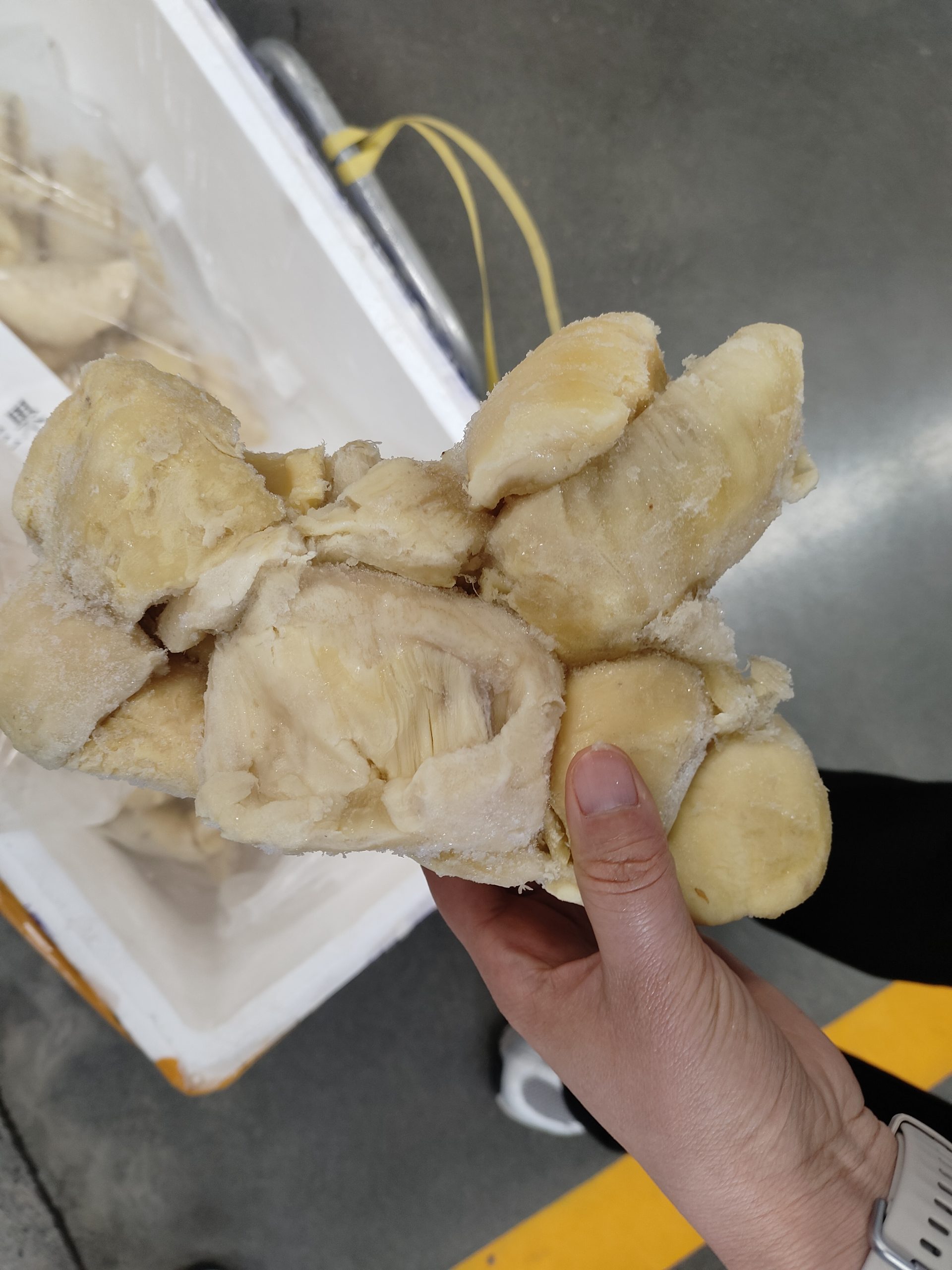
Before Drying
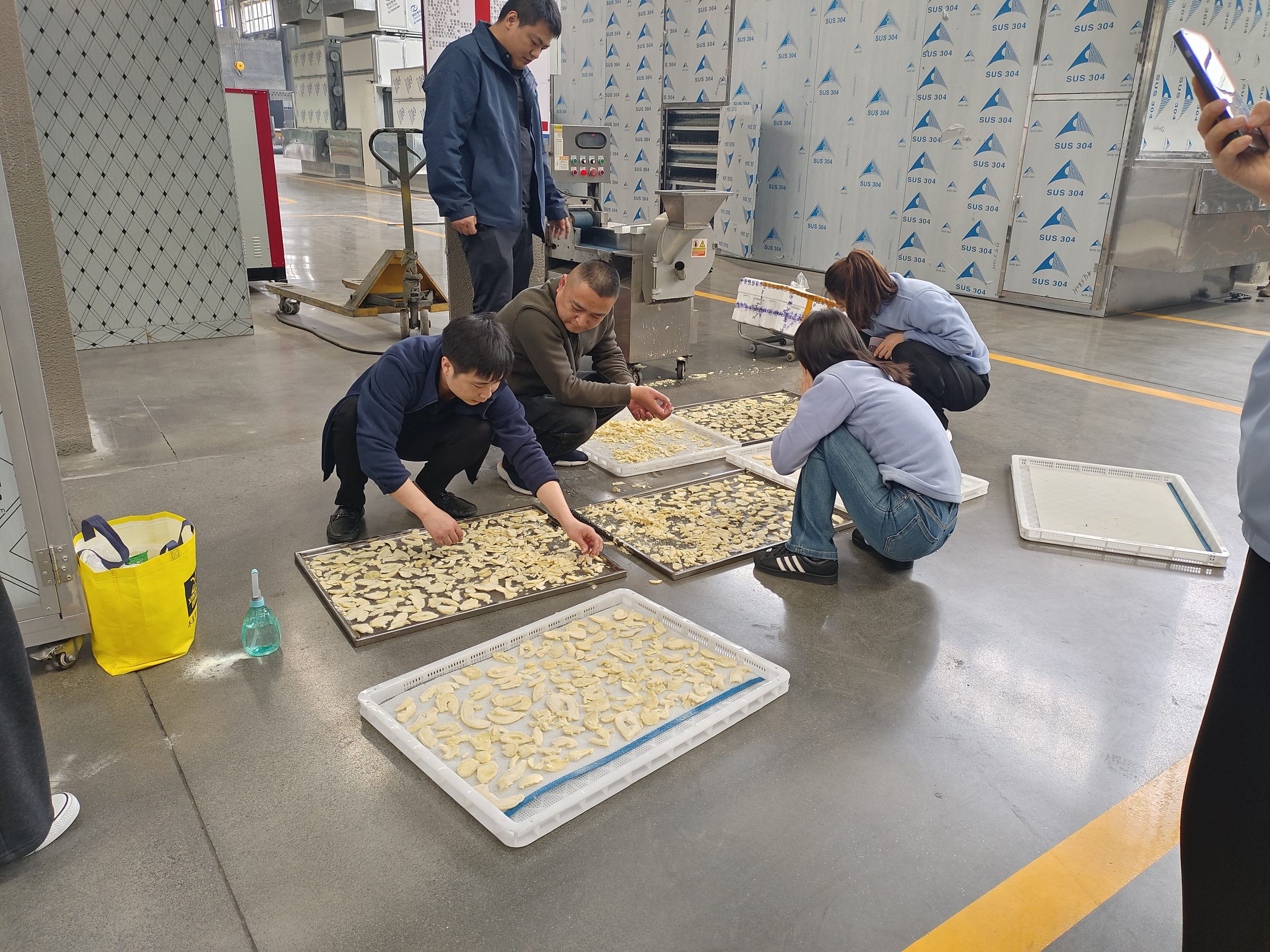
After Drying
Based on our recent site trials, the standard commercial workflow includes three critical stages:
Stage 1: Pre-Drying Preparation (Fresh State)
Fresh durian pulp is extracted and sliced into uniform pieces. Uniform thickness is mandatory to ensure every piece dries at the same rate, preventing some pieces from over-drying while others remain soft.
Stage 2: Precision Dehydration (The Middle Phase)
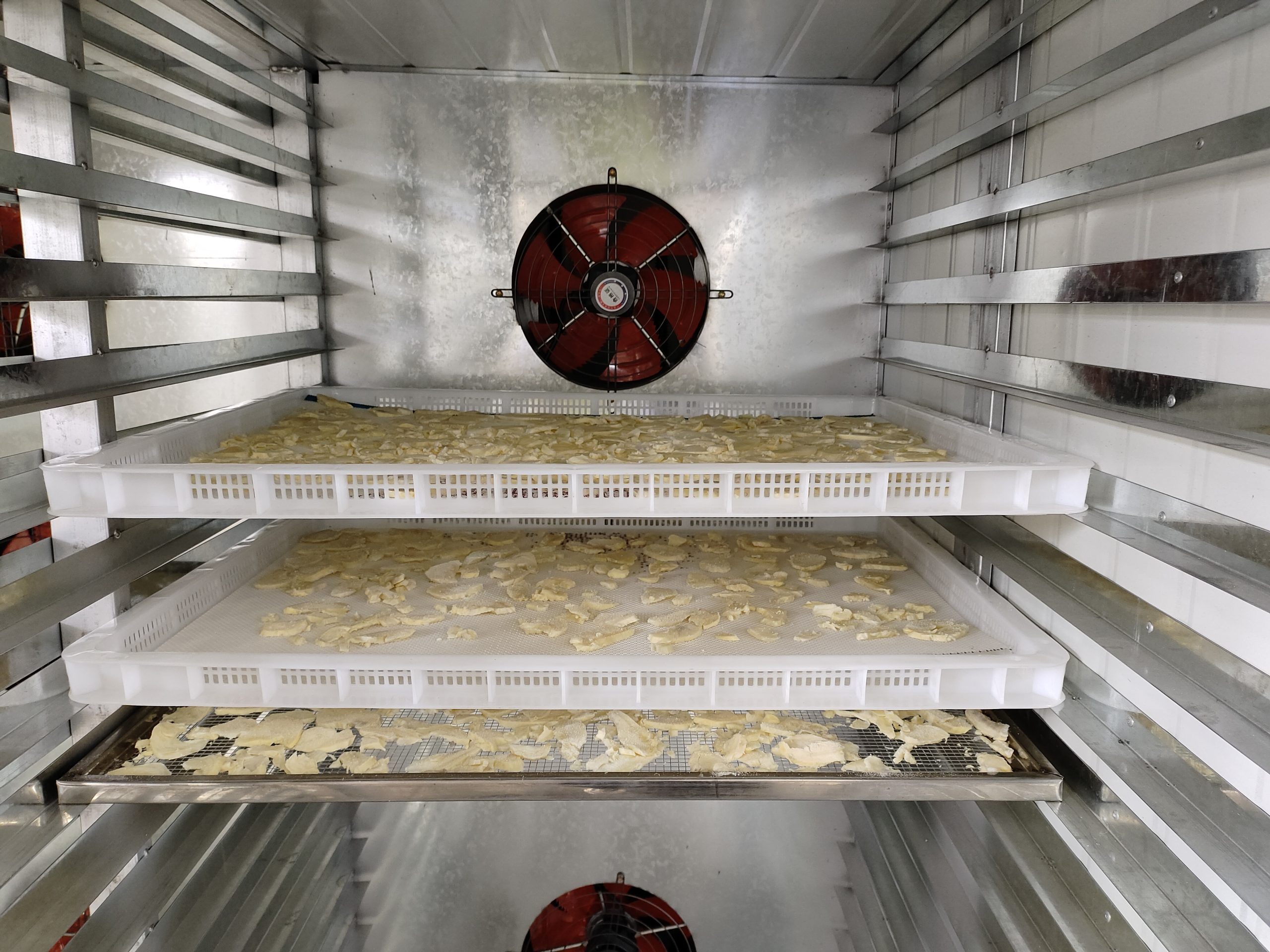
The durian is loaded onto food-grade SUS304 trays.
Airflow Logic: High-velocity fans circulate dehumidified air horizontally across the trays.
Temperature Profile: We typically start at 55°C for surface moisture removal and finish at 45°C for core stabilization.
Stage 3: Stabilization & Packaging (Post-Drying)
The final product must reach a moisture content of 10- 12% for chewy pulp or <5% for crispy chips. The results show a consistent golden hue with no oxidative browning.
| Parameter | Heat Pump Dryer (Batch) | Mesh Belt Dryer (Industrial) |
| Drying Temp | 40°C – 65°C | 50°C – 100°C |
| Capacity | 200kg – 2,000kg/batch | 500kg – 10 tons/day |
| Best For | Premium Durian Slices & Chewy Pulp | Bulk Durian Chips & Industrial Processing |
| Nutrient Retention | Excellent (Closed Loop) | Good (Continuous Flow) |
Q: Why does my dried durian turn dark or “dirty” looking?
A: This is likely due to high temperature or uneven airflow. Traditional dryers rely on high heat, which caramelizes the fruit’s sugar. Our Heat Pump Dryer uses controlled dehumidification to preserve the natural golden pigments.
Q: Is it possible to use the machine for other tropical fruits?
A: Yes. The PLC control system allows for “Custom Drying Curves.” You can switch from Durian to Mango, Jackfruit, or Banana by simply selecting a different program on the touch screen.
Q: How much space is required for a 1,000kg batch system?
A: Our modular cabinet designs are compact. We provide Free 3D Layout Designs to help you optimize your factory floor space before purchase.
Commercial Durian Dehydration: Preserving Quality with Heat Pump Technology
Milk Powder Drying – Parameters for Consistent Final Moisture and Functional Properties
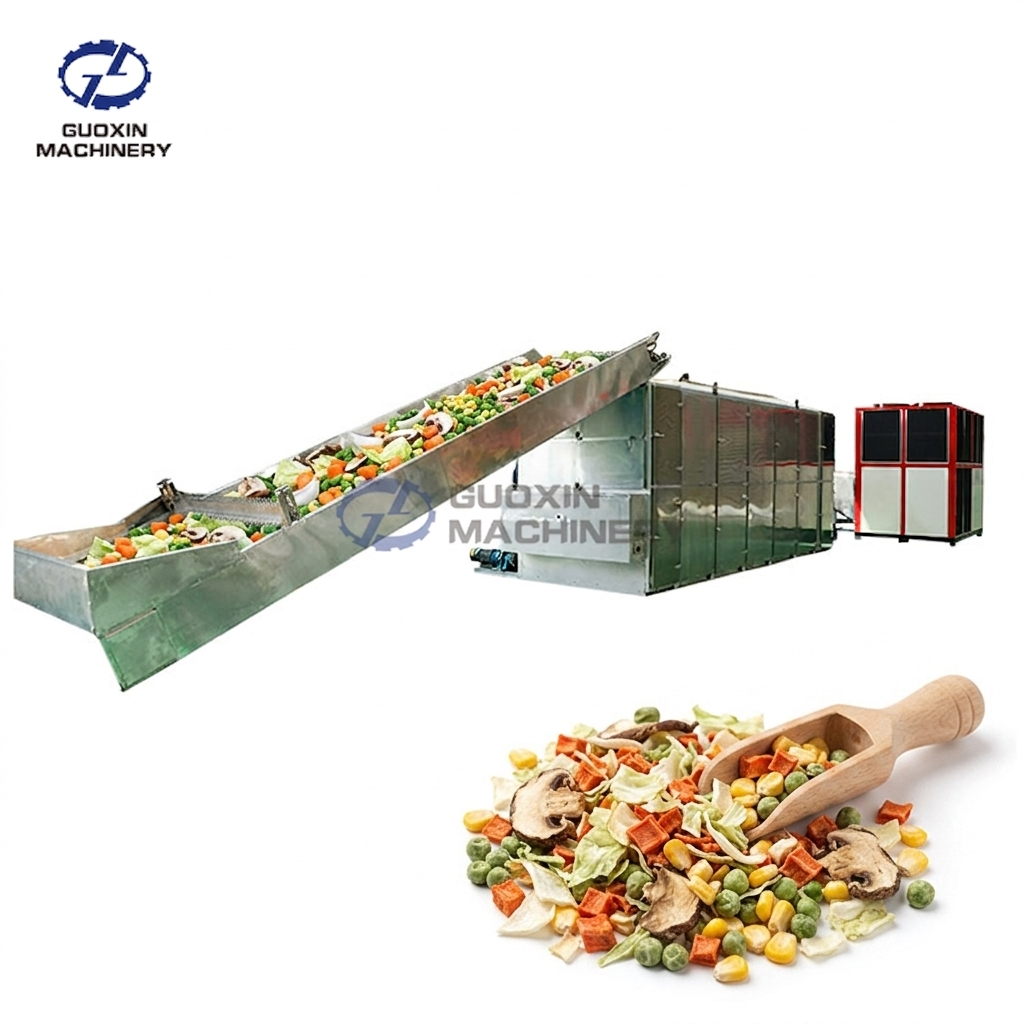
Dehydrated Vegetables for Instant Noodle Seasoning – Drying Parameters for Consistent Quality in Seasoning Packs
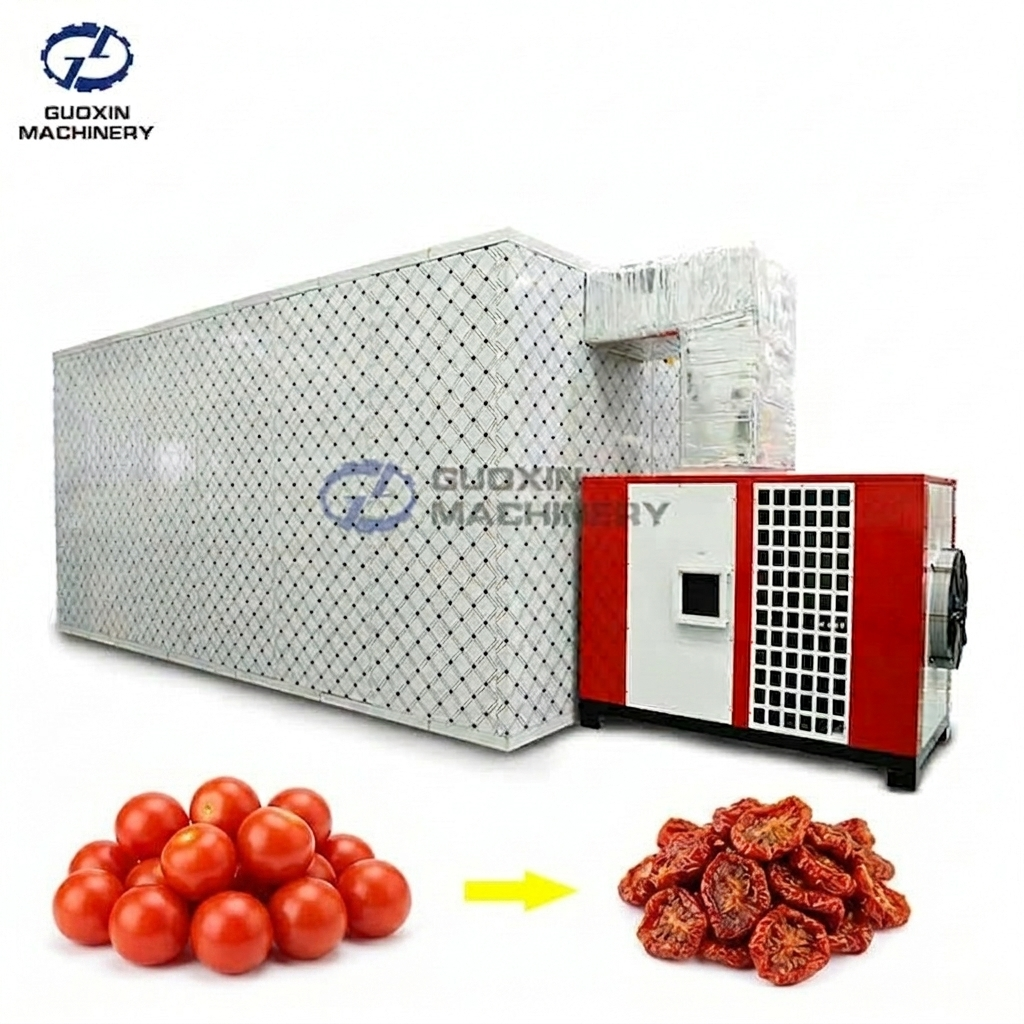
Sun-Dried Tomato Drying – Parameters for Industrial Production of Consistent Tomato Slices