
© Henan Guoxin Machinery Manufacturing Co., Ltd. All Rights Reserved.



Liquid milk is first concentrated by evaporation to 40–60 % total solids before entering the drying stage. The concentrate must then be dried to a final moisture content of 3–5 % (water activity below 0.25) to ensure microbial stability, prevent caking during storage, and maintain solubility and flowability in the finished powder. Lactose in the amorphous state, proteins, an...
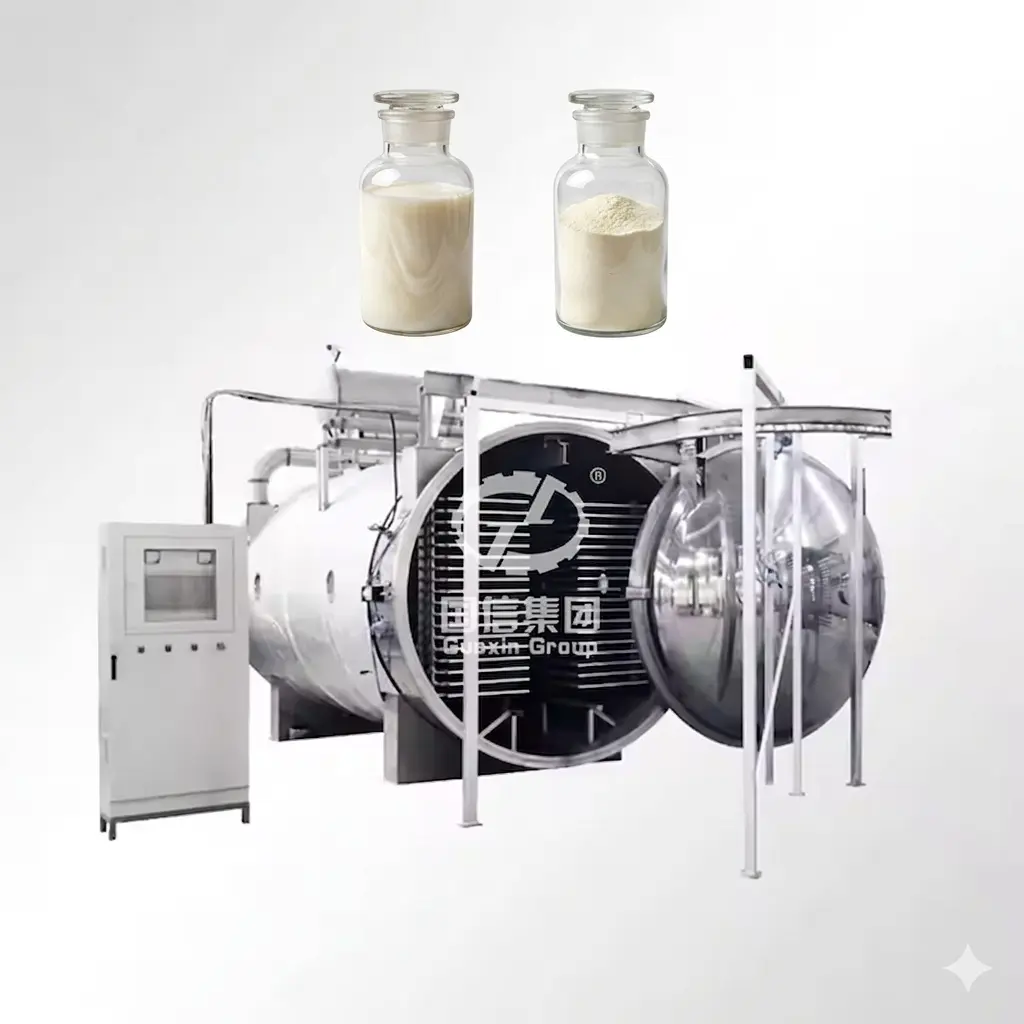
Milk Powder Drying
Liquid milk is first concentrated by evaporation to 40–60 % total solids before entering the drying stage. The concentrate must then be dried to a final moisture content of 3–5 % (water activity below 0.25) to ensure microbial stability, prevent caking during storage, and maintain solubility and flowability in the finished powder. Lactose in the amorphous state, proteins, and fat globules are sensitive to thermal exposure; excessive heat leads to denaturation, Maillard browning, and reduced reconstitution performance.
For industrial production that requires controlled moisture removal while preserving powder functionality, drum drying, freeze drying, and heat pump secondary drying are established methods. Drum drying applies direct contact with heated rollers for viscous concentrates. Freeze drying uses sublimation under vacuum for maximum retention of native structure. Heat pump systems provide low-temperature secondary drying after initial concentration or primary drying to fine-tune final moisture without additional thermal damage.
Pre-processing includes pasteurization, concentration under vacuum (typically 45–50 % solids at 70–90 °C), and homogenization to stabilize fat distribution before the dryer feed.
| Material | Initial Moisture (%) | Target Moisture (%) | Typical Temp / Time | Pre-Processing Steps | Key Process Requirements | Recommended Guoxin Dryer Type |
|---|---|---|---|---|---|---|
| Milk Powder (from concentrate) | 40–60 | 3–5 | Drum: 120–160 °C surface / continuous sheet formation Freeze: –40 °C to 40 °C / 24–48 h Heat pump secondary: 55–75 °C / 2–6 h | Pasteurize, concentrate to 40–60 % solids, and homogenize | Protein solubility, minimal browning, uniform particle size | Drum or Freeze (primary) Heat pump (secondary) |
These parameters are taken from commercial dairy powder production records and published drying kinetics. Drum drying produces flakes that are subsequently milled, with surface temperatures kept within the range to limit protein damage. Freeze drying operates under vacuum to remove ice by sublimation, resulting in highly porous particles with excellent rehydration properties. Heat pump secondary drying refines moisture in already partially dried material at controlled low temperatures.
What final moisture range is standard for commercial milk powder?
3–5 % moisture (water activity below 0.25) is the accepted specification for shelf stability and prevention of caking.
How does drum drying differ from freeze drying in effect on powder properties?
Drum drying produces denser particles through direct heat contact, while freeze drying yields more porous structures with superior solubility due to sublimation.
Why is secondary drying sometimes applied after primary concentration?
It allows precise final moisture adjustment at lower temperatures, reducing the risk of thermal degradation in heat-sensitive milk components.
What pre-processing step most affects final powder solubility?
Homogenization before drying stabilizes fat globules and improves overall reconstitution performance in the finished powder.
For pilot drying trials on your milk concentrate, with reports on final moisture uniformity, solubility index, and color values, contact Guoxin Machinery with your solids content and daily production requirement.
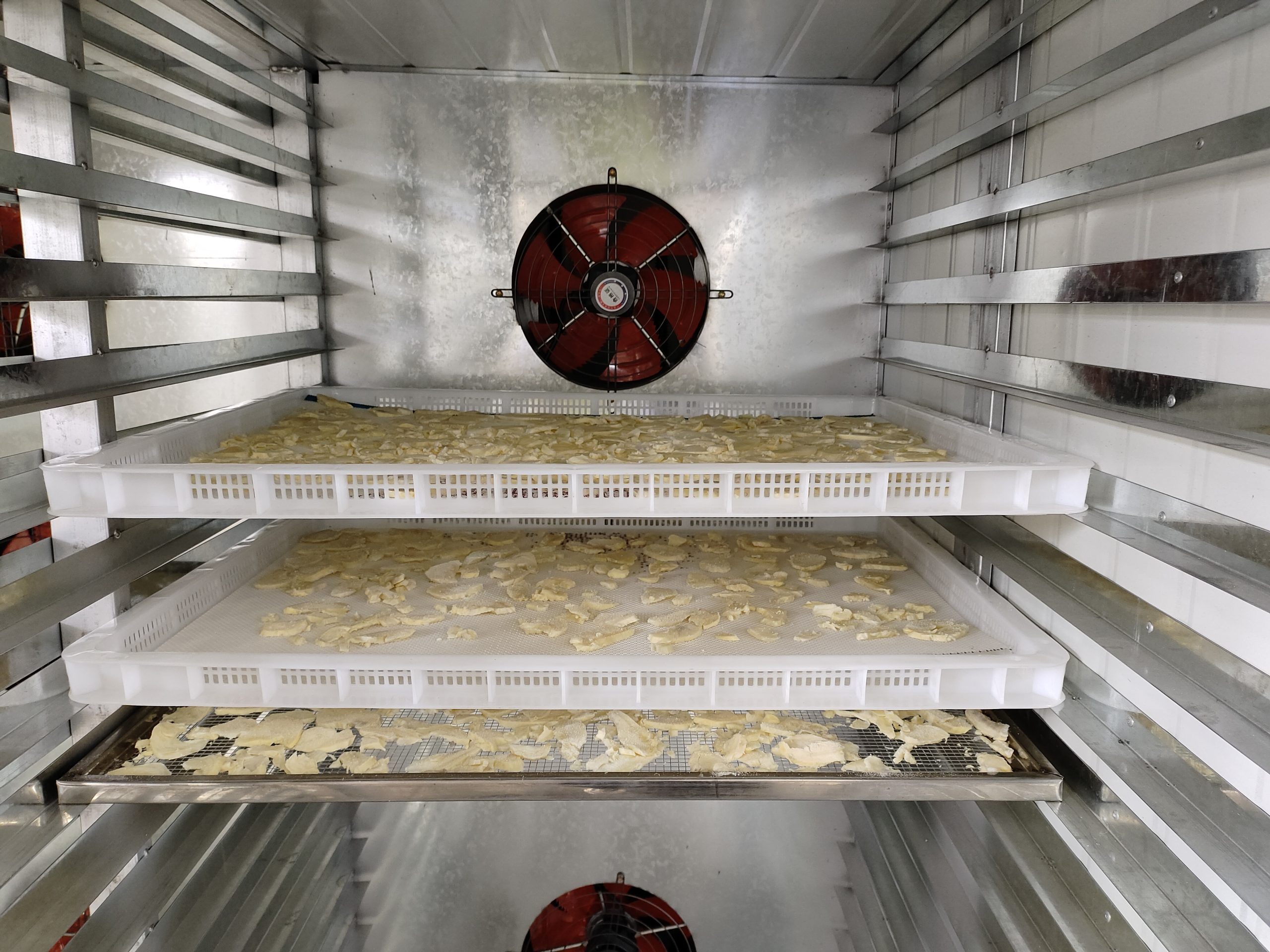
Commercial Durian Dehydration: Preserving Quality with Heat Pump Technology
Milk Powder Drying – Parameters for Consistent Final Moisture and Functional Properties
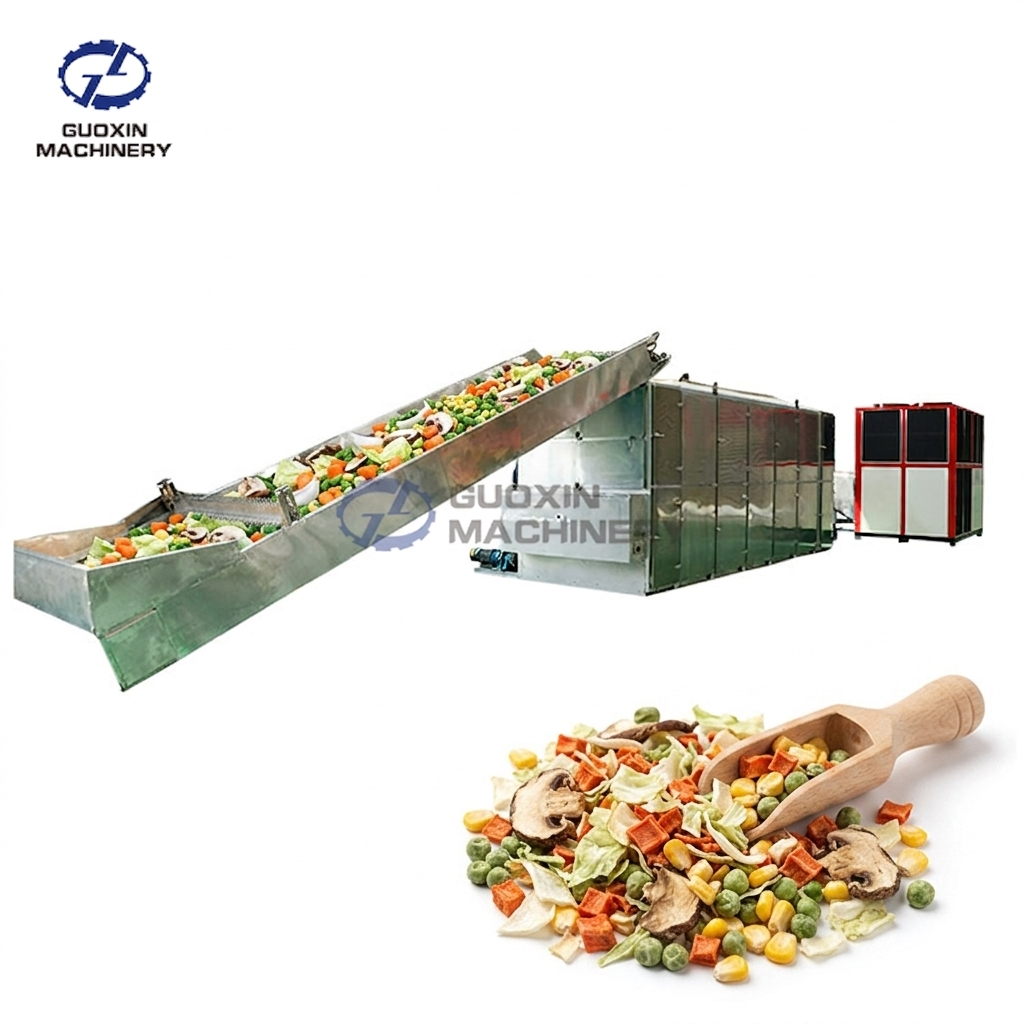
Dehydrated Vegetables for Instant Noodle Seasoning – Drying Parameters for Consistent Quality in Seasoning Packs
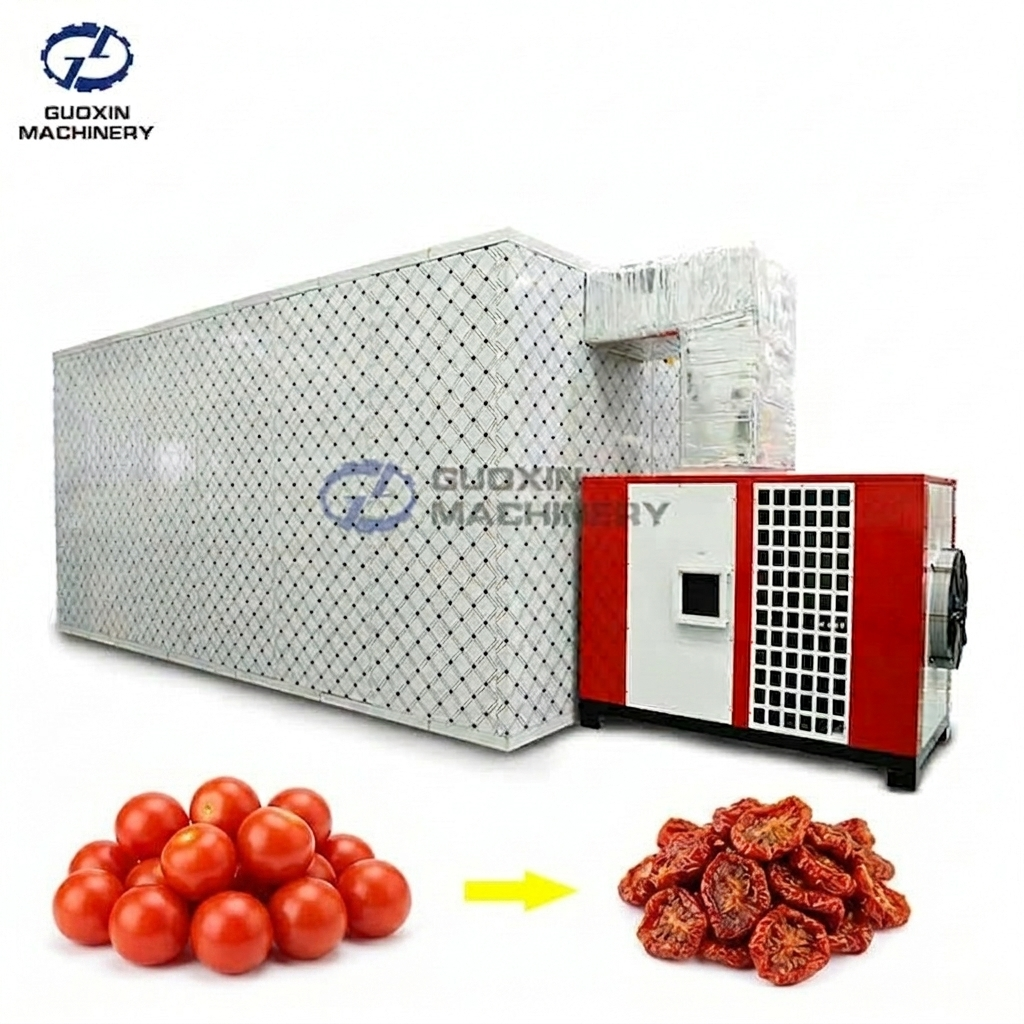
Sun-Dried Tomato Drying – Parameters for Industrial Production of Consistent Tomato Slices