
© Henan Guoxin Machinery Manufacturing Co., Ltd. All Rights Reserved.



Fresh tomatoes for sun-dried processing start with 90–94 % moisture on a wet basis. They are typically sliced and dried to a final moisture of 5–10 % to reach a water activity below 0.6 for microbial stability and long shelf life. The high sugar and acid content, combined with lycopene as the primary pigment, makes temperature control critical. Lycopene degrades with excessi...
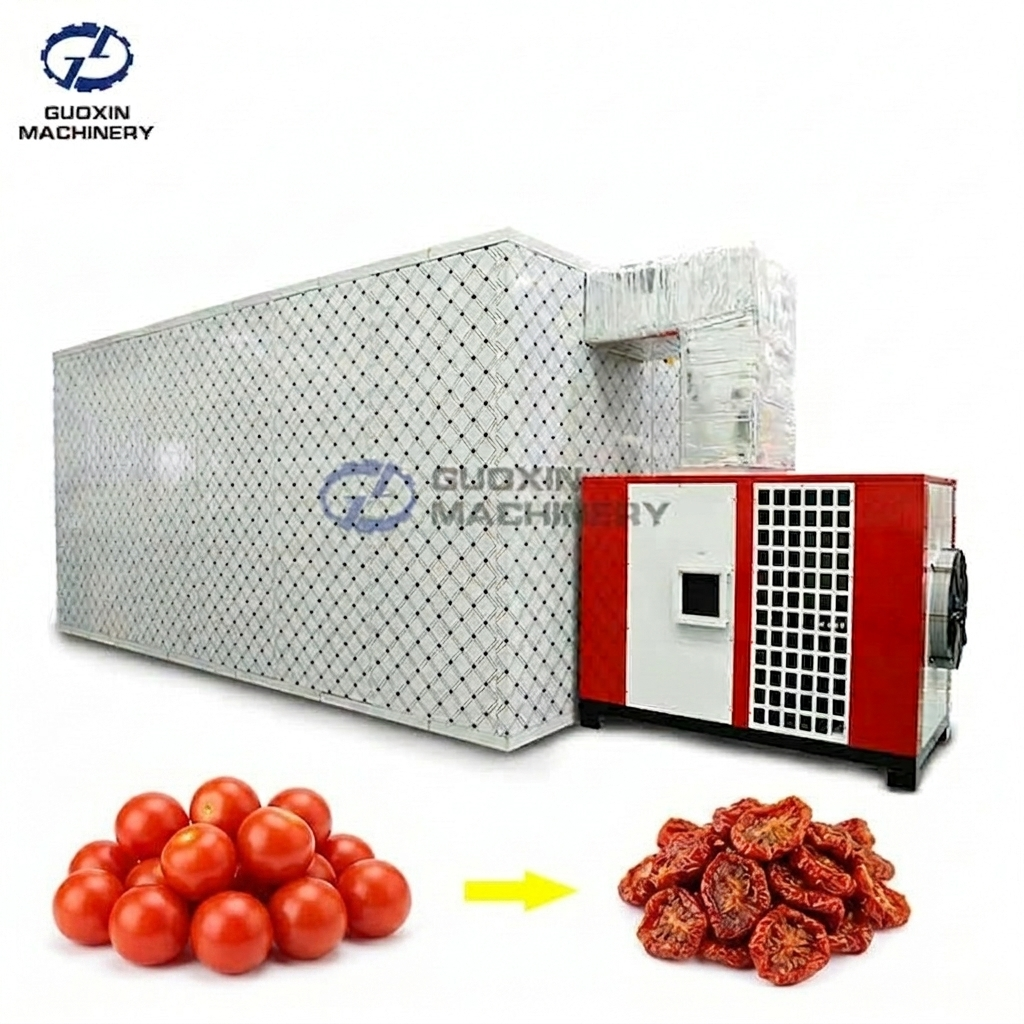
Sun-Dried Tomato Drying Machine
Fresh tomatoes for sun-dried processing start with 90–94 % moisture on a wet basis. They are typically sliced and dried to a final moisture of 5–10 % to reach a water activity below 0.6 for microbial stability and long shelf life.
The high sugar and acid content, combined with lycopene as the primary pigment, makes temperature control critical.
Lycopene degrades with excessive heat or prolonged oxygen exposure, while uneven drying leads to case hardening or inconsistent color.
Traditional open-sun drying relies on ambient conditions but introduces variability in moisture, color, and hygiene.
For industrial production that replicates the characteristic appearance and quality of sun-dried tomatoes, controlled low-temperature drying provides repeatability.
Heat pump dryers maintain stable chamber conditions at 45–60 °C with dehumidification, minimizing lycopene loss while achieving uniform moisture removal across slices.
Mesh belt dryers support continuous throughput for higher volumes with similar temperature profiles. These methods align with the need for bright red color, retained lycopene, and rehydration performance required in final products.
Pre-processing includes washing whole tomatoes, slicing to 4–8 mm thickness for even drying, optional light salting or citric acid dip to reduce browning, and draining excess surface water. Uniform slice thickness directly affects drying time and final moisture distribution.
| Material | Initial Moisture (%) | Target Moisture (%) | Typical Temp / Time | Pre-Processing Steps | Key Process Requirements | Recommended Guoxin Dryer Type |
|---|---|---|---|---|---|---|
| Tomato Slices (sun-dried style) | 90–94 | 5–10 | 45–60 °C / 8–18 h (depending on slice thickness) | Wash, slice 4–8 mm, optional citric dip, drain | Lycopene retention, color uniformity, and even moisture removal | Heat pump or mesh belt |
These parameters are drawn from commercial drying records and published kinetics studies on tomato slices. Lower temperatures within the range favor higher lycopene retention, while the mesh belt configuration allows continuous operation without interrupting airflow. Final product from these systems shows stable color values and rehydration ratios suitable for direct use in sauces, snacks, or further processing.
What slice thickness gives the best balance of drying time and quality?
4–6 mm slices dry faster with more uniform moisture removal than 8 mm slices, while still preserving structural integrity and color.
Why is temperature kept below 60 °C for sun-dried style tomatoes?
Higher temperatures accelerate lycopene degradation and cause darkening. The 45–60 °C range supports the characteristic bright red appearance while reaching target moisture.
How does pre-dipping affect the final product?
A brief citric acid dip reduces enzymatic browning and helps maintain the bright surface color associated with sun-dried tomatoes.
What final moisture range ensures shelf stability?
5–10 % moisture (water activity below 0.6) prevents microbial growth and supports long-term storage without refrigeration.
For pilot drying trials on your tomato variety, with full reports on lycopene content, color values, moisture uniformity, and energy use, contact Guoxin Machinery with your slice thickness and daily throughput requirement.
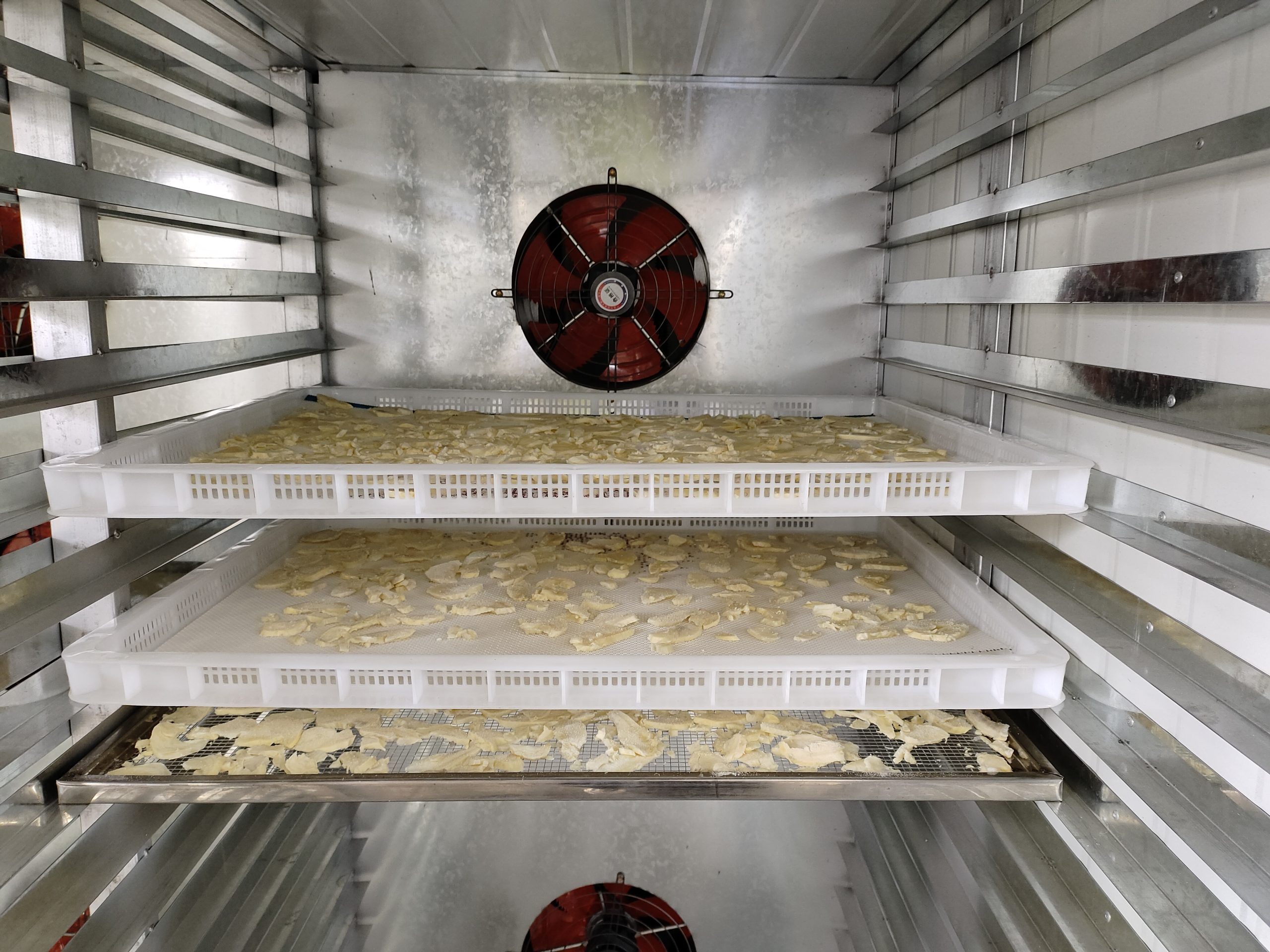
Commercial Durian Dehydration: Preserving Quality with Heat Pump Technology
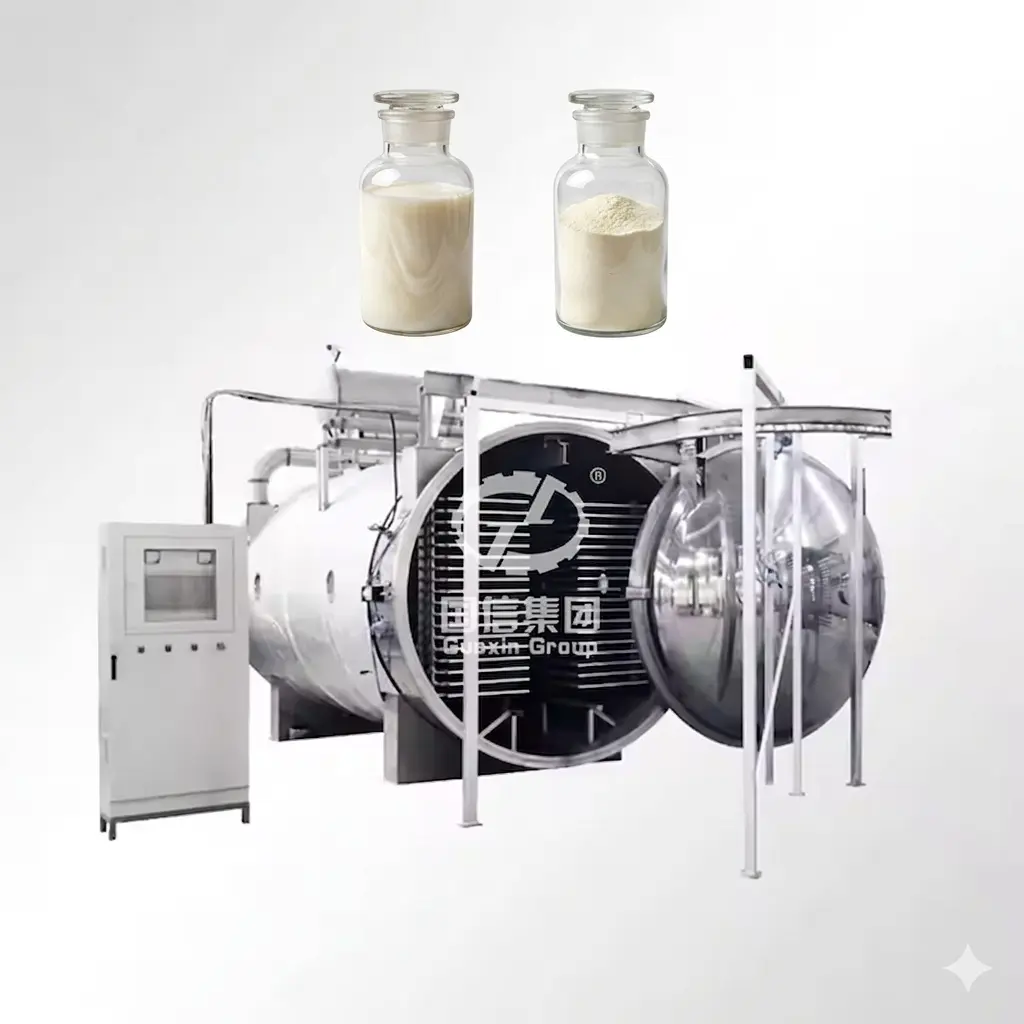
Milk Powder Drying – Parameters for Consistent Final Moisture and Functional Properties
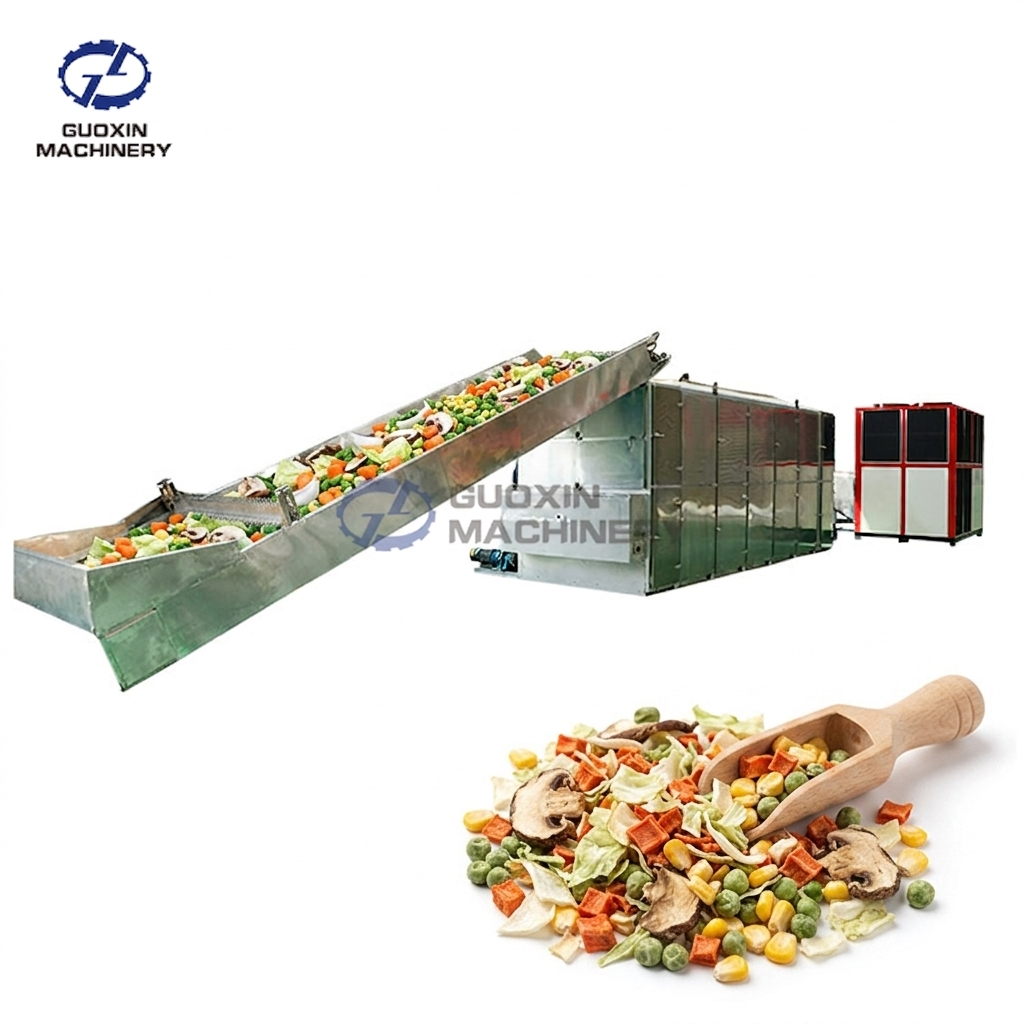
Dehydrated Vegetables for Instant Noodle Seasoning – Drying Parameters for Consistent Quality in Seasoning Packs
Sun-Dried Tomato Drying – Parameters for Industrial Production of Consistent Tomato Slices