© Henan Guoxin Machinery Manufacturing Co., Ltd. All Rights Reserved.



Release time:2026-04-01
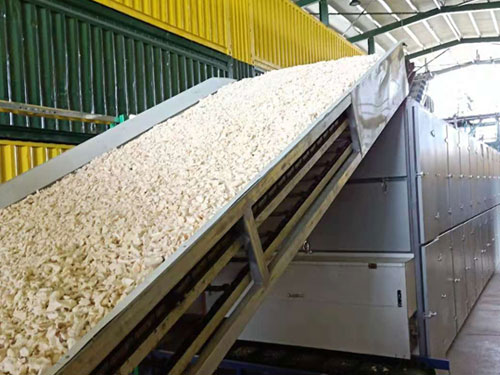
1.5t/h Cassava Chip Drying Line in Papua New Guinea | Guoxin Group
In Papua New Guinea, cassava is a staple crop with immense potential as a primary carbohydrate source for the livestock industry. Historically, the challenge has been the rapid post-harvest spoilage of fresh cassava due to high moisture content ($60\%-70\%$). The client required an industrial-scale solution to convert fresh cassava into shelf-stable, high-quality “cassava chips” for large-scale animal feed production.
Client Objectives:
Throughput: A continuous input capacity of $1,500\text{ kg/h}$ to match harvest volumes.
Clean Energy: Utilizing local natural gas reserves to minimize operational costs.
Feed Quality: Reducing moisture to $<12\%$ to prevent aflatoxin growth during storage.
Durability: Heavy-duty construction capable of handling the abrasive nature of cassava tubers.
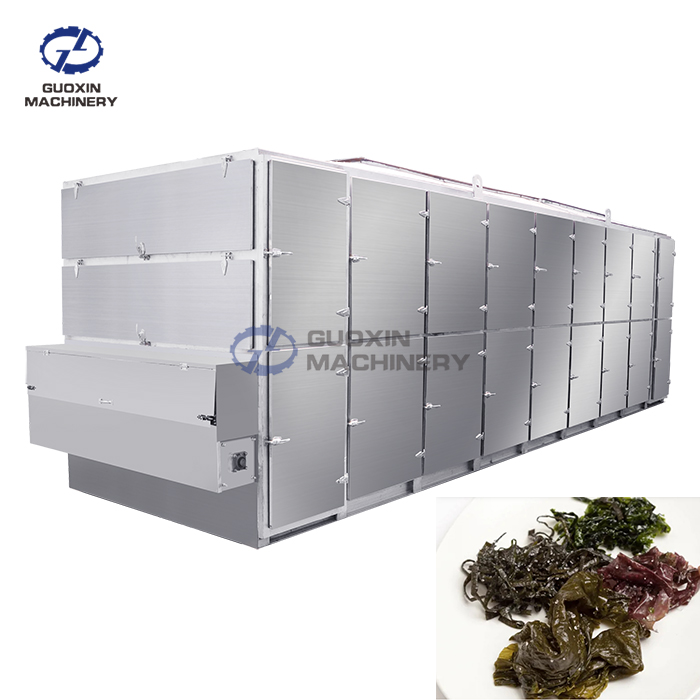
Guoxin Group engineered a high-capacity Continuous Mesh Belt Drying System optimized for the density and airflow requirements of sliced cassava chips.
Core Equipment: Guoxin Multi-layer Continuous Mesh Belt Dryer.
Heat Source: Natural Gas Heat Exchange Furnace. This indirect heating system ensures that the clean energy of natural gas is converted into pure, hot air, preventing any combustion by-products from contaminating the animal feed.
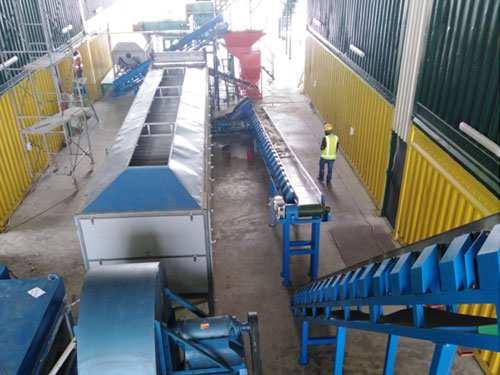
Feeding System: Automated sloping conveyor with a uniform material spreader to ensure even drying across the $2.5\text{m}$ wide belt.
Material Contact: Reinforced stainless steel mesh to withstand the weight of $1.5\text{ tons}$ of material per hour.
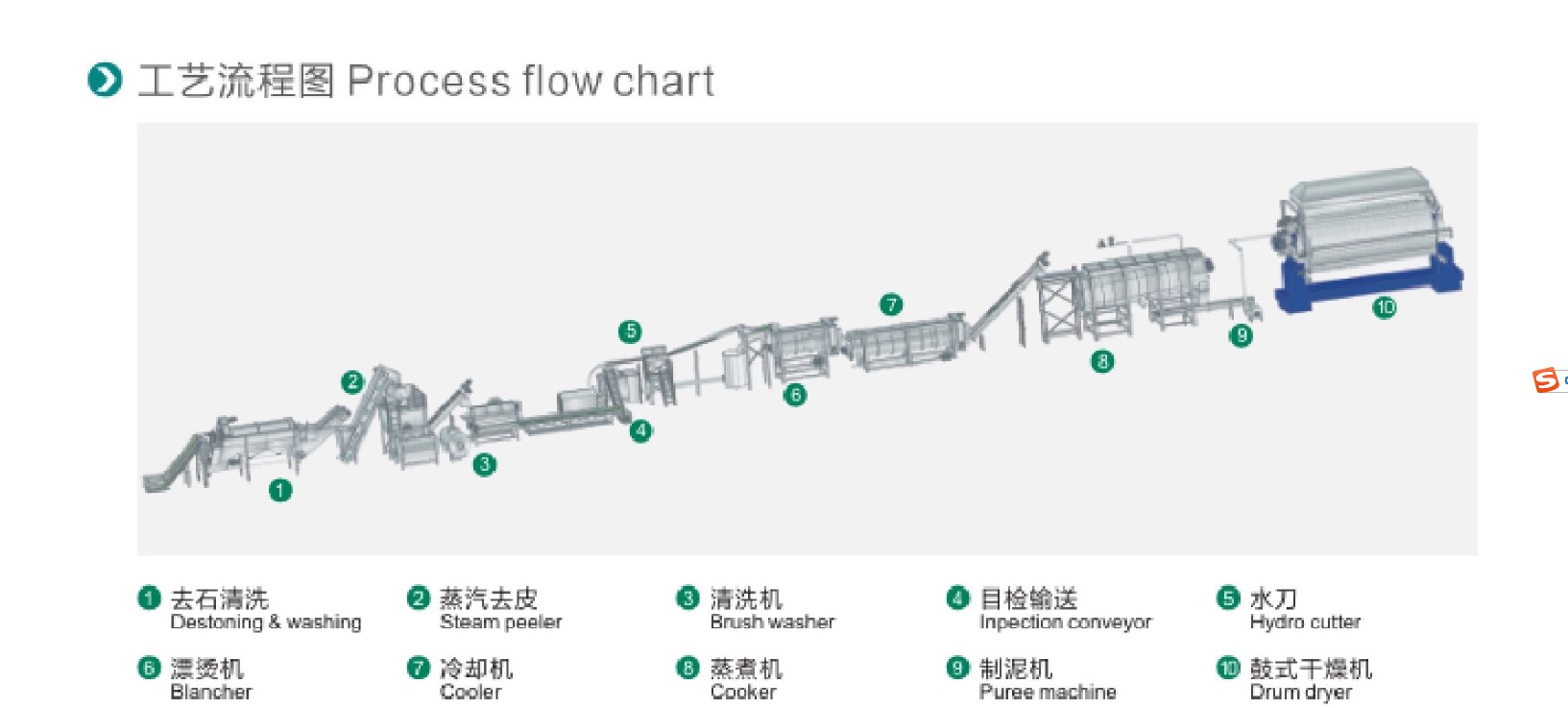
Vegetables Process Flowchart
(Section reserved for user-supplied diagram)
Sequence: Fresh Cassava Washing/Peeling → Mechanical Slicing (Chips) → Automated Feeding → Multi-layer Drying ($60\text{°C} – 80\text{°C}$) → Cooling → Storage/Grinding for Feed.
| Parameter | Value / Technical Detail |
|---|---|
| Input Capacity | $1,500\text{ kg/h}$ ($36\text{ Tons/Day}$ continuous) |
| Final Moisture Content | Reduced from $65\%$ to $<12\%$ |
| Heat Source Type | Indirect Natural Gas Heat Exchanger |
| Drying Uniformity | $\ge 98\%$ |
| Fuel Efficiency | Optimized thermal recovery system (save $15\%$ gas consumption) |
| Standard Compliance | ISO 9001 / International Food & Feed Safety Standards |
Economic Impact:
By producing cassava chips locally, the client significantly reduced their dependence on imported grain-based feeds (corn/soy). The transition to a natural gas heat source provided a $30\%$ reduction in energy costs compared to diesel-generated drying systems previously used in the region.
Investment Recovery:
Based on the current market price of livestock feed in PNG, the facility achieved full ROI within 9–11 months. The automation of the Guoxin line allowed the client to run 24/7 shifts with only 2–3 operators per shift.
Regional Policy Adaptability:
The project supports PNG’s “National Agriculture Development Plan,” which encourages import substitution and local value-added processing. The low-emission natural gas furnace also aligns with local environmental regulations regarding industrial air quality.
“The 1.5t/h capacity has completely transformed our supply chain. We can now process fresh cassava from local farmers immediately, preventing spoilage. The natural gas heat exchanger is incredibly clean and efficient, and the dried chips are perfect for our poultry and swine feed mixes.” — Technical Director, PNG Livestock Project.