
© Henan Guoxin Machinery Manufacturing Co., Ltd. All Rights Reserved.



Coffee cherries after harvest contain approximately 55–65 % moisture. Parchment coffee following wet or honey processing starts drying at 40–50 % moisture and must reach 10–12 % for safe storage and hulling. Cocoa beans leave fermentation at around 60 % moisture and are dried to 6–8 % to prevent mold while completing flavor development. Instant coffee begins as a concentrate...
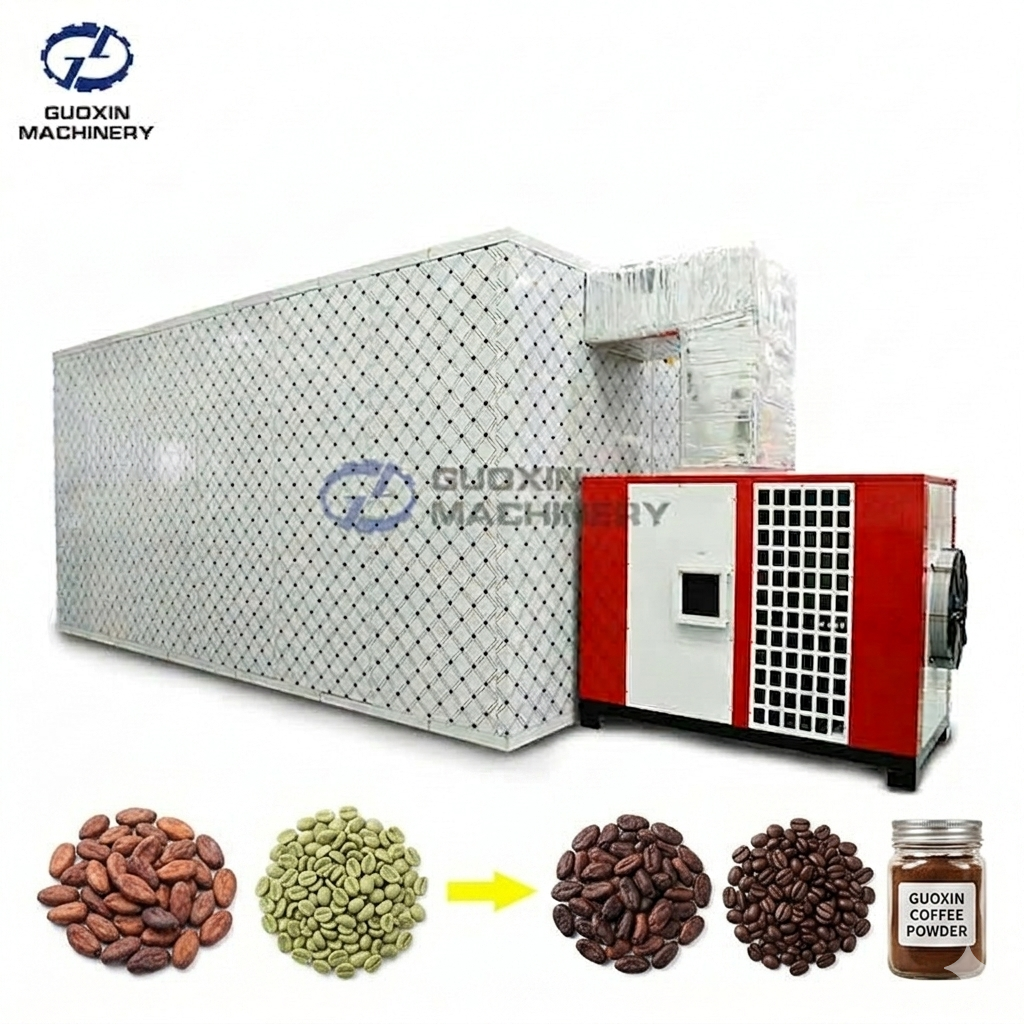
Drying Coffee Beans
Coffee cherries after harvest contain approximately 55–65 % moisture.
Parchment coffee following wet or honey processing starts drying at 40–50 % moisture and must reach 10–12 % for safe storage and hulling.
Cocoa beans leave fermentation at around 60 % moisture and are dried to 6–8 % to prevent mold while completing flavor development.
Instant coffee begins as a concentrated extract (35–50 % solids) and is dried to 3–5 % final moisture for shelf stability and rapid dissolution.
These materials share high initial water content but differ in heat sensitivity.
Coffee parchment requires strict temperature limits to protect aroma precursors and prevent cellular damage.
Cocoa nibs tolerate slightly higher rates but risk crusting if dried too quickly.
Instant coffee powder demands rapid moisture removal from liquid extract while preserving volatile compounds.
The table below lists the parameters for 3 drying methods documented in commercial plants: vacuum freezing, heat pump drying, and continuous mesh belt drying
| Material | Initial Moisture (%) | Target Moisture (%) | Typical Temp / Time | Pre-Processing Steps | Key Process Requirements | Recommended Guoxin Dryer Type |
|---|---|---|---|---|---|---|
| Coffee Beans (parchment) | 40–50 | 10–12 | 35–40 °C / 8–17 h (mechanical) | Wash, depulp, ferment (if needed) | Uniform moisture, temperature control below 40 °C | Heat pump or mesh belt |
| Cocoa Nibs | ~60 | 6–8 | 40–60 °C / 18–48 h (intermittent) | Ferment, wash, drain | Avoid crusting, complete flavor development | Drum or heat pump |
| Instant Coffee Powder | 50–65 (extract) | 3–5 | Freeze: –40 °C to 40 °C / 24–48 h Drum: 120–160 °C surface | Concentrate extract, homogenize | Volatile retention, particle functionality | Freeze or drum |
Parameters derive from published drying kinetics and operational records.
Coffee parchment drying stays below 40 °C to maintain green bean quality and cup scores.
Cocoa drying uses intermittent cycles to reach the target moisture without surface hardening.
Instant coffee powder relies on freeze-drying for superior aroma retention.
What temperature limit applies to parchment coffee drying?
Parchment coffee requires drying temperatures not exceeding 40 °C to preserve cellular structure and aroma precursors.
Why is intermittent drying used for cocoa nibs?
Intermittent drying prevents crust formation on the bean surface while allowing internal moisture to migrate evenly to the target 6–8 % level.
How does freeze-drying benefit instant coffee powder?
Freeze drying sublimates ice directly to vapor at low temperature, protecting volatile flavor compounds better than high-heat methods.
What final moisture range ensures microbial stability across these products?
Water activity below 0.6, achieved at 3–12 % moisture depending on the material, prevents mold and supports long-term storage.
For pilot drying trials on your specific coffee, cocoa, or instant coffee material, with reports on moisture uniformity, color retention, and energy consumption, contact Guoxin Machinery with your raw material details and production volume.
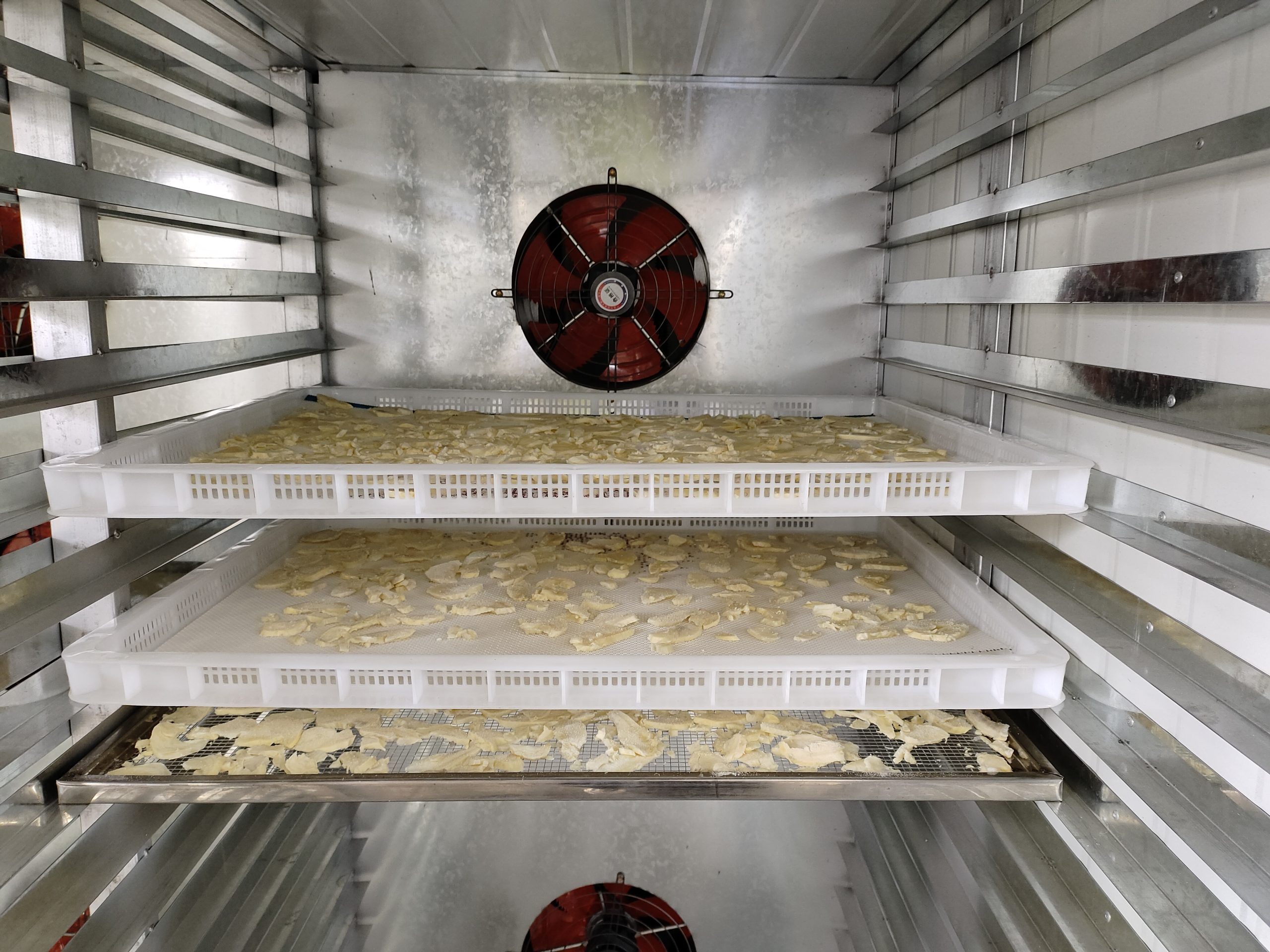
Commercial Durian Dehydration: Preserving Quality with Heat Pump Technology
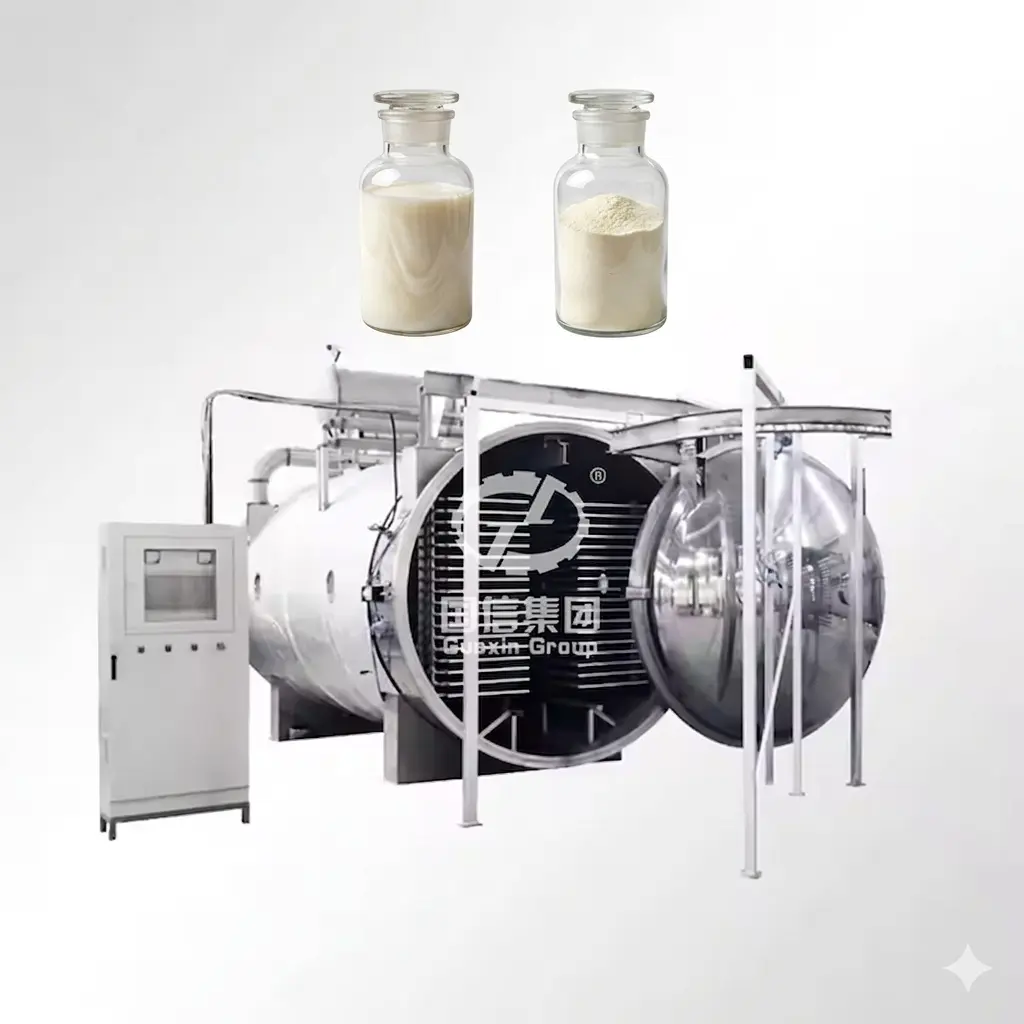
Milk Powder Drying – Parameters for Consistent Final Moisture and Functional Properties

Dehydrated Vegetables for Instant Noodle Seasoning – Drying Parameters for Consistent Quality in Seasoning Packs
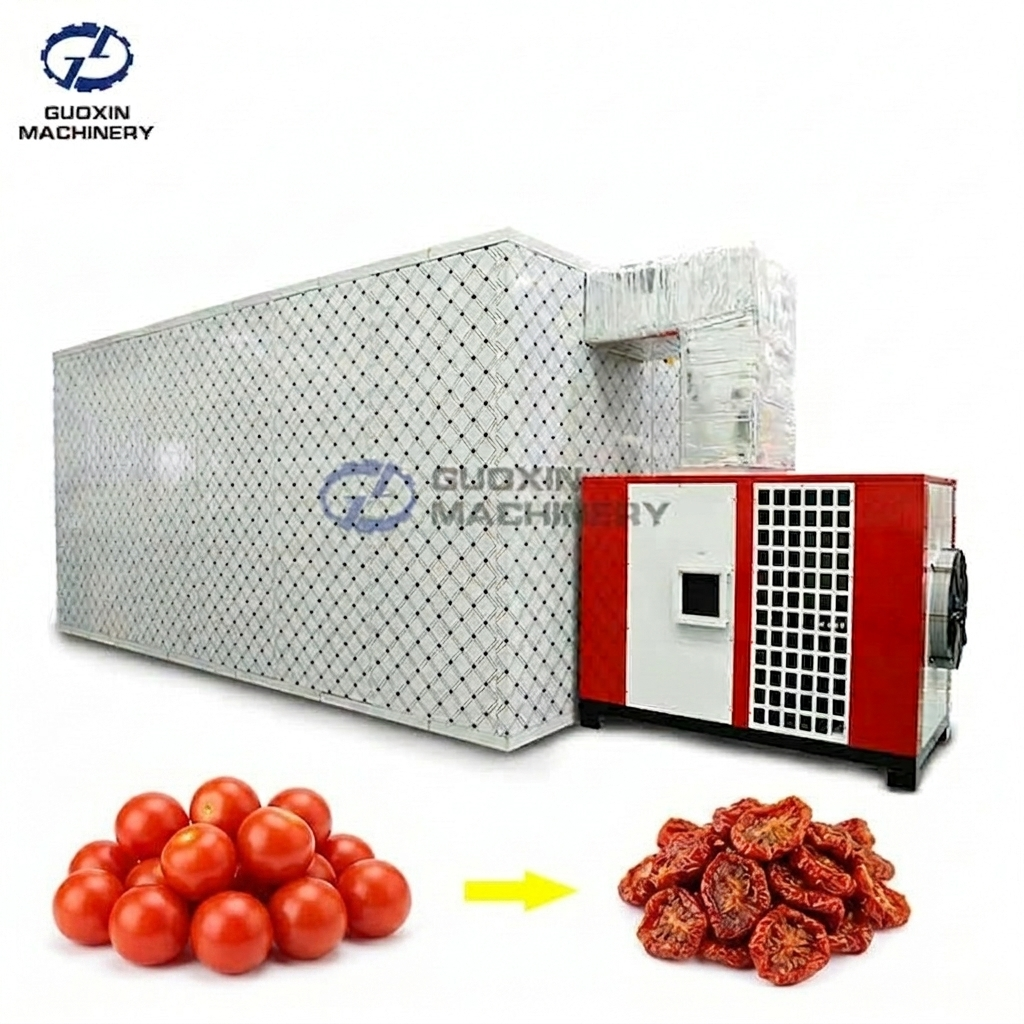
Sun-Dried Tomato Drying – Parameters for Industrial Production of Consistent Tomato Slices