© Henan Guoxin Machinery Manufacturing Co., Ltd. All Rights Reserved.



Release time:2026-04-01
Indonesia is the world’s largest producer of coconuts. In March 2026, Guoxin Group commissioned a comprehensive processing facility for a leading Indonesian coconut oil producer. The client’s primary challenge was the inconsistency of sun-dried copra, which often led to high Free Fatty Acid (FFA) levels and mold contamination, significantly devaluing the extracted oil.
Client Requirements:
Oil Quality: Reduce moisture to a stable level ($<6\%$) to ensure high-purity oil extraction.
Integrated Processing: A seamless transition from fresh coconut meat shredding to continuous drying.
Large Scale: A processing capacity of $20,000\text{ kg}$ of fresh coconut meat per day.
Guoxin Group provided an integrated EPC production line that combines high-speed shredding with multi-layer mesh belt dehydration technology.
Pre-treatment Section: Industrial-grade coconut shredding machine designed for high-fat content materials.
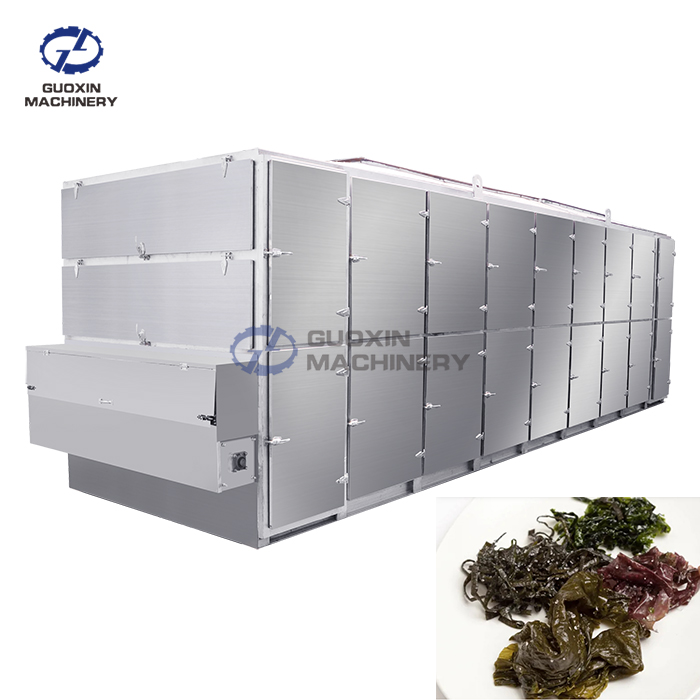
Core Equipment: Guoxin Multi-layer Continuous Mesh Belt Dryer (Heavy-Duty Series).
Heating System: Biomass energy system utilizing coconut shells as fuel, creating a self-sustaining energy loop.
Material Contact: Full SUS304 Stainless Steel mesh belts to prevent oil contamination and ensure food-grade output.
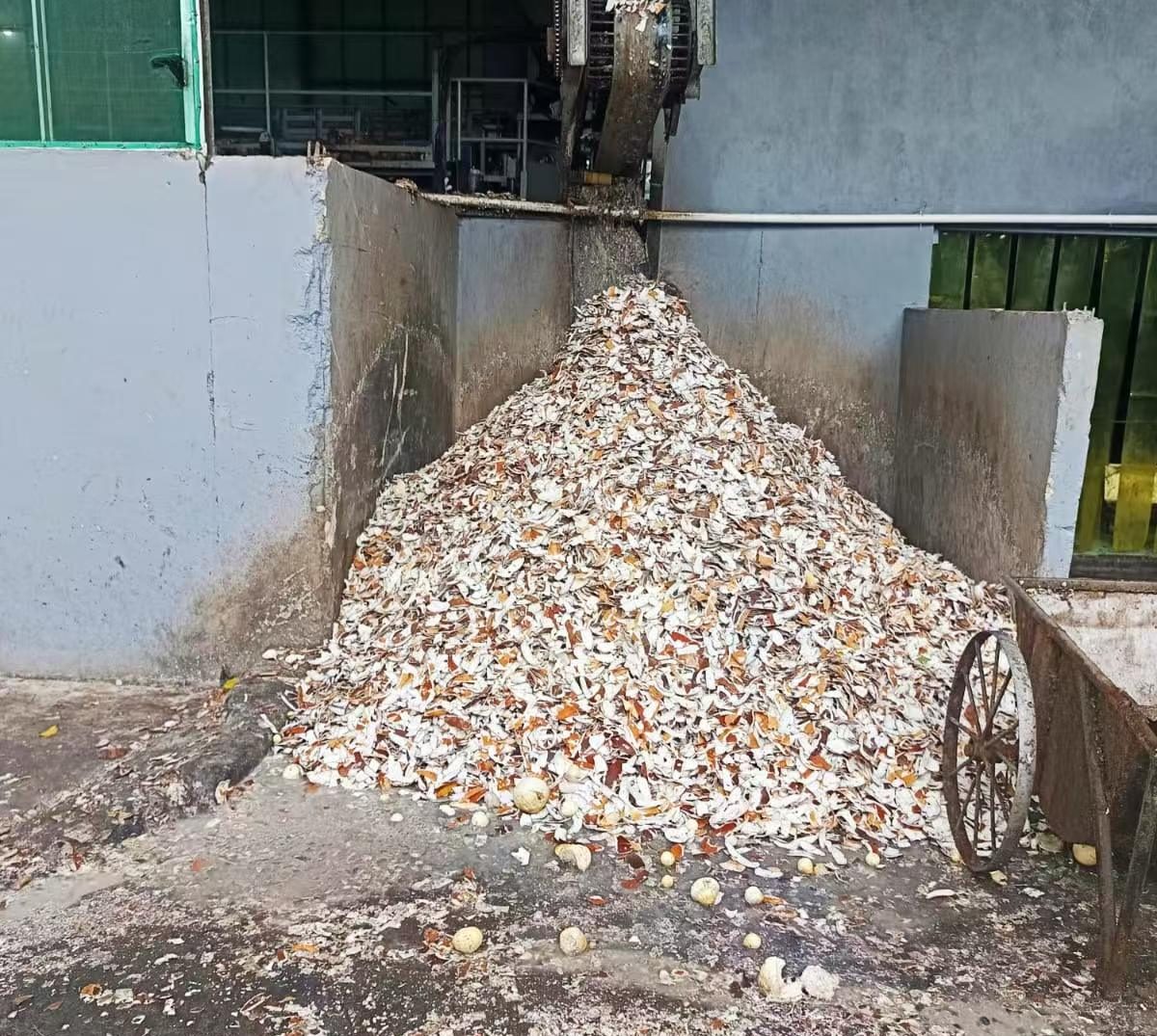
20-Ton Per Day Continuous Coconut Meat Drying & Shredding Line – Indonesia
(Section reserved for user-supplied diagram)
Sequence: Fresh Coconut De-shelling → Shredding/Slicing → Automated Feeding → Multi-layer Controlled Drying ($55\text{°C} – 75\text{°C}$) → Cooling → Oil Extraction/Pressing.
| Parameter | Technical Detail / Value |
|---|---|
| Input Capacity | 20,000 kg (20 Tons) per 24 hours |
| Initial Moisture | ∼50%−55% (Fresh coconut meat) |
| Final Moisture | ≤6% (Optimal for oil pressing) |
| Energy Source | Coconut Shell Biomass (Waste-to-Energy) |
| Drying Uniformity | ≥97% (Ensures consistent oil yield) |
| Automation Level | Full PLC integration with remote monitoring |
Waste-to-Energy Efficiency:
By utilizing the discarded coconut shells as the primary heat source, the client eliminated external fuel costs. This “circular economy” model reduces operational expenses by approximately $40\%$ compared to diesel or gas-fired systems.
Investment Return:
High-quality dried copra with low FFA levels commands a $15\%-20\%$ price premium in the international coconut oil market. Based on this value-add and the reduction in manual labor, the facility is projected to reach full ROI within 10 months.
Regional Policy Adaptability:
The project aligns with Indonesia’s “Hilirisasi” (Downstreaming) policy, which encourages the domestic processing of raw commodities into high-value finished products. The biomass heating system also complies with Indonesia’s renewable energy targets.
“The Guoxin team understood the unique challenges of processing high-oil content coconut meat. The integration of the shredding machine with the mesh belt dryer has streamlined our entire operation. Most importantly, the stability of the moisture content has significantly improved our oil extraction efficiency.” — Technical Director, North Sulawesi Processing Site.
Technical Consultation: Detailed analysis of fresh meat fat content and local humidity.
Custom Engineering: Modification of the mesh belt to handle shredded coconut without “clogging.”
On-site Commissioning (March 2026): Guoxin engineers completed installation and fine-tuning in Indonesia.
Operator Training: Comprehensive training on PLC logic and biomass furnace maintenance.