
© Henan Guoxin Machinery Manufacturing Co., Ltd. All Rights Reserved.



Characteristics of BSFL Black Soldier Fly Larvae are biological matrices with high moisture and fat content, requiring specific thermal handling to maintain market value. High Moisture Content: Fresh larvae typically consist of 65%–75% water. Rapid moisture removal is necessary to stop enzymatic activity and prevent spoilage. Lipid Composition: BSFL contain 25%–35% lipids (o...
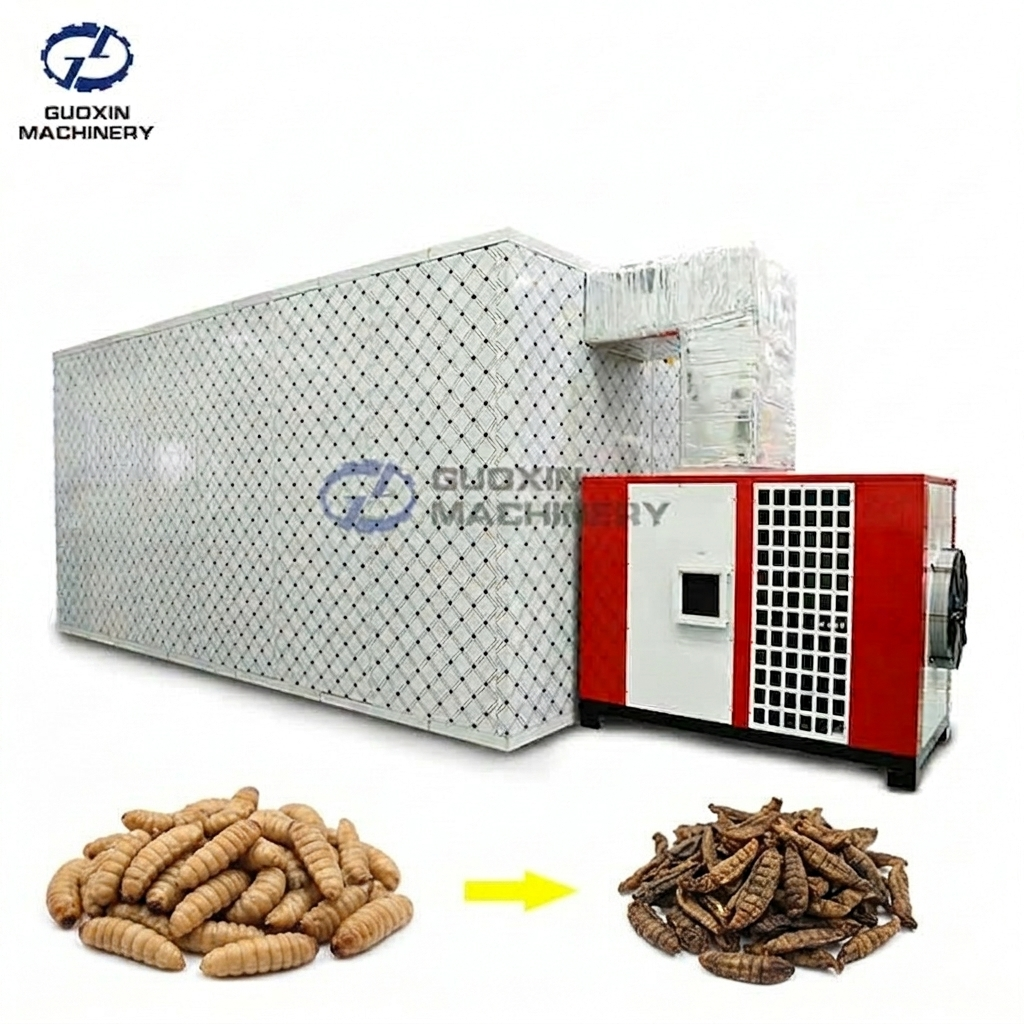
Black Soldier Fly Larvae drying machine
Black Soldier Fly Larvae are biological matrices with high moisture and fat content, requiring specific thermal handling to maintain market value.
High Moisture Content: Fresh larvae typically consist of 65%–75% water. Rapid moisture removal is necessary to stop enzymatic activity and prevent spoilage.
Lipid Composition: BSFL contain 25%–35% lipids (on a dry basis). Excessive heat or prolonged exposure to oxygen leads to rancidity, which ruins the smell and nutritional profile of the insect meal.
Protein Structure: The protein content (approx. 40%) is sensitive to “thermal denaturing.” Overheating reduces the solubility and digestibility of the meal for aquaculture and poultry feed.
Operators scaling up BSFL production face three critical requirements:
Color Preservation: The market prefers a light golden-brown meal. Darkening (charring) indicates burnt protein and lost nutrients.
Inactivation: The drying process must serve as a “kill step” to eliminate potential pathogens (Salmonella, E. coli) to meet feed safety regulations.
Oil Separation: For producers aiming for defatted insect meal, the drying process must leave the larvae in a physical state that allows for efficient mechanical oil pressing.
The choice of drying technology depends on the target end-product: whole dried larvae, high-protein meal, or extracted insect oil.
| Parameter | Microwave Dehydration | Air Energy Heat Pump | Continuous Mesh Belt |
| Drying Principle | Internal molecular vibration | Closed-loop dehumidification | Continuous hot air convection |
| Typical Temperature | $75\text{°C} – 90\text{°C}$ | $50\text{°C} – 70\text{°C}$ | $80\text{°C} – 110\text{°C}$ |
| Drying Time | $8 – 15$ Minutes | $8 – 12$ Hours | $2 – 4$ Hours |
| Final Moisture | $<5\%$ | $5\% – 8\%$ | $5\% – 10\%$ |
| Nutrient Quality | Excellent (Fast) | High (Low Temp) | Good (Scalable) |
| Best For | Premium whole larvae | High-grade oil extraction | Mass market insect meal |
Microwave drying is highly effective for BSFL due to the high moisture content of the larvae.
Puffing Effect: The rapid internal evaporation causes the larvae to “puff,” creating a porous structure that is highly desirable for whole-larvae sales and facilitates easier oil extraction later.
Uniformity: It avoids the “surface hardening” common in traditional ovens, ensuring the core is dry without burning the exterior.
For facilities focusing on the highest possible protein integrity and lower operational costs.
Energy Recovery: Utilizing the 3/4 free energy principle from the ambient air, this system reduces electricity consumption by up to 70% compared to traditional electric heating.
Gentle Processing: The low-temperature, closed-loop system prevents the lipids from oxidizing, resulting in a meal with a superior shelf life and better aroma.
Designed for large-scale farms processing tens of tons of larvae daily.
Continuous Flow: Automated feeding ensures a non-stop production cycle, reducing labor requirements.
Zone Control: Different temperature zones allow for high-heat initial moisture removal followed by a lower-heat finishing stage to protect the final product quality.
Q: Why does the final moisture content need to be below 10%?
A: At moisture levels above $12\%$, the risk of mold growth and lipid hydrolysis increases significantly. For international export, a target of 5%–8% is generally required to ensure stability during maritime transport.
Q: Can I use direct-fired coal or wood furnaces for BSFL?
A: It is highly discouraged for food-grade or high-end feed markets. Combustion by-products (smoke and soot) can contaminate the larvae. Indirect heat exchangers or clean energy (heat pumps/gas) are recommended to maintain purity.
Q: How does drying affect the efficiency of the oil press?
A: Larvae that are dried too slowly or at inconsistent temperatures often become “leathery,” making it difficult for mechanical presses to extract the oil. Microwave-dried or properly belt-dried larvae maintain a brittle structure that yields higher oil recovery rates.
Site Planning: We offer modular systems that can be integrated with upstream larvae washing and downstream grinding/packaging units.
Trial Testing: We provide performance analysis for different BSFL strains to determine the optimal drying curve for your specific geographic climate.
Heat Source Adaptation: Systems can be configured for Natural Gas, Steam, or Air-Energy Heat Pumps, depending on regional energy availability.
[Request Industrial BSFL Drying Line Layout & ROI Analysis]
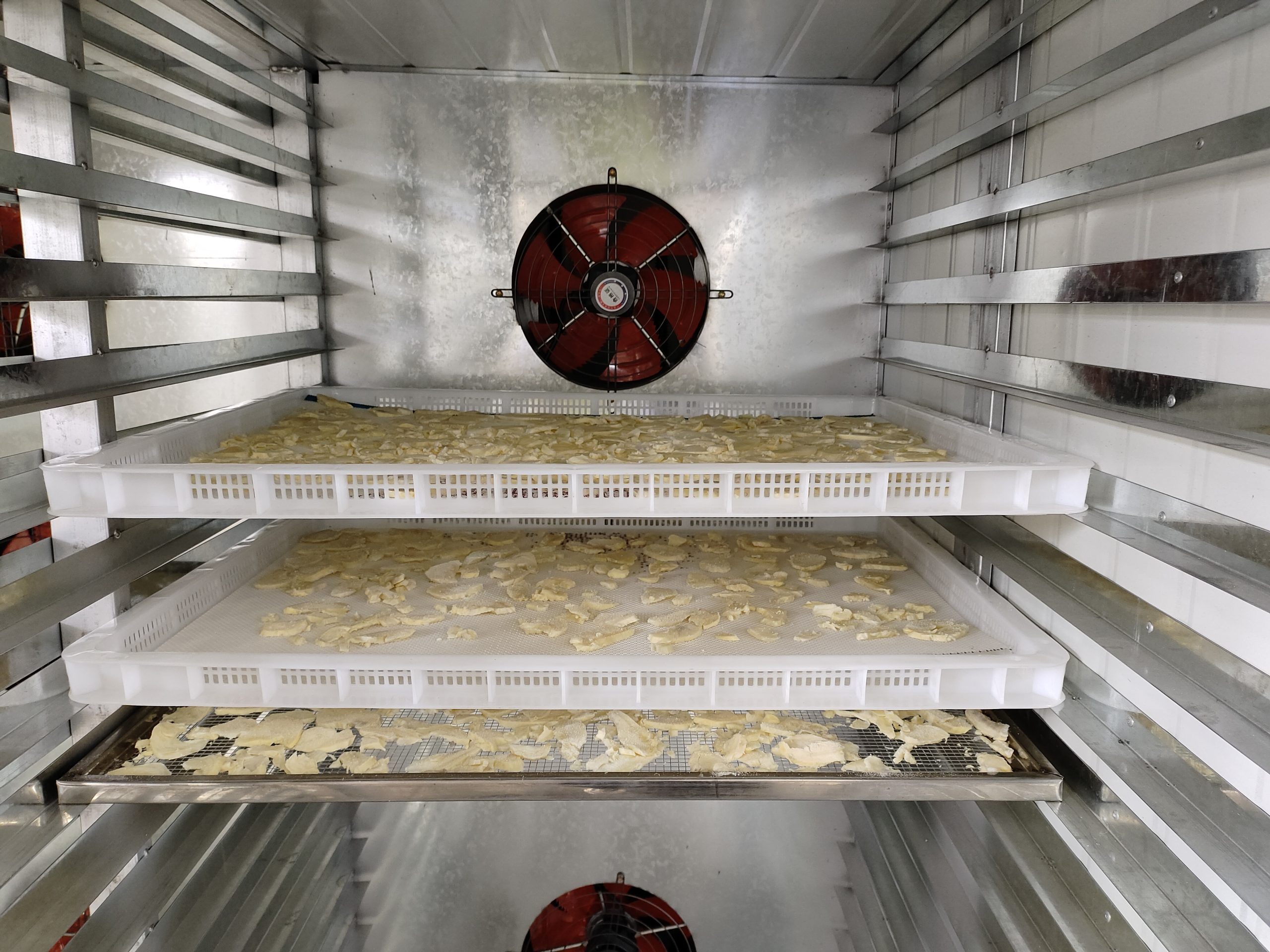
Commercial Durian Dehydration: Preserving Quality with Heat Pump Technology
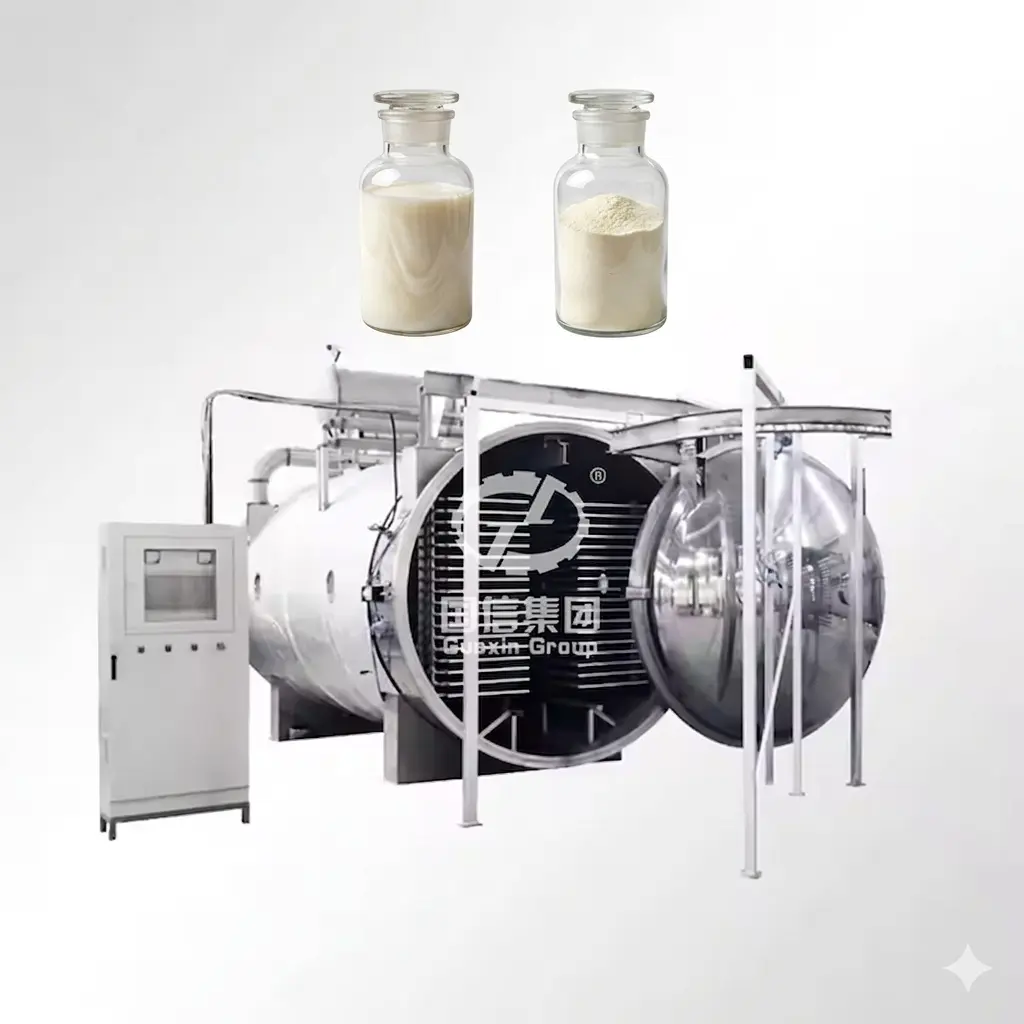
Milk Powder Drying – Parameters for Consistent Final Moisture and Functional Properties
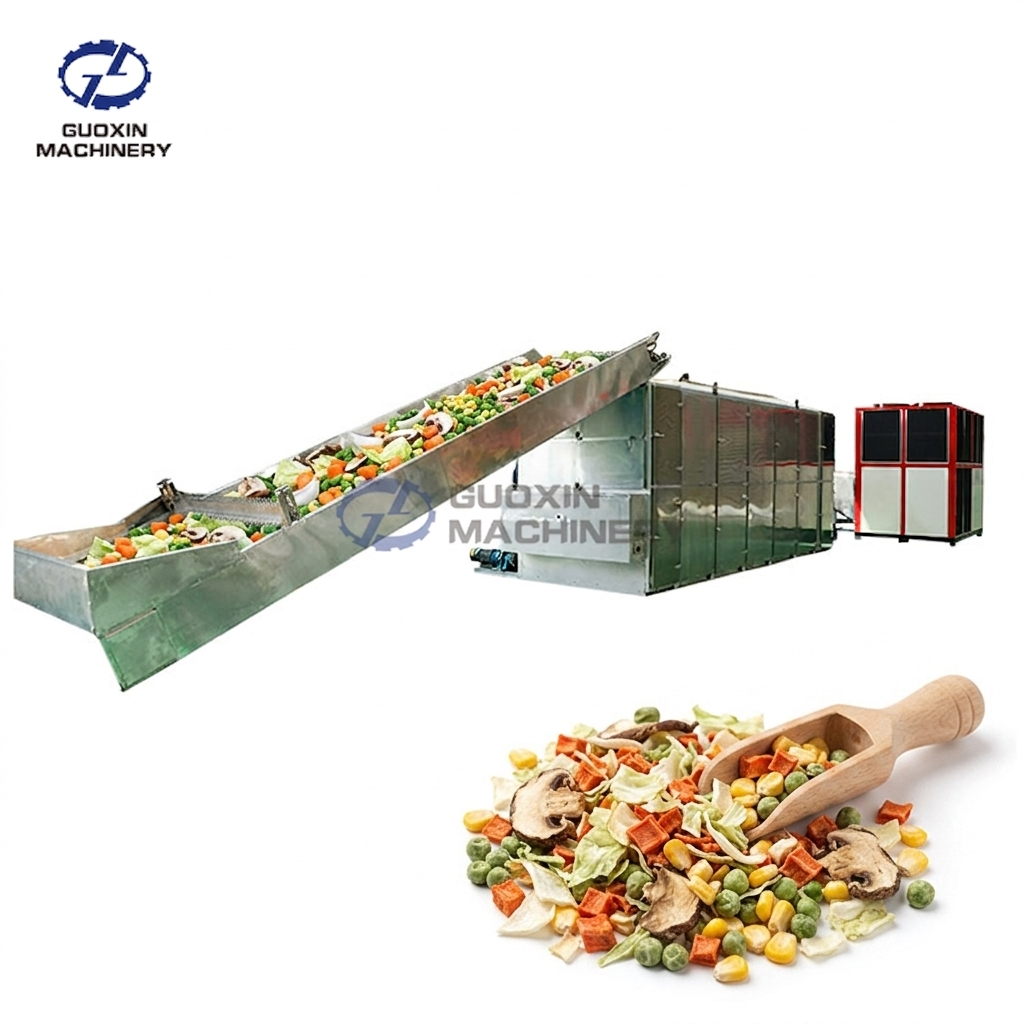
Dehydrated Vegetables for Instant Noodle Seasoning – Drying Parameters for Consistent Quality in Seasoning Packs
Sun-Dried Tomato Drying – Parameters for Industrial Production of Consistent Tomato Slices