
© Henan Guoxin Machinery Manufacturing Co., Ltd. All Rights Reserved.



Technical Overview: Low-Temperature Dehydration Engineering for Aquatic Products Dehydrating whole fish, fillets, small fish, and marine products requires precise low-temperature thermal management. Exposing fish protein to uncalibrated high temperatures (>60°C) causes fat oxidation (rancidity), protein denaturation, skin locking (surface crusting tra...
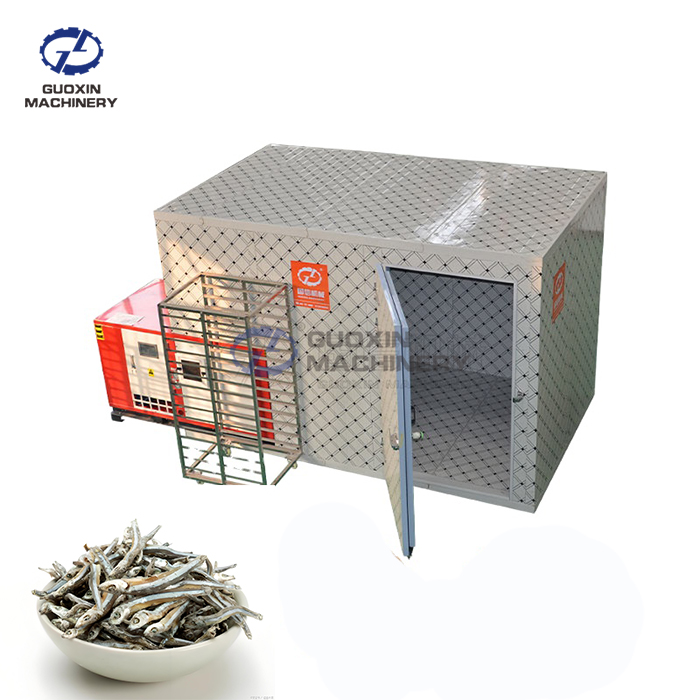
Dehydrating whole fish, fillets, small fish, and marine products requires precise low-temperature thermal management. Exposing fish protein to uncalibrated high temperatures (>60°C) causes fat oxidation (rancidity), protein denaturation, skin locking (surface crusting trapping internal moisture), and yellowing discoloration.
Guoxin Group manufactures heavy-duty, food-grade Industrial Fish Dryer Machines engineered specifically for freshwater and marine fish processing. Equipped with low-temperature closed-loop heat pump dehumidifiers and corrosion-resistant stainless steel chambers, our equipment preserves natural flavor, structural elasticity, and lipid stability while achieving targeted final moisture levels down to 10%–15%.
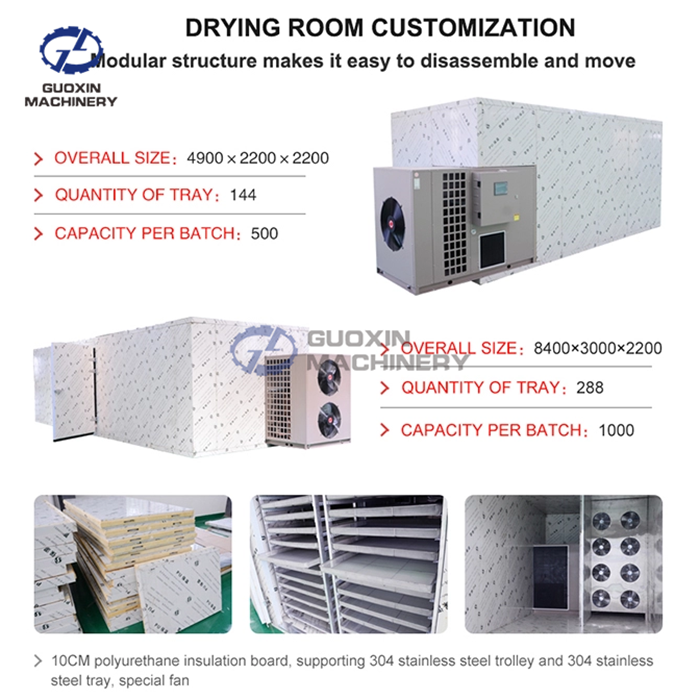
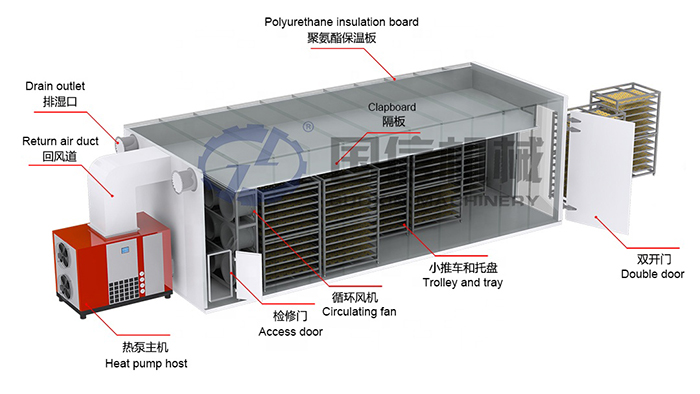
| Operational Parameter | Air-Energy Heat Pump Drying Chamber | Continuous Multi-Layer Mesh Belt Dryer |
| Processing Capacity | 300 kg – 3,000 kg / batch | 2,000 kg – 15,000 kg / 24h |
| Material Build Standard | Food-Grade SUS304 / SUS316 Stainless Steel | Food-Grade SUS304 / SUS316 Stainless Steel |
| Thermal Source Options | Closed-Loop Air Energy Heat Pump (Electric) | Air-Source Heat Pump / Steam Heat Exchanger / Natural Gas |
| Temperature Control Range | 20°C – 60°C (Accuracy ±0.1°C) | 30°C – 70°C (PLC Zoned Control) |
| Dehumidification Method | Condensing Latent Heat Recovery | High-Volume Forced Air Convection (Up to 40,000 m³/h) |
| Target Final Moisture | 10% – 18% (Customizable by product type) | 10% – 18% (Customizable by product type) |
| System Automation | Centralized Siemens PLC Touchscreen | Centralized Siemens PLC Touchscreen |
Low-Temperature Moisture Removal (25°C – 55°C)
Anti-Corrosion Structural Engineering
Multi-Stage Humidity Control (Anti-Case Hardening)
Marine Fish: Yellow croaker, hairtail, Spanish mackerel, eel, cod fillets, squid, cuttlefish.
Freshwater Fish: Tilapia, grass carp, silver carp, catfish, black carp, mandarin fish.
Specialty Seafood & By-Products: Shrimp, sea cucumber, fish maws, fish roe, fish shreds, shark fin.
Q1: What factors determine the price of a commercial fish dryer machine?
A: Fish dryer machine prices depend primarily on: (1) Target processing capacity per batch or per day, (2) Selected thermal source (electric heat pump vs. steam/natural gas heat exchanger), (3) Material build grade (SUS304 vs. marine-grade SUS316 for high-salt environments), and (4) Level of line automation (trolley-based batch chamber vs. continuous conveyor line). Contact Guoxin Group engineers for a precise itemized quotation based on your production targets.
Q2: How does low-temperature heat pump drying prevent fish from turning yellow or dark?
A: Discoloration and yellowing during fish drying are caused by high thermal exposure oxidising fish fats and proteins. By maintaining drying temperatures strictly between 25°C and 50°C and using closed-loop dehumidification, moisture is extracted under cool conditions, preserving the original white or natural flesh color.
Q3: How does the system handle high salt content in marine fish processing?
A: Standard industrial dryers suffer rapid coil corrosion when processing brine-treated or ocean fish. Guoxin fish dryers feature anti-corrosion treated evaporator coils, full SUS304/SUS316 interior walls, and sealed electrical enclosures to prevent saline air from damaging internal components.
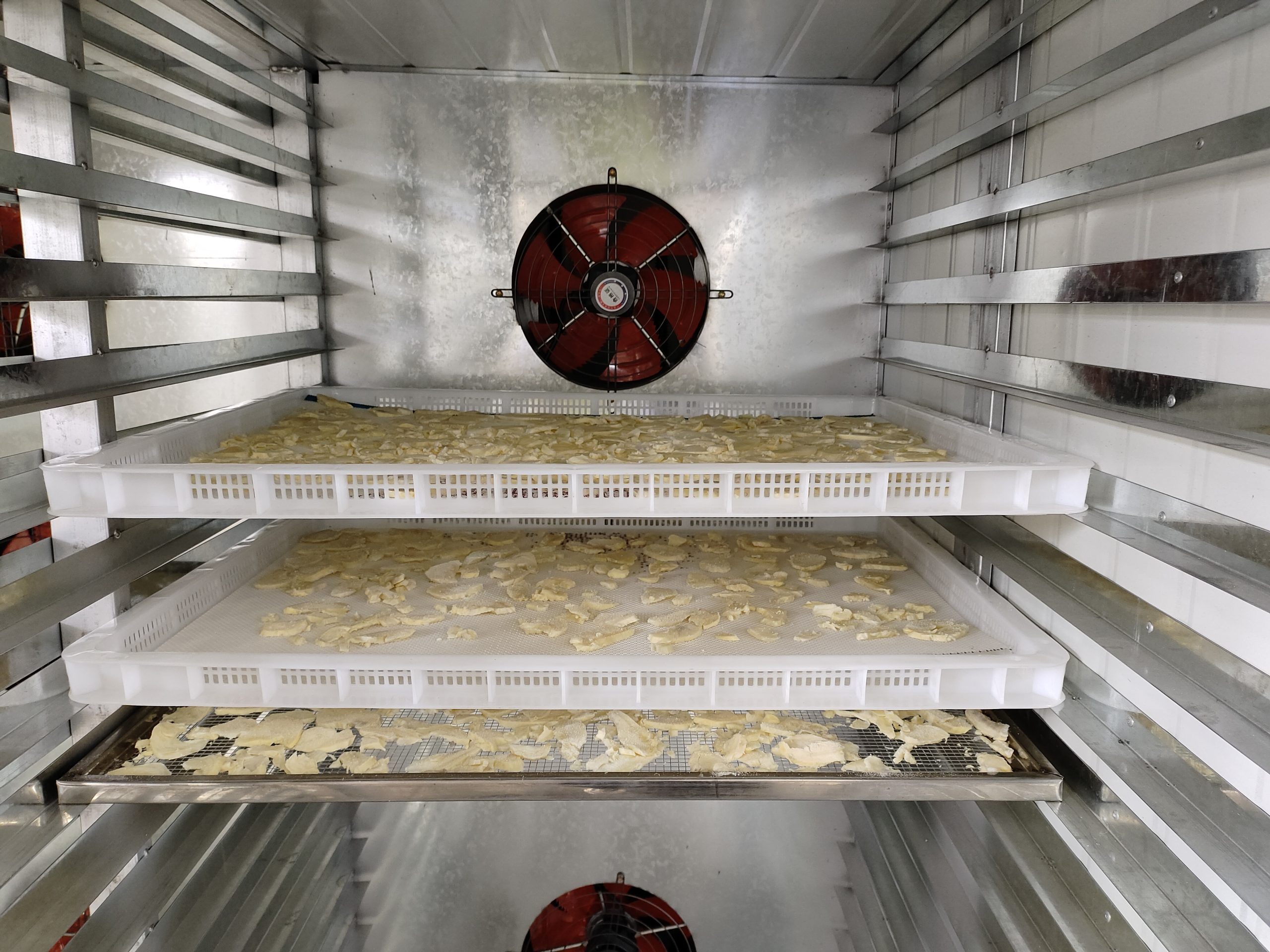
Commercial Durian Dehydration: Preserving Quality with Heat Pump Technology
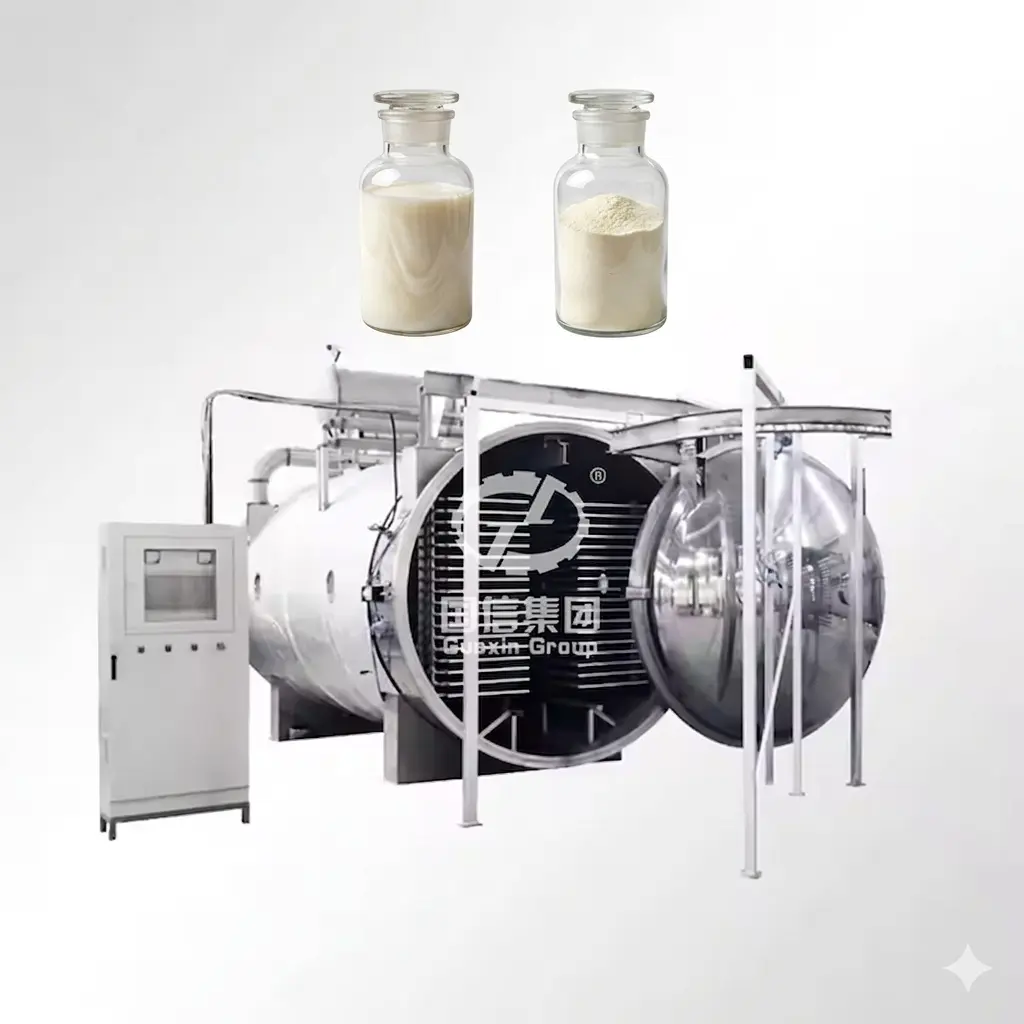
Milk Powder Drying – Parameters for Consistent Final Moisture and Functional Properties
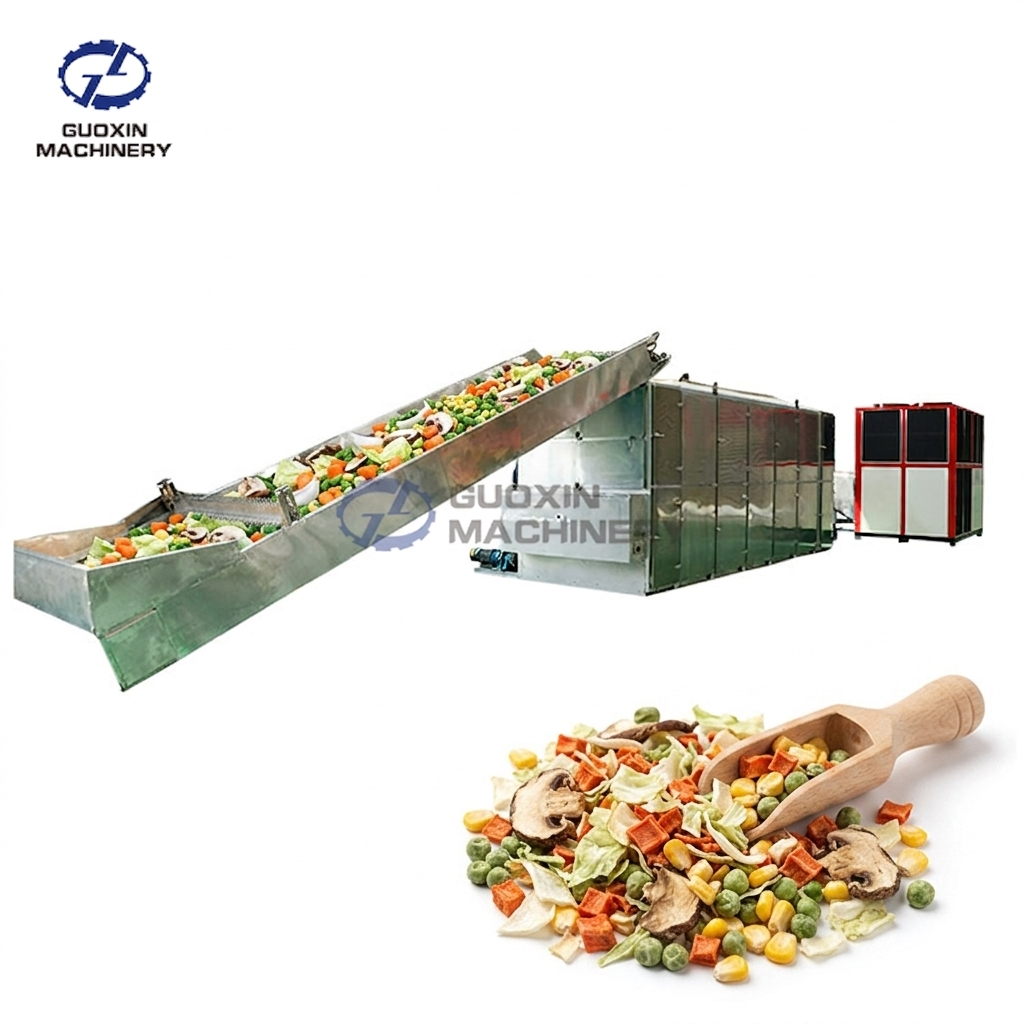
Dehydrated Vegetables for Instant Noodle Seasoning – Drying Parameters for Consistent Quality in Seasoning Packs
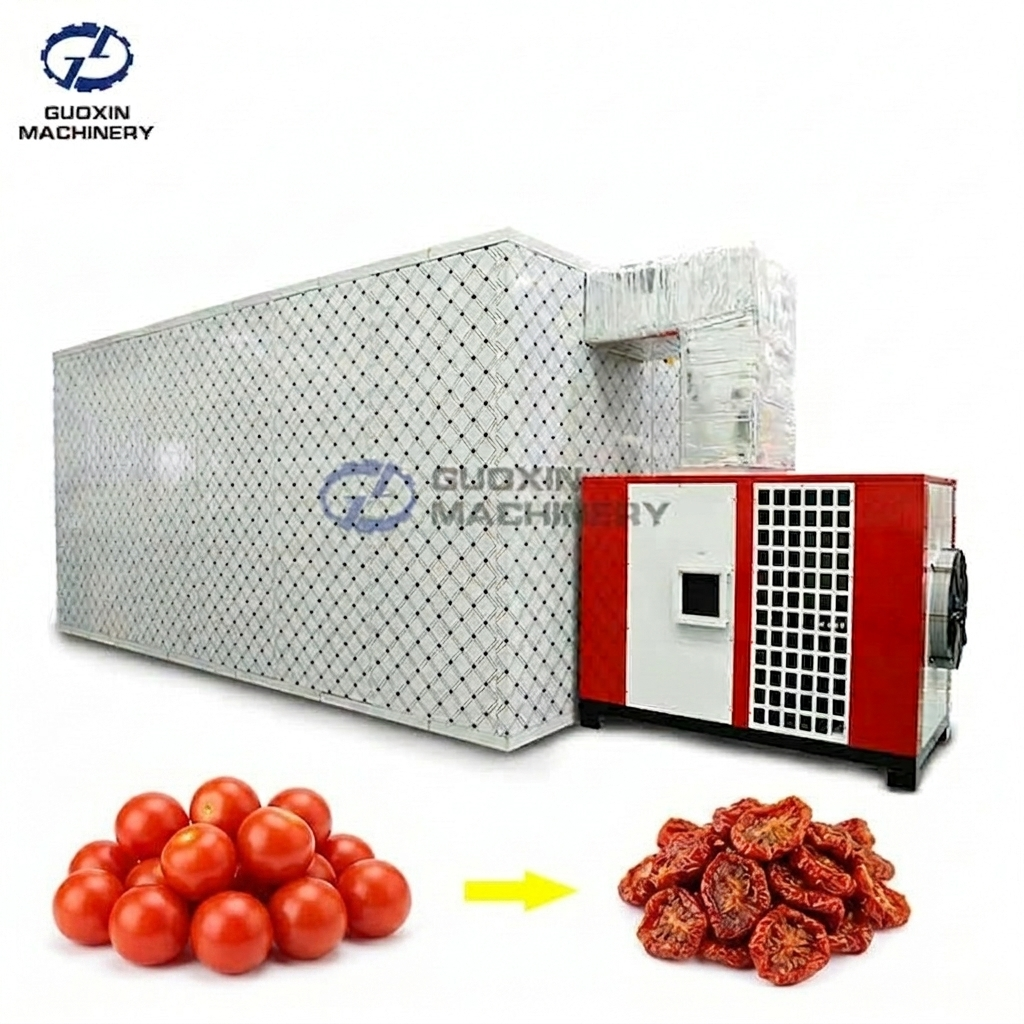
Sun-Dried Tomato Drying – Parameters for Industrial Production of Consistent Tomato Slices