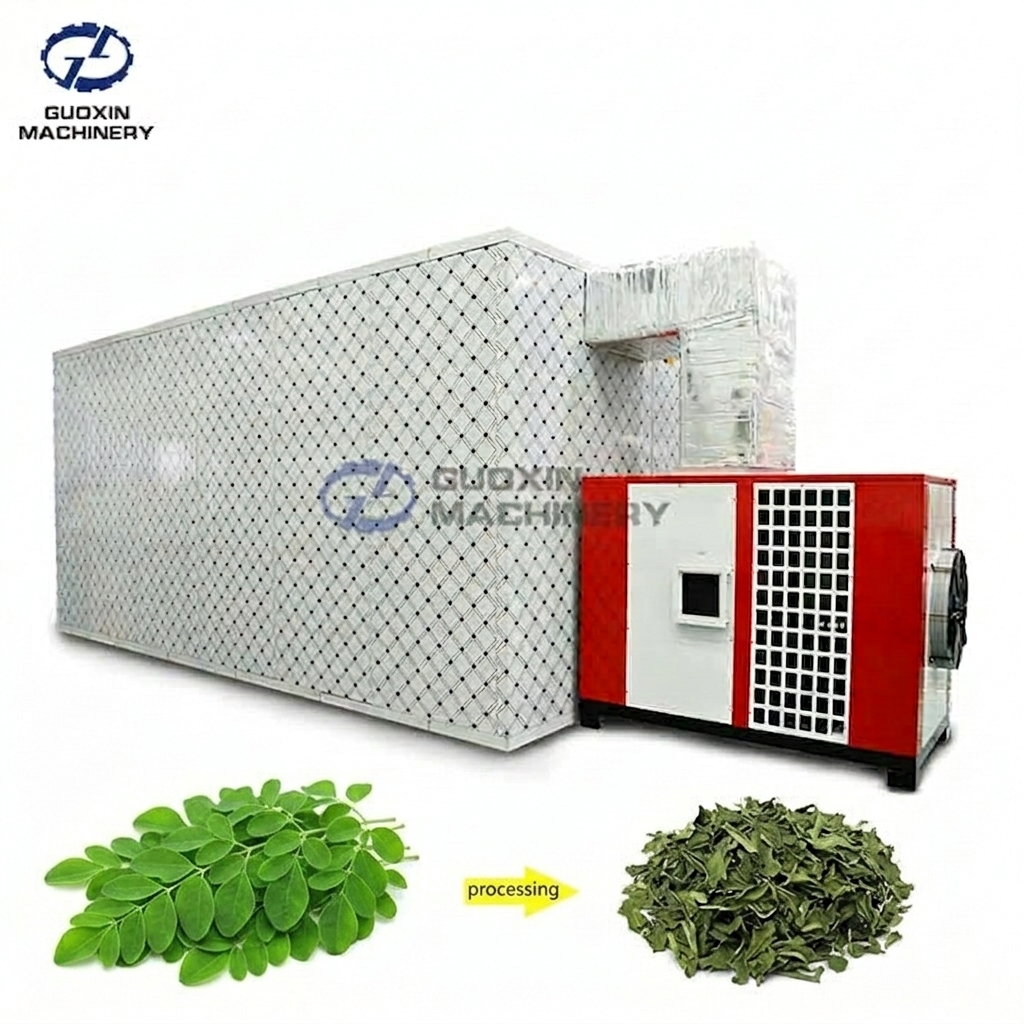
 " alt="Moringa Leaf Drying Machine: Industrial Dehydration for Premium Herb Powder">
© Henan Guoxin Machinery Manufacturing Co., Ltd. All Rights Reserved.



How do herb and spice processors scale up moringa leaf drying without degrading chlorophyll and bioactive nutrients? In the export-grade spice and herb processing sector, Moringa oleifera has become a highly lucrative commodity. However, fresh moringa leaves carry a dense initial moisture profile of 80% to 83%. To process these delicate leaves into a shelf-stable, vibrant gr...
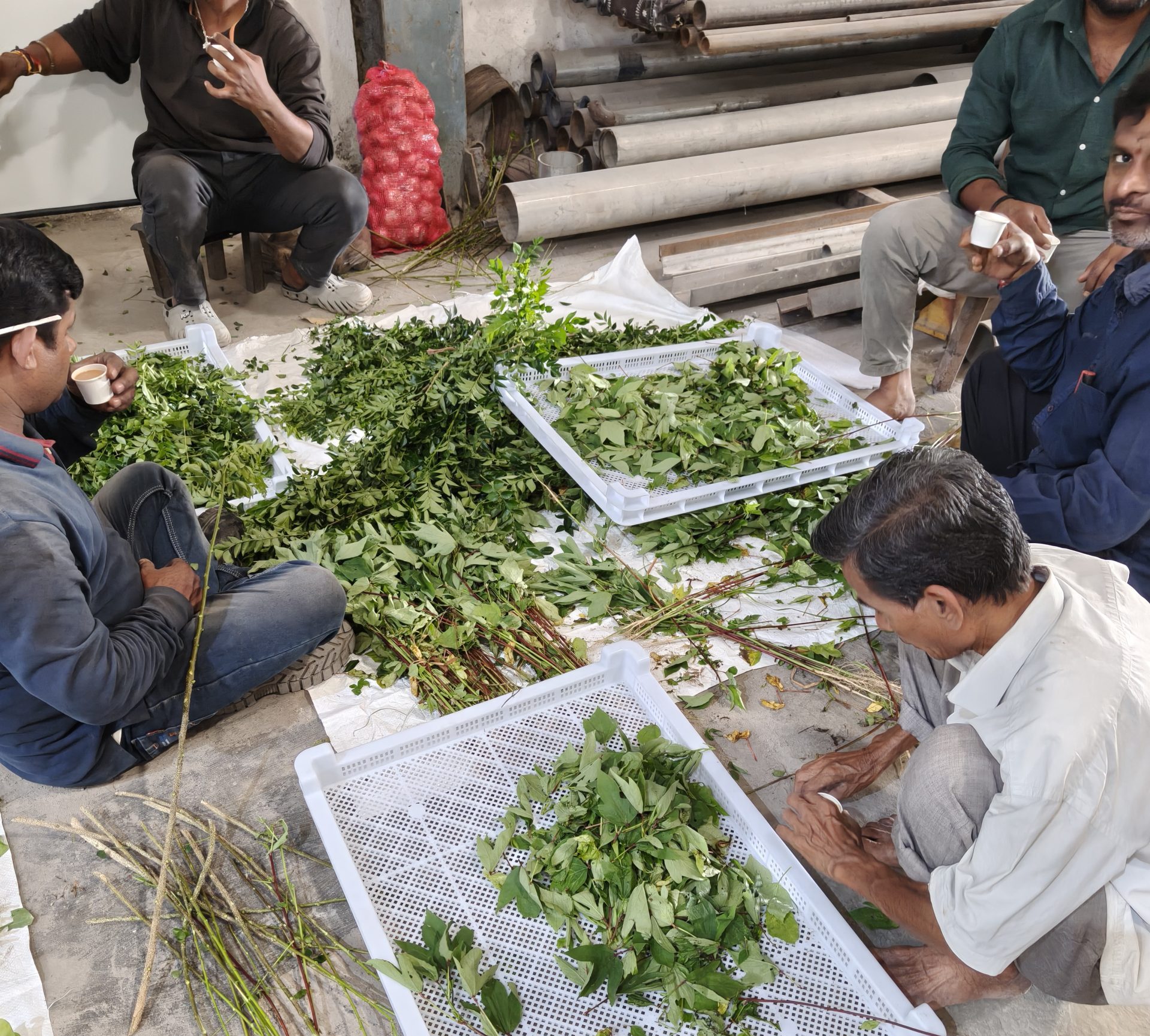
How do herb and spice processors scale up moringa leaf drying without degrading chlorophyll and bioactive nutrients?
In the export-grade spice and herb processing sector, Moringa oleifera has become a highly lucrative commodity.
However, fresh moringa leaves carry a dense initial moisture profile of 80% to 83%. To process these delicate leaves into a shelf-stable, vibrant green powder, the moisture content must be systematically reduced to a strict equilibrium of 5% to 8%, achieving a water activity level below 0.6.
Because herbs are packed with highly volatile, heat-sensitive compounds—including chlorophyll, polyphenols, and Vitamin C—traditional high-heat convective ovens are entirely unusable. Exposing the leaves to harsh thermal environments causes rapid enzymatic browning, nutrient oxidation, and severe volatile oil loss.
Guoxin Machinery provides advanced thermodynamic solutions engineered specifically to lock in agricultural nutrients and maximize commercial crop value.
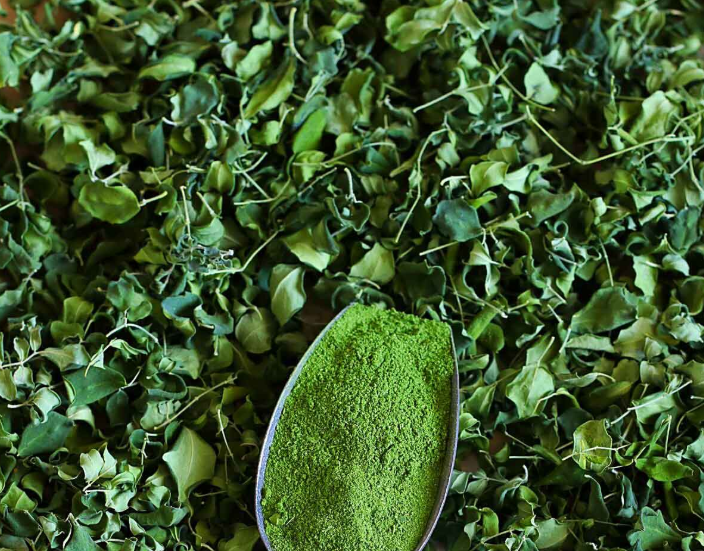
To ensure repeatable nutrient retention and uniform powder stability, an industrial moringa leaf drying machine must strictly manage the following processing phases:
[Peak Maturity Harvest] → [Gentle Air-Bubble Washing] → [Mechanical Stem Stripping] →
[Loose Bed Layering] → [Low-Temp Dehumidification (35-50°C)] → [Stable Milling Base]
Phase 1: Precision Low-Temperature Thermal Curve (35°C – 50°C)
Unlike robust root vegetables, leafy herbs require gentle, low-intensity thermal evaporation. Our systems utilize a multi-stage programmable drying profile that keeps temperatures tightly bounded between 35°C and 50°C. This localized climate mimics ideal natural shade-drying conditions but operates at an accelerated, industrial-scale velocity, preventing color fading and browning.
Phase 2: High-Velocity Volume Dehumidification
Instead of continuously baking the product bed, our machines rely on active, closed-loop moisture extraction. By constantly pulling damp air off the leaves and passing it through an internal refrigeration circuit, moisture is condensed into liquid and discharged. This eliminates high relative humidity pockets within the chamber, ensuring every leaf dries uniformly without “stewing” in its own moisture.
Phase 3: Achieving the Optimal Milling Boundary (5% – 8%)
For factories producing fine moringa powder, reducing the final moisture to 5% to 8% is critical. Residual moisture above 10% makes the leaves pliable rather than brittle. When passed through high-speed spice pulverizers, pliable leaves will clog the grates, generate frictional heat, and burn the powder. A true herb dehydrator guarantees a perfectly brittle leaf structure ready for clean, efficient milling.
Depending on your daily tonnage requirements and operational footprint, we offer two main commercial configurations under our spice and herb machinery catalog:
Option A: Air-Energy Heat Pump Drying Room (Batch Processing for Premium Herbs)
The gold standard for high-end medicinal herbs and premium nutritional powders.
Option B: Automated Continuous Mesh Belt Dehydrator (Large-Scale Export Tonnage)
Engineered for industrial agricultural cooperatives requiring continuous, high-volume automation.
The parameters below outline our calibrated configurations for processing high-grade Moringa oleifera leaves:
| Technical Parameter | Batch Heat Pump Drying System | Continuous Mesh Belt Processing Line |
| Hourly / Daily Footprint | 200 kg to 2,000 kg per batch | 1 Ton to 10+ Tons per day continuous |
| Calibrated Temperature Range | 35°C to 50°C (Zoned Controls) | 35°C to 55°C (Multi-tier PLC Target) |
| Drying Cycle Duration | 6 to 12 Hours (Variety Dependent) | Continuous flow retention adjustment |
| Target Moisture Profile | From ~82% down to 5% – 8% Max | From ~82% down to 5% – 8% Max |
| Core Value Proposition | Maximum preservation of volatile oils | Automated high-capacity throughput |
| Contact Metallurgy Build | Food-Grade SUS304 Stainless Steel | Food-Grade SUS304 Stainless Steel |
Q1: Why should we avoid high-temperature blanching or high-heat drying tunnels for moringa leaves?
A: In general spice processing, some root crops require high heat or blanching to denature enzymes. However, for leafy herbs like moringa, blanching instantly leaches out water-soluble vitamins and ruins the cellular structure. Furthermore, drying temperatures above 55°C rapidly break down the leaf’s carotenoid and chlorophyll bonds, turning a premium green product into a low-grade, dull brown leaf that commands a much lower market price. Our moringa leaf drying machine uses cold-rolled dehumidification to achieve maximum nutrient lock-in without high heat.
Q2: Why is loose, single-layer spreading emphasized for herb processing?
A: Leafy herbs tend to mat and clump together when wet. If loaded too thickly or compacted into deep beds, air cannot penetrate the center of the mass. This creates localized moisture pockets where the trapped leaves ferment and turn black, completely ruining the batch uniformity. Our continuous lines feature automated vibratory feeders and leveling rakes to ensure the moringa leaves are distributed across the stainless steel mesh belt at a calibrated, loose depth for 100% uniform cross-flow aeration.
Q3: What material certifications do your spice and herb drying machines provide?
A: To satisfy international food regulations (including FDA, CE, and HACCP compliance), all structural framework parts, internal walls, airflow ducting, processing trays, and conveyor meshes in Guoxin machinery are fabricated from food-grade SUS304 stainless steel (with optional upgrade to SUS316L for high-salinity coastal environments). This high-spec build prevents any risk of chemical corrosion during sanitation wash-downs and guarantees zero heavy-metal contamination in your final organic herbal powders.
[Contact Our Spice & Herb Engineering Team for a Custom 3D Plant Layout & Pro-Forma Invoice]
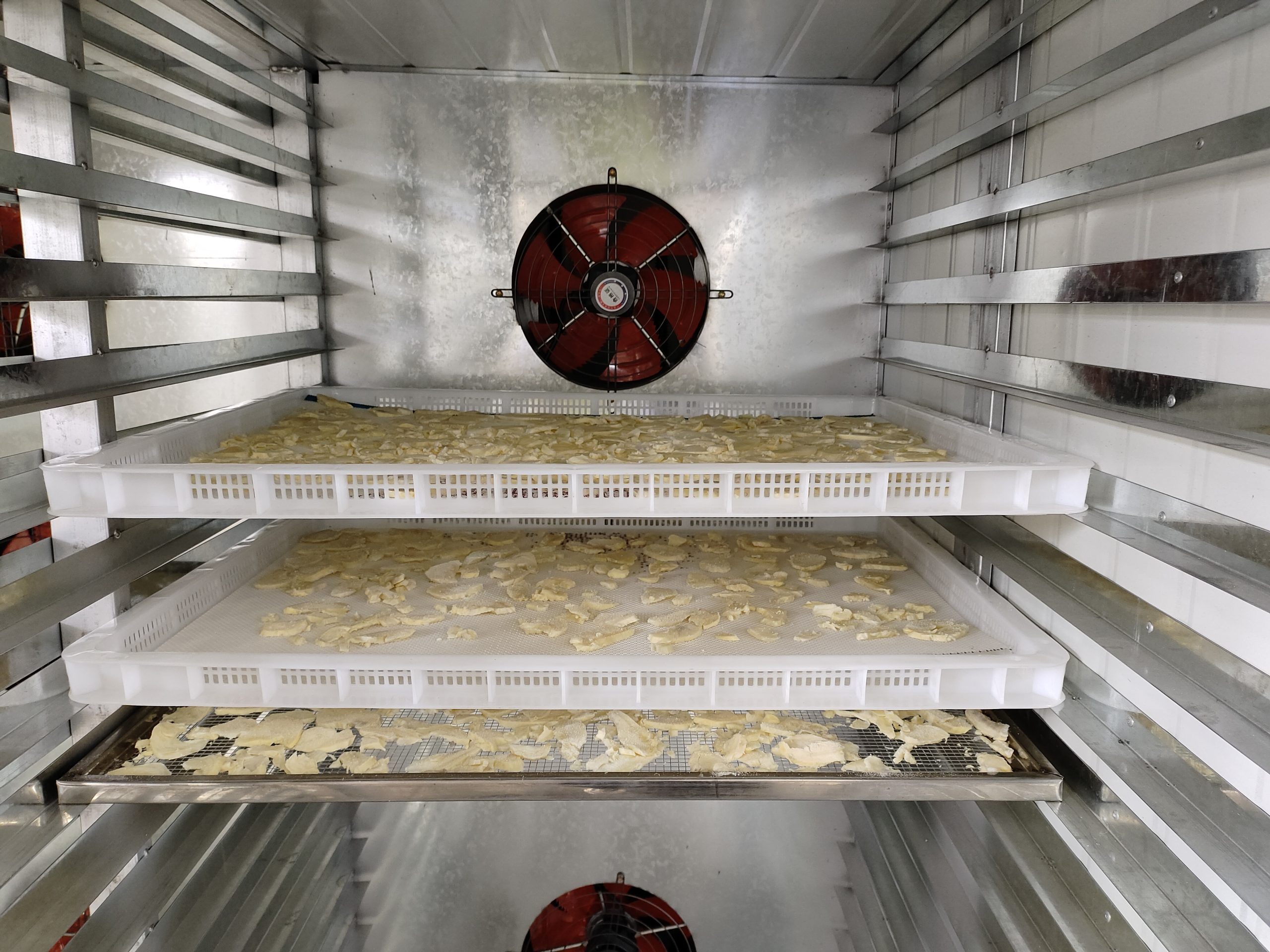
Commercial Durian Dehydration: Preserving Quality with Heat Pump Technology
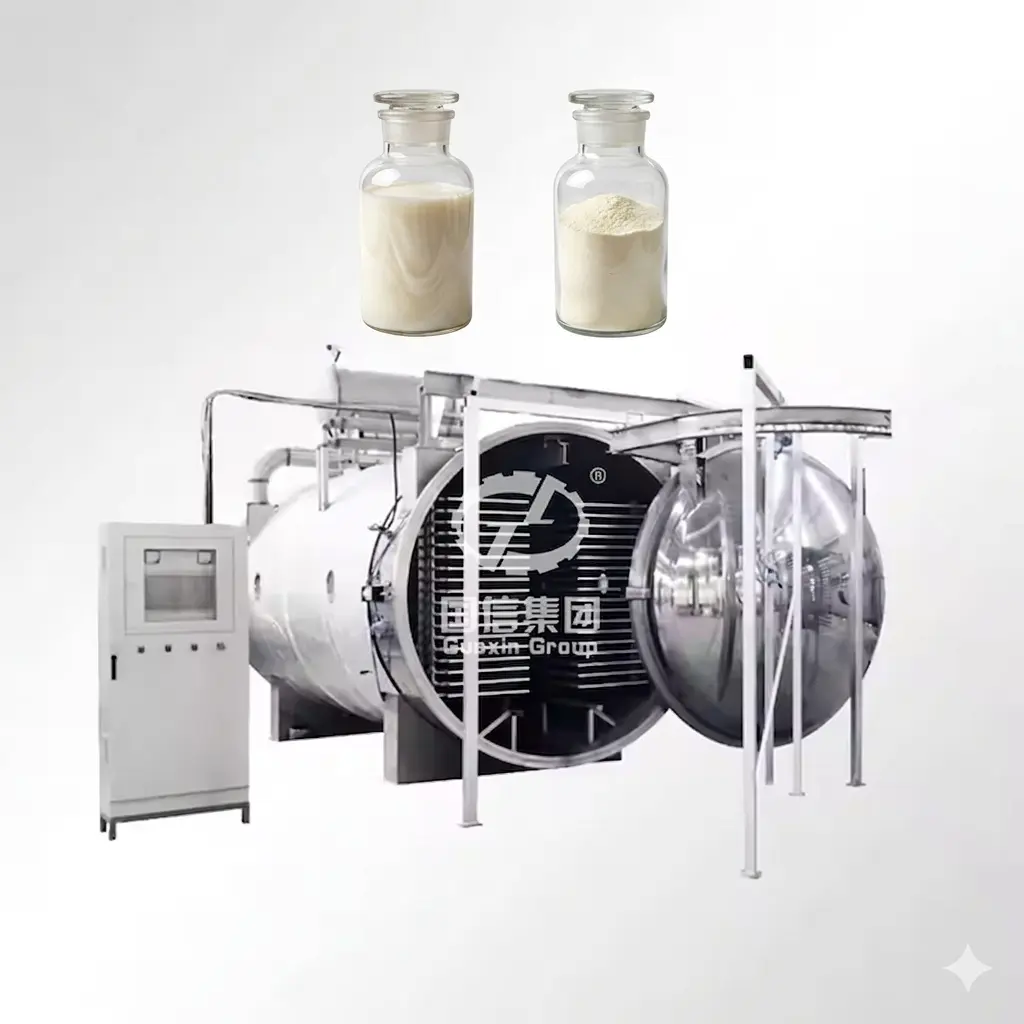
Milk Powder Drying – Parameters for Consistent Final Moisture and Functional Properties
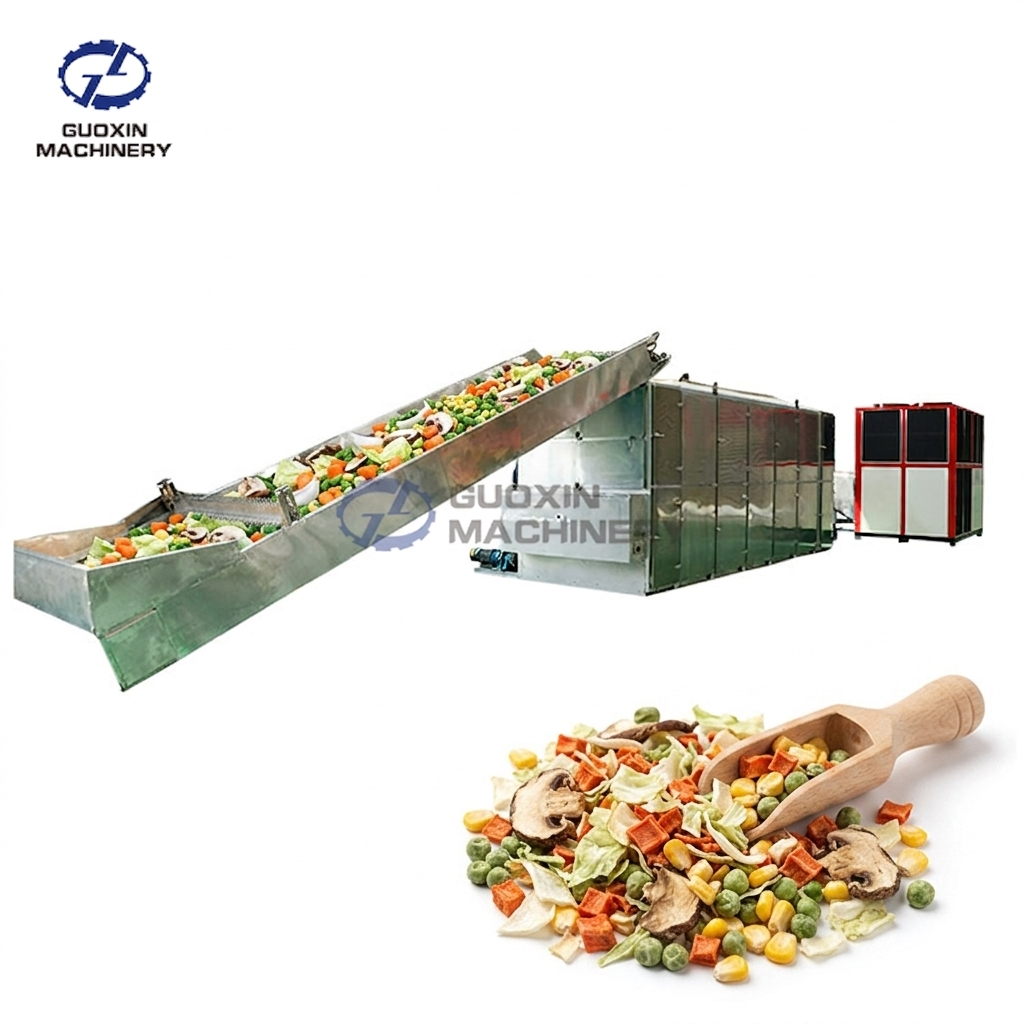
Dehydrated Vegetables for Instant Noodle Seasoning – Drying Parameters for Consistent Quality in Seasoning Packs
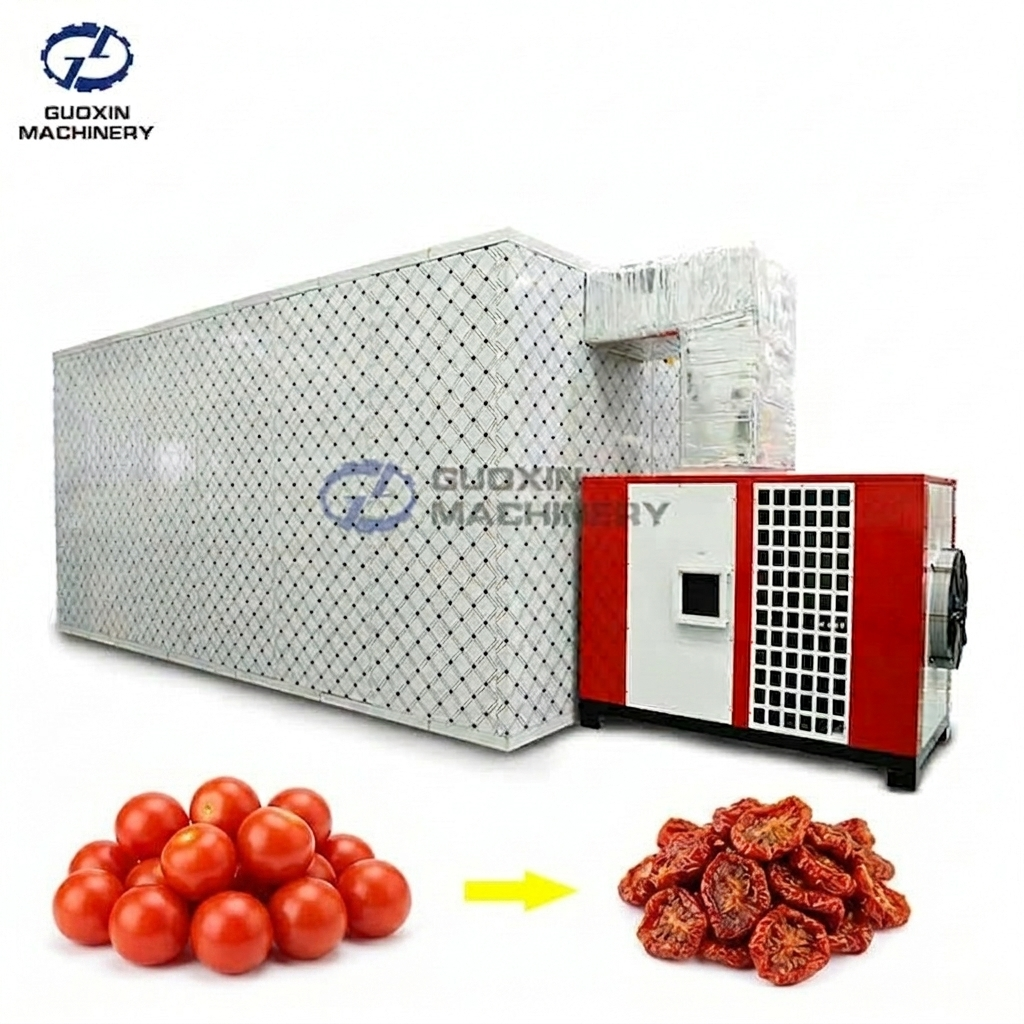
Sun-Dried Tomato Drying – Parameters for Industrial Production of Consistent Tomato Slices