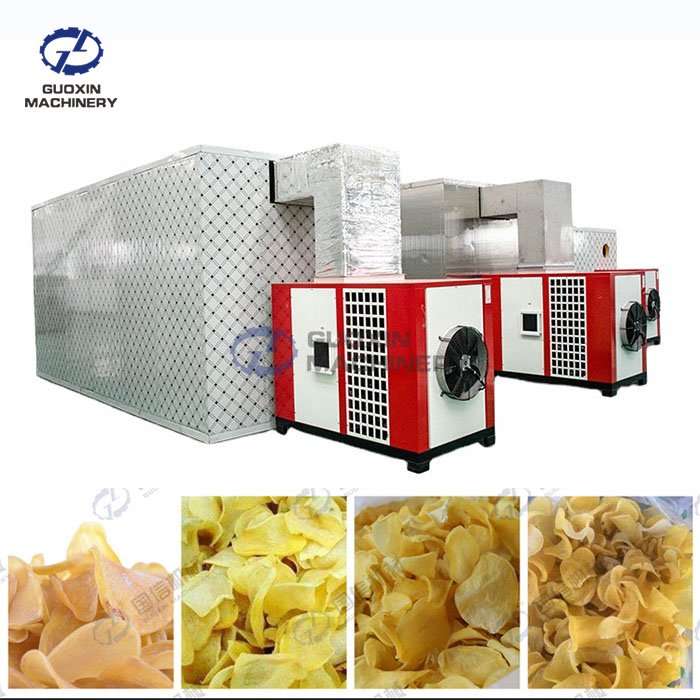
 " alt="Industrial Potato Dryer Machine & Continuous Chip Dehydration Lines">
© Henan Guoxin Machinery Manufacturing Co., Ltd. All Rights Reserved.



Technical Overview: Pre-Fry Dewatering and Oil-Free Dehydration Engineering In industrial potato chip manufacturing, thermal moisture control serves two distinct processing requirements: Pre-Fry Surface Moisture Removal: Stripping 10% – 15% unbound surface water from blanched potato slices before frying reduces oil absorption by 20% – 30%, prevents hot oil splatt...
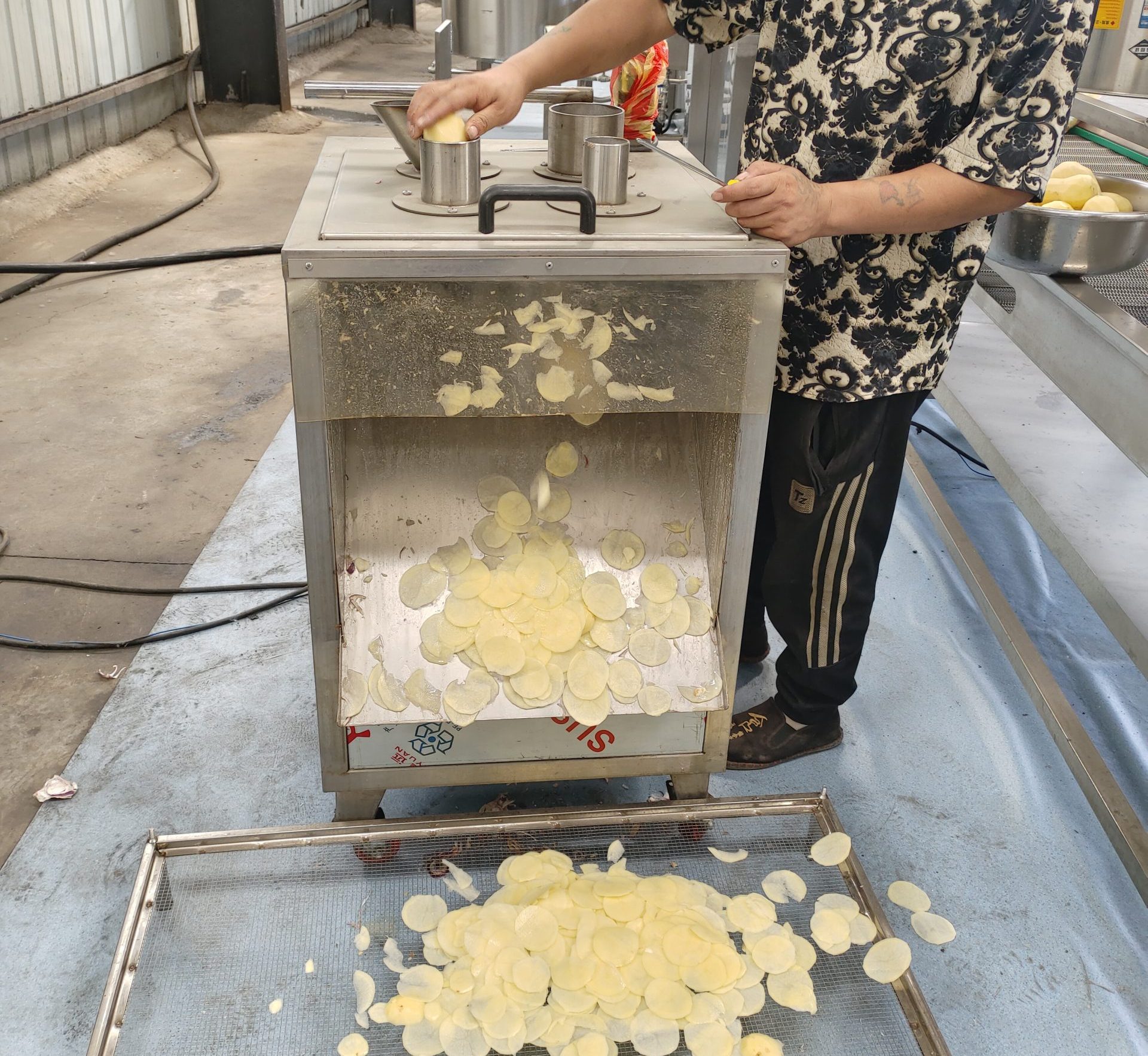
Technical Overview: Pre-Fry Dewatering and Oil-Free Dehydration Engineering
In industrial potato chip manufacturing, thermal moisture control serves two distinct processing requirements:
Pre-Fry Surface Moisture Removal:
Stripping 10% – 15% unbound surface water from blanched potato slices before frying reduces oil absorption by 20% – 30%, prevents hot oil splattering, and maintains frying temperature stability.
Oil-Free Complete Dehydration:
Reducing total slice moisture from 80% wet-basis down to <3% produces crisp, non-fried potato and root vegetable chips without oil addition.
Guoxin Group manufactures heavy-duty, food-grade Industrial Potato Dryer Machines and continuous conveyor dehydrators. Built with SUS304 stainless steel contact components, our equipment integrates with automated washing, peeling, slicing, blanching, and packaging systems.
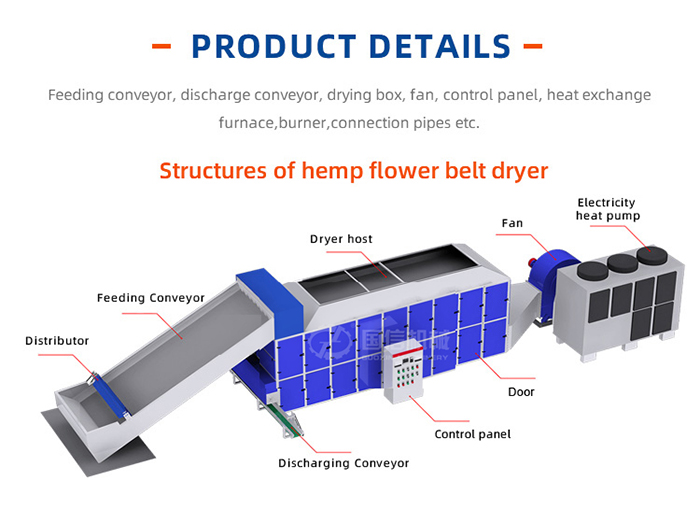
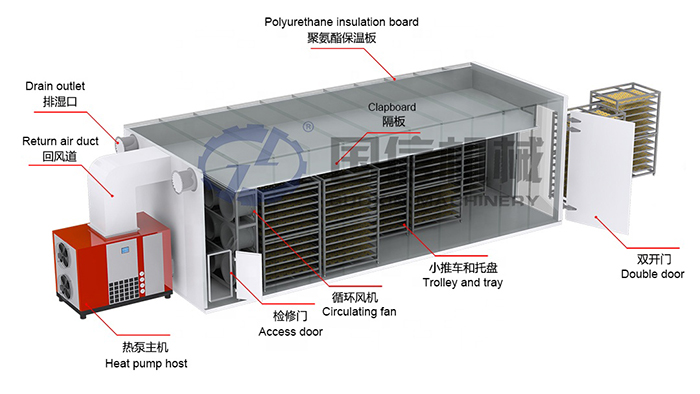
| Operational Parameter | Continuous Multi-Layer Mesh Belt System | Air-Energy Heat Pump Dehumidification Chamber |
| Processing Capacity | 2,000 kg – 10,000 kg / 24h | 500 kg – 2,000 kg / batch |
| Material Contact Build | Food-Grade SUS304 Stainless Steel | Food-Grade SUS304 Stainless Steel |
| Thermal Source Options | Air-Energy Heat Pump / Steam / Natural Gas | Closed-Loop Electric Heat Pump |
| Operating Temperature | 40°C – 85°C (Zoned PLC Control) | 40°C – 75°C (± 0.1 °C Precision) |
| Target Final Moisture | Down to <3% (Finished) or 10%-15% (Pre-fry) | Down to <3% (Finished) or 10%-15% (Pre-fry) |
| Airflow Capacity | Forced Convection (Up to 40,000 m^3/h) | Multi-Directional Internal Recirculation |
| System Automation | Centralized Siemens PLC Interface | Multi-Stage Automated Control |
[Raw Potato Hopper] ──► [Washing & Peeling] ──► [Slicing & Rinsing] ──► [Blanching Unit] ──►
[Surface Dewatering / Complete Dryer] ──► [Frying or Packaging]
A. Pre-Fry Dewatering Stage
Removes surface rinse water left on potato slices after blanching.
Prevents drastic temperature drops inside the oil fryer, lowering overall natural gas/electricity consumption per batch.
Eliminates moisture-induced oil degradation, extending frying oil usable lifespan.
B. Low-Temperature Color Preservation (55°C – 65°C)
High drying temperatures trigger starch caramelization and Maillard browning, turning potato slices dark brown or bitter.
Medium-to-low temperature dehumidification combined with high air velocity (40,000 m^3/h) strips moisture below the enzymatic browning threshold, preserving a bright golden visual grade.
Guoxin Group heat pump modules extract ambient thermal energy to lower utility costs per kilogram of evaporated water:
Coefficient of Performance (COP): Closed-loop heat pump modules yield a COP of 3.5 to 4.0. Delivering 3.5 kW – 4.0 kW of thermal energy for every 1 kW of electrical input.
Latent Heat Recovery: Moisture-laden exhaust air passes through an evaporator coil inside the system. Moisture condenses out as liquid water while thermal energy is recycled back into the drying tunnel, reducing thermal waste by up to 75% compared to open-vent electrical heating.
Starch Adhesion Prevention:
Potato slices release free starch upon cutting. Continuous systems utilize food-grade SUS304 woven mesh belts with non-stick surface treatments or high-pressure spray cleaning attachments to prevent material sticking.
Multi-Crop Recipe Presets:
The central PLC system stores customizable operational profiles. Operators can adjust belt speed, temperature curves, and fan frequencies to process alternative root vegetables, including sweet potato, cassava, taro, beet, and carrot slices.
Q1: What are the target moisture levels for pre-fry surface dewatering versus oil-free chip dehydration?
A: For pre-fry surface treatment, the system removes surface water, reducing total slice weight by 10% – 15% while leaving core moisture intact. For oil-free dehydrated potato chips, the machine lowers moisture content below 3% – 5% to ensure crispness and prevent microbial growth in sealed storage.
Q2: What heat sources can be configured for large continuous potato chip drying lines?
A: Continuous mesh belt lines accept Air-Energy Heat Pumps (electric), Natural Gas Burners, or Steam Heat Exchangers. Indirect heat exchangers are used for gas and steam setups to ensure no combustion exhaust or smoke comes into contact with food products.
Q3: What facility space and electrical connections are required for installation?
A: Batch heat pump chambers (500kg/batch) require approximately 15 – 25 m^2 of floor area and a 380V / 3-Phase 50Hz power connection. Continuous mesh belt lines (2 – 10Tons/day) require factory space ranging from 12 to 30 meters in length. Detailed utility connection layouts are provided during engineering design.
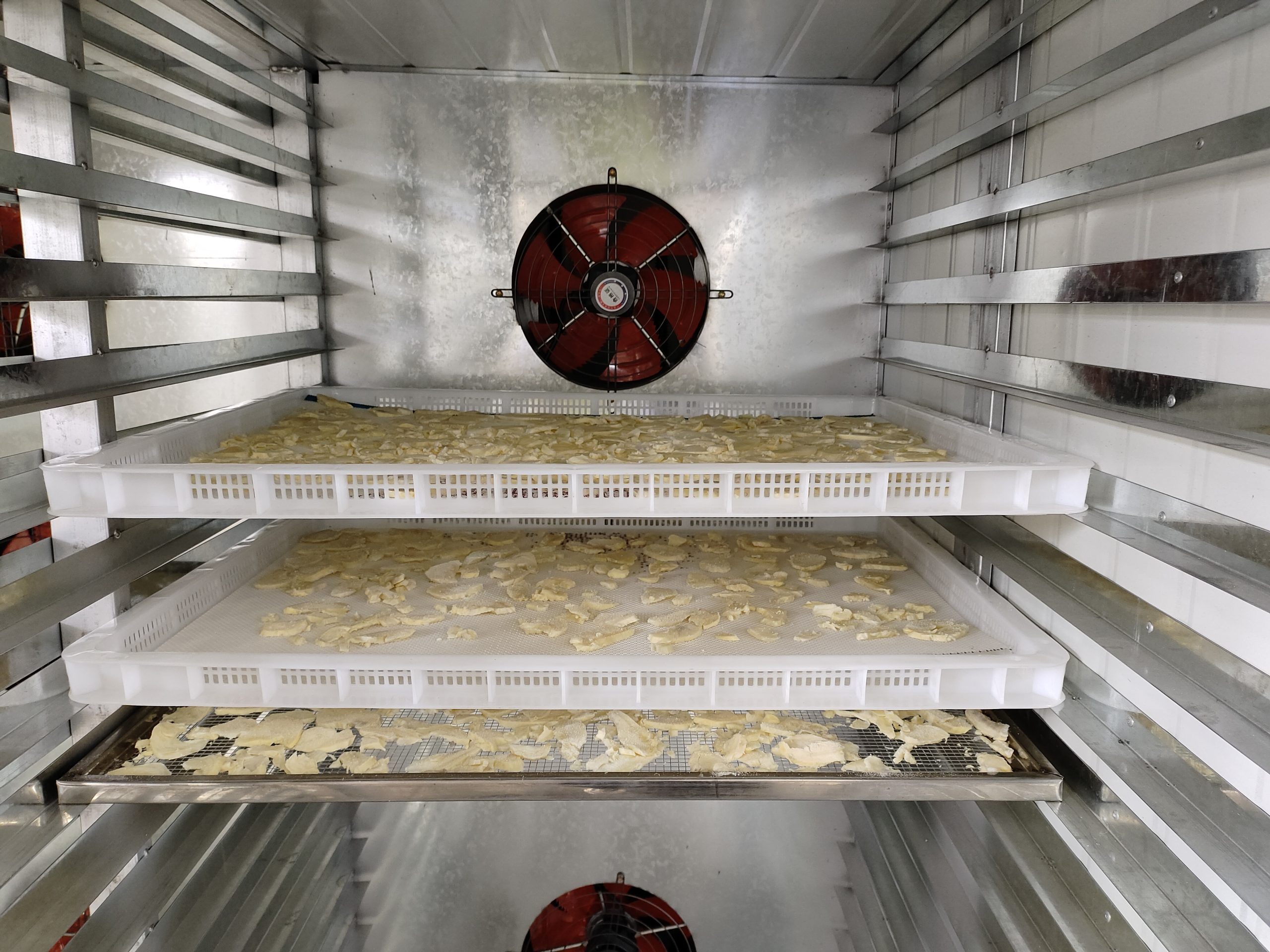
Commercial Durian Dehydration: Preserving Quality with Heat Pump Technology
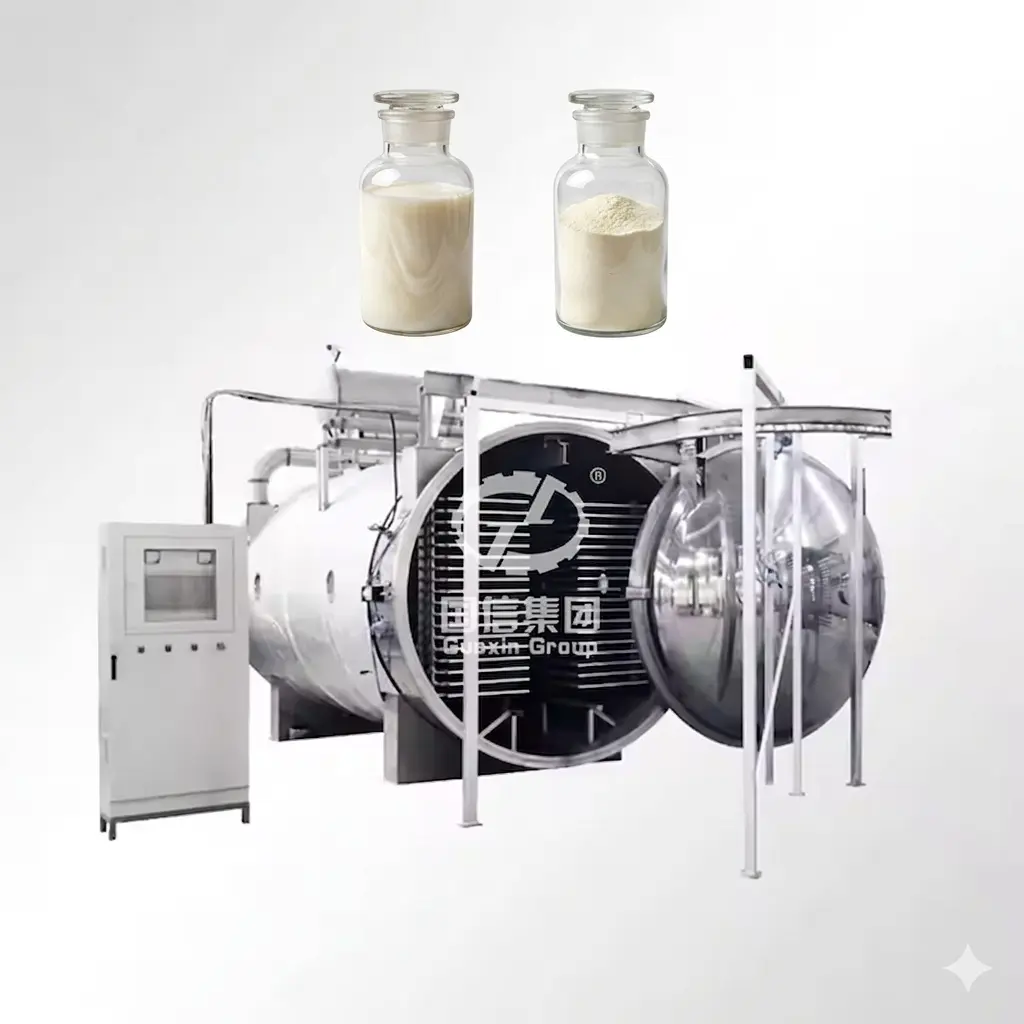
Milk Powder Drying – Parameters for Consistent Final Moisture and Functional Properties
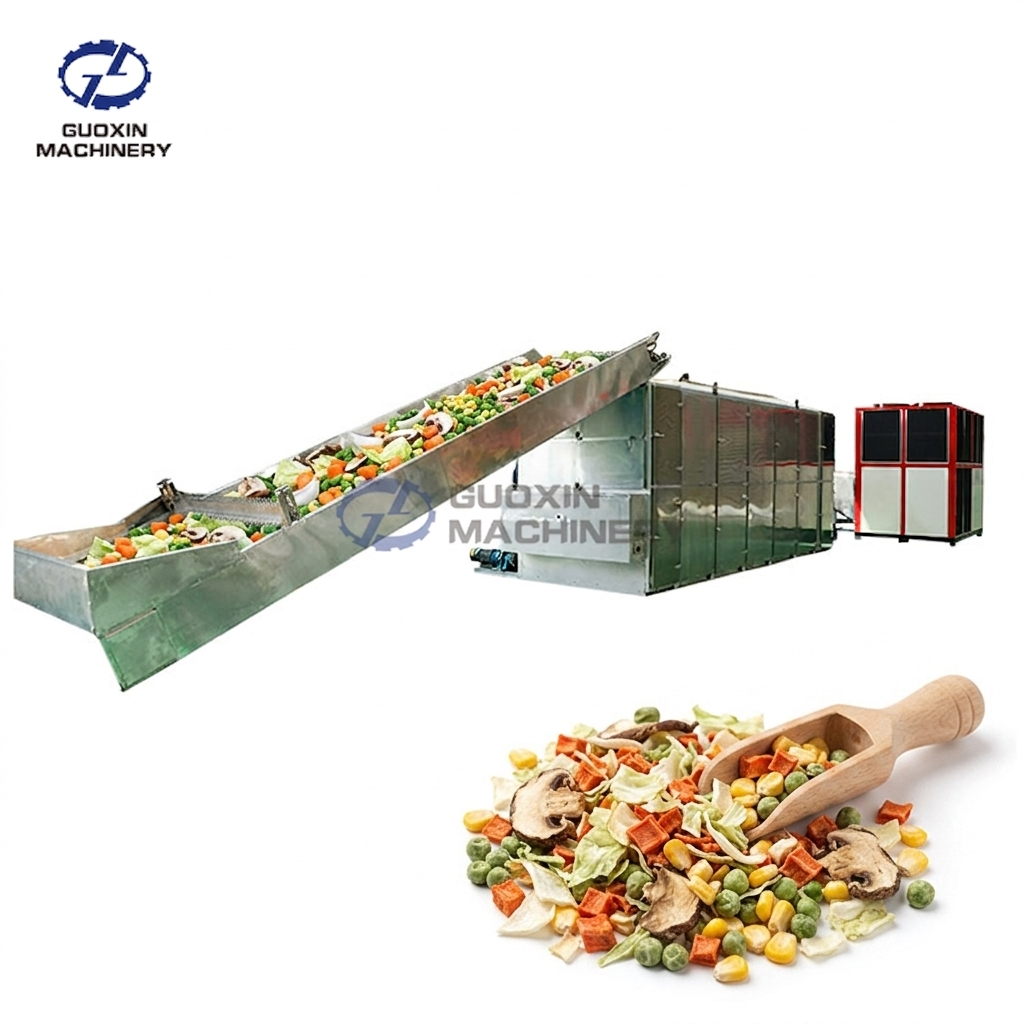
Dehydrated Vegetables for Instant Noodle Seasoning – Drying Parameters for Consistent Quality in Seasoning Packs
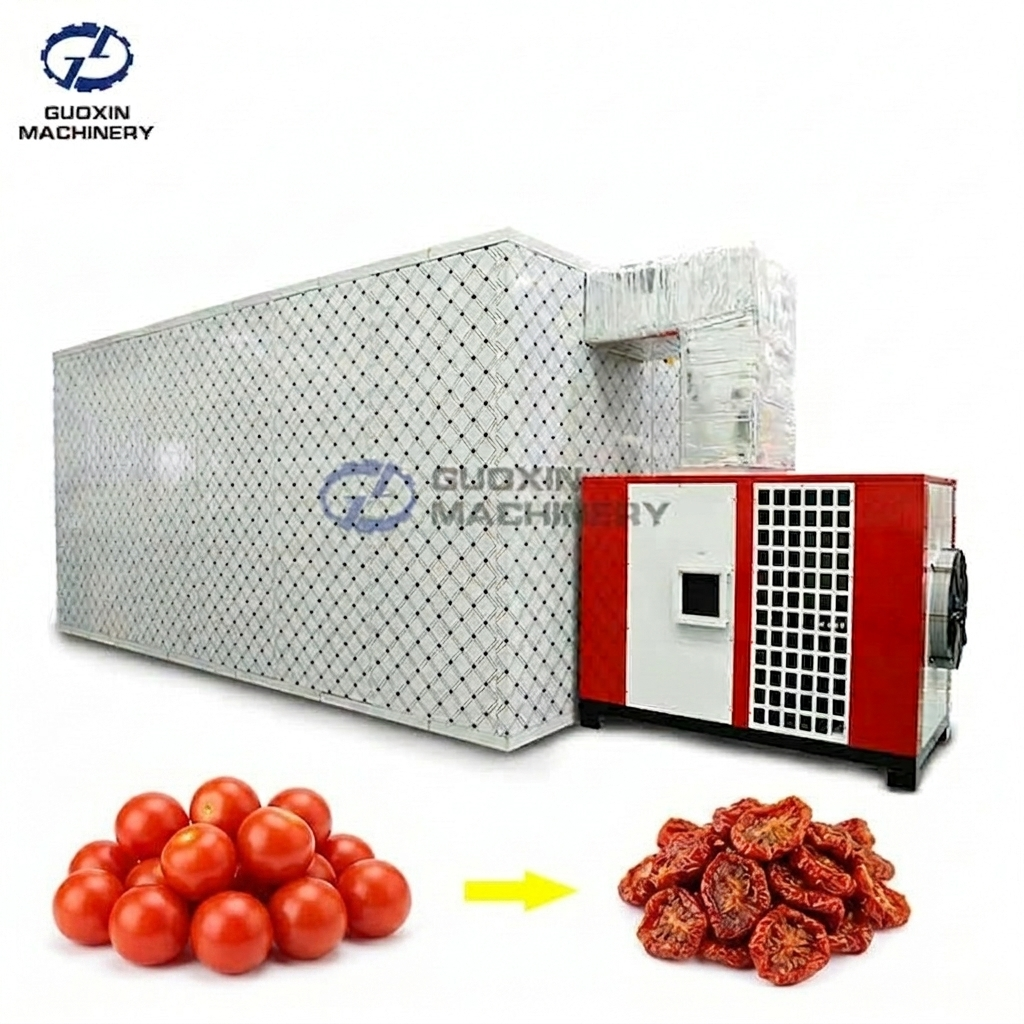
Sun-Dried Tomato Drying – Parameters for Industrial Production of Consistent Tomato Slices