© Henan Guoxin Machinery Manufacturing Co., Ltd. All Rights Reserved.



Release time:2026-04-10
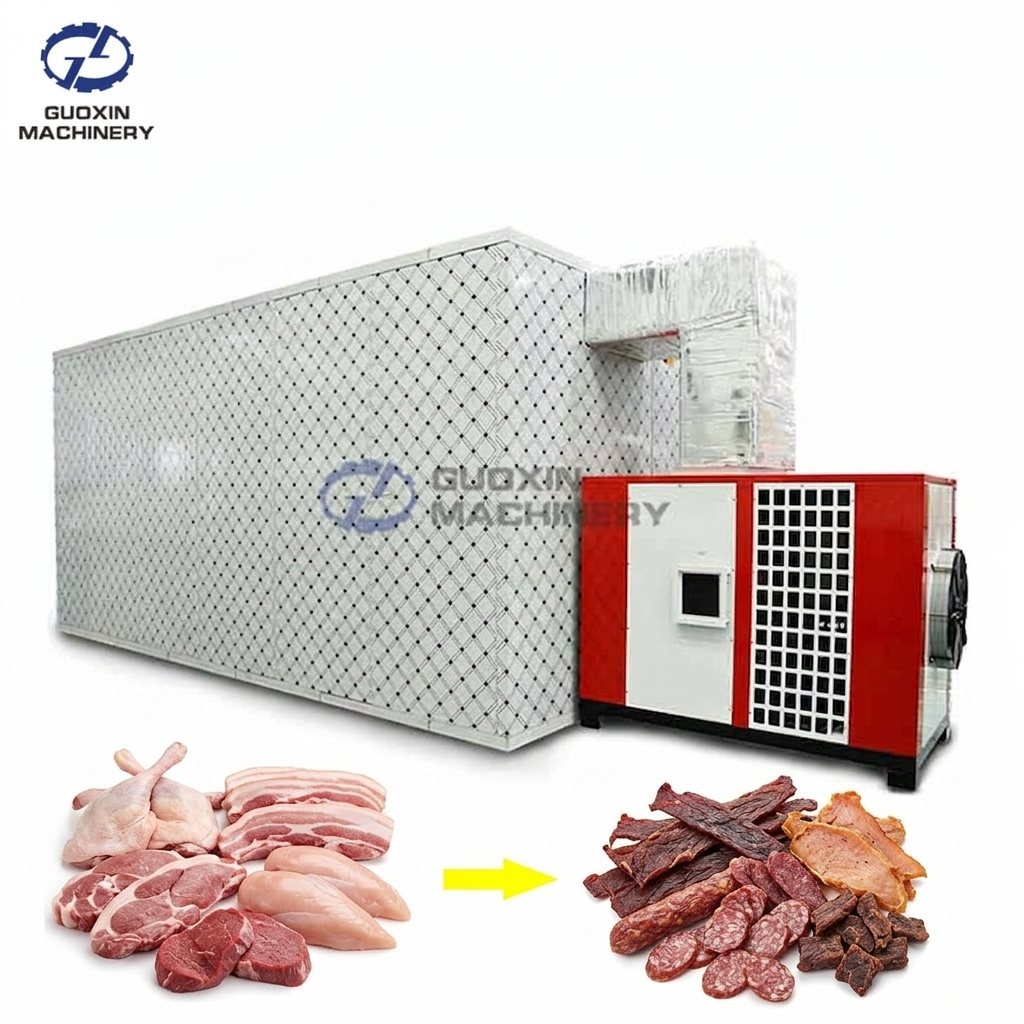
Meat Drying Solution
Meat and seafood present distinct challenges: high protein content, variable fat levels, salt tolerance requirements, and strict food safety standards.
North American and European lines prioritize USDA/FDA pathogen reduction (internal temperature lethality) and water activity below 0.85 for shelf-stable jerky.
Asian and Latin American exporters focus on high throughput, color uniformity, and rehydration performance for traditional products like dried shrimp, squid, and sea cucumber.
The table below lists each material with its typical parameters, pre-processing, and the Guoxin dryer type used in actual industrial operations.
Pre-processing follows standard industrial practice: trimming, washing, slicing or forming, marinating/curing where required, and a lethality heat step (minimum 160 °F / 71 °C for beef, 165 °F / 74 °C for poultry) before final drying to meet food safety regulations. Uniform piece thickness is essential for consistent moisture removal.
| Material | Initial Moisture (%) | Target Moisture (%) | Typical Temp / Time | Pre-Processing Steps | Key Challenges & Customer Needs | Recommended Dryer | Dedicated Solution |
|---|---|---|---|---|---|---|---|
| Beef Jerky / Dehydrated Beef / Charqui | 60–70 | 15–20 | 65–75 °C / 4–8 h | Trim fat, slice 4–6 mm, marinate, lethality heat step | Pathogen reduction (USDA/FDA), chew texture, North American snack market | Heat pump or microwave-assisted | Beef Jerky Drying Solution |
| Chicken Jerky | 65–75 | 15–20 | 65–75 °C / 4–8 h | Trim, slice, marinate, lethality heat step | Lean yield and safety for North American functional snacks | Heat pump dryer | Chicken Jerky Drying Solution |
| Turkey Jerky | 65–75 | 15–20 | 65–75 °C / 4–8 h | Trim, slice, marinate, lethality heat step | Low-fat profile and flavor retention for US and European markets | Heat pump dryer | Turkey Jerky Drying Solution |
| Dried Sausages | 50–65 | 20–30 | 60–70 °C / 6–12 h | Stuff, ferment/cure, partial cook | Texture and mold control for European and Latin American traditional products | Heat pump dryer | Dried Sausage Drying Solution |
| Dried Shrimp | 75–80 | 12–18 | 50–60 °C / 6–10 h | Wash, cook/steam, optional shell, drain | Color retention and salt tolerance for Asian export standards | Mesh belt dryer | Dried Shrimp Drying Solution |
| Dried Squid | 70–80 | 10–20 | 45–55 °C / 8–16 h | Clean, score or slice, optional blanch | Rehydration ratio and appearance for Chinese and Southeast Asian markets | Heat pump dryer | Dried Squid Drying Solution |
| Dried Scallop | 70–80 | 10–18 | 45–55 °C / 10–18 h | Clean, optional light brine | Premium texture and flavor for high-value Asian export | Heat pump dryer | Dried Scallop Drying Solution |
| Dried Abalone | 70–80 | 10–18 | 45–55 °C / 12–20 h | Clean, tenderize if needed | Luxury texture and color for premium Chinese and international markets | Heat pump dryer | Dried Abalone Drying Solution |
| Dried Sea Cucumber | 80–85 | 10–15 | 45–55 °C / 12–24 h | Gut, boil, cool, drain | Rehydration performance and shape retention for medicinal markets | Heat pump dryer | Dried Sea Cucumber Drying Solution |
| Dried Anchovy | 70–80 | 10–15 | 50–60 °C / 6–12 h | Wash, optional boil, spread whole | Odor control and uniformity for Southeast Asian cooking ingredients | Mesh belt or microwave-assisted | Dried Anchovy Drying Solution |
| Fish Maw | 70–80 | 8–15 | 45–55 °C / 10–18 h | Clean, inflate or flatten | Texture and collagen retention for Asian premium market | Heat pump dryer | Fish Maw Drying Solution |
| Pork Floss (Rousong) | 60–70 | 8–12 | 55–65 °C / 6–10 h | Cook, shred, season, fluff | Fiber texture and flavor for Chinese and Asian snack applications | Heat pump or mesh belt | Pork Floss Drying Solution |
| Dried Cod (Bacalhau) | 75–82 | 12–18 | 50–60 °C / 8–16 h | Salt cure, wash, dry whole or pieces | Traditional texture for Brazilian, Portuguese and European markets | Mesh belt dryer | Dried Cod Drying Solution |
These parameters come from industrial drying records and food safety guidelines across heat pump and mesh belt installations. Heat pump dryers provide low-temperature, humidity-controlled conditions that protect protein quality and reduce case hardening. Mesh belt dryers enable continuous high-volume processing for shrimp, anchovy, and cod. Microwave assistance can accelerate internal moisture removal on thicker pieces while maintaining safety lethality.
Q:What temperature and lethality step is required for safe beef and poultry jerky production?
A:USDA and FDA guidelines require meat to reach an internal temperature of at least 160 °F (71 °C) for beef and 165 °F (74 °C) for poultry before or during the early drying stage to destroy pathogens, followed by controlled drying to water activity below 0.85.
Q:Which dryer type works best for delicate seafood such as abalone and sea cucumber?
A:Heat pump dryers operating at 45–55 °C with precise humidity control deliver superior texture and rehydration performance while meeting premium export color and shape requirements in Asian markets.
Q:How does the final moisture level affect shelf stability in dried meat and seafood?
A:Target water activity below 0.85 (typically 10–20 % moisture) prevents microbial growth in shelf-stable products. Processors monitor this closely for compliance with North American, European, and export regulations.
Q:Can one drying line handle both jerky and high-salt seafood products?
A:Yes. Modular heat pump and mesh belt systems support quick changeover with validated cleaning procedures that meet HACCP standards in all major markets.
Q: How do I prevent “Case Hardening” (dry outside, wet inside) in thick meat cuts?
A: This is caused by drying too fast at high temperatures. Our Heat Pump Dryer uses PLC-controlled humidity cycles, slowing down the surface drying to allow internal moisture to migrate out naturally, ensuring a consistent texture.
Q: Is the equipment easy to sanitize?
A: Hygiene is non-negotiable for meat. We use SUS304 Food-Grade Stainless Steel for all contact parts. The internal structure is designed for easy wash-down to prevent bacterial buildup.
Q: What is the ROI of switching to a heat pump system?
A: Most customers in the meat industry recover their investment in 8–14 months through 65%–75% energy savings and significantly lower product rejection rates due to better quality control.
What data is available before starting a full EPC meat or seafood drying project?
Pilot-scale trials on your specific raw material provide detailed reports on energy consumption, moisture uniformity, color values, texture measurements, and pathogen reduction validation.
For material-specific drying trials, parameter confirmation or an EPC proposal matched to your target market and daily throughput, contact us with details of your raw material and production requirements.
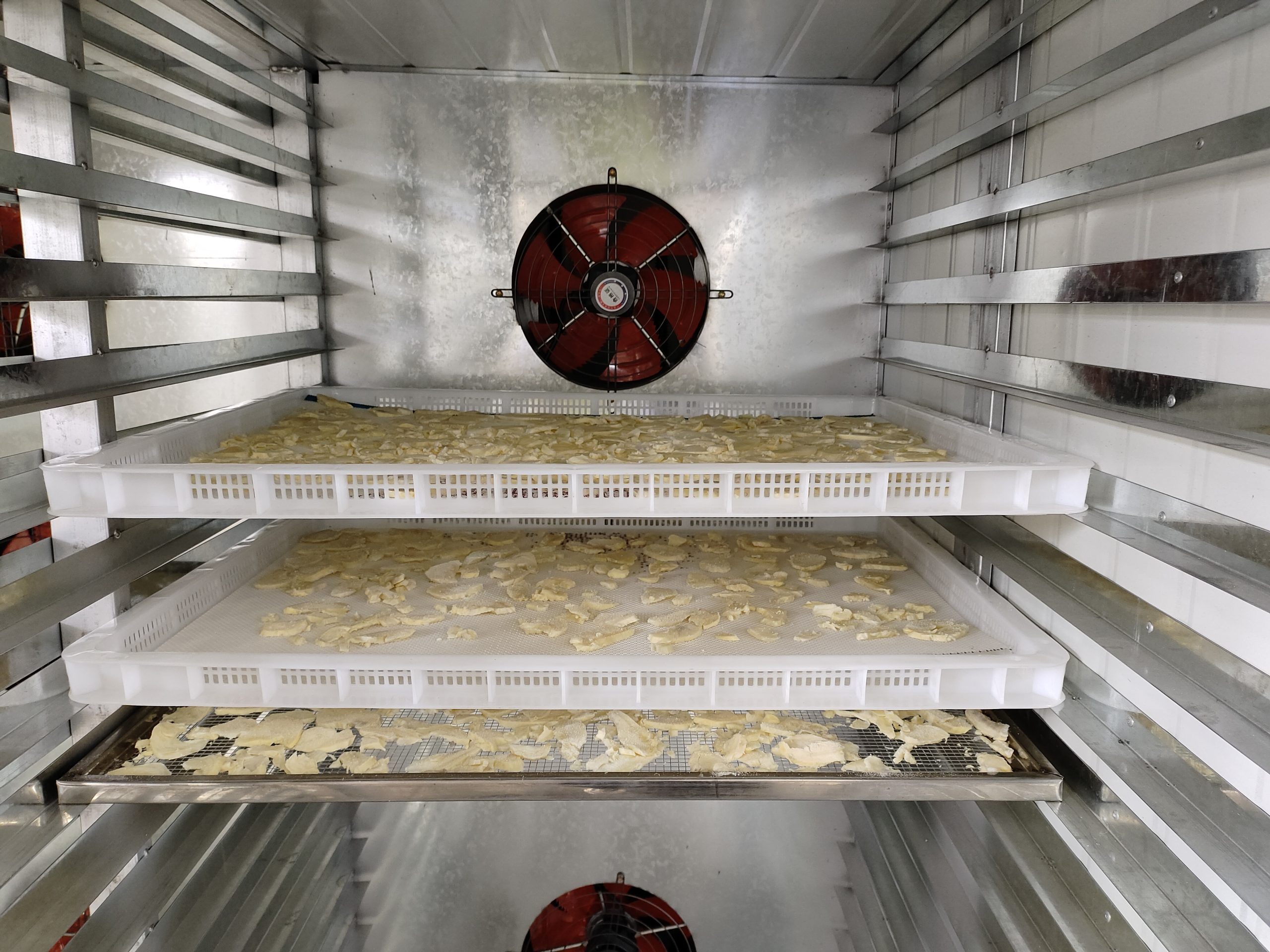
Commercial Durian Dehydration: Preserving Quality with Heat Pump Technology
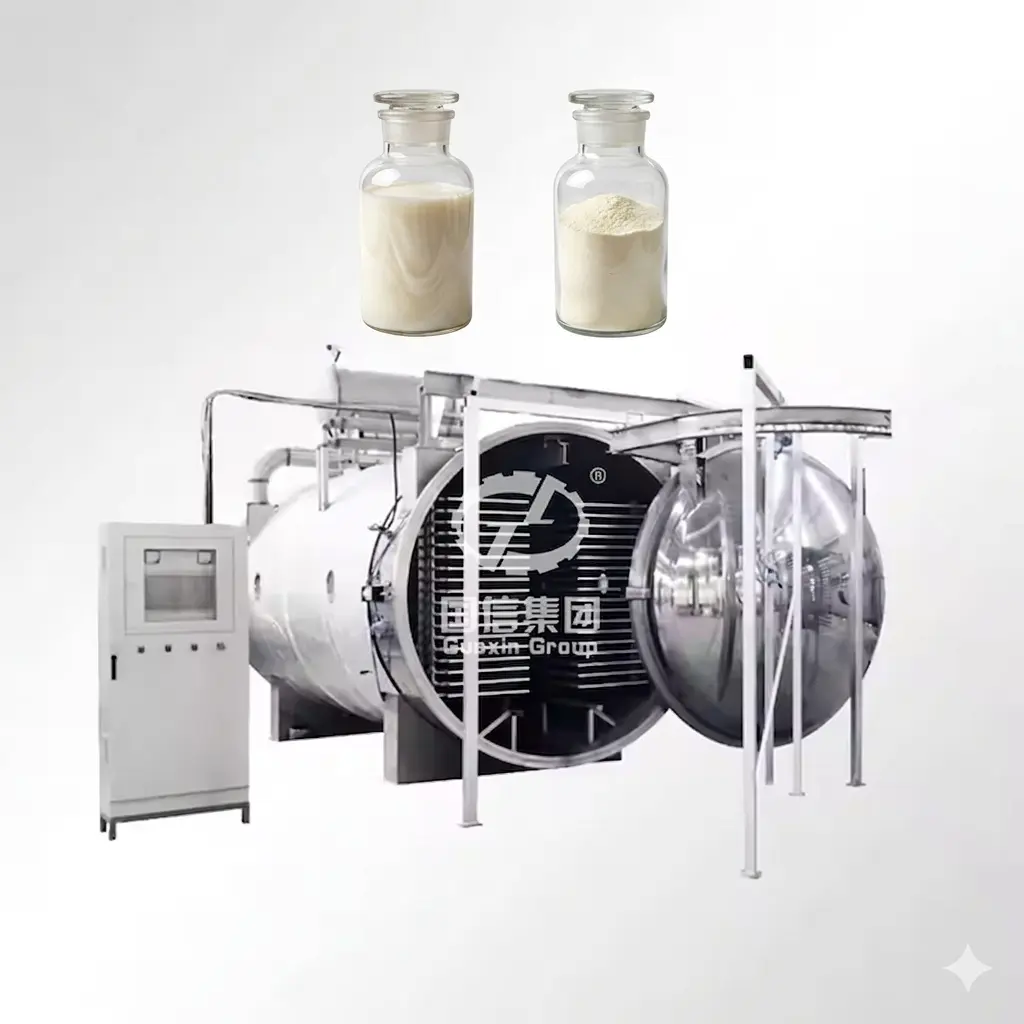
Milk Powder Drying – Parameters for Consistent Final Moisture and Functional Properties
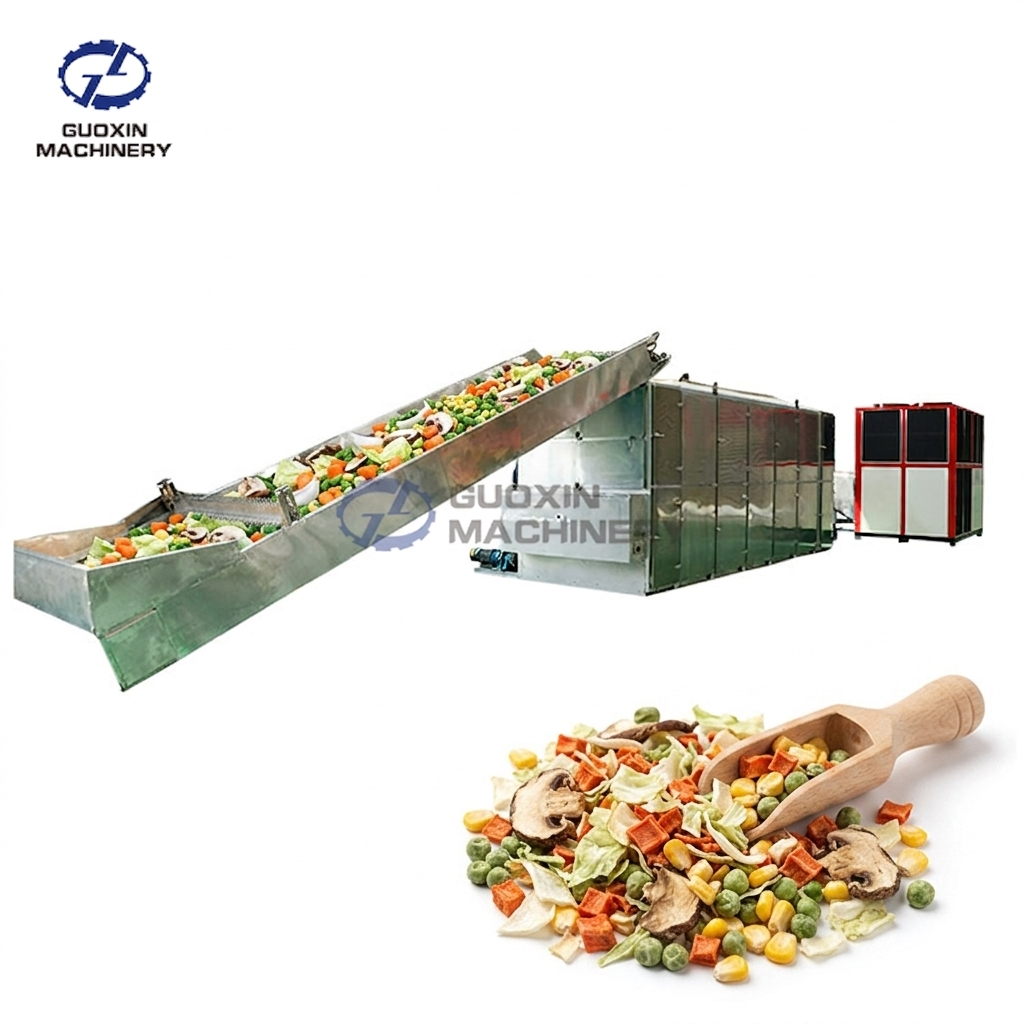
Dehydrated Vegetables for Instant Noodle Seasoning – Drying Parameters for Consistent Quality in Seasoning Packs
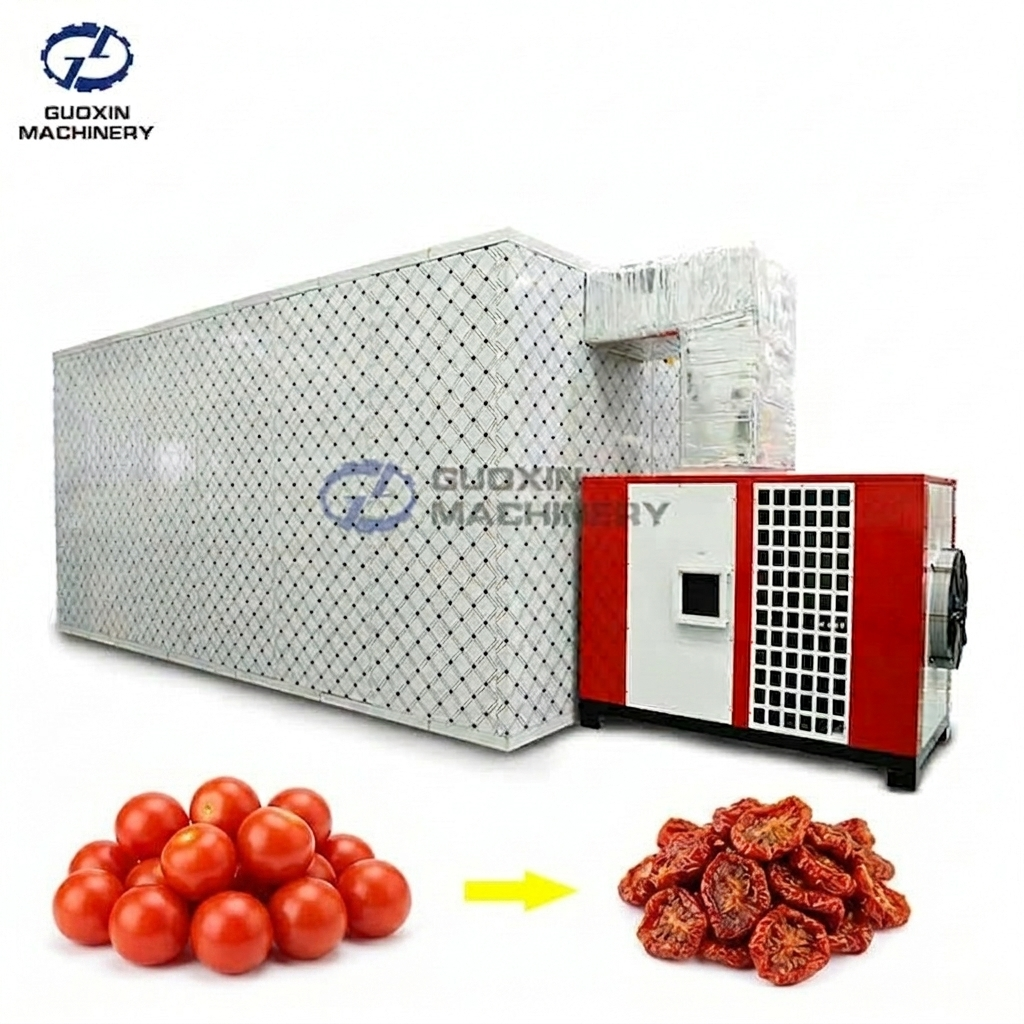
Sun-Dried Tomato Drying – Parameters for Industrial Production of Consistent Tomato Slices
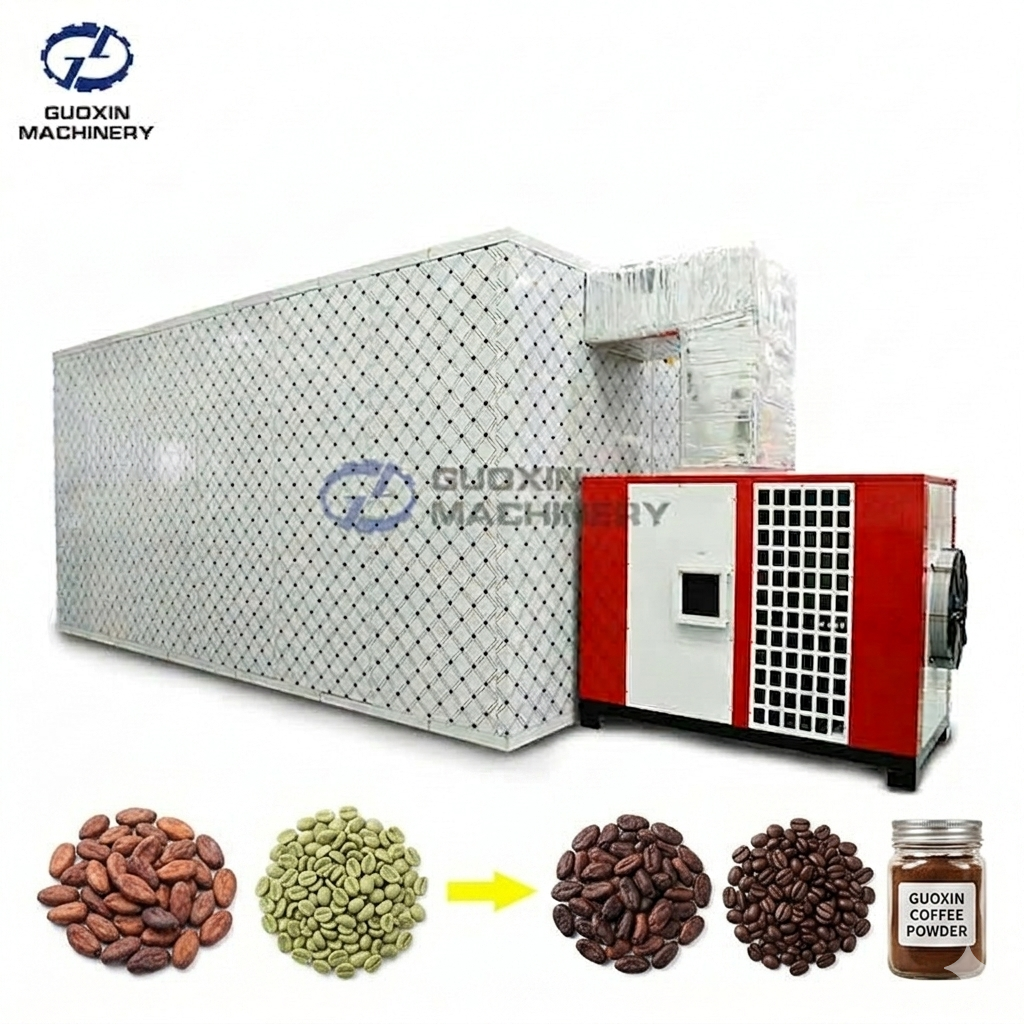
Drying Coffee Beans, Cocoa Nibs and Instant Coffee Powder