© Henan Guoxin Machinery Manufacturing Co., Ltd. All Rights Reserved.



Release time:2026-09-14
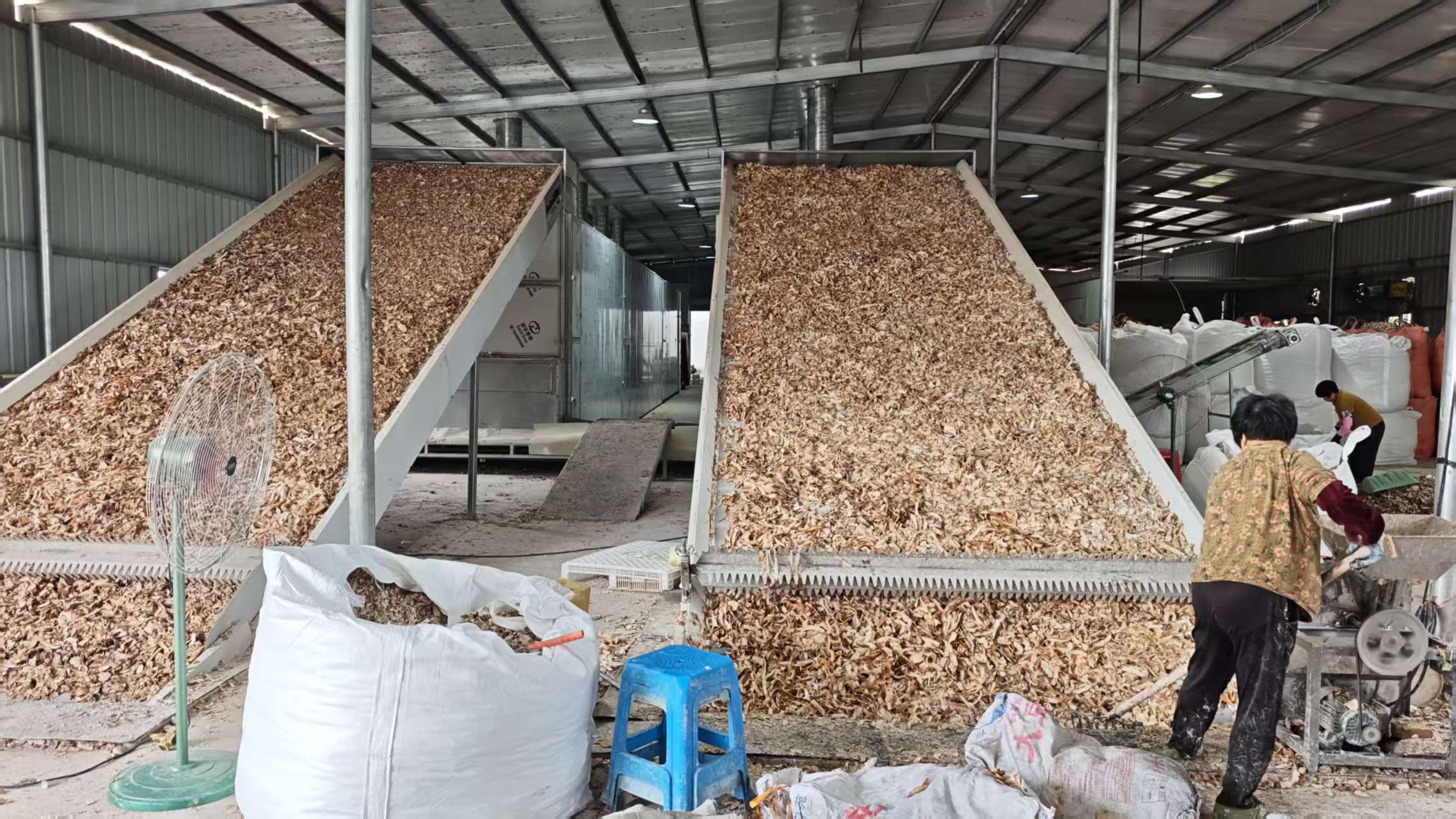
On September 10, 2026, Guoxin Machinery completed on-site testing and operational handover for an industrial multi-layer mesh-belt taro slice drying facility in Fujian Province, China. Engineered specifically for high-starch root crops, the automated line converts fresh sliced taro into uniformly dried, shelf-stable chips with high energy efficiency and minimal manual labor.
| Operational Parameter | Site Installation Details |
| Location | Fujian Province, China |
| Commissioning Date | September 3, 2026 |
| Processed Material | Fresh Sliced Taro Chips (High Starch, High Initial Moisture) |
| Drying Architecture | Multi-Layer Continuous Mesh-Belt Drying Tunnel |
| Material Construction | Food-Grade Stainless Steel (Contact Surfaces & Drying Chamber) |
| Feeding Mechanism | Slicer-Integrated Hopper with Incline Spreader Elevator |
| Discharge & Packaging | Cleated Belt Discharge Conveyor to Ton-Bag Bulk Station |
| Control System | Centralized Digital Control Cabinet |
| Target Final Moisture | <10% (Brittle Commercial Grade) |
[Raw Taro Slicing & Hopper] ──► [Incline Spreader Elevator] ──►
[Multi-Tier Mesh-Belt dryer] ──► [Cleated Discharge Conveyor] ──► [Bulk Ton-Bag Collection]
Slicing & Automated Intake: Fresh taro roots pass through a mechanical slicer directly into the bottom loading hopper. Workers feed raw material continuously at ground level.
Elevated Spreading: An inclined cleated belt lifts the raw slices into the top of the dryer. Integrated spreader teeth distribute the layer evenly across the full belt width to ensure consistent airflow permeability.
Multi-Tier Convective Drying: Slices travel continuously through the insulated SUS304 chamber. Forced hot air circulates through the mesh openings, removing moisture steadily as the product cascades between drying tiers.
Discharge & Bulk Packaging: Dehydrated taro slices exit via an inclined discharge belt directly into heavy-duty bulk ton bags. The final output features a uniform crisp texture, clean color retention, and zero clumped product.
Q1: Why choose a continuous mesh-belt dryer over static drying rooms for taro processing?
Industrial mesh-belt dryers eliminate manual tray loading and unloading, drastically reducing labor costs. The continuous turning mechanism ensures identical drying quality across every batch, preventing hot-spot scorching common in static tray racks.
Q2: What heat sources can be integrated into this taro slice drying system?
Guoxin continuous drying lines can be configured with Air-Source Heat Pump Units (maximum electrical efficiency), Steam Heat Exchangers, Natural Gas Burners, or Biomass Furnaces, depending on local factory energy infrastructure.
Q3: How does the dryer prevent starch buildup inside the chamber?
The stainless steel mesh belts and smooth interior paneling minimize starch accumulation. The drop-tier design allows loose starch powder to collect at dedicated bottom cleanout access doors for quick daily maintenance.
Commercial Durian Dehydration: Preserving Quality with Heat Pump Technology
Milk Powder Drying – Parameters for Consistent Final Moisture and Functional Properties
Dehydrated Vegetables for Instant Noodle Seasoning – Drying Parameters for Consistent Quality in Seasoning Packs
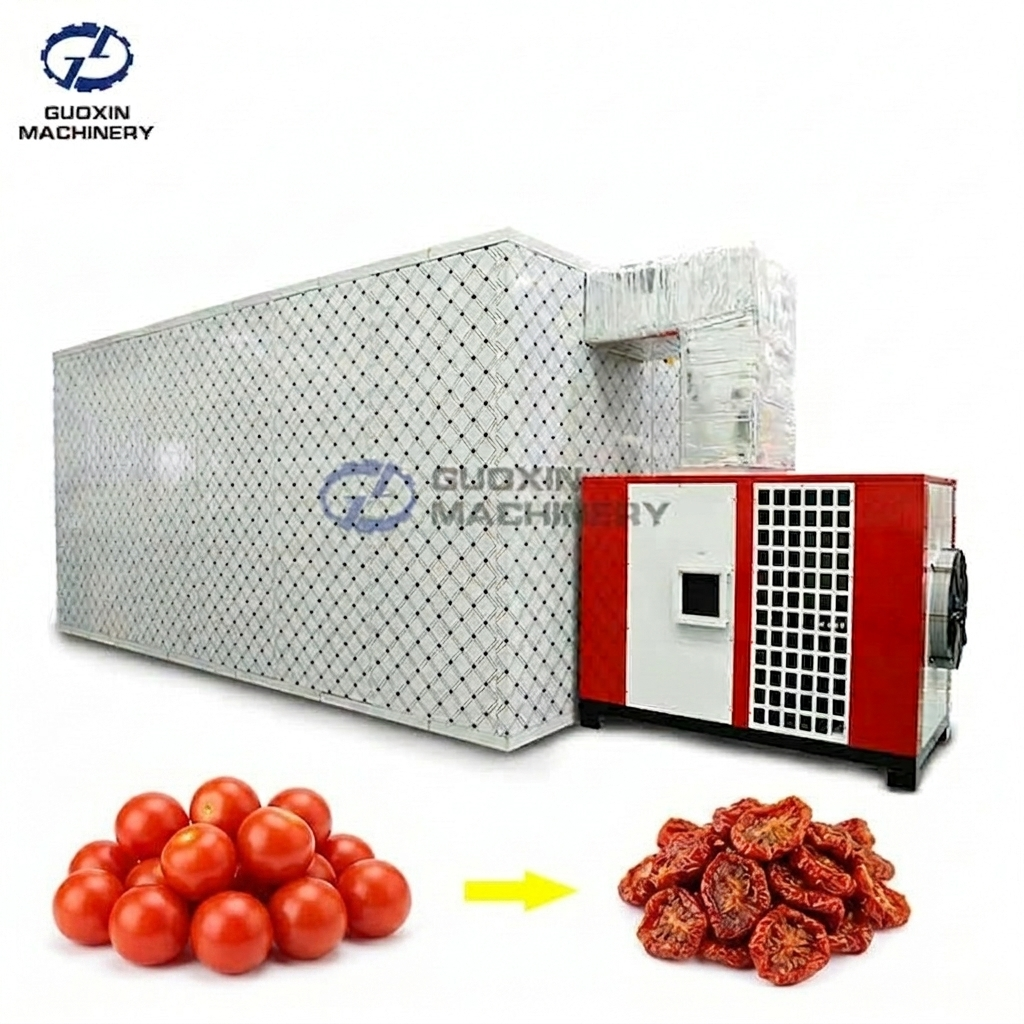
Sun-Dried Tomato Drying – Parameters for Industrial Production of Consistent Tomato Slices
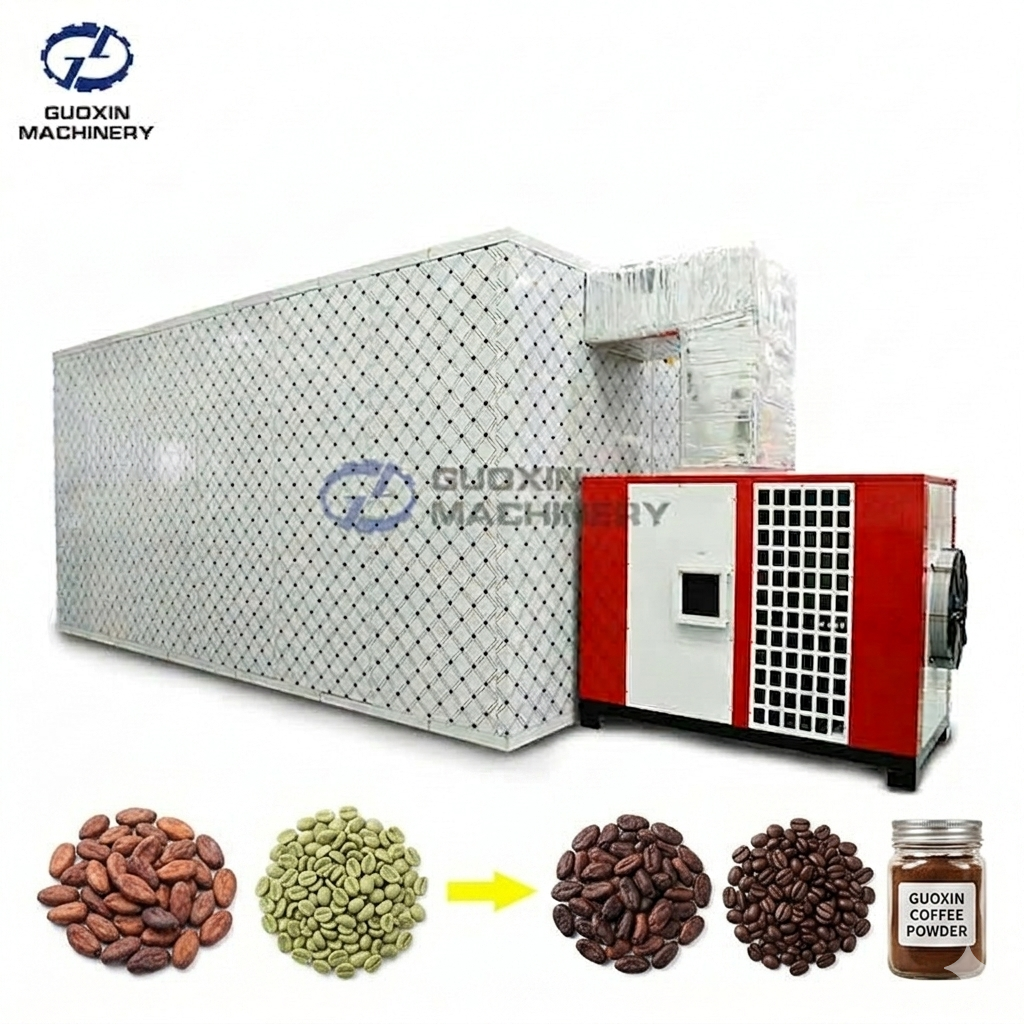
Drying Coffee Beans, Cocoa Nibs and Instant Coffee Powder