© Henan Guoxin Machinery Manufacturing Co., Ltd. All Rights Reserved.



Release time:2026-06-22
What are the processing efficiency and quality retention benefits of continuous microwave seafood dehydrators?
Industrial continuous microwave processing lines achieve rapid moisture reduction in seafood from an initial 75%–80% down to a shelf-stable 10%–12% within 5 to 8 minutes. This volumetric heating technology eliminates the 4-to-6-hour processing windows required by traditional hot-air dryers, completely preventing head-blackening and protein degradation while ensuring a uniform, light-puffed crisp texture.
In large-scale commercial seafood operations, processing fresh shrimp (Penaeus vannamei) introduces major biochemical challenges. Shrimp tissues hold a high moisture content of 75% to 80% alongside sensitive structural proteins and active enzymes.
Conventional convective hot-air drying methods transfer heat slowly from the exterior surface toward the core. This long exposure to heat triggers enzymatic browning (turning shrimp heads and tails an unmarketable black) and causes uneven drying. The outer layers often become tough and overcooked (“case hardening”) while the internal core remains damp, which can lead to rapid bacterial spoilage during downstream packaging.
To resolve these thermodynamic limitations, an engineered factory trial run was conducted on June 12, 2026, utilizing Guoxin’s automated continuous industrial microwave tunnel system. The operational sequence follows a precise, linear mechanical path:
Phase 1: Controlled Material Infeed
Fresh, graded whole shrimp are transferred to the intake zone, operators arrange the shrimp uniformly onto a high-temperature-resistant, food-grade conveyor belt. This structured, single-layer distribution ensures that the electromagnetic field encounters a homogeneous material depth, preventing uneven energy absorption and local clumping.
Phase 2: Continuous Microwave Dehydration Tunnel
The conveyor belt carries the material bed through the sealed microwave application tunnel. Operating at a standard industrial frequency of 2450MHz, the electromagnetic waves bypass the shell barrier to directly agitate polar water molecules throughout the entire shrimp body simultaneously. This volumetric heating drives moisture outward through the shell instantly, lowering drying times by over 95% compared to static hot-air ovens.
Phase 3: Automated Discharging and Final Evaluation
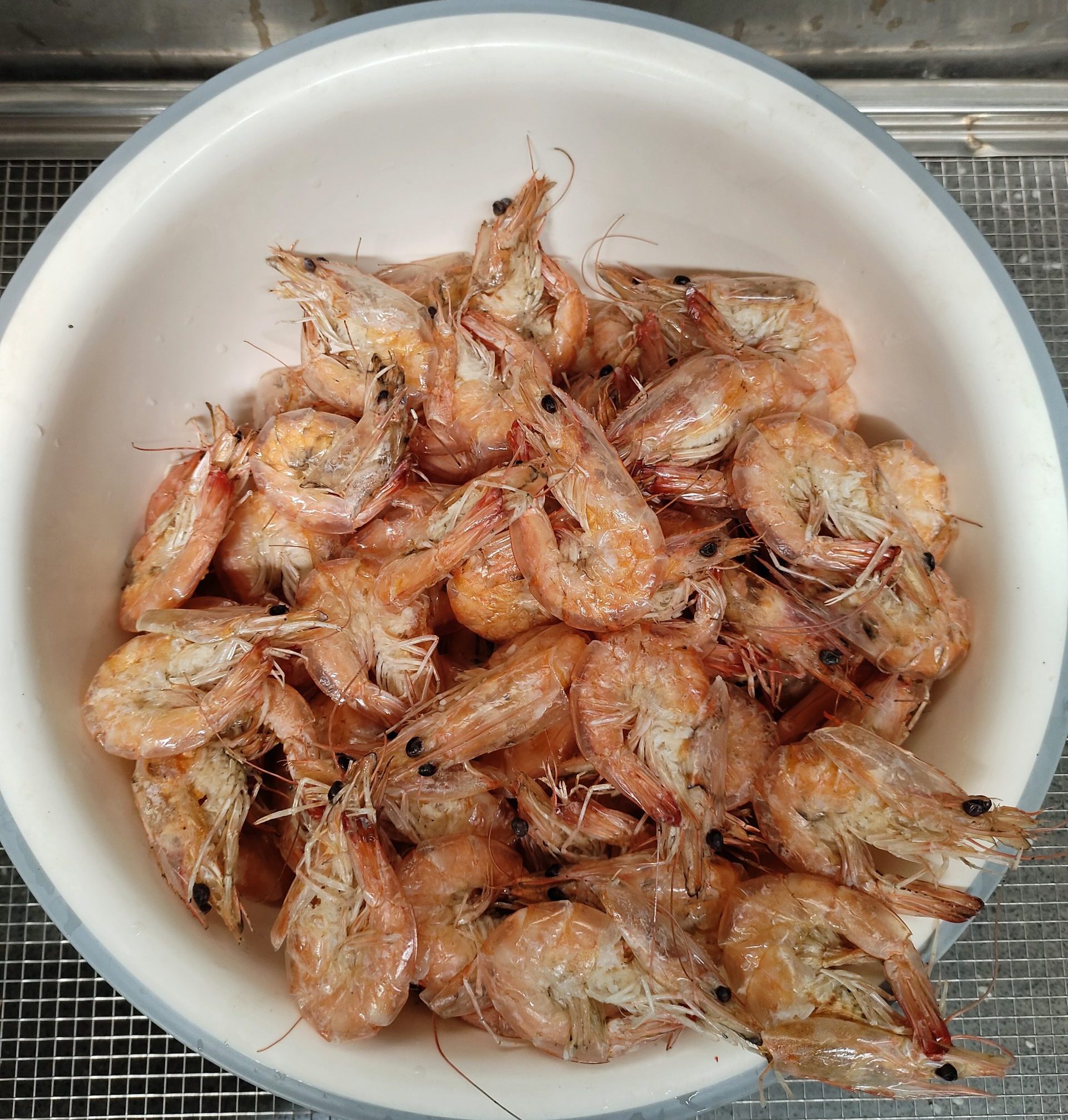
An integrated discharge chute guides the finished product seamlessly into receiving basins. A detailed inspection of the final batch (IMG_20260610_105628.jpg) confirms that the rapid vapor release creates a slightly puffed, crisp texture. The shrimp maintain an attractive, uniform bright pinkish-red coloration with zero scorched margins and no blackening of the heads or tail fans.
The table below outlines verified operational parameters and performance data captured during the workshop trial.
| Technical Operational Parameter | Trial Run Measured Performance Data |
| Material Input State | Raw, Head-On Fresh Large Shrimp (~80% Moisture) |
| Material Output State | Fully Dehydrated & Crisped Shrimp (10%–12% Moisture) |
| Total Enclosure Processing Time | 5.5 to 7 Minutes (Continuous Transit) |
| Microwave Field Frequency | 2450MHz (±50 MHz industrial variance) |
| Real-Time Product Core Temp | 80°C – 95°C (Monitored via Infrared Pyrometers) |
| Finished Product Visual Quality | Uniform Deep Red/Pink; Zero Head-Blackening |
| Microbiological Status | Simultaneous Pasteurization Achieved via Thermal Energy |
Commercial Durian Dehydration: Preserving Quality with Heat Pump Technology
Milk Powder Drying – Parameters for Consistent Final Moisture and Functional Properties
Dehydrated Vegetables for Instant Noodle Seasoning – Drying Parameters for Consistent Quality in Seasoning Packs
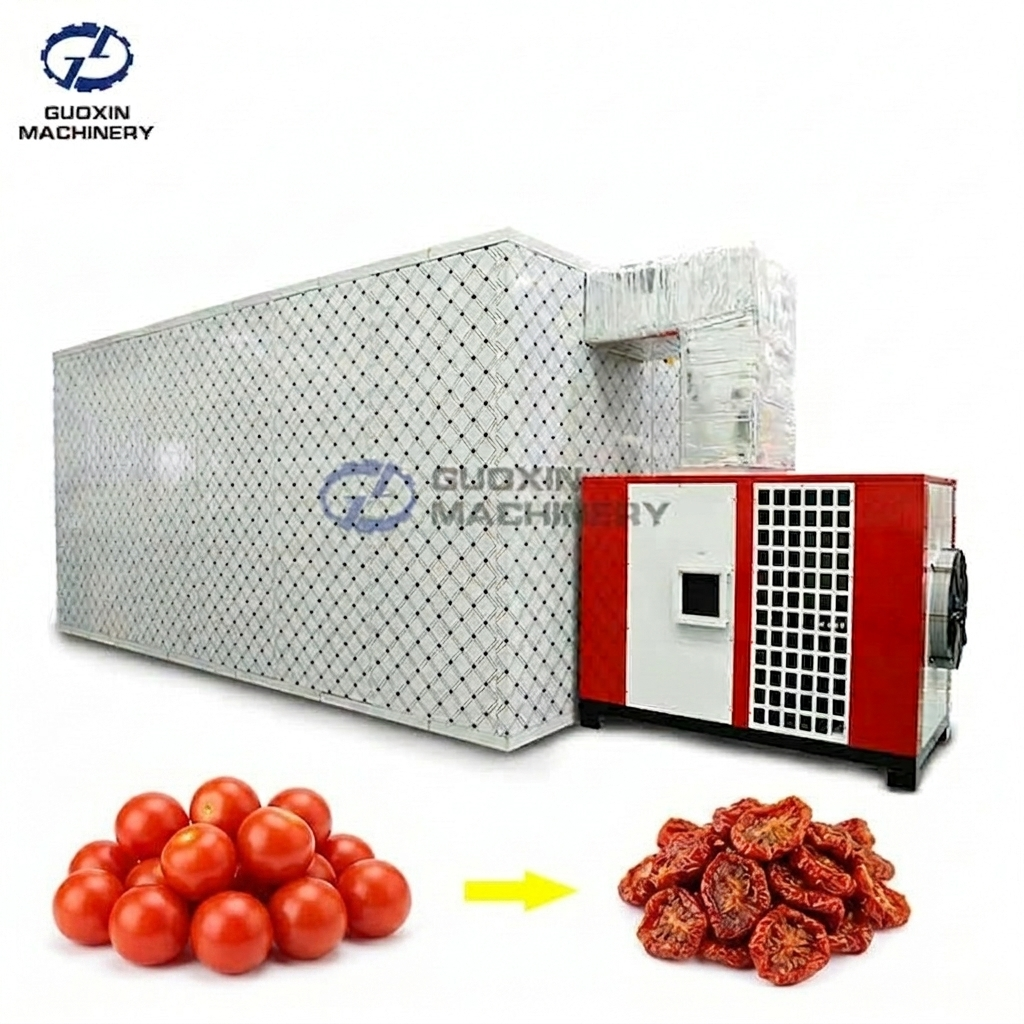
Sun-Dried Tomato Drying – Parameters for Industrial Production of Consistent Tomato Slices
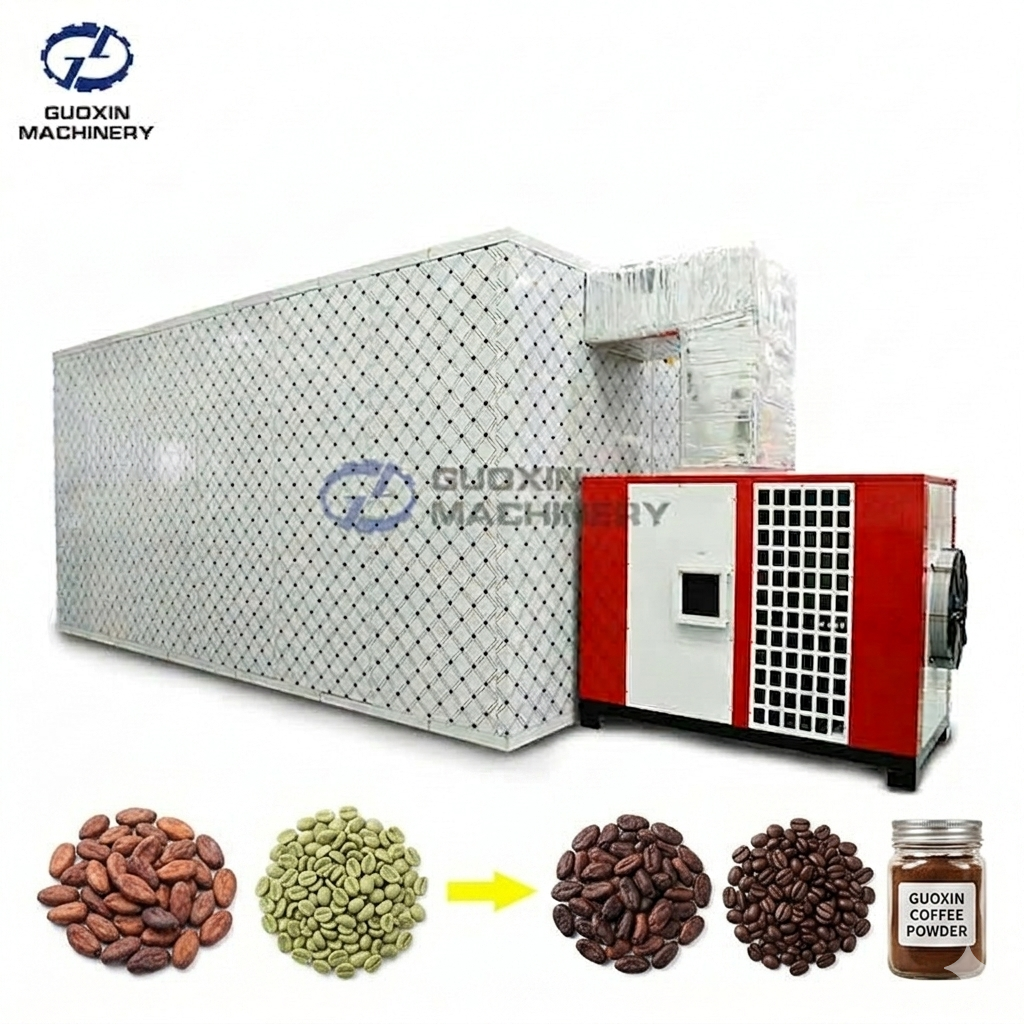
Drying Coffee Beans, Cocoa Nibs and Instant Coffee Powder