© Henan Guoxin Machinery Manufacturing Co., Ltd. All Rights Reserved.



Release time:2026-05-20
Industrial processing of premium, Mediterranean-style sun-dried tomato halves and uniform strips requires highly specialized thermodynamic regulation.
Fresh tomatoes are characterized by an extremely high initial moisture content of 93% to 94%, low initial pH, and a delicate structural matrix high in fructose, glucose, and lycopene.
To achieve a shelf-stable export grade that replicates the traditional chewy texture of sun-dried variants, this moisture must be systematically reduced to a precise equilibrium of 14% to 18% for halves, and 10% to 12% for industrial strips.
Failing to regulate the moisture evacuation curve leads to immediate product downgrading, including caramelized skin darkening, case hardening, and severe loss of lycopene-driven red coloration.
Guoxin Machinery designs and manufactures integrated, continuous multi-layer mesh belt dehydration systems.
These installations utilize precision thermal zoning, controlled relative humidity injection, and automated material handling to maximize throughput while preserving the color profile and structural integrity demanded by global B2B food buyers.
Request Technical Specifications & Customized 3D Processing Plant Layout
The world’s premium sun-dried tomatoes originate in regions with distinct Mediterranean climate characteristics—characterized by high solar radiation, low ambient humidity during harvest, and well-drained volcanic or sandy loam soils. These cultivation factors produce tomatoes with high soluble solids (a baseline of 5.5 to 6.5 °Brix), thick structural pericarps, and concentrated organic acids.
When processing these high-solids varieties at an industrial scale, the primary mechanical challenge is the sheer volume of water mass that must be evaporated. For every 1 metric ton of finished sun-dried product, the processing line must efficiently extract and vent approximately 13 to 14 metric tons of liquid water. This high-volume mass transfer must occur under strict thermal limits, as the high concentration of monosaccharides makes the fruit highly sensitive to Maillard browning and thermal degradation if exposed to uncontrolled heat source temperatures.
Dehydrating high-moisture, high-sugar tomatoes at an enterprise scale requires specific engineering configurations to manage internal vapor pressure without altering product morphology.
Tomato halves feature a dense, waxy outer skin (cuticle) on one side and an exposed, high-moisture pulp matrix on the other. If exposed to a high-temperature, low-humidity airflow at the start of the drying cycle, the exposed pulp dries prematurely, forming an impermeable structural layer. This case hardening traps core moisture inside, leading to internal fermentation and pocket rotting during storage. Simultaneously, uneven drying causes the edges to curl inward, ruining the flat visual profile required for premium retail packaging.
Our continuous lines implement a Multi-Stage Airflow and Relative Humidity (RH) Curve managed via a centralized Siemens PLC framework. The drying chamber is divided into independent thermodynamic zones. The initial zone introduces high-volume air at 60°C to 65°C with controlled relative humidity injection. This intentionally keeps the waxy outer skin and pulp surface pliable, setting up a stable osmotic gradient that pulls core water to the surface uniformly. As the tomatoes progress to the lower conveyor tiers and moisture levels fall below 40%, the PLC automatically scales down temperatures to 50°C to 55°C to finish dehydration without structural distortion.
Tomatoes contain high levels of reducing sugars and lycopene, both of which degrade when product core temperatures exceed critical thresholds. Standard single-stage convective air dryers cause the sugars to liquefy and scorch, turning the fruit a dull brown or black and imparting a bitter flavor.
The drying system utilizes low-temperature, high-velocity cross-flow ventilation. The PLC control curves monitor real-time product temperatures via infrared sensors, ensuring the core temperature of the tomato pulp never exceeds 62°C. This prevents sugar caramelization and minimizes oxygen exposure within the drying boundary layer, preserving the vibrant, bright red appearance required to pass global export quality inspections.
The matrix below defines the engineered configurations for Guoxin continuous multi-tier conveyor drying infrastructure optimized for enterprise-scale tomato processing installations.
| Operational Parameter | GX-TM-124 Continuous Line | GX-TM-205 Enterprise Plant | GX-TM-256 Industrial Complex |
| Wet Input Raw Throughput | 1,000 kg/h to 1,500 kg/h | 3,000 kg/h to 4,500 kg/h | 5,000 kg/h to 8,000 kg/h+ |
| Conveyor Belt Width Options | 1,200 mm | 2,000 mm | 2,500 mm |
| Drying System Tiers | 4 Layers | 5 Layers | 6 Layers |
| Chamber Enclosure Length | 12 Meters | 16 Meters | 22 Meters |
| Compatible Thermal Utilities | Air-Source Heat Pump / Steam | Air-Source Heat Pump + Steam | Direct Steam Loop / Natural Gas |
| Temperature Control Range | 40°C – 75°C (±0.5°C accuracy) | 40°C – 75°C (±0.5°C accuracy) | 40°C – 75°C (±0.5°C accuracy) |
| Conveyor Material Build | Food-Grade SUS304 Mesh | Food-Grade SUS304 Mesh | Food-Grade SUS316L / SUS304 |
| Air Circulation Vector | Reversing Vertical Cross-Flow | Reversing Vertical Cross-Flow | Reversing Vertical Cross-Flow |
| Automation Architecture | Siemens PLC / Touchscreen HMI | Siemens PLC / Touchscreen HMI | Full Siemens PLC / SCADA Ready |
Because processing tomatoes requires the evaporation of massive amounts of water, thermal utility consumption represents the largest single operational variable in total production costs. Our engineering configurations utilize advanced latent heat recovery to stabilize factory expenditures.
Traditional open-cycle agricultural dryers constantly vent warm, moisture-laden exhaust air into the environment, resulting in significant structural energy loss.
Guoxin’s closed-loop air-source heat pump configurations pass this humid air stream over an integrated industrial refrigeration evaporator.
The moisture is condensed out as liquid waste, while the latent heat of vaporization is recovered by the refrigerant circuit and redirected to reheat the dry processing air.
This thermodynamic configuration achieves a high Coefficient of Performance (COP).
In standard operating conditions, our integrated systems achieve 60% to 75% energy savings compared to conventional open-loop electrical resistance heaters or direct oil-fired burners, lowering total factory OPEX and accelerating capital amortization.
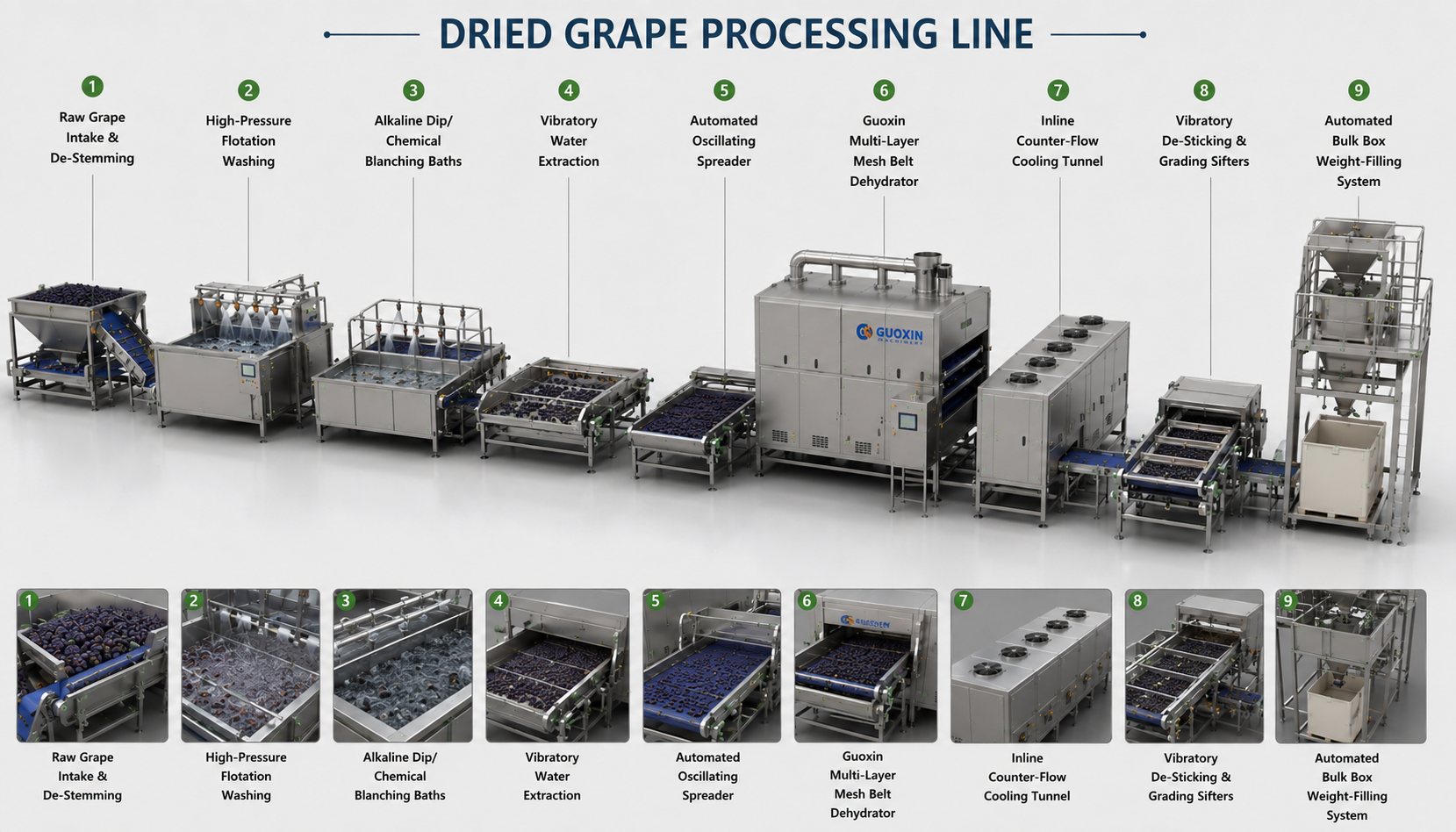
Enterprise food processors require full production line integration to eliminate technical mismatches between equipment vendors and ensure synchronized throughput speeds. Guoxin Machinery designs, manufactures, and installs complete turnkey (EPC) processing lines, aligning all pre-treatment and post-drying systems for continuous automation:
[Raw Tomato Bulk Intake] → [Flotation Air-Bubble Washing Module] → [Size Calibration] → [Mechanical Automated Halving/Slicing] → [Vibratory Seed Removal & De-Watering] → [Sulphiting/Salting Preservation Dip Tank] → [Automated Leveling Distribution Feeder] → [Guoxin Multi-Layer Mesh Belt Dryer] → [Inline Counter-Flow Cooling Tunnel] → [Color & Defect Sorting] → [Nitrogen-Flush Vacuum Packaging / Oil-Infusion Bottling Line]
Precision rotary blade assemblies split tomatoes along the longitudinal axis into perfect halves or compress them through multi-blade cassettes for uniform strips, executing the cut cleanly without tearing the delicate skin or crushing the internal seed cavities.
Receives wet cut tomatoes from the preservation dip tank and uses an oscillating mechanical arm to distribute the product uniformly across the width of the main drying belt, skin-side down wherever possible, preventing manual piling errors and ensuring uniform airflow permeability.
Q1: How do I select the correct equipment model and belt area for tomato halves versus strips?
A: Model selection is calculated based on the physical geometry of the cut and your daily raw input tonnage. Tomato halves require up to 1.5 to 2 times longer retention time inside the drying chamber compared to uniform strips because halves retain their internal juice matrix and have a thicker boundary layer. If your facility requires a raw input capacity of 50 tons of fresh tomatoes per day for halves, the extended drying curve requires a larger active belt area—such as our GX-TM-256 Industrial Complex—to ensure the material moves slowly through the multi-stage temperature zones without requiring product stacking that causes uneven drying.
Q2: What is the recommended factory layout for an export-grade tomato dehydration plant?
A: To pass rigorous international food safety audits (such as HACCP, BRC, or FDA inspections), the plant must enforce a strict physical separation between wet and dry processing zones. The washing, automated slicing, seed removal, and chemical conditioning dip tanks must be isolated in a dedicated Wet Processing Area built with corrosion-resistant wash-down walls and dedicated floor drainage systems. The continuous mesh belt drying line acts as the sealed mechanical transition through the central facility wall. The discharge end of the dryer outputs directly into a positive-pressure, HEPA-filtered Clean Zone running ambient relative humidity below 35% to prevent the warm, hygroscopic dried tomatoes from re-absorbing moisture before automated packaging occurs.
Q3: What are the capital expenditure thresholds and expected ROI payback periods for this infrastructure?
A: Total capital expenditure (CapEx) depends on the chosen level of mechanical automation (such as integrated optical sorters or multi-head automated packaging systems) and the primary thermal utility available at your site (such as direct steam boiler connections versus localized air-source heat pump configurations). While a fully continuous automated line requires a higher initial investment than old-style static drying rooms, it removes massive manual labor costs, requiring only 2 to 3 technicians to monitor the entire system from a central PLC console. Backed by a 60% to 75% drop in utility consumption and the premium prices fetched by uniform, zero-defect export-grade tomatoes, commercial operators typically recover their full capital investment within 14 to 22 months of operation.
Q4: How does the structural design prevent product sticking and satisfy global sanitation standards?
A: To eliminate product adhesion caused by high-sugar fruit pulp, our continuous woven mesh belts are fabricated from food-grade SUS304 stainless steel treated with an optional food-safe, non-stick structural finish. The interior walls of the drying enclosure utilize a clean, smooth layout with radius corners and continuous, ground-smooth welds to prevent organic particles or sugars from pooling in crevices. The entire dryer enclosure is built with large, double-sealed inspection doors to provide complete access for high-pressure chemical wash-downs and streamlined Clean-in-Place (CIP) sanitization routines, complying fully with FDA and European CE regulations.
Henan Guoxin Machinery collaborates with global food brands, agricultural processing cooperatives, and commercial exporters to verify performance metrics prior to capital expenditure approval.
Industrial processors can ship specific regional tomato varieties to our laboratory testing facility to determine accurate drying curves, sugar tolerance thresholds, and moisture diffusion parameters.
Provision of full 3D facility blueprints, precise utility integration parameters (electrical distribution, steam balancing, drainage paths), and factory-direct on-site installation supervision globally.
Contact Our Engineering Team for a Technical Project Proposal
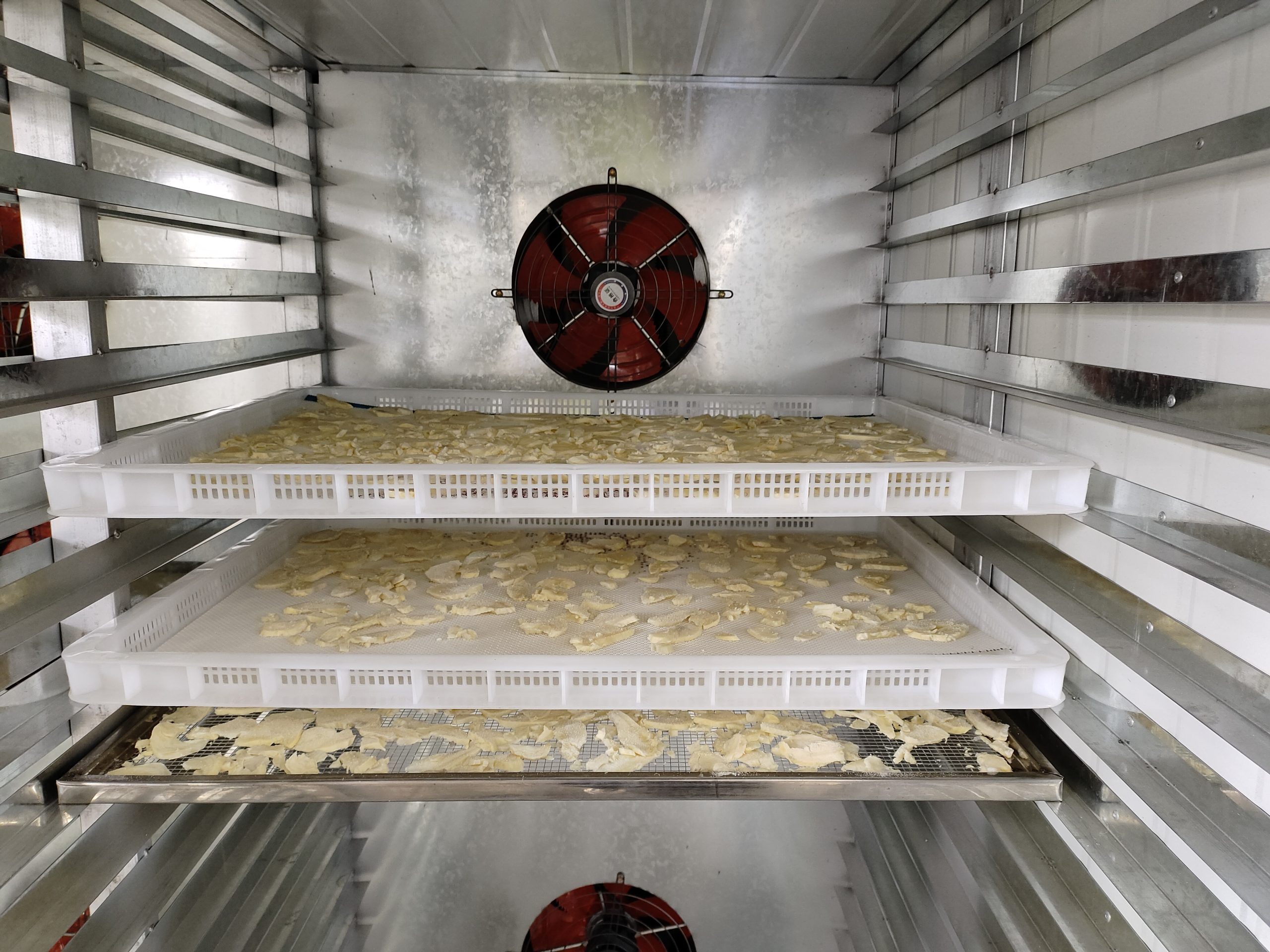
Commercial Durian Dehydration: Preserving Quality with Heat Pump Technology
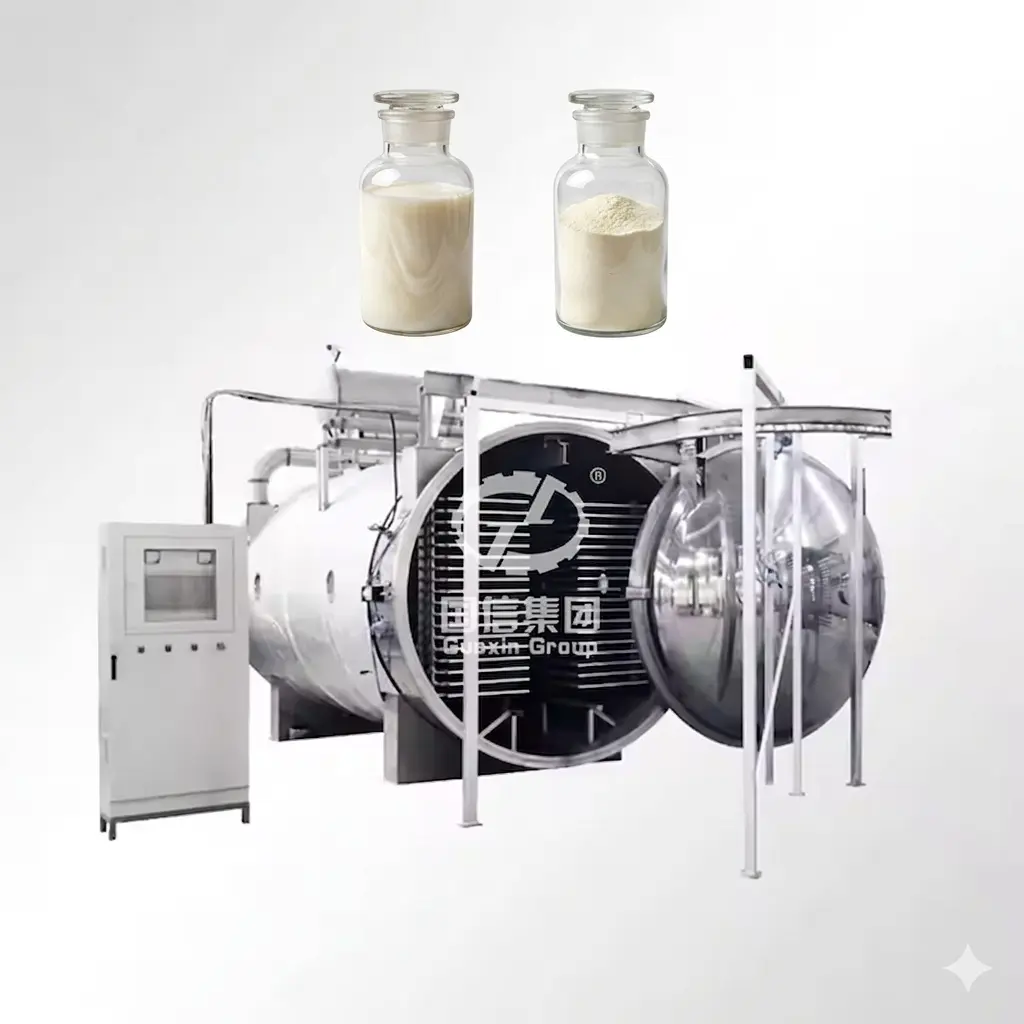
Milk Powder Drying – Parameters for Consistent Final Moisture and Functional Properties
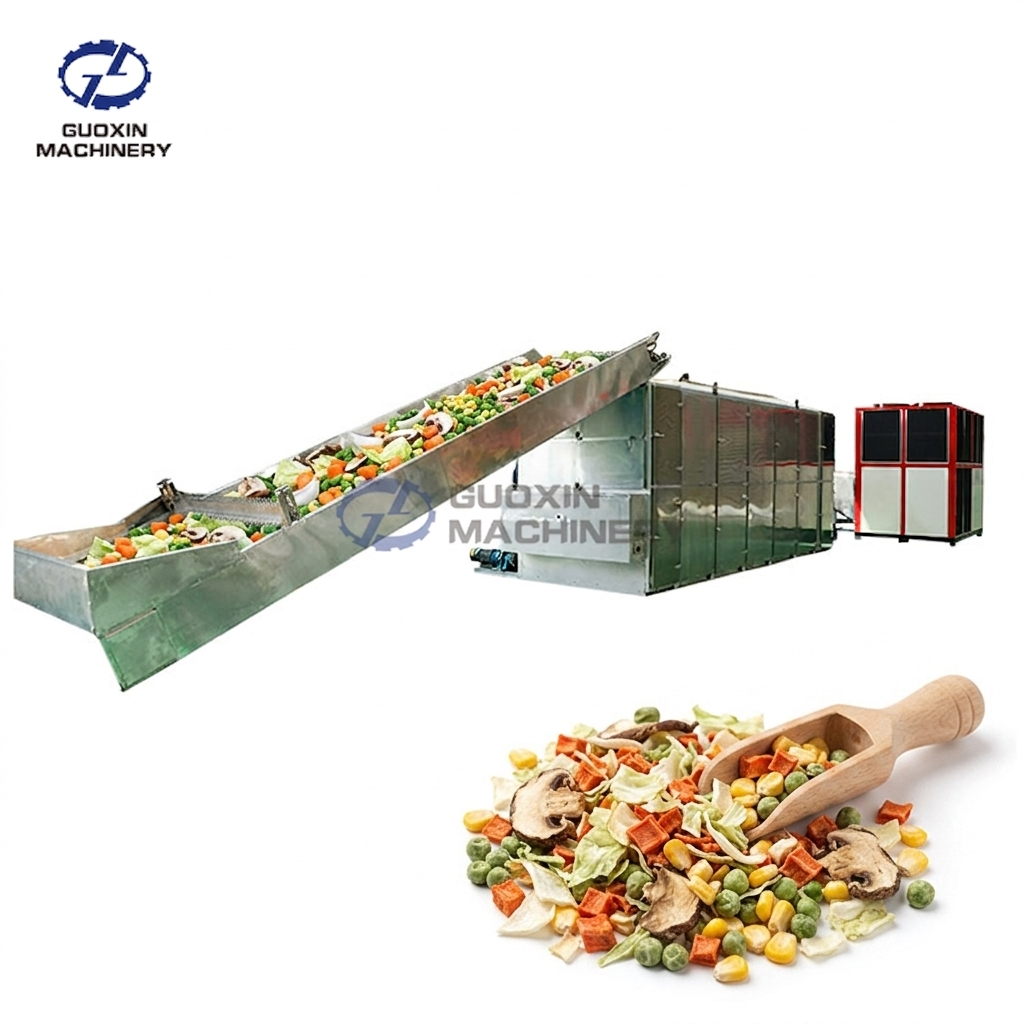
Dehydrated Vegetables for Instant Noodle Seasoning – Drying Parameters for Consistent Quality in Seasoning Packs
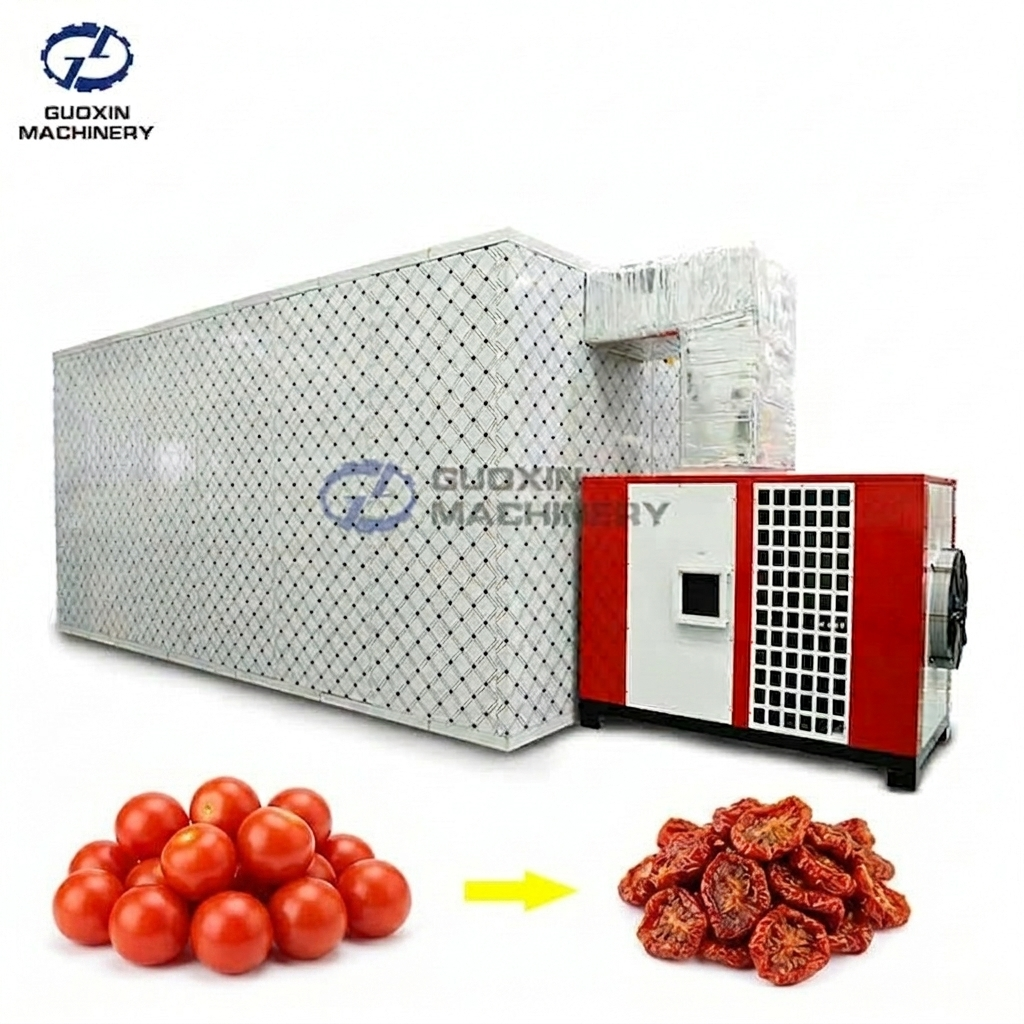
Sun-Dried Tomato Drying – Parameters for Industrial Production of Consistent Tomato Slices
Drying Coffee Beans, Cocoa Nibs and Instant Coffee Powder