© Henan Guoxin Machinery Manufacturing Co., Ltd. All Rights Reserved.



Release time:2026-05-19
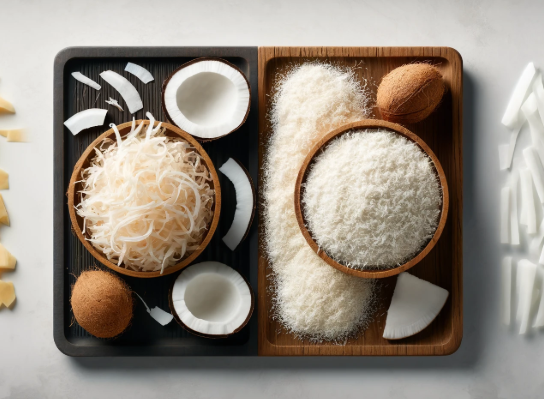
In industrial coconut processing, maintaining the balance between rapid moisture removal, lipid stabilization, and color preservation is critical. Fresh coconut meat has a high oil content (including lauric acid) and an initial moisture content of approximately 50% to 55%.
To meet global export standards, this moisture must be reduced to under 3% while completely avoiding lipid oxidation, yellowing, or structural scorching.
We have fully integrated, continuous multi-layer mesh belt dehydration systems specifically configured for large-scale desiccated coconut (fine/coarse grades) and high-value coconut flakes production. Our systems use advanced thermodynamic configurations, automated mechanical pre-treatment, and downstream material handling to deliver synchronized, high-yield plant operations.
Request Technical Specifications & Customized 3D Processing Plant Layout
Processing coconut at an industrial scale presents specific biochemical and mechanical challenges that cannot be resolved by standard agricultural dryers.
Coconut meat contains high levels of saturated fats. Exposure to processing temperatures exceeding 80°C for extended periods triggers thermal degradation of lauric acid, resulting in rancidity, off-flavors, and browning (the Maillard reaction).
The drying chamber is divided into three distinct operational heat zones. The initial stage uses a high-volume, medium-temperature airflow (70°C to 75°C) to drive off free surface moisture rapidly during the constant-rate drying phase.
As the material moves to the falling-rate phase, the PLC dynamically lowers the temperature to 55°C to 60°C, ensuring the core temperature of the oil-rich meat never reaches the threshold of lipid breakdown, preserving a clean, bright white color profile.
Desiccated coconut consists of fine, shredded particles that easily compact or create non-uniform beds on a conveyor belt, leading to localized wet pockets or over-dried, brittle product.
As the coconut shreds drop from the upper tier to the lower tier, the product bed is inverted and loosened.
This fluidization ensures that horizontal, alternating forced airflow passes evenly through the material bed, ensuring an identical final moisture distribution of 2.5% to 3% across the entire batch.
The following matrix defines the engineered baseline configurations for Guoxin continuous multi-layer mesh belt systems processing desiccated coconut and coconut flakes. Actual structural length and belt configurations are adjusted depending on factory floor space constraints and regional thermal utility choices.
| Operational Parameter | GX-12-4 Continuous System | GX-20-5 Commercial System | GX-25-6 Enterprise Plant |
| Wet Input Capacity Baseline | 400 kg/h to 600 kg/h | 1,000 kg/h to 1,500 kg/h | 2,000 kg/h to 3,500 kg/h+ |
| Conveyor Belt Width | 1,200 mm | 2,000 mm | 2,500 mm |
| Number of Drying Tiers | 4 Layers | 5 Layers | 6 Layers |
| Drying Chamber Length | 10 Meters | 12 Meters | 15 Meters |
| Compatible Heat Sources | Steam / Gas / Heat Pump | Steam / Natural Gas / Thermal Oil | Steam / Natural Gas / Biomass |
| Operational Temperature Curve | 50°C – 80°C (PLC Adjustable) | 50°C – 80°C (PLC Adjustable) | 50°C – 80°C (PLC Adjustable) |
| Material Contact Construction | Food-Grade SUS304 Stainless Steel | Food-Grade SUS304 Stainless Steel | Food-Grade SUS316L / SUS304 |
| Drive & Fan Power Layout | 15 kW to 22 kW | 30 kW to 45 kW | 55 kW to 75 kW+ |
| Standard Electrical Utility | 3-Phase / 380V / 50Hz (Customizable for regional grids) | 3-Phase / 380V / 50Hz (Customizable for regional grids) | 3-Phase / 380V / 50Hz (Customizable for regional grids) |
For enterprise food processors, thermal utility consumption represents the largest single operational variable. Our heating configurations are engineered to optimize thermal transfer efficiency and lower total cost per ton of finished product.
When paired with our high-efficiency heat exchange configurations—utilizing air-energy heat pump modules or industrial steam loops—the system captures energy from the warm, moist exhaust air, recycling the latent heat back into the fresh intake air stream.
In typical processing conditions, our integrated configurations deliver 60% to 75% energy savings compared to traditional open-loop electrical resistance heating elements or outdated direct-fired fossil fuel systems.
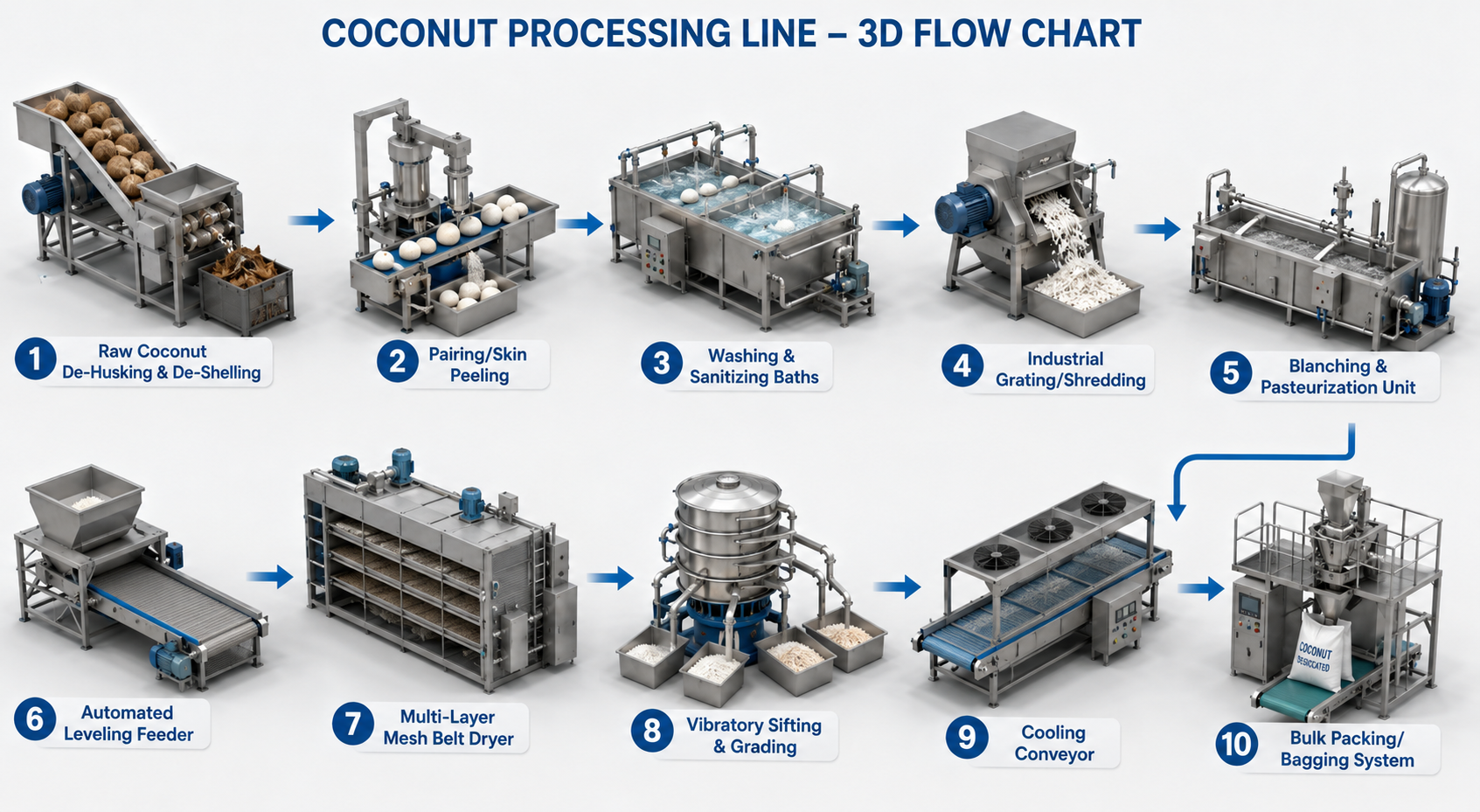
Guoxin Machinery provides single-source engineering, procurement, and construction (EPC) capability. We supply the complete processing pipeline to eliminate integration mismatches between multi-vendor equipment, ensuring synchronized throughput from raw husk to final moisture-proof packaging:
Raw Coconut De-Husking & De-Shelling → Pairing/Skin Peeling→ Washing & Sanitizing Baths → Industrial Grating/Shredding → Blanching & Pasteurization Unit → Automated Leveling Feeder → Multi-Layer Mesh Belt Dryer → Vibratory Sifting & Grading → Cooling Conveyor → Bulk Packing/Bagging System
Request a Comprehensive Turnkey Production Line Layout & Cost Estimate
Q1: How do I select the correct equipment model and capacity configuration for a desiccated coconut line?
A: Model selection depends on two main metrics: your daily raw input volume (measured in tons of wet coconut meat) and your target final product grade (fine granules vs. thick flakes). Fine desiccated coconut packs tightly, creating a denser bed that requires greater static air pressure, whereas flakes allow higher airflow permeability. For plants processing 2 to 5 tons per day, we configure a 4-layer, 10-meter continuous system. For multi-ton enterprise installations (>10 tons/day), we engineer custom multi-tier systems with wider belt widths (up to 2.5 meters) and extended chamber lengths to ensure proper retention times without overloading the conveyor tracks.
Q2: What is the recommended production line configuration for building a new factory?
A: A standard commercial footprint requires an integrated arrangement that splits processing into three zones: Wet Pre-treatment, Thermal Dehydration, and Dry Grading/Packaging. The pre-treatment zone requires stainless steel grating and continuous blanching machinery to stabilize microbial levels before drying. The thermal section houses the multi-layer mesh belt dryer alongside its dedicated heat source infrastructure. The final zone utilizes vibratory grading screens to separate fine powder from standard grades, feeding directly into an environment-controlled packaging room to prevent moisture re-absorption.
Q3: What are the typical investment budget thresholds and expected payback periods (ROI) for this infrastructure?
A: Total capital expenditure (CapEx) varies based on the level of line automation and the selected heating utility (e.g., direct steam boiler connections versus localized air-source heat pump configurations). While the initial equipment acquisition cost for a automated continuous line is higher than batch-type drying rooms, the drastic reduction in manual labor (requiring only 2-3 operators for the entire line) combined with the 60% to 75% utility reduction significantly compresses operating expenditures (OpEx). Based on global market data for export-grade desiccated coconut margins, industrial operators typically achieve full capital investment recovery within 14 to 22 months of continuous factory operation.
Q4: How does the system handle sanitation and food safety compliance for international export?
A: Exporting to regions governed by the FDA, HACCP, or European regulatory bodies requires strict sanitary equipment design. All internal components, including the multi-layer woven mesh belts, product guiding plates, structural frame members, and internal air ducting, are fabricated from certified food-grade SUS304 or SUS316L stainless steel. The internal geometry utilizes a zero-dead-angle design with continuous, ground-smooth welds to prevent organic particles or fats from pooling in crevices. The drying hood incorporates synchronized mechanical lift panels, enabling complete access for high-pressure chemical wash-downs and streamlined Clean-in-Place (CIP) maintenance protocols.
Henan Guoxin Machinery works closely with industrial project managers to verify production performance metrics before final manufacturing.
Contact Our Engineering Team for a Technical Project Proposal
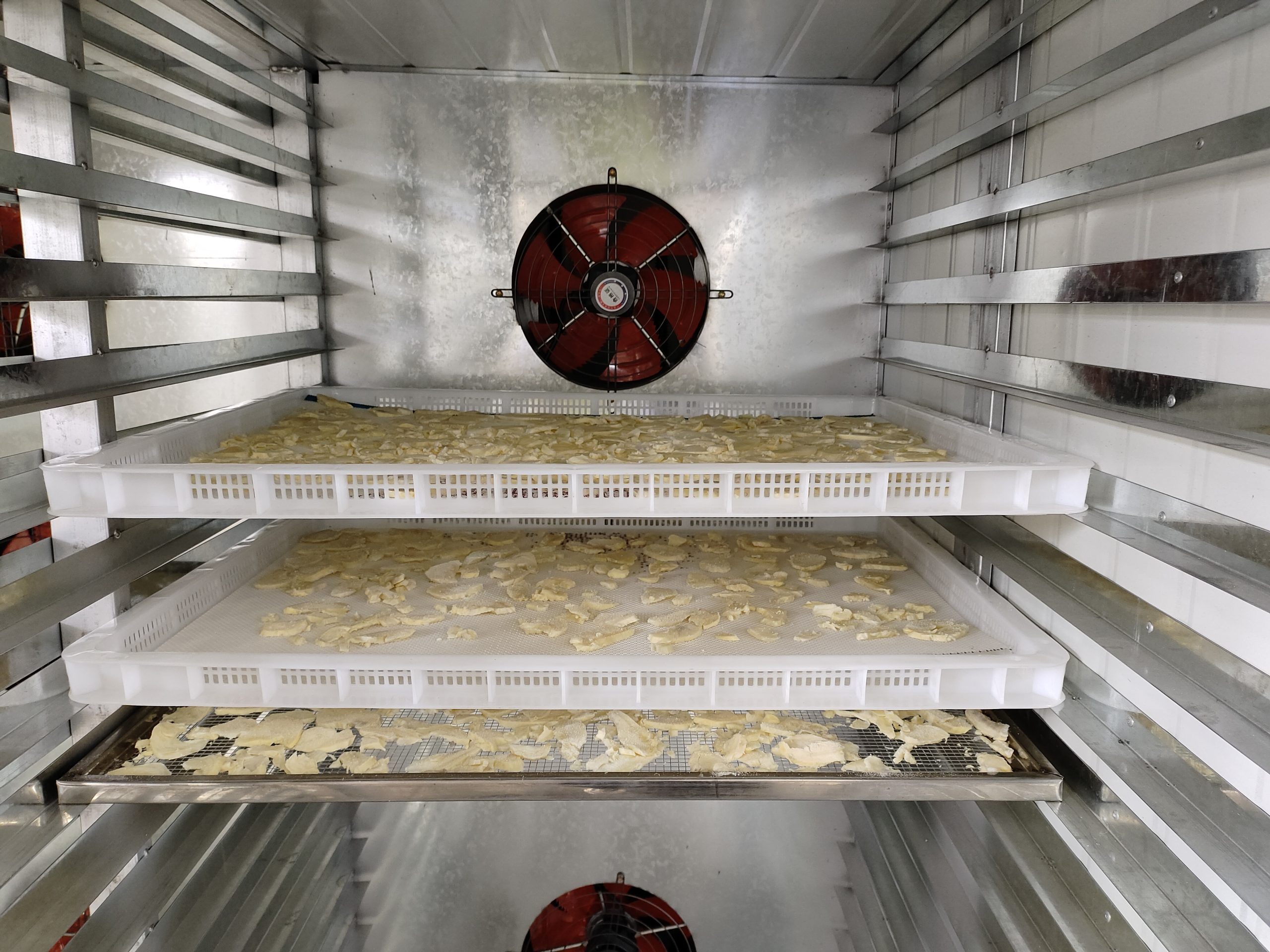
Commercial Durian Dehydration: Preserving Quality with Heat Pump Technology
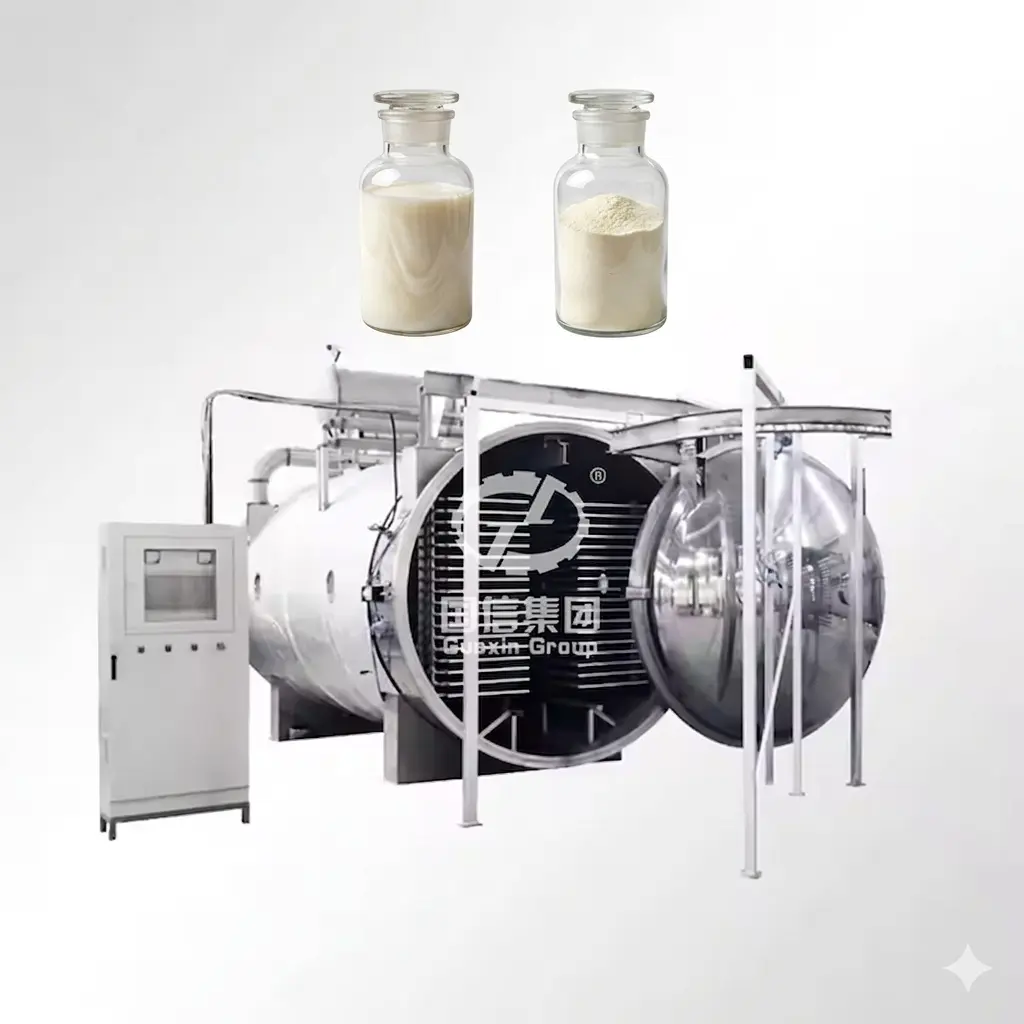
Milk Powder Drying – Parameters for Consistent Final Moisture and Functional Properties
Dehydrated Vegetables for Instant Noodle Seasoning – Drying Parameters for Consistent Quality in Seasoning Packs
Sun-Dried Tomato Drying – Parameters for Industrial Production of Consistent Tomato Slices
Drying Coffee Beans, Cocoa Nibs and Instant Coffee Powder