© Henan Guoxin Machinery Manufacturing Co., Ltd. All Rights Reserved.



Release time:2026-03-10
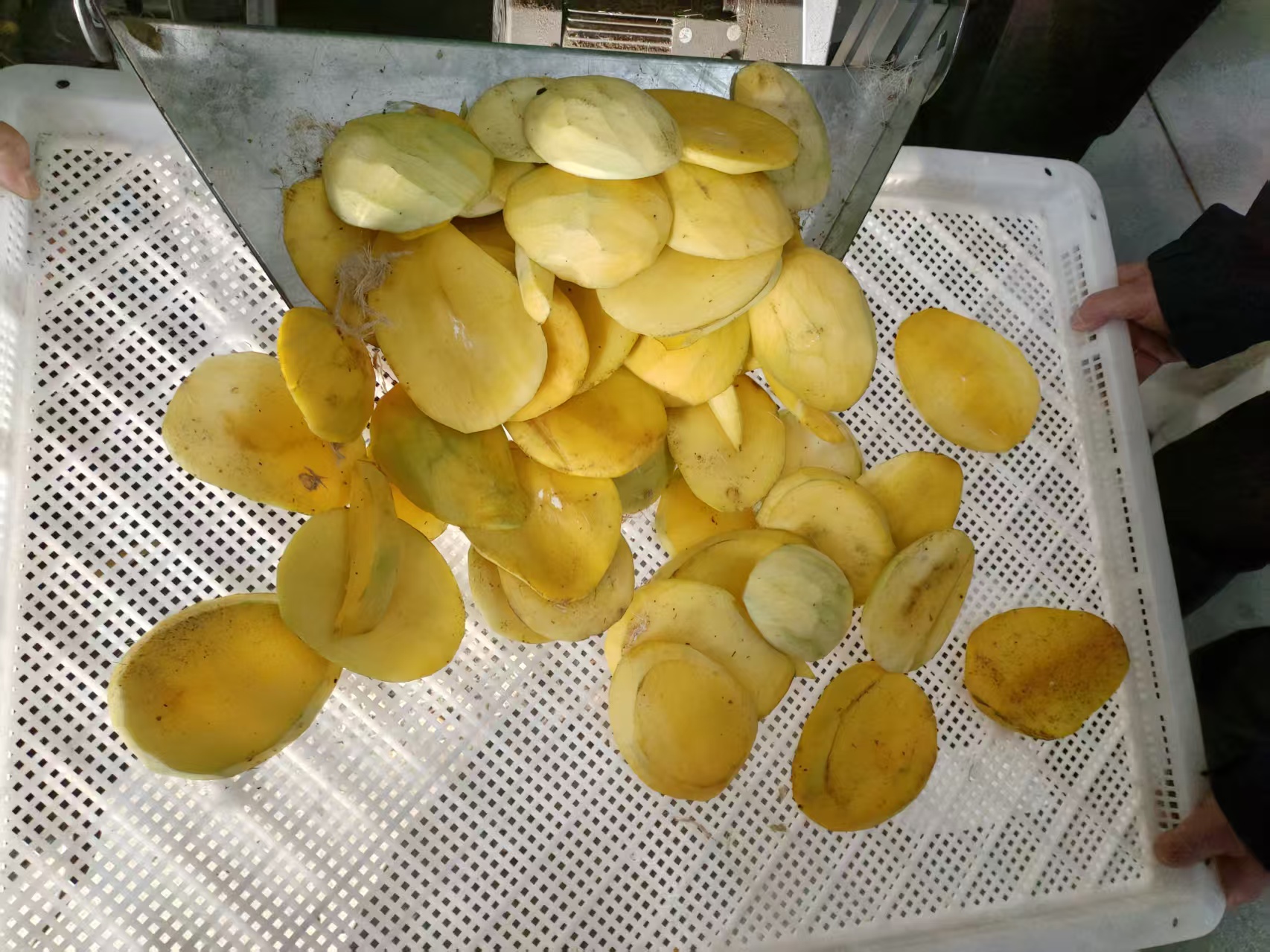
Release Time: March 10, 2026 | Category: Fruit Dehydration Technical Guides | Author: Guoxin Group Process Engineering Team
Dried mango is one of the most commercially profitable tropical dried fruits in the global snack and ingredient markets. Characterized by its vibrant golden color, chewy texture, and sweet tropical aroma, premium dried mango commands a high price point in export markets.
However, for commercial food processors, drying ripe mangoes presents unique technical challenges. Ripe mango flesh contains high sugar levels (15°C – 20°C Brix) and elevated natural moisture (80% – 85%). Without precise thermal and humidity control, mango slices easily suffer from sugar caramelization (browning), tray sticking, surface case hardening, and uneven moisture loss.
This technical guide covers the end-to-end industrial mango dehydration process, comparing traditional drying methods with modern commercial heat pump and continuous mesh belt technologies.
Many agricultural regions traditionally dry mangoes under direct sunlight. While sun drying requires low initial capital, commercial export processors are rapidly transitioning to closed-environment industrial drying systems.
| Processing Factor | Outdoor Sun Drying | Industrial Heat Pump / Mesh Belt Dryer |
| Drying Cycle Duration | 3 to 7 days (Weather dependent) | 6 to 12 hours (Controlled cycle) |
| Final Moisture Control | Unpredictable (15% – 25%) | Precise target (12% – 15%) |
| Visual Color & Quality | High oxidation, dull brownish tint | Vibrant golden-yellow color retention |
| Food Hygiene & Safety | Exposure to dust, insects, mold spores | Closed sanitary environment (HACCP/FDA) |
| Sugar & Flavor Preservation | Loss of aromatic volatiles under ambient UV | Preserved natural mango esters & sweetness |
Key Takeaway: While open-air sun drying works for local home consumption, industrial dehydration is required to meet international export standards, prevent microbial growth, and ensure consistent batch quality year-round.
To produce premium soft-chewy dried mango slices without artificial additives or dark spots, food processing facilities follow a standardized five-step industrial workflow:
[Raw Ripe Mango Selection] ──► [Washing & Mechanical Peeling] ──► [Precision Slicing (5-8mm)] ──► [Anti-Browning Dip] ──► [Multi-Stage Dehydration (55°C-65°C)] ──► [Dehumidified Packing]
Step 1: Selection & Ripeness Grading
Optimal raw mangoes should have a firmness of 3 – 5 kg/cm^2 and sugar content of 14°–18° Brix.
Over-ripe mangoes become too soft to slice cleanly and adhere excessively to trays, while under-ripe green mangoes lack sweetness and yield a sour, tough texture.
Step 2: Washing, Peeling & De-stoning
Whole fruits pass through an air-bubble washing station to flush away latex, dirt, and surface bacteria.
Mechanical fruit peelers remove the tough outer skin with minimal pulp waste before the central pit (seed) is extracted manually or automatically.
Step 3: Precision Slicing & Anti-Browning Pre-treatment
Slice Thickness: Mango flesh is sliced uniformly into 5 mm – 8 mm strips. Slices thinner than 4mm become brittle crisps, while slices over 10mm trap internal moisture and prolong drying times significantly.
Pre-treatment Bath: Slices are briefly dipped in a 0.5% – 1.0% citric acid or ascorbic acid (Vitamin C) solution for 3–5 minutes. This step inactivates polyphenol oxidase enzymes, preventing natural fruit darkening during thermal exposure.
Step 4: Multi-Stage Thermal Drying Curve
For high-sugar ripe mangoes, applying a static single temperature often leads to case hardening. Guoxin Group application engineers recommend a 3-Phase Dehydration Curve:
                              STAGE 1 (Surface Removal)
                                60°C - 65°C | High Exhaust
                                      │
                                      ▼
                              STAGE 2 (Constant Evaporation)
                                55°C - 60°C | Continuous RH Dehumidification
                                      │
                                      ▼
                              STAGE 3 (Final Moisture Trimming)
                                50°C - 55°C | Slow Thermal Equilibrium
Phase 1 (High Moisture Removal): Set chamber temperature to 60°C – 65°Cwith maximum air circulation for 2–3 hours to rapidly evaporate surface moisture.
Phase 2 (Constant Speed Drying): Lower temperature to 55°C – 60°C with relative humidity (RH) set at 20% for 4–6 hours. Water migrates from the core to the surface at a steady rate without scorching sugars.
Phase 3 (Equilibrium & Trimming): Reduce temperature to 50°C – 55°C for 2–3 hours until internal moisture reaches the target 12% – 15%.
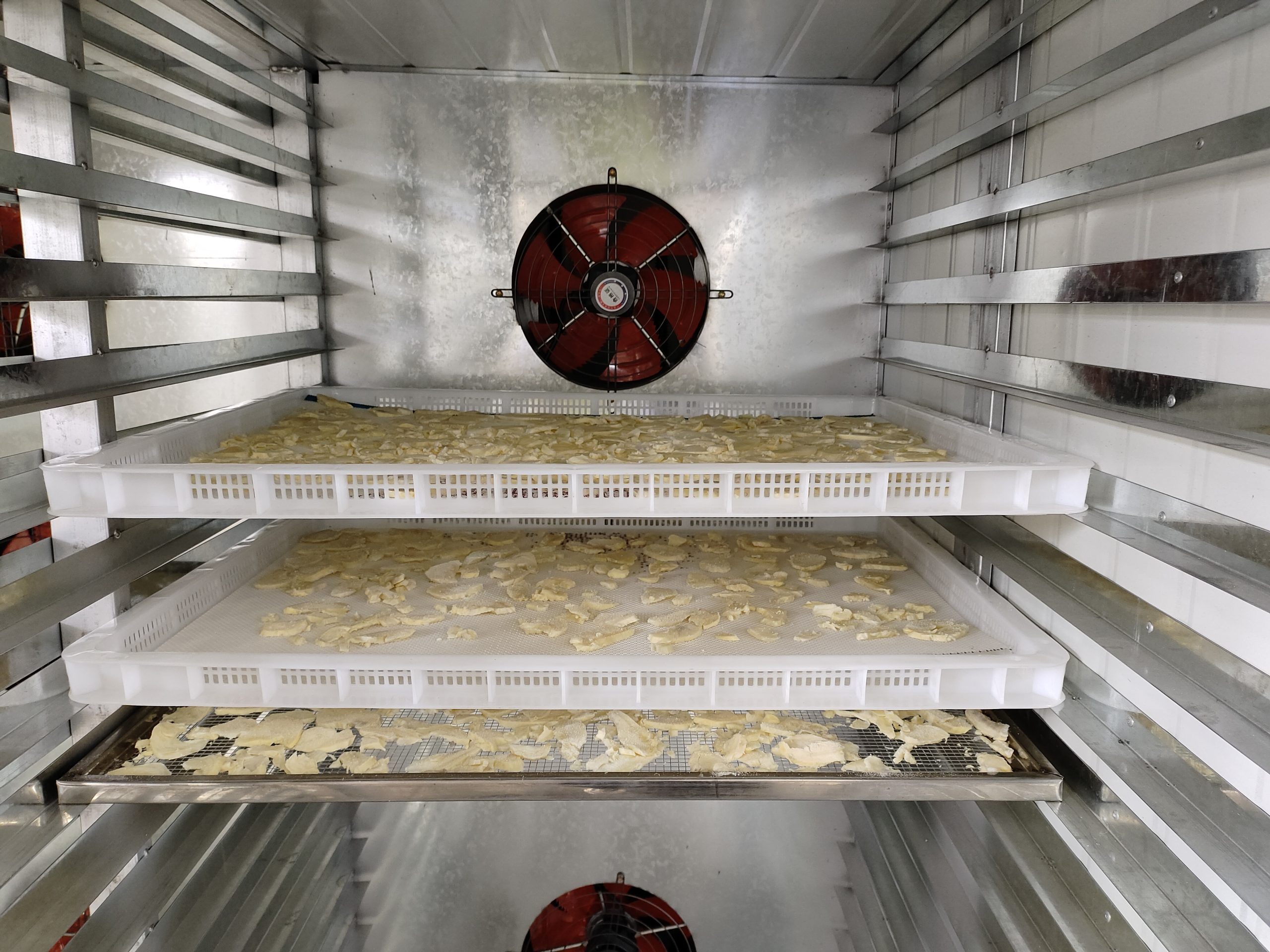
Depending on daily processing targets and factory floor footprints, commercial fruit processors select between two main machinery configurations:
                          ┌─── Air-Energy Heat Pump Tray Dryer ───► Batch Processing (200kg - 3 Tons/batch)
                          │    - Maximum energy savings, non-stick Teflon trays
Mango Dehydration Lines ──┤
                          └─── Continuous Mesh Belt Dryer ────────► Mass Factory Scale (5 - 20+ Tons/day)
                               - Fully automated S-path continuous conveyor
Ideal Capacity: 200kg to 3,000 kg per batch.
Core Advantage: Features a closed-loop refrigeration heat pump that recycles latent heat. Consumes up to 60%–70% less electricity than conventional thermal heating elements. Equipped with food-grade food trays lined with non-stick Teflon mesh to prevent sticky mango sugar adhesion.
Ideal Capacity: 5Tons to 20+ Tonsfresh intake per day.
Core Advantage: Automated 24/7 continuous operation. Slices travel across multi-tiered food-grade $SUS304$ mesh belts, gently flipping between tiers to achieve uniform moisture dissipation without manual tray flipping.
(Indexable HTML specification table for commercial factory planning)
| Facility Scale | Fresh Mango Daily Input | Final Dried Output (14% H₂O) | Recommended Dryer Setup | Target Operational Focus |
| Small Fruit Processing Lab | 300 – 500kg / day | 45 – 75 kg / day | Single Heat Pump Cabinet (15kW) | Specialty organic stores, local boutique brands |
| Medium Commercial Factory | 2 – 5 Tons / day | 300 – 750kg / day} | Dual Heat Pump Chambers / Small Mesh Belt | Regional supermarket supply & bulk white-labeling |
| Large Industrial Export Line | 10 – 20+Tons / day | 1.5 – 3.0Tons / day | Multi-Stage Continuous Mesh Belt Line | Global export markets, continuous dried fruit snack lines |
Q1: How do you keep dried ripe mango slices from sticking to drying trays or mesh belts?
A: Ripe mangoes release natural fructose during thermal drying. To eliminate sticking, commercial processors use food-grade Teflon-coated non-stick tray liners in batch dryers, or application-specific food-grade $SUS304$ wire mesh belts with non-stick silicone coatings in continuous processing lines.
Q2: Why do dried mango slices sometimes turn brown or dark during processing?
A: Darkening occurs due to enzymatic oxidation or high-temperature sugar caramelization. To preserve a bright yellow appearance, maintain drying temperatures strictly below65°C and perform a brief anti-browning pre-treatment dip in a mild organic acid solution (citric acid or ascorbic acid) prior to dehydration.
Q3: How many kilograms of fresh mangoes are needed to produce 1 kg of dried mango?
A: The standard yield ratio for commercial mango dehydration ranges from 7:1 to 9:1. Removing skin, pit, and evaporating moisture from 85% down to 14% wet-basis means approximately 7 to 9 kg of fresh whole mangoes yields 1kgof finished dried mango slices.
Whether you are scaling up from small-batch tray drying or setting up a full-scale automated fruit processing facility, Guoxin Group engineers design customized, energy-efficient dehydration plants tailored to your regional fruit varieties and utility setup.
Commercial Durian Dehydration: Preserving Quality with Heat Pump Technology
Milk Powder Drying – Parameters for Consistent Final Moisture and Functional Properties
Dehydrated Vegetables for Instant Noodle Seasoning – Drying Parameters for Consistent Quality in Seasoning Packs
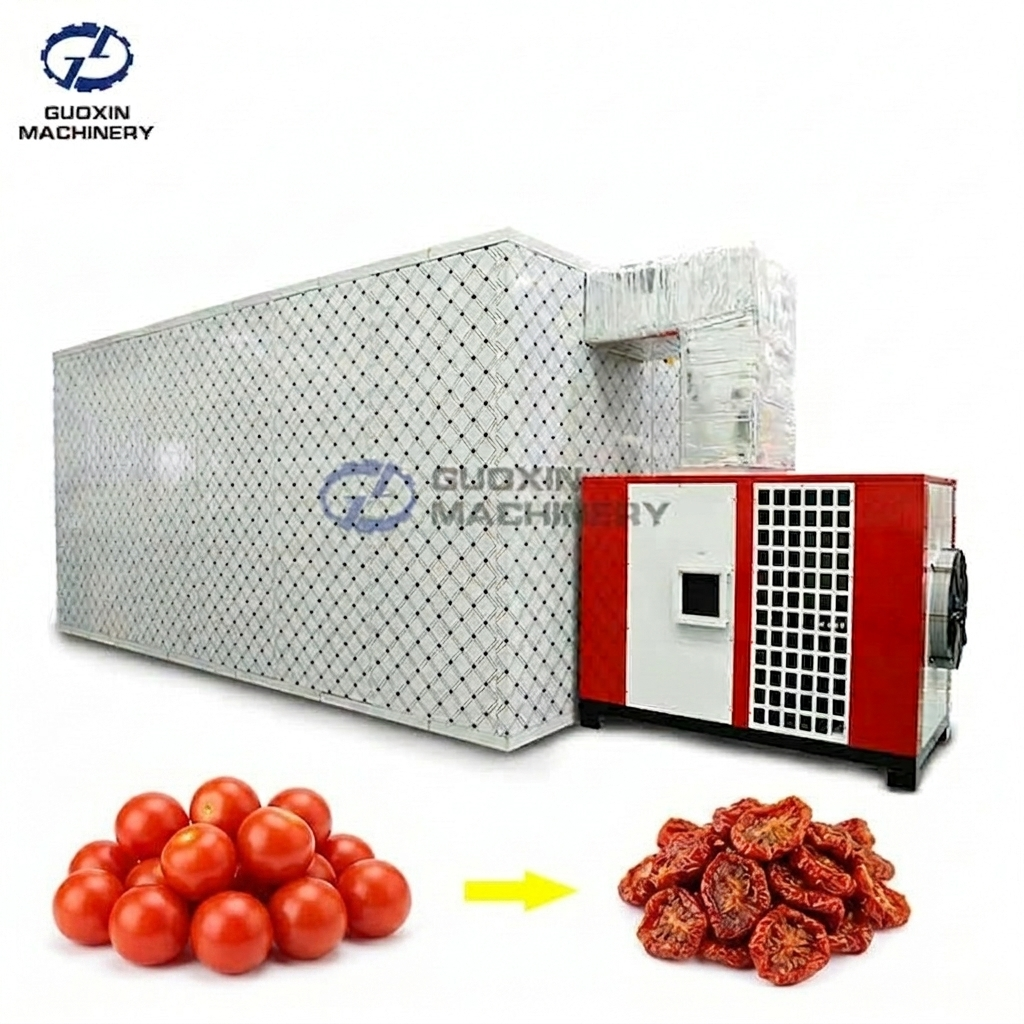
Sun-Dried Tomato Drying – Parameters for Industrial Production of Consistent Tomato Slices
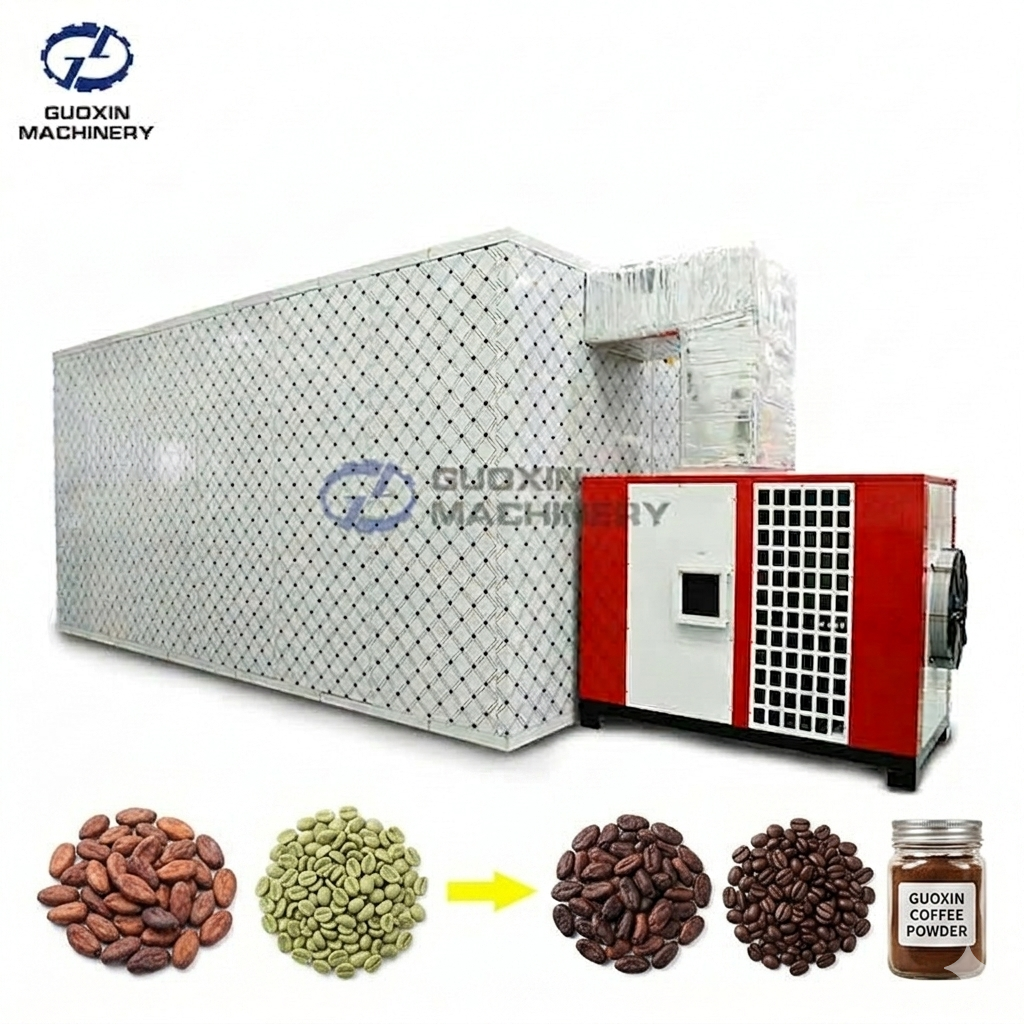
Drying Coffee Beans, Cocoa Nibs and Instant Coffee Powder