© Henan Guoxin Machinery Manufacturing Co., Ltd. All Rights Reserved.



Release time:2026-05-19
Industrial dehydration of high-sugar fig varieties (such as Mission, Adriatic, or Turkey Brown) demands highly calibrated thermodynamic control. Fresh figs possess an exceptionally high initial moisture content of 75% to 80% bound within a dense, soft pulp matrix rich in fructose and glucose. Processing these fruits into a shelf-stable export state requires reducing moisture levels down to an equilibrium of 15% to 18% for whole figs, and 10% to 12% for processed fig slices.
Improper thermal profiling introduces severe processing defects. Excessive heat causes immediate localized sugar caramelization, turning the fruit flesh bitter and black. Conversely, insufficient vapor pressure regulation triggers internal fermentation and souring before moisture can escape the pericarp.
Guoxin Machinery engineers integrated continuous multi-layer mesh belt drying lines utilizing precision thermal zoning and closed-loop dehumidification. These systems optimize moisture mass-transfer rates while preserving the structural integrity, natural color, and high nutrient profile required by premium global markets.
Processing whole figs versus uniform fig slices presents distinct mechanical and biochemical hurdles that traditional single-stage agricultural dryers cannot accommodate.
Whole figs feature a thick, waxy outer skin that acts as a natural barrier to moisture evaporation. If exposed to a high-temperature, low-humidity airflow at the start of processing, the skin dries prematurely and seals. This case hardening traps moisture inside the core, leading to internal rot during storage. Under intense heat, the trapped moisture expands rapidly, causing the skin to rupture and leak sticky syrup.
Our continuous lines implement a Multi-Stage Airflow and Relative Humidity (RH) Curve managed via centralized PLC software.
In the first drying section, the system maintains a high-humidity environment (RH 40% to 50%) at moderate temperatures (55°C to 60°C).
This preserves skin permeability and initiates a steady, uniform migration of core moisture via capillary action. As the figs progress through the subsequent conveyor layers, the PLC reduces humidity and drops the temperature to 45°C to 50°C, ensuring uniform volume contraction without structural splitting.
When figs are sliced, the internal seed and sugar matrix is directly exposed to the mechanical drying environment.
High temperatures liquefy these sugars, causing them to bleed onto the conveyor surface, creating product clumping and severe belt adhesion.
The drying line utilizes custom-fabricated, food-grade non-stick SUS304 stainless steel woven mesh belts.
The continuous system distributes wet fig slices via an automated oscilating spreader to ensure a uniform, non-overlapping product bed.
As the slices transition downward through the multi-layer configuration, alternating vertical cross-flow air paths prevent surface sugars from binding to the mesh grid, delivering clean, individual slices at the discharge gate.
The matrix below defines the engineered configurations for Guoxin continuous multi-tier conveyor drying infrastructure optimized for enterprise-scale fig processing plants.
| Operational Parameter | GX-FG-124 Continuous Line | GX-FG-205 Enterprise Plant | GX-FG-256 Industrial Complex |
| Wet Input Material Throughput | 300 kg/h to 500 kg/h | 1,000 kg/h to 1,800 kg/h | 2,500 kg/h to 4,000 kg/h+ |
| Conveyor Belt Width Options | 1,200 mm | 2,000 mm | 2,500 mm |
| Drying System Tiers | 4 Layers | 5 Layers | 6 Layers |
| Chamber Enclosure Length | 10 Meters | 12 Meters | 16 Meters |
| Available Thermal Utilities | Air-Source Heat Pump / Steam | Steam / Natural Gas / Heat Pump | Direct Steam / Natural Gas Loop |
| Temperature Profile Bounds | 40°C – 75°C (PLC Variable) | 40°C – 75°C (PLC Variable) | 40°C – 75°C (PLC Variable) |
| Conveyor Material Build | Food-Grade SUS304 Mesh | Food-Grade SUS304 Mesh | Food-Grade SUS304 Mesh |
| Air Circulation Vector | Reversing Vertical Cross-Flow | Reversing Vertical Cross-Flow | Reversing Vertical Cross-Flow |
| Control Software Integration | Siemens PLC / Touchscreen HMI | Siemens PLC / Touchscreen HMI | Siemens PLC / SCADA Compatible |
For commercial food ingredient manufacturers, thermal utility efficiency directly impacts the operating cost per ton of finished inventory.
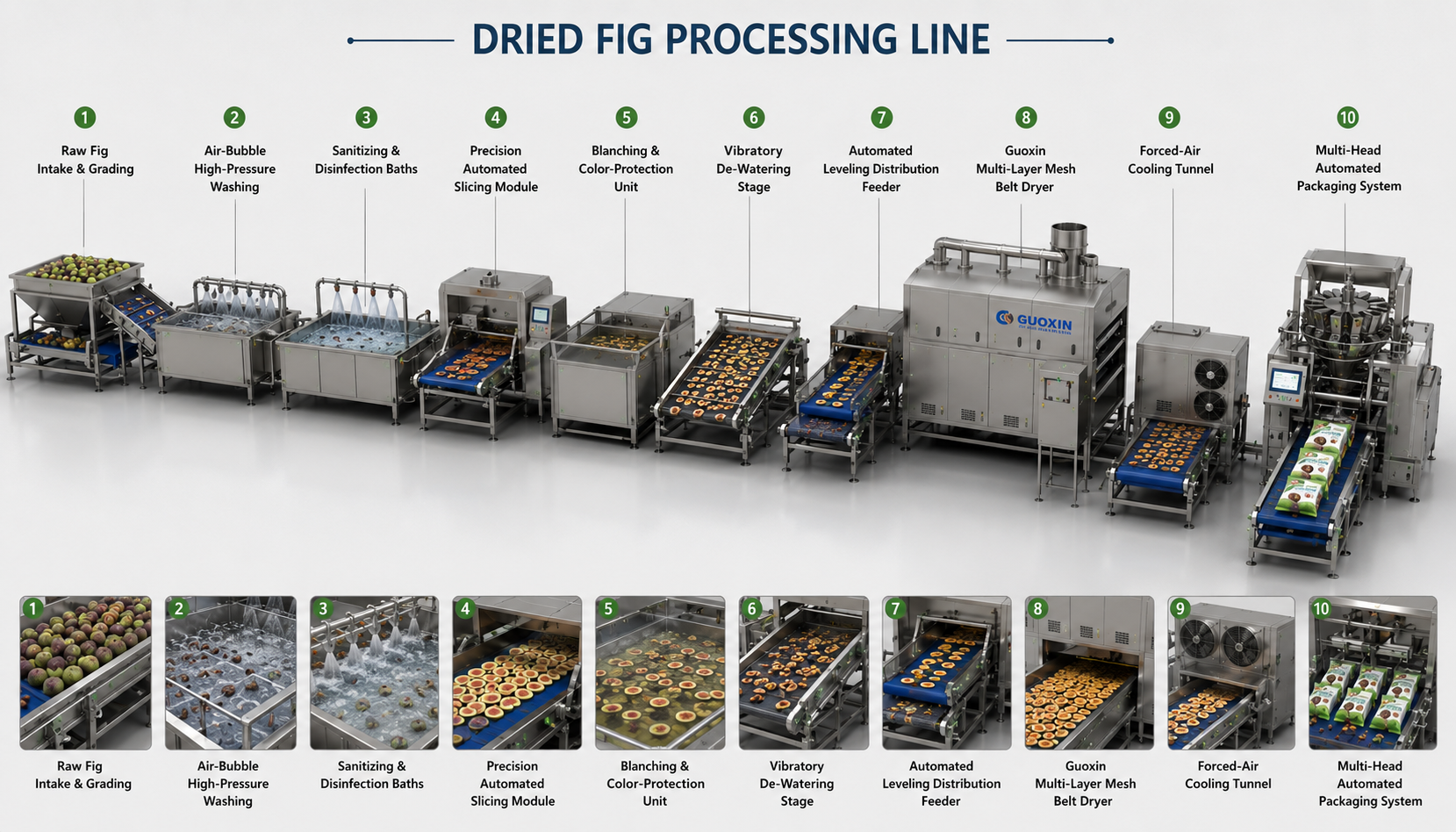
Enterprise processors require comprehensive, single-source factory engineering to establish synchronized processing speeds, maintain rigorous hygiene protocols, and eliminate structural bottleneck risks between components. Guoxin Machinery provides full EPC (Turnkey) production line design:
[Raw Fig Intake & Grading] → [Air-Bubble High-Pressure Washing] → [Sanitizing & Disinfection Baths] → [Precision Automated Slicing Module] → [Blanching & Color-Protection Unit] → [Vibratory De-Watering Stage] → [Automated Leveling Distribution Feeder] → [Guoxin Multi-Layer Mesh Belt Dryer] → [Forced-Air Cooling Tunnel] → [ Grading Machine] → [Multi-Head Automated Packaging System]
Q1: How do I select the correct equipment model and capacity configuration for a commercial fig drying line?
A: Model selection is calculated based on two operational variables: the physical state of the material (whole figs vs. sliced figs) and your daily peak harvest processing volume. Whole figs require up to 2.5 to 3 times longer retention time inside the drying chamber compared to slices due to the waxy pericarp and higher core volume. If your plant targets a throughput of 10 tons of wet whole figs per day, the extended drying curve requires a larger drying area—such as our GX-FG-205 Enterprise Plant with an extended chamber length—to allow the fruits to move slowly through the multi-stage temperature zones without sacrificing output quality.
Q2: What is the recommended factory layout for building an export-grade fig processing facility?
A: To pass international food safety audits, the factory must be divided into segregated processing zones. The pre-treatment machinery (washing, slicing, blanching, and de-watering) is placed in a designated “Wet Processing Zone” with specialized floor drainage systems. The automatic fig fruits mesh belt drying line serves as the structural transition barrier through the main facility wall. The discharge end of the drying system outputs directly into a positive-pressure, climate-controlled “Clean Packaging Zone” running ambient relative humidity below 40% to prevent dried figs from absorbing atmospheric moisture before automated packaging occurs.
Q3: What are the typical investment budget thresholds and expected payback periods (ROI) for this infrastructure?
A: Total capital expenditure (CapEx) depends on the scale of processing, the integration of automated pre-treatment lines (such as optical sorting or automated slicers), and the choice of primary heat source. While the initial capital cost for a fully continuous automated line is higher than basic batch tray-drying systems, it significantly reduces manual labor dependencies, requiring only 2 to 3 operators to manage the entire processing line. Combined with the 60% to 75% reduction in utility consumption, commercial operators typically achieve complete capital investment recovery within 14 to 22 months of plant operation.
Q4: How does the mechanical design satisfy global sanitation and food-contact compliance standards?
A: To ensure full compliance with international food regulations (including FDA, HACCP, and European CE directives), all structural frameworks, internal air-routing louvers, exterior panels, and continuous woven mesh belts are fabricated exclusively from food-grade SUS304 stainless steel. Internal surfaces feature a smooth, polished finish with a radius-corner design that prevents product debris or high-sugar deposits from building up in corners. The outer enclosure is built with large, double-sealed inspection doors to provide complete access for high-pressure chemical wash-downs and streamlined Clean-in-Place (CIP) sanitization routines.
Henan Guoxin Machinery collaborates with international agricultural cooperatives and commercial food brands to validate system performance metrics before manufacturing begins.
Contact Our Engineering Team for a Technical Project Proposal
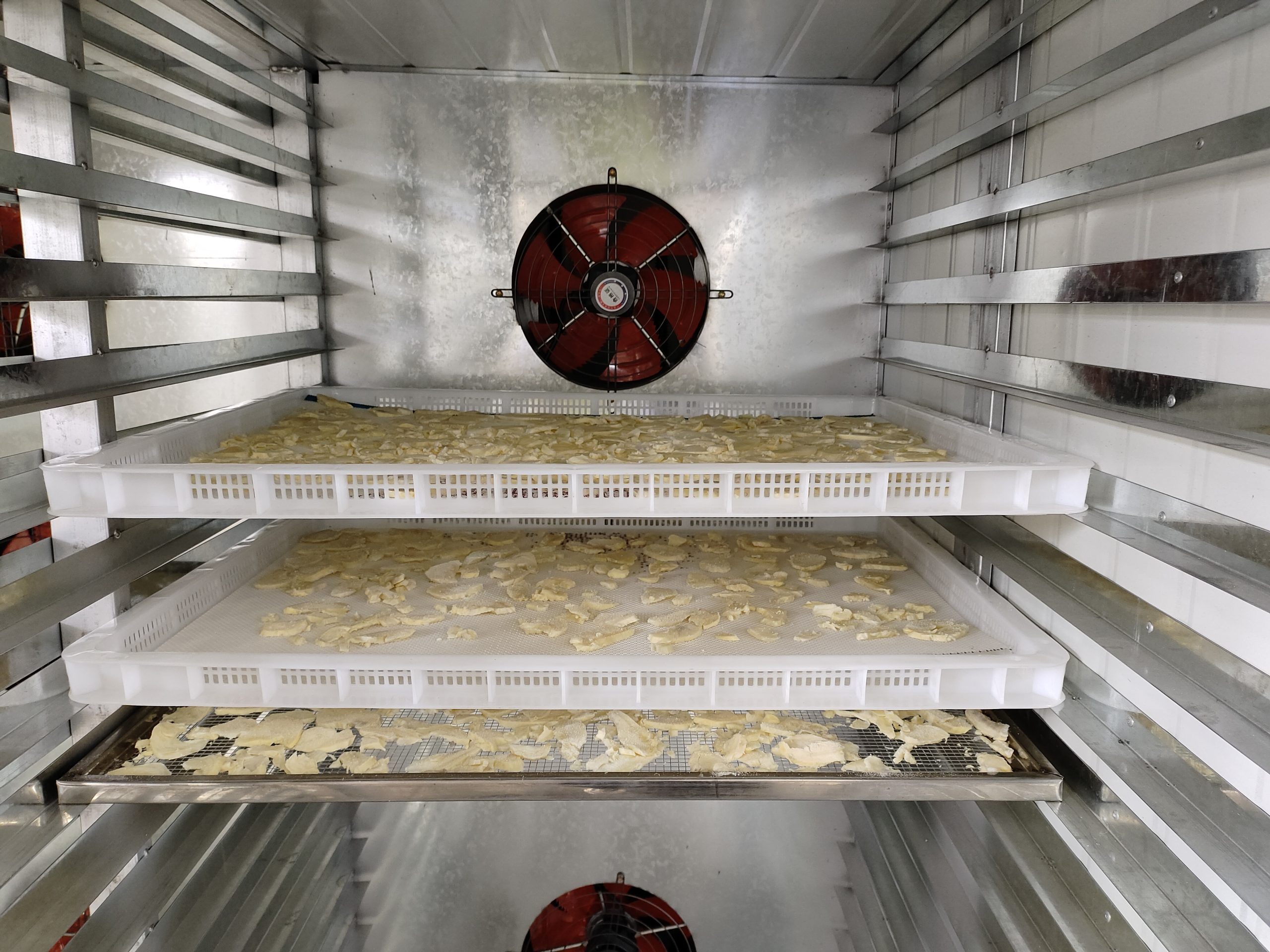
Commercial Durian Dehydration: Preserving Quality with Heat Pump Technology
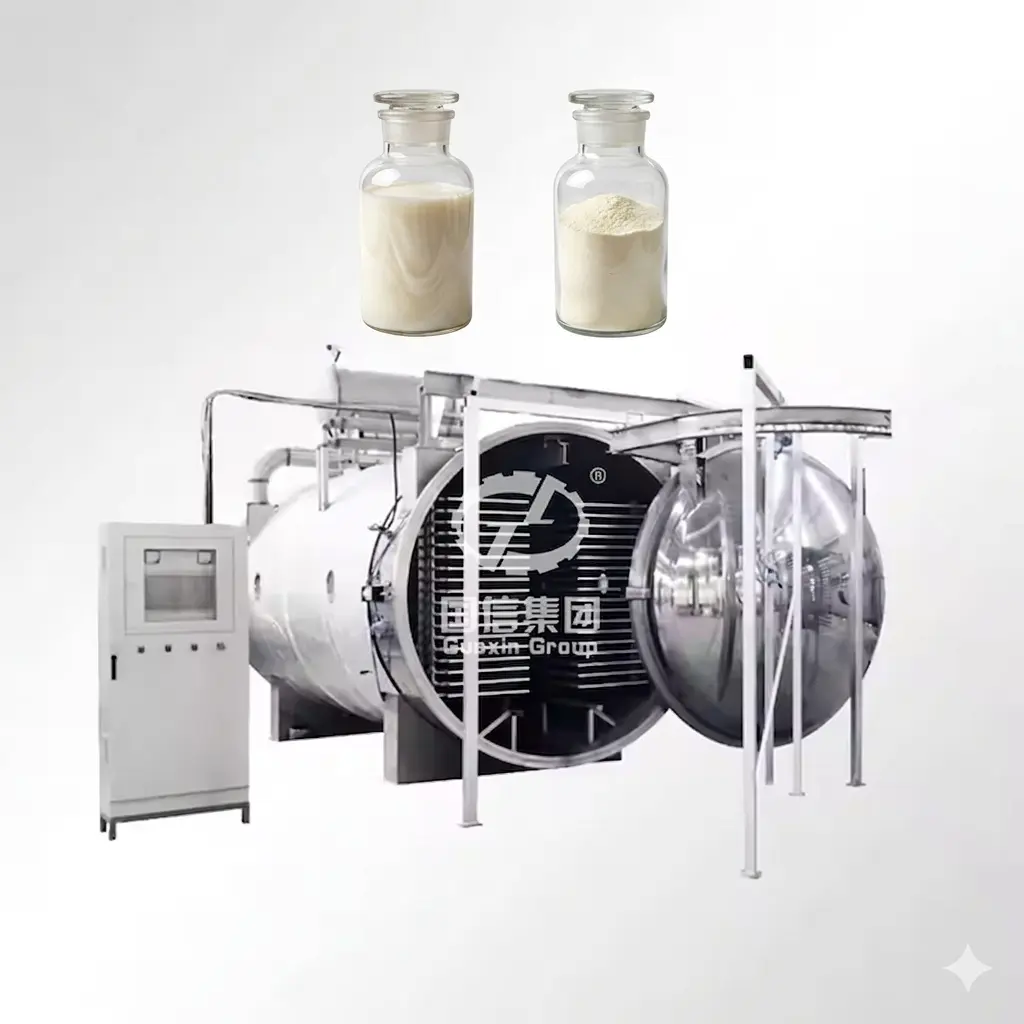
Milk Powder Drying – Parameters for Consistent Final Moisture and Functional Properties
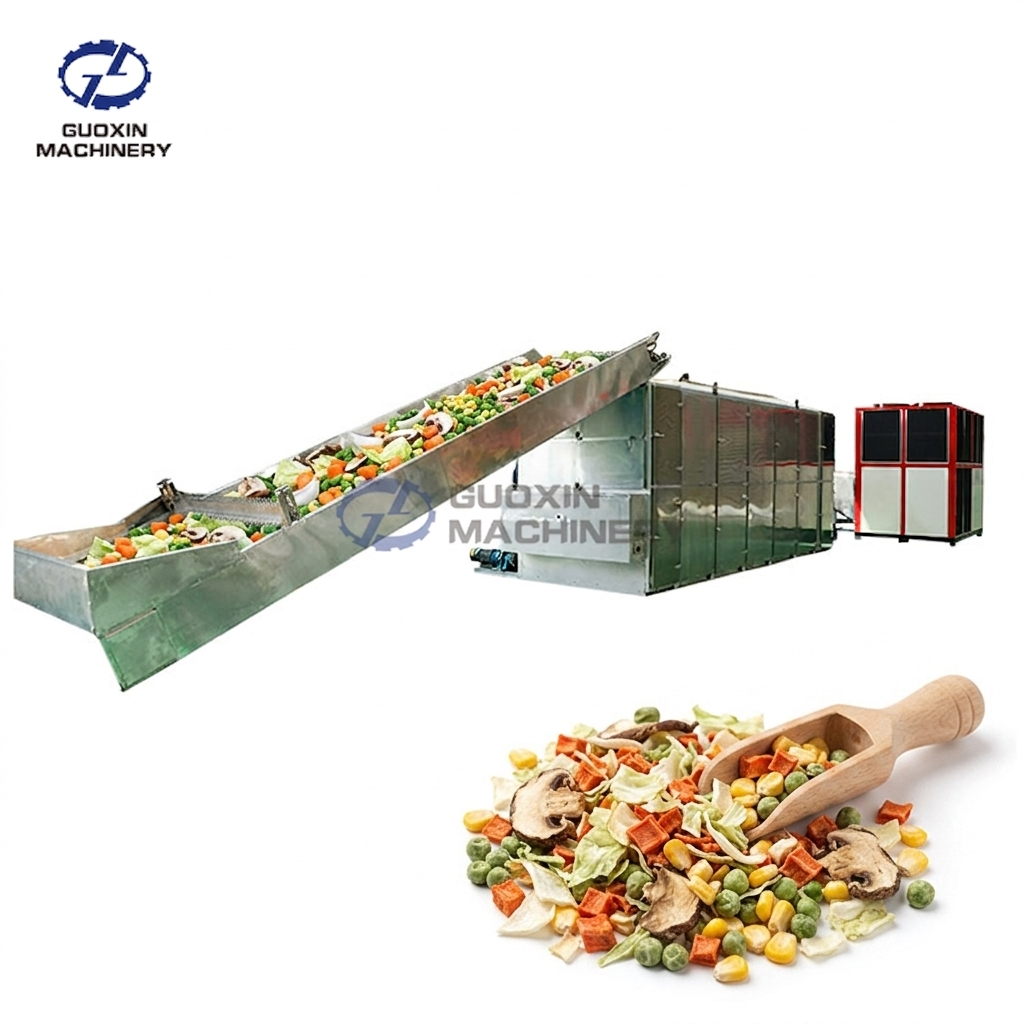
Dehydrated Vegetables for Instant Noodle Seasoning – Drying Parameters for Consistent Quality in Seasoning Packs
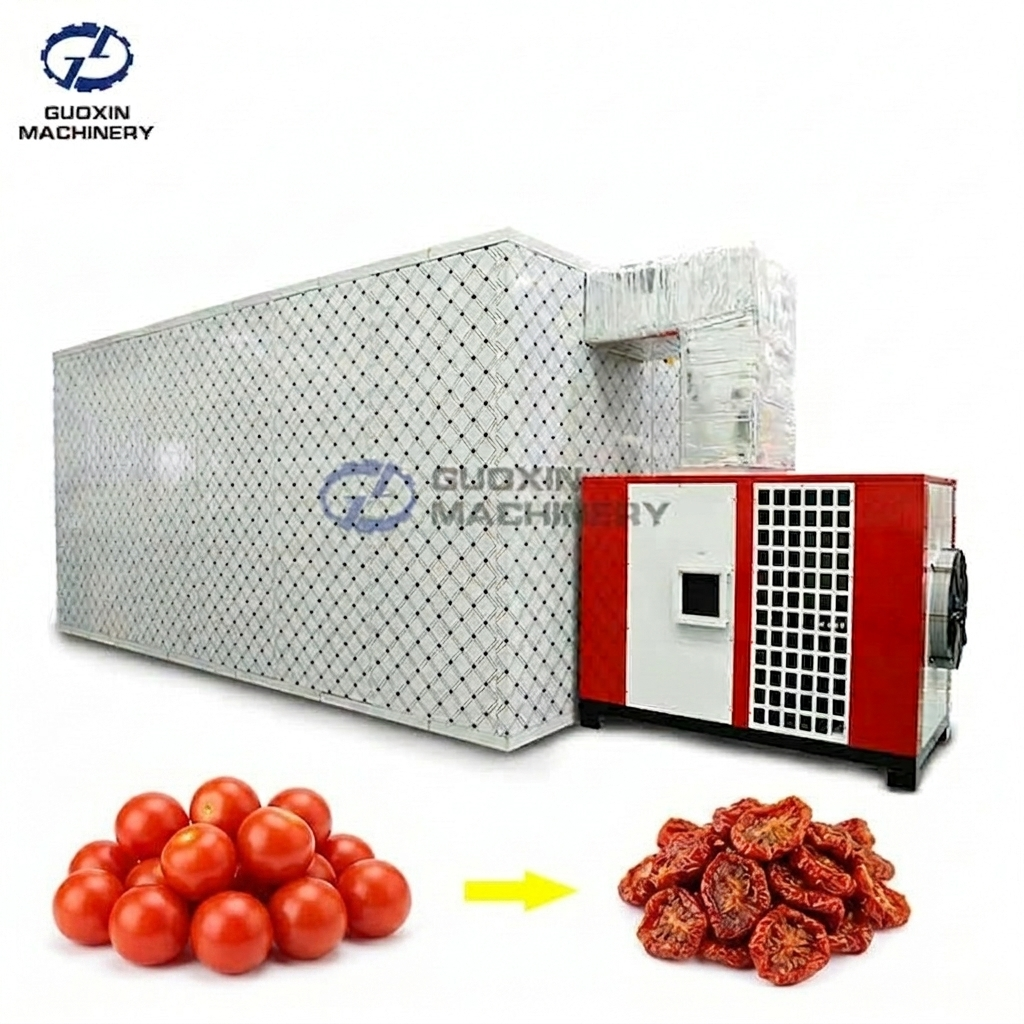
Sun-Dried Tomato Drying – Parameters for Industrial Production of Consistent Tomato Slices
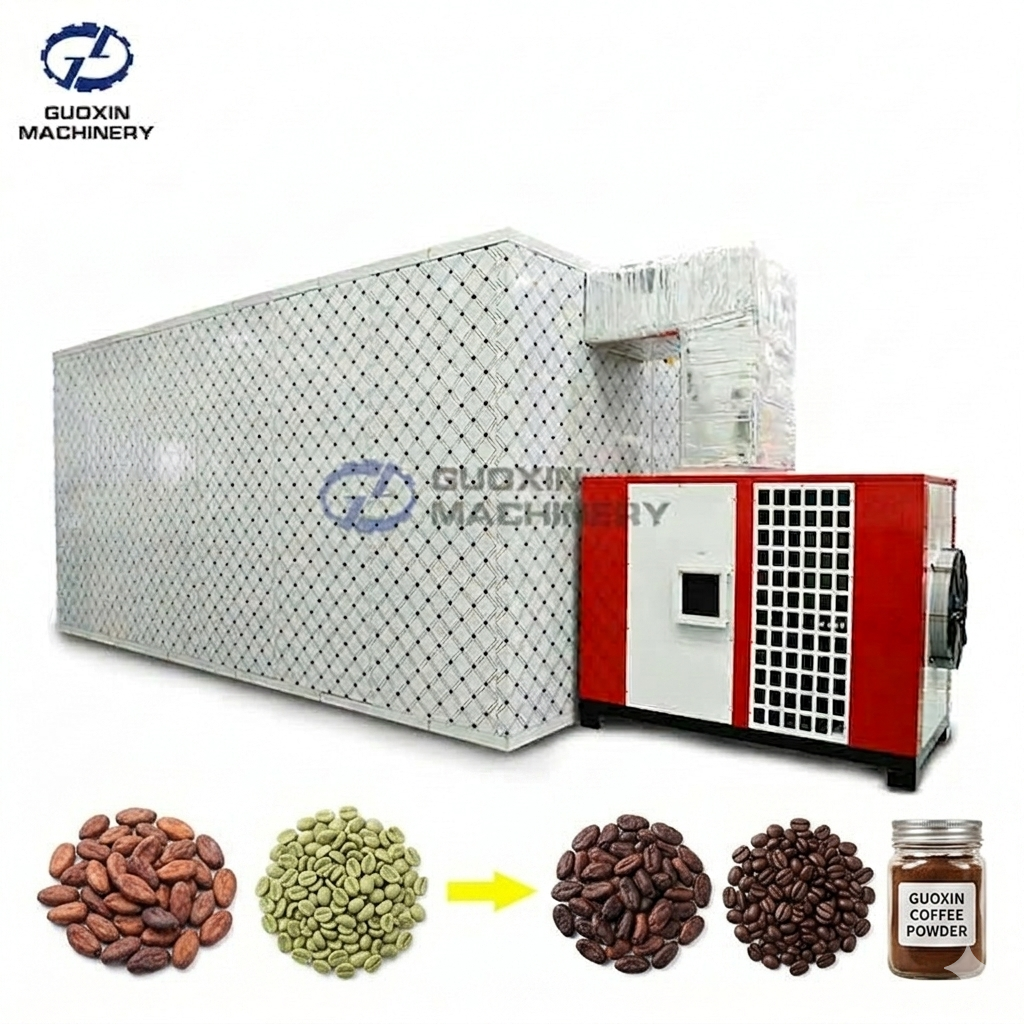
Drying Coffee Beans, Cocoa Nibs and Instant Coffee Powder