© Henan Guoxin Machinery Manufacturing Co., Ltd. All Rights Reserved.



Release time:2026-06-04
This fully integrated automated ginger processing installation delivers a continuous raw material processing capacity of 10 to 50 Metric Tons per 24-hour shift, extracting surface and cellular moisture from an initial 80%–85% down to a precise final equilibrium of 10%–12% while preserving a uniform natural yellow coloration across the entire production lot.
A commercial agricultural exporter based in Indonesia required an industrial-scale infrastructure upgrade to process fresh, locally harvested ginger (Zingiber officinale) roots into high-value dehydrated slices for the international pharmaceutical, spice, and extraction markets.
The tropical maritime climate of Indonesia presents severe processing bottlenecks. Harvested ginger carries heavy alluvial clay matrices, root hairs, and high surface microbial loads. With an initial moisture content of 80% to 85%, fresh ginger spoils rapidly under high ambient humidity if not washed, sliced, and dehydrated within a critical post-harvest window.
Traditional batch drying methods or uncalibrated static ovens result in uneven moisture distribution, localized scorching, and “case hardening”—where the outer layer of the ginger slice dries into a hard shell, trapping water inside the core. This structural defect triggers internal mold formation during maritime shipping and causes severe degradation of the active ingredient, gingerol, lowering the market value of the product.
To eliminate manual handling costs and enforce strict global food-safety compliance, Guoxin Machinery designed and commissioned a continuous, linearly integrated production line. The complete automated sequence operates via a centralized control framework:
[Rotary Drum Initial Washer] → [Secondary Brush Roller Deep Cleanser] → [Conveyor Matrix] → [Industrial Centrifugal Slicing Module] → [Automated Leveling Feeder] → [Guoxin Multi-Tier Continuous Mesh Belt Dehydrator] → [Automatic Discharging System] → [Direct Bulk Packaging Gate]
Operating costs per dry metric ton dictate the global price competitiveness of the finished spice. This industrial installation features built-in thermal efficiency configurations to optimize factory utility expenditures.
The table below outlines specific, verified industrial configurations for Guoxin continuous multi-tier mesh belt processing lines deployed for ginger dehydration projects.
| Technical Parameter | GX-GG-124 Standard Line | GX-GG-205 Indonesian Plant | GX-GG-256 Industrial Complex |
| Daily Raw Input Capacity | 8 to 12 Tons per Day | 20 to 30 Tons per Day | 40 to 60 Tons per Day+ |
| Effective Conveyor Belt Width | 1,200 mm | 2,000 mm | 2,500 mm |
| Drying Enclosure Tiers | 4 Layers | 5 Layers | 6 Layers |
| Total Equipment Length | 12 Meters | 16 Meters | 26 Meters |
| Slicing Thickness Precision | 2.0 mm – 6.0 mm (pm 0.2 mm) | 2.0 mm – 6.0 mm (pm 0.2 mm) | 2.0 mm – 6.0 mm (pm 0.2 mm) |
| Chassis Build Metallurgy | Food-Grade SUS304 | Food-Grade SUS304 | Full Premium SUS304 Stainless |
| Primary Thermal Utilities | Natural Gas / Diesel / Steam | Natural Gas / LNG / Biomass | Natural Gas / Steam Boiler Loops |
| Air Circulation Fan Drive | Variable Speed Axial Fans | VFD High-Volume Axials | SCADA Integrated Centrifugals |
| Automation Integration | Central PLC Control Panel | Siemens PLC / Touchscreen HMI | Complete Factory SCADA / Profinet |
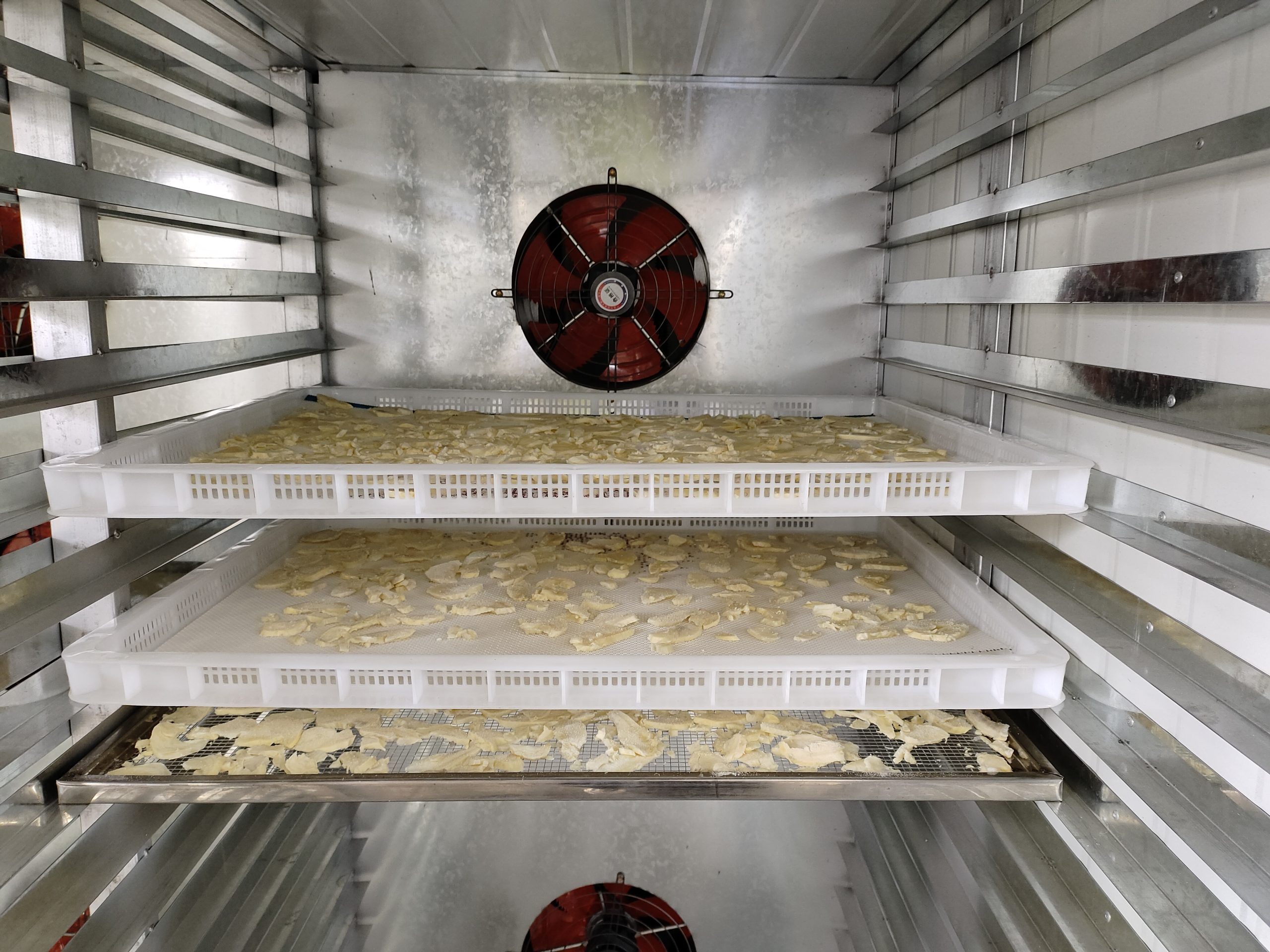
Commercial Durian Dehydration: Preserving Quality with Heat Pump Technology
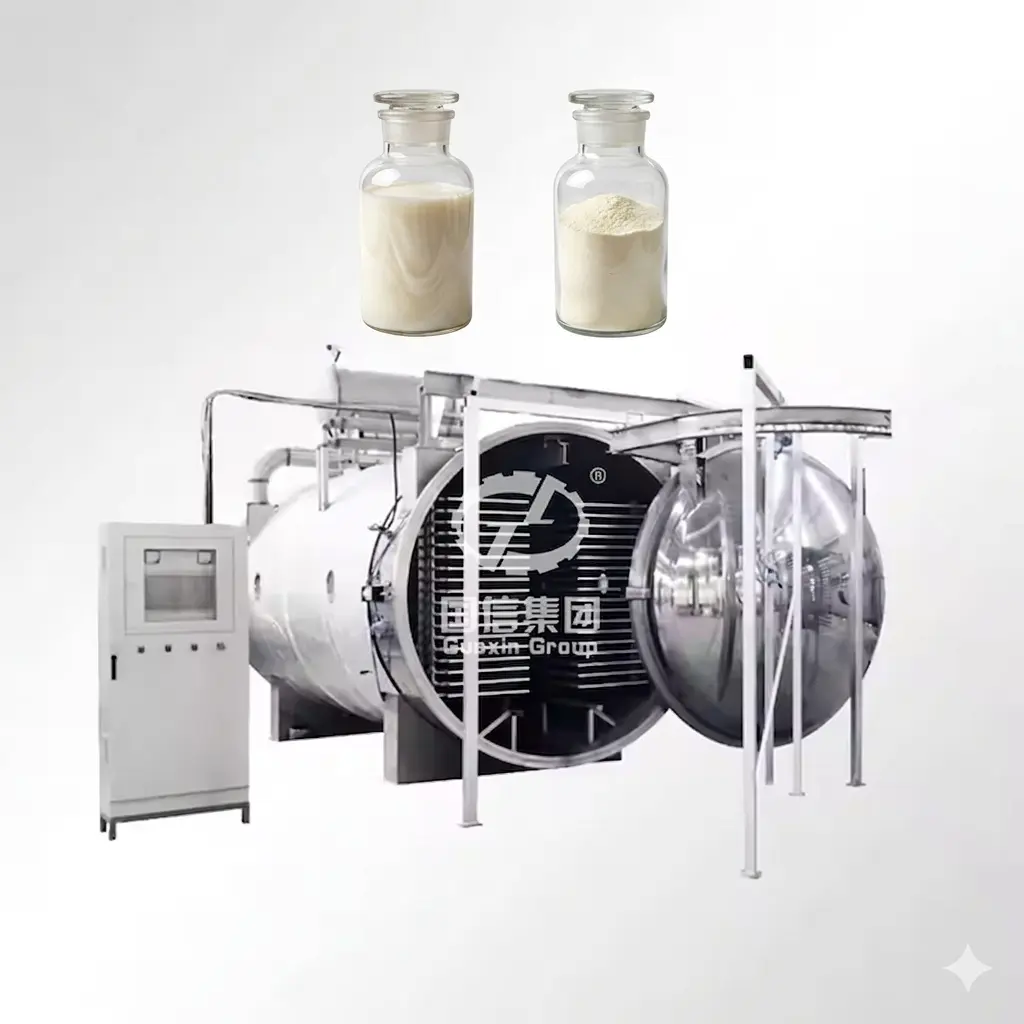
Milk Powder Drying – Parameters for Consistent Final Moisture and Functional Properties
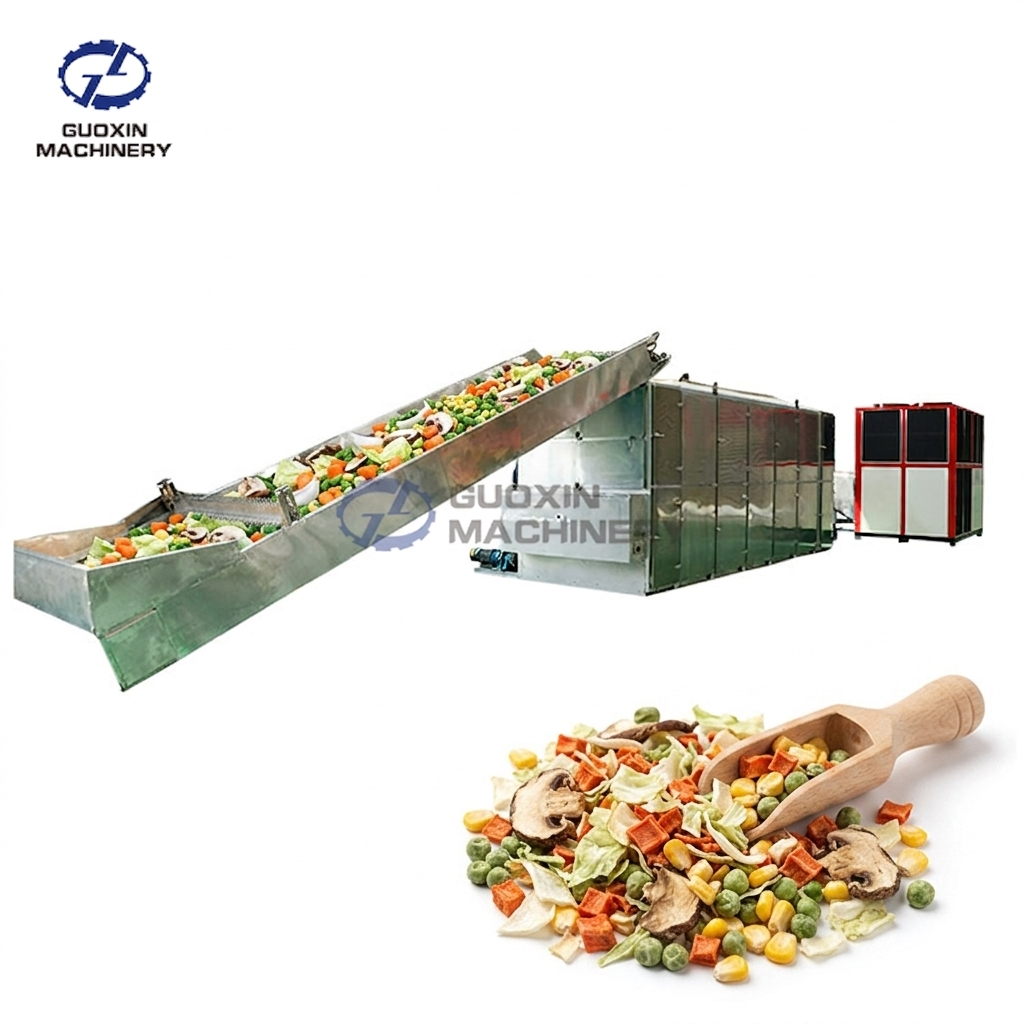
Dehydrated Vegetables for Instant Noodle Seasoning – Drying Parameters for Consistent Quality in Seasoning Packs
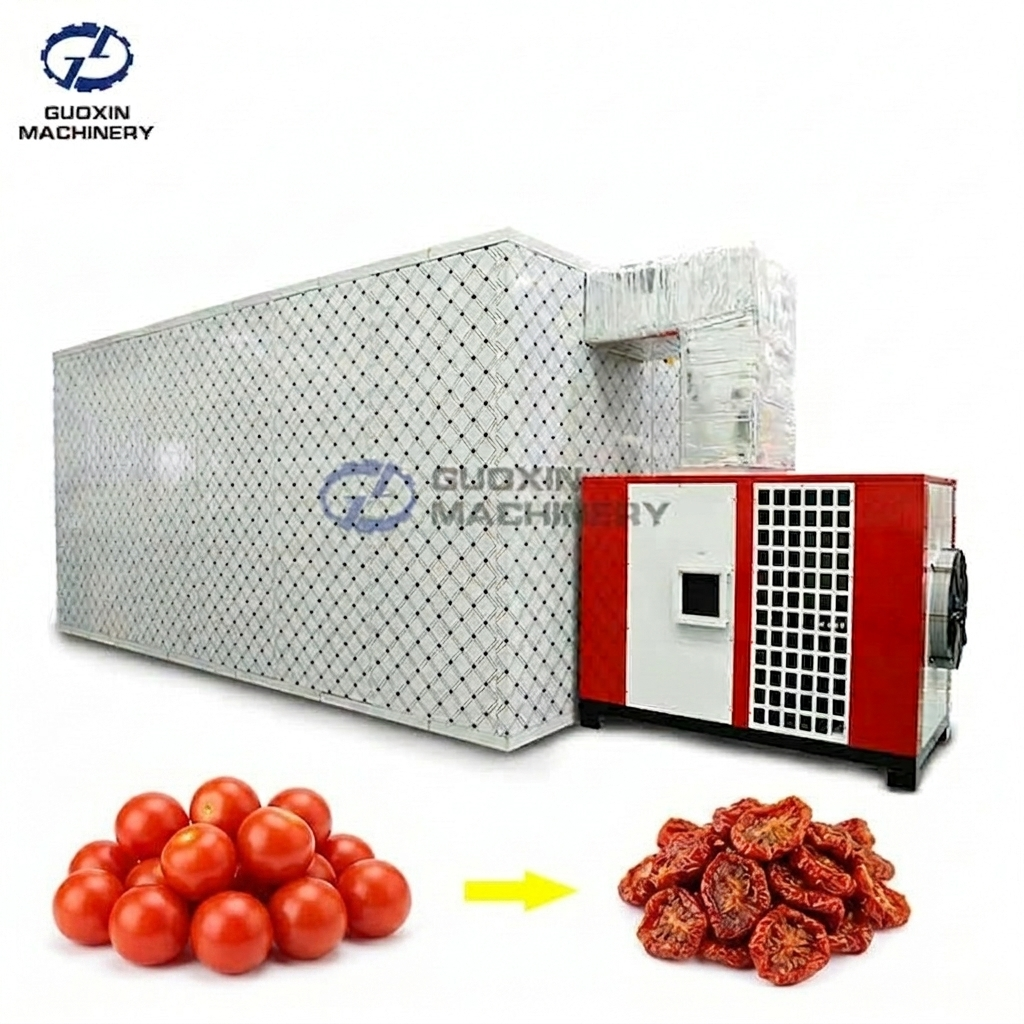
Sun-Dried Tomato Drying – Parameters for Industrial Production of Consistent Tomato Slices
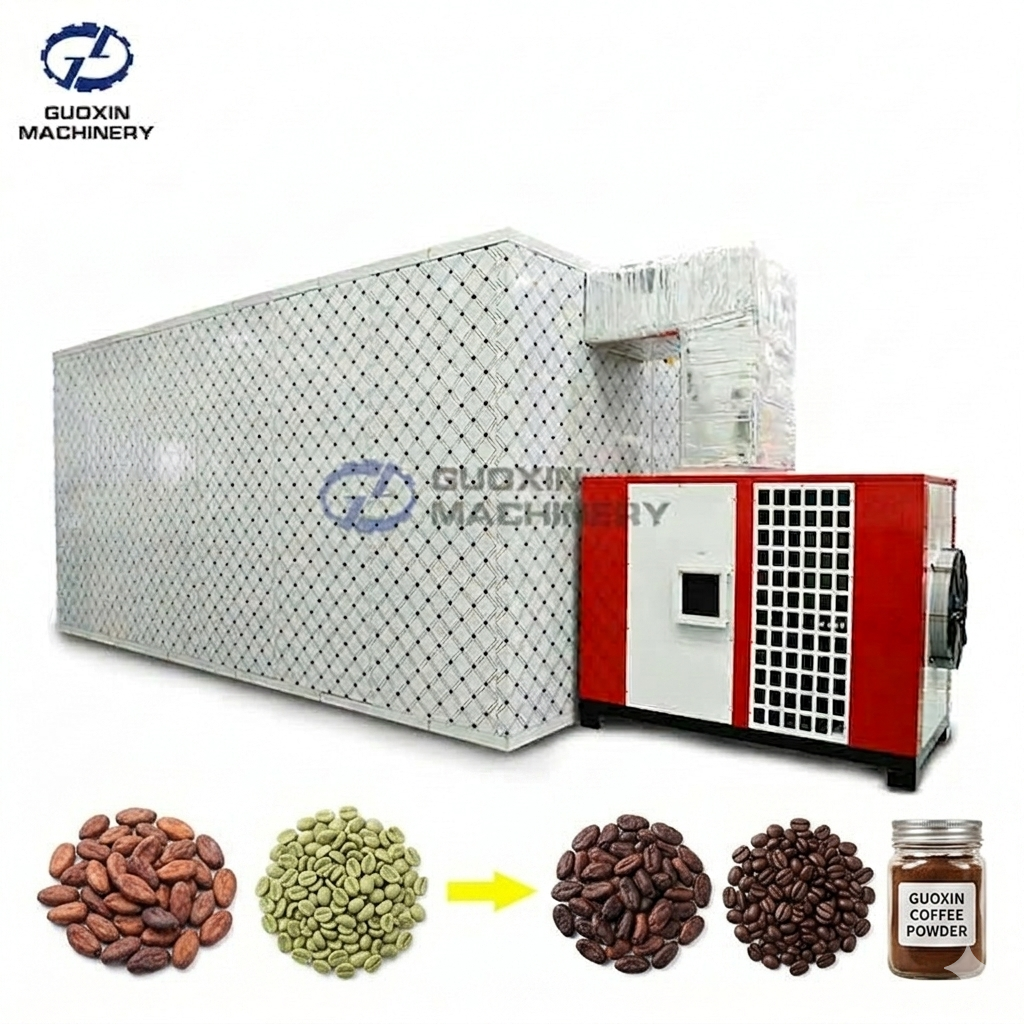
Drying Coffee Beans, Cocoa Nibs and Instant Coffee Powder