© Henan Guoxin Machinery Manufacturing Co., Ltd. All Rights Reserved.



Release time:2026-05-07
This project highlights the transition from manual batch processing to a fully automated, continuous production line. For industrial spice manufacturers, the goal is to maximize throughput while maintaining the high capsaicin content and vibrant red color that define market value.
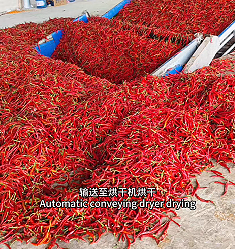
Step 1: Industrial Bubble Washing
The process begins with high-pressure bubble washing machine. This stage removes soil, pesticide residues, and surface impurities without damaging the delicate skin of the peppers.
Step 2: Precision Slicing (Chili Shredding)
Following the wash, the peppers are directed into a high-speed slicing machine.
Step 3: Uniform Feeding via Conveyor
The sliced peppers are transferred to the drying unit via a feeding conveyor equipped with a leveling device.
Process Control: The conveyor ensures an even distribution of material across the width of the mesh belt. Uneven loading leads to wet spots and inconsistent quality; our automated feeding eliminates this human error.
Step 4: Continuous Multi-Layer Mesh Belt Drying
The heart of the line is the multi-layer mesh belt dryer. The sliced chilis travel in an S shaped path through 5–7 layers of SUS304 stainless steel belts.
Thermal Efficiency: Hot air is forced through the material layers from the bottom up and top down. As the shreds drop from one belt to the next, they are naturally flipped, ensuring uniform exposure to the airflow.
| Production Stage | Equipment Involved | Key Function | Operational Parameter |
|---|---|---|---|
| Pre-Treatment | Industrial Bubble Washer | Soil & Residue Removal | High-pressure circulating water |
| Size Reduction | Chili Slicing Machine | Increase Surface Area | Uniform thickness: |
| Material Transfer | Feeding Conveyor | Automated Loading | Frequency-controlled speed |
| Dehydration | Mesh Belt Dryer | Moisture Removal | Temp: |
| Final Moisture | — | Stability & Storage | Target: |
Industrial operators invest in this integrated line because it addresses the three major pain points of chili processing:
Labor Cost Reduction: The entire line from washing to drying requires only 1–2 supervisors, replacing the 10+ workers needed for traditional tray-based systems.
Color Retention: By using controlled, medium-temperature airflow (), we prevent the browning associated with high-heat furnaces, maintaining the Natural Red pigment.
Throughput Consistency: Unlike sun-drying or simple batch ovens, the continuous mesh belt system provides a predictable hourly output, regardless of external weather conditions.
Q1: Does slicing the chili peppers affect the shelf life of the final product?
A: Slicing actually improves stability. By removing moisture faster and more uniformly, the risk of internal mold growth is eliminated. When stored in proper vacuum or airtight packaging, sliced chili shreds maintain flavor and heat for over 12–18 months.
Q2: What heat sources can be used for the mesh belt dryer?
A: Our systems are highly adaptable. Depending on local energy costs, the line can be powered by Air Energy Heat Pumps, Natural Gas, Steam, or Biomass furnaces. For food-grade spices, we utilize indirect heat exchangers to ensure zero combustion exhaust comes into contact with the peppers.
Q3: How do you prevent the seeds from falling through the mesh belt?
A: We customize the mesh aperture (hole size) based on whether you are drying whole peppers, slices, or shreds. For sliced chilis, we use a fine-gauge SUS304 stainless steel mesh that retains the product and seeds while allowing maximum airflow.
Q4: Can this line handle different varieties of peppers (e.g., Bird’s Eye, Habanero, Bell Peppers)?
A: Yes. The PLC control system allows the operator to adjust the belt speed and drying temperature. Different varieties require different drying curves, which can be saved as presets in the system.
Guoxin Group provides complete turnkey solutions for chili processing.
Request a Customized Chili Processing Line Proposal
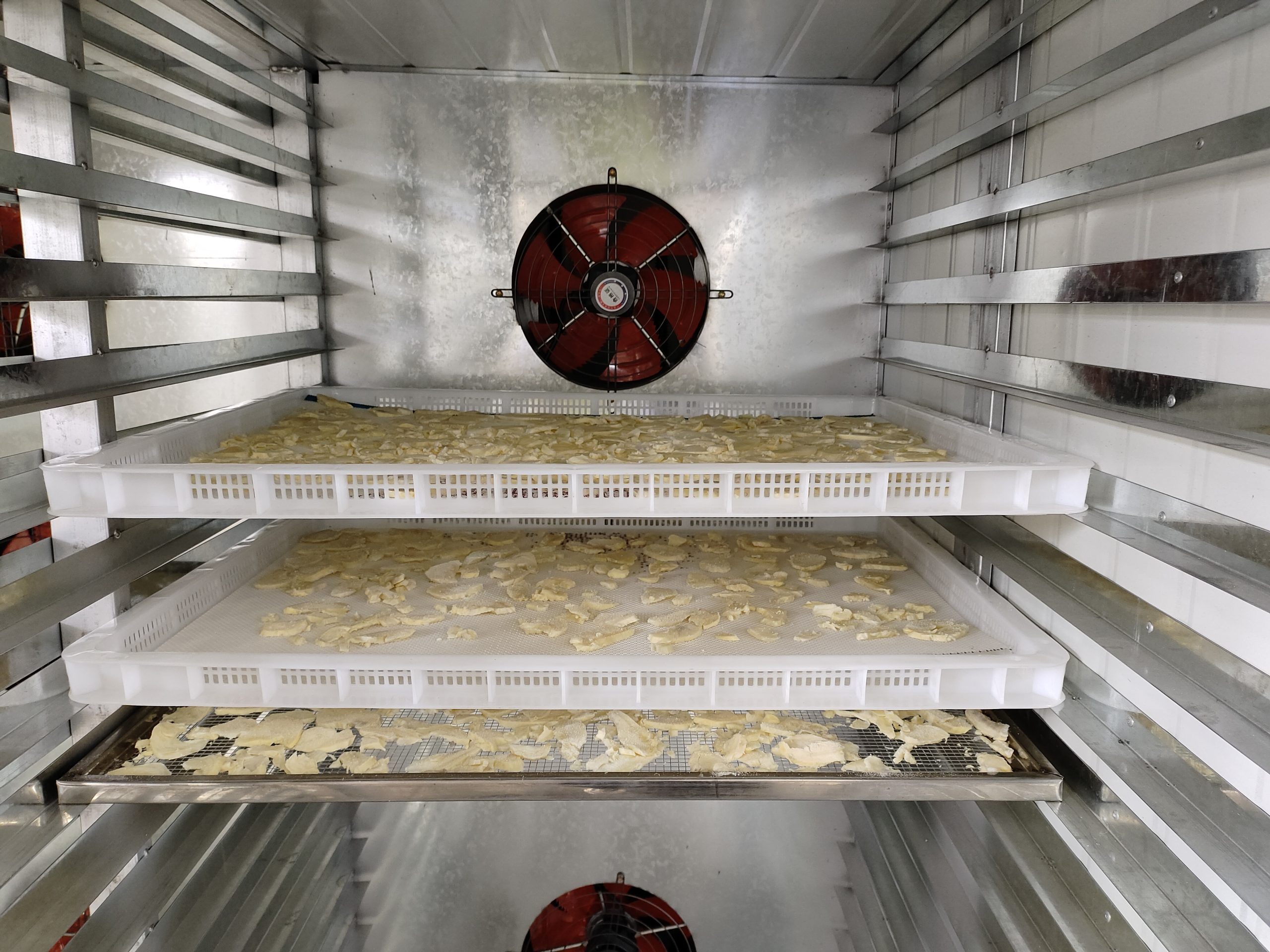
Commercial Durian Dehydration: Preserving Quality with Heat Pump Technology
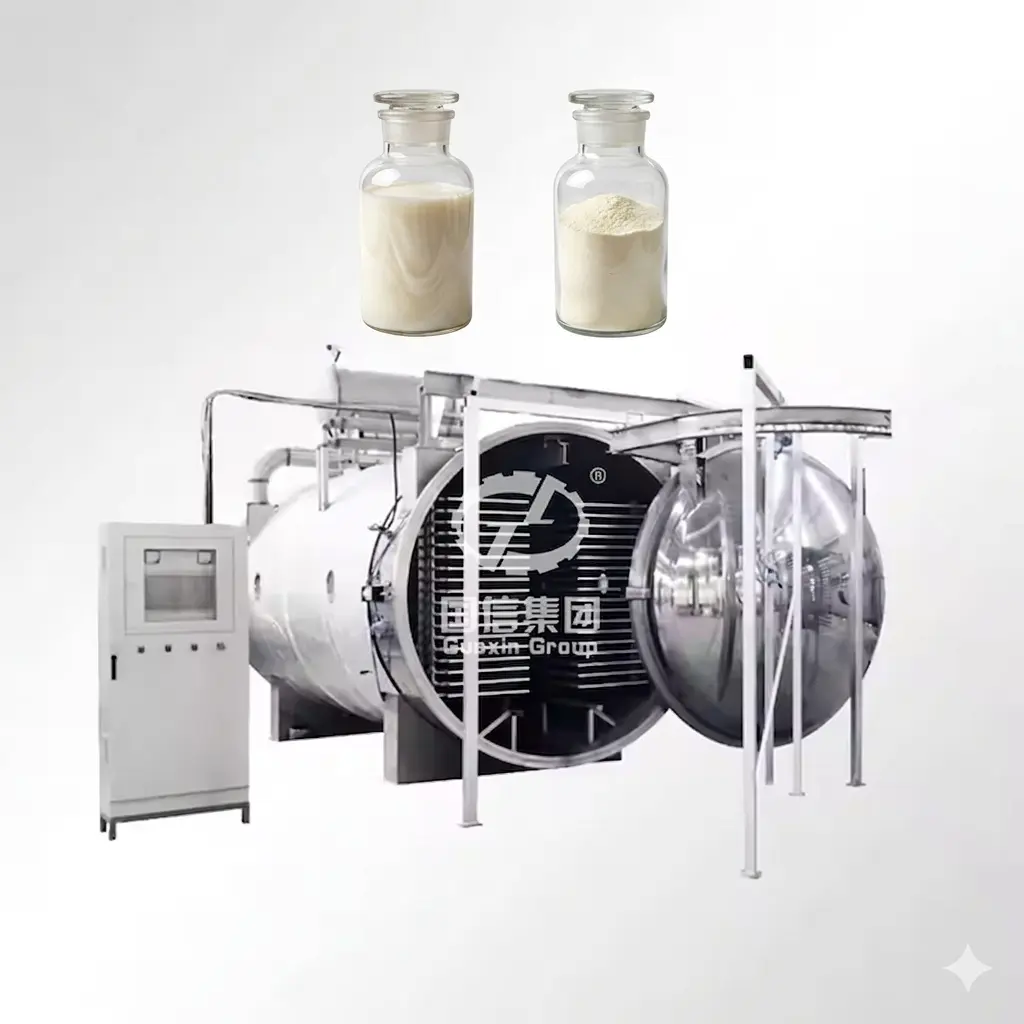
Milk Powder Drying – Parameters for Consistent Final Moisture and Functional Properties
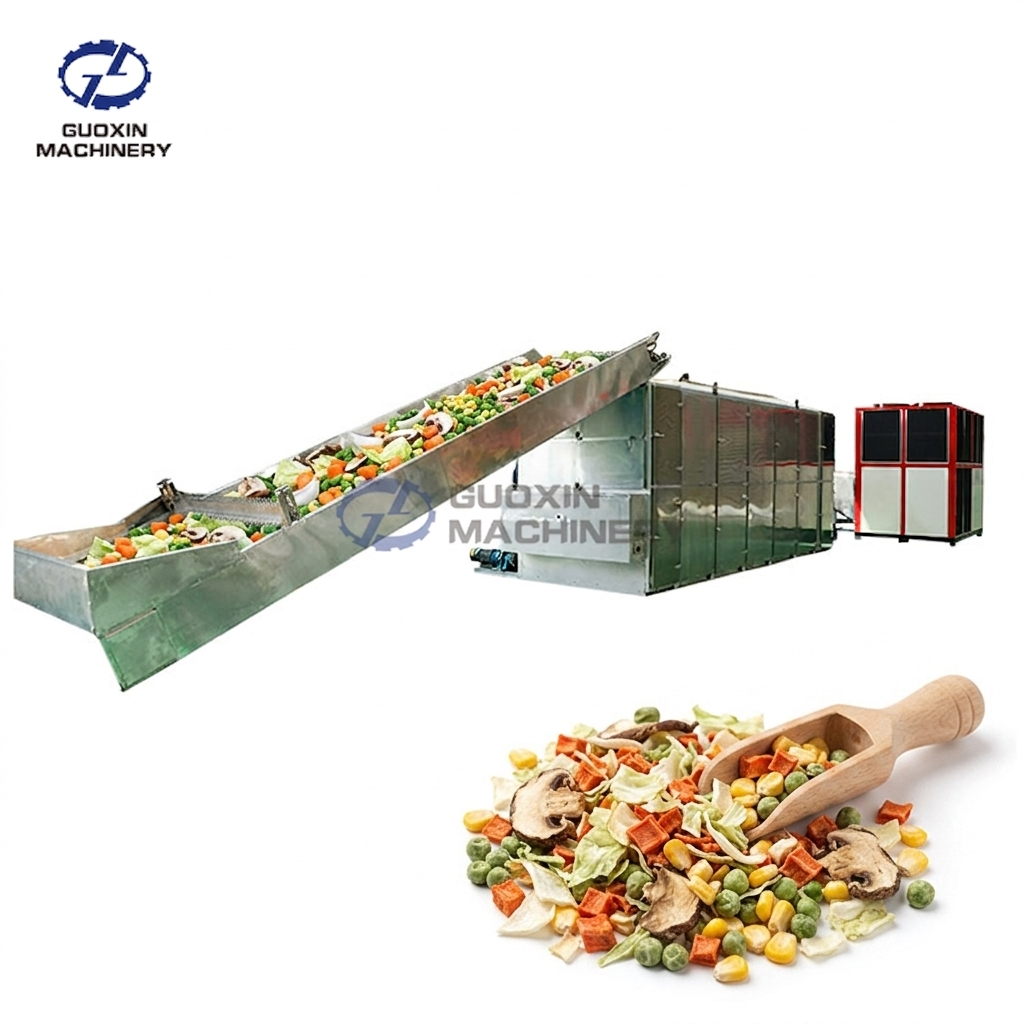
Dehydrated Vegetables for Instant Noodle Seasoning – Drying Parameters for Consistent Quality in Seasoning Packs
Sun-Dried Tomato Drying – Parameters for Industrial Production of Consistent Tomato Slices
Drying Coffee Beans, Cocoa Nibs and Instant Coffee Powder