© Henan Guoxin Machinery Manufacturing Co., Ltd. All Rights Reserved.



Release time:2026-06-24
Industrial heat pump drying rooms process bulk daylilies (yellow flowers) using a controlled multi-stage temperature and humidity profile. By pairing an automated blanching pre-treatment with closed-loop dehumidification, these systems reduce moisture to a shelf-stable 10% to 12% while completely preserving the natural golden-yellow color matrix. This technology cuts energy consumption by 60% to 70% compared to traditional electrical resistance or coal-fired drying houses.
Daylilies (Hemerocallis citrina) are highly perishable agricultural products with a narrow harvest window. To secure export-grade quality and prevent rapid ambient spoilage, this commercial installation uses a streamlined, high-throughput batch-automation process:
[Fresh Field Harvest] → [Precise Steam/Water Blanching] → [Uniform Tray Spreading] →
[Mobile Cart Racking] → [Heat Pump Drying Chamber] → [Automated PLC Climate Control] → [Bulk Market Packaging]
Phase 1: Harvest & Fresh Intake
As shown in the site production video,fresh yellow flowers are harvested directly from local agricultural fields and transported to the facility via light cargo trucks. Prompt processing is crucial to prevent the buds from opening, which degrades their market value.
Phase 2: Blanching Pre-Treatment
Before entering the drying cycle, the raw daylilies undergo a precise thermal blanching step. This process inactivates internal polyphenol oxidases (the enzymes responsible for browning), fixes the vibrant yellow pigment, and breaks down the outer waxy cuticle of the flower bud to allow for rapid moisture migration during the drying stage.
Phase 3: Tray Loading & Racking
Following the blanching phase, workers evenly spread the cooled daylilies across food-grade, perforated plastic trays. The trays are then stacked vertically onto heavy-duty mobile stainless steel carts. This structured arrangement optimizes space while allowing horizontal convective airflow to pass smoothly across every single layer.
Phase 4: Chamber Loading & Intelligent Dehydration
The loaded carts are wheeled directly into the insulated Guoxin heat pump drying room. Once the chamber door is sealed, operators activate the intelligent PLC controller. The system manages the entire dehydration run automatically without requiring dedicated manual oversight:
Upon completing the automated cycle, the daylilies exhibit uniform dryness from core to tip. The finished product features an attractive, bright golden-yellow color with no structural scorching. The dried flowers are collected from the trays, bulk-bagged, and immediately prepped for commercial market distribution.
Daylilies require a managed, multi-stage temperature curve to prevent case hardening—a defect where the outer skin dries too quickly and seals moisture inside the core.
Stage 1 (Warm-up & Inversion): 50°C – 55°C → High Dehumidification (Fixes color matrix)
Stage 2 (Main Drying Phase): 60°C – 65°C → High-Velocity Convective Air (Rapid moisture removal)
Stage 3 (Final Equalization): 50°C → Low-Speed Airflow (Stabilizes core equilibrium)
By utilizing high-volume, low-temperature drying air, the system allows moisture to evaporate naturally from the plant tissues. This preserves the delicate nutritional profile, natural aroma, and flexible texture required by commercial buyers.
The table below outlines industrial configurations for Guoxin commercial heat pump vegetable drying houses.
| Technical Parameter | Model GX-HP-30 | Deployed Project Model | Model GX-HP-100 |
| Fresh Batch Capacity | 500 kg to 800 kg/batch | 1,500 kg to 2,500 kg/batch | 5,000 kg to 8,000 kg/batch |
| Drying Room Footprint | 4.5m ×2.2m×2.5m | 9.6m×2.2m×2.5m | Multi-Chamber Modular Array |
| Mobile Racking Carts | 4 to 6 Racks | 12 to 16 Racks | 32+ Integrated Racks |
| Total Product Trays | 96 to 144 Trays | 288 to 384 Trays | 1,000+ Industrial Trays |
| Power Consumption | 8.5 kW/h | 22.5 kW/h | Variable Frequency Modular |
| Operating Temp Range | 30°C – 75°C | 30°C – 75°C | 30°C – 75°C |
| Chassis Insulation | 100mm Polyurethane | 100mm Polyurethane | 100mm Polyurethane |
A: Traditional coal-fired drying houses expose daylilies to sulfur dioxide and ash, which compromises food safety and alters the natural flavor. Direct electrical resistance heating consumes massive amounts of energy, creating high operating costs. A heat pump drying room operates on an energy-multiplication principle: it uses a small amount of electricity to power a compressor that absorbs ambient thermal energy from the air. This loop delivers up to 4 kW of thermal energy for every 1 kW of electricity consumed, lowering net energy costs by up to 70%.
A: Daylily coloration depends heavily on managing moisture during the initial warm-up phase. If relative humidity stays too high as temperatures rise, the flower buds will stew in their own vapor, turning an unmarketable brown or black. Guoxin’s PLC controller works with automated electronic expansion valves and moisture exhaust fans. When the internal sensors detect a humidity spike, the system increases the dehumidification cycle instantly, ensuring the daylilies dry cleanly and maintain their premium golden color.
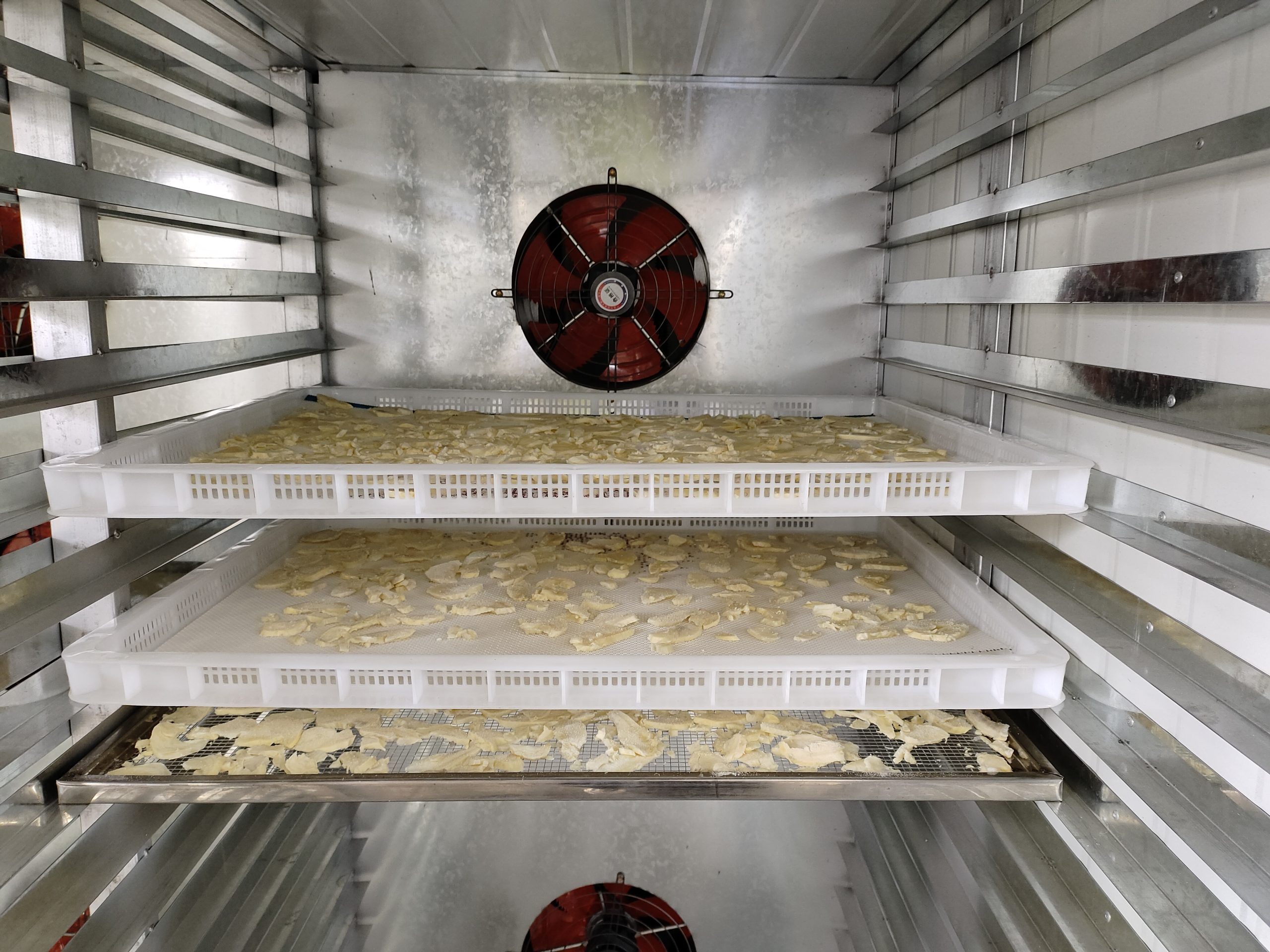
Commercial Durian Dehydration: Preserving Quality with Heat Pump Technology
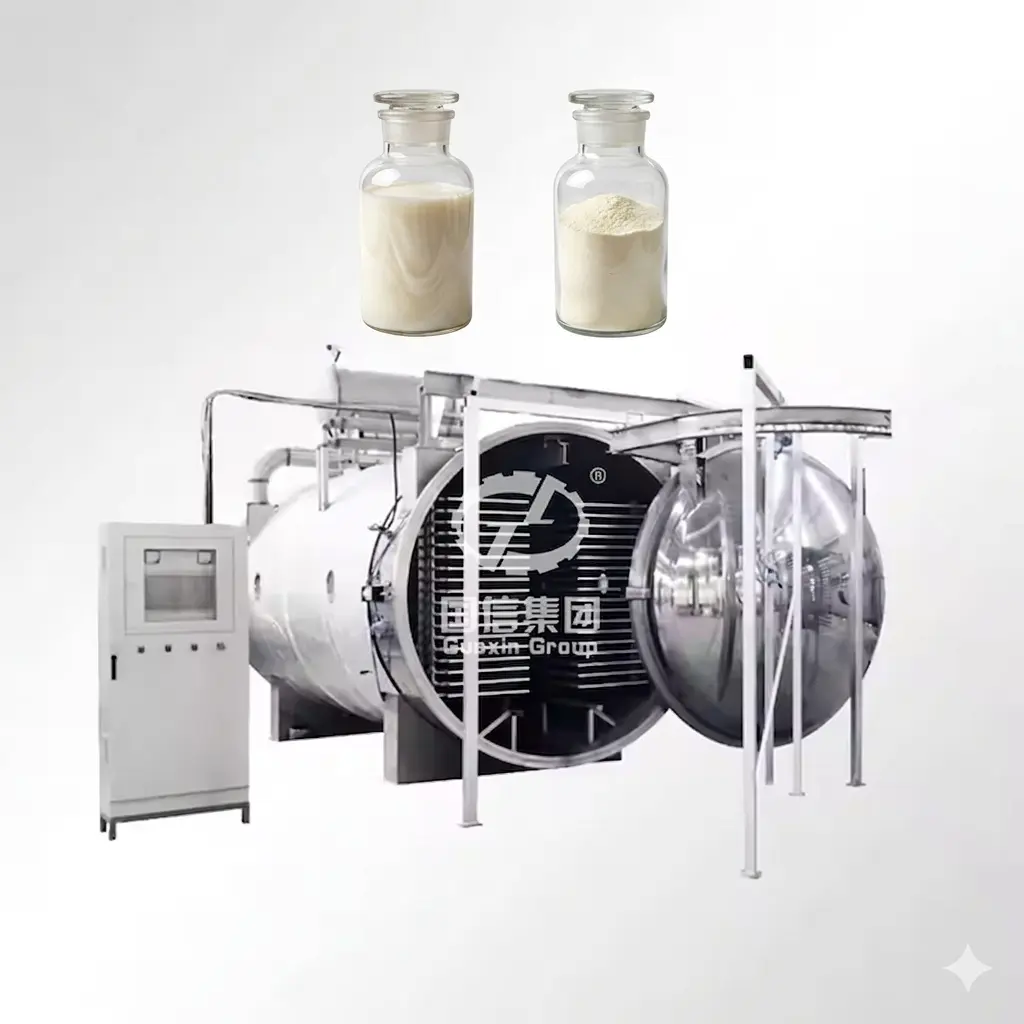
Milk Powder Drying – Parameters for Consistent Final Moisture and Functional Properties
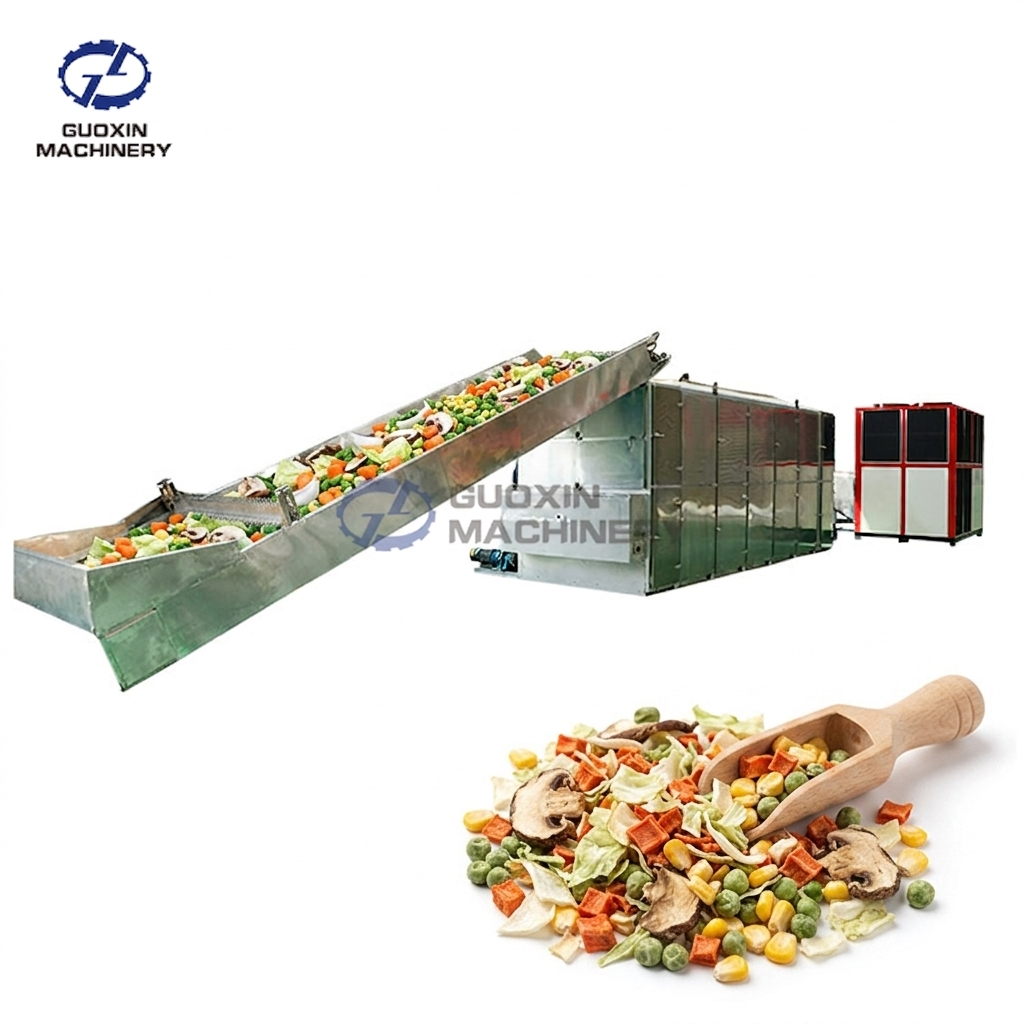
Dehydrated Vegetables for Instant Noodle Seasoning – Drying Parameters for Consistent Quality in Seasoning Packs
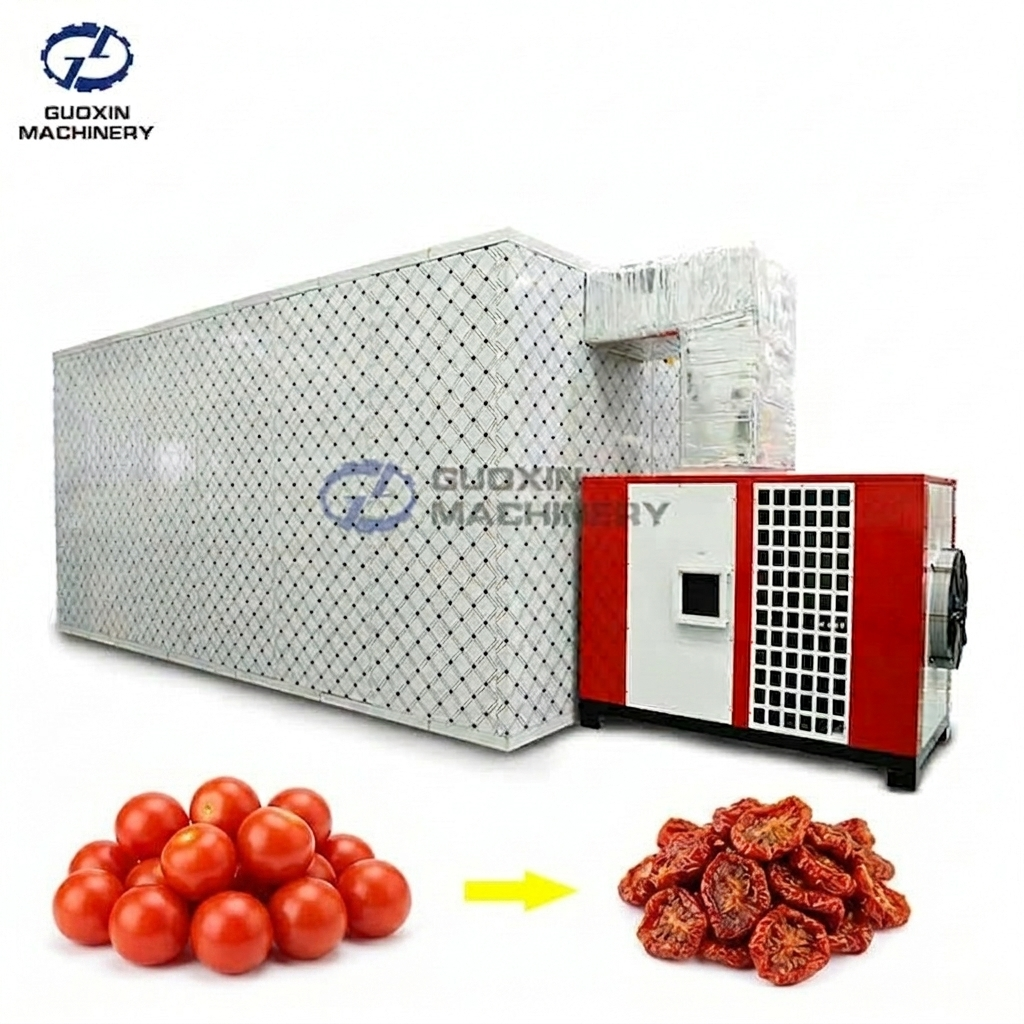
Sun-Dried Tomato Drying – Parameters for Industrial Production of Consistent Tomato Slices
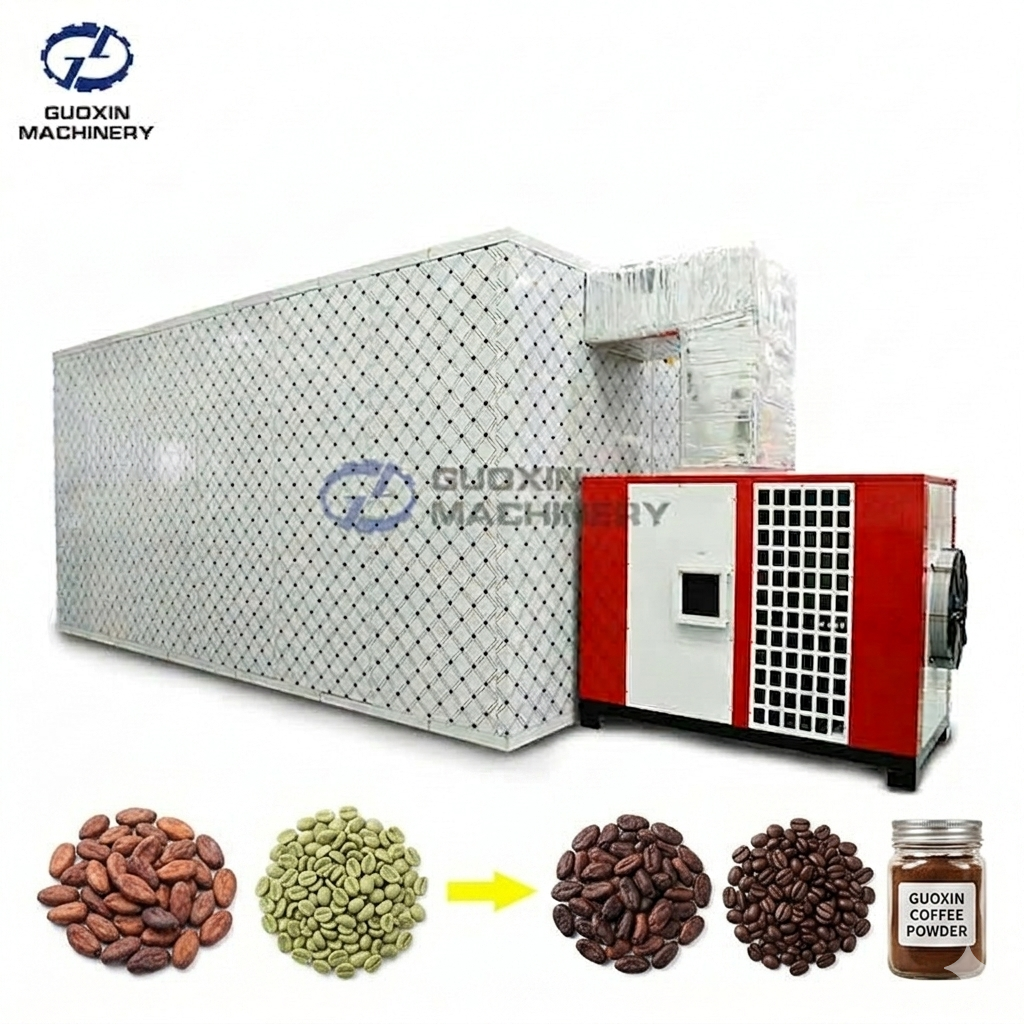
Drying Coffee Beans, Cocoa Nibs and Instant Coffee Powder