© Henan Guoxin Machinery Manufacturing Co., Ltd. All Rights Reserved.



Release time:2026-08-04
Desiccated coconut flakes and powder present a delicate thermodynamic challenge during post-harvest dehydration. Freshly milled coconut meat contains high initial moisture levels (approx. 35%–50%) along with rich natural oils and delicate sugars.
Exposing wet coconut flakes to uncalibrated high heat causes lipid oxidation, premature yellowing/browning, and flavor loss. Furthermore, food safety standards require strict microbiological limits (Salmonella and E. coli prevention) before final retail packaging.
On July 31, 2026, Guoxin Machinery conducted a comparative workshop trial in our testing facility using customer-supplied raw desiccated coconut. We evaluated two distinct drying technologies under real-time operating conditions:
Continuous Multi-Layer Mesh Belt Dryer System
Tunnel Industrial Microwave Dryer & Sterilization Line
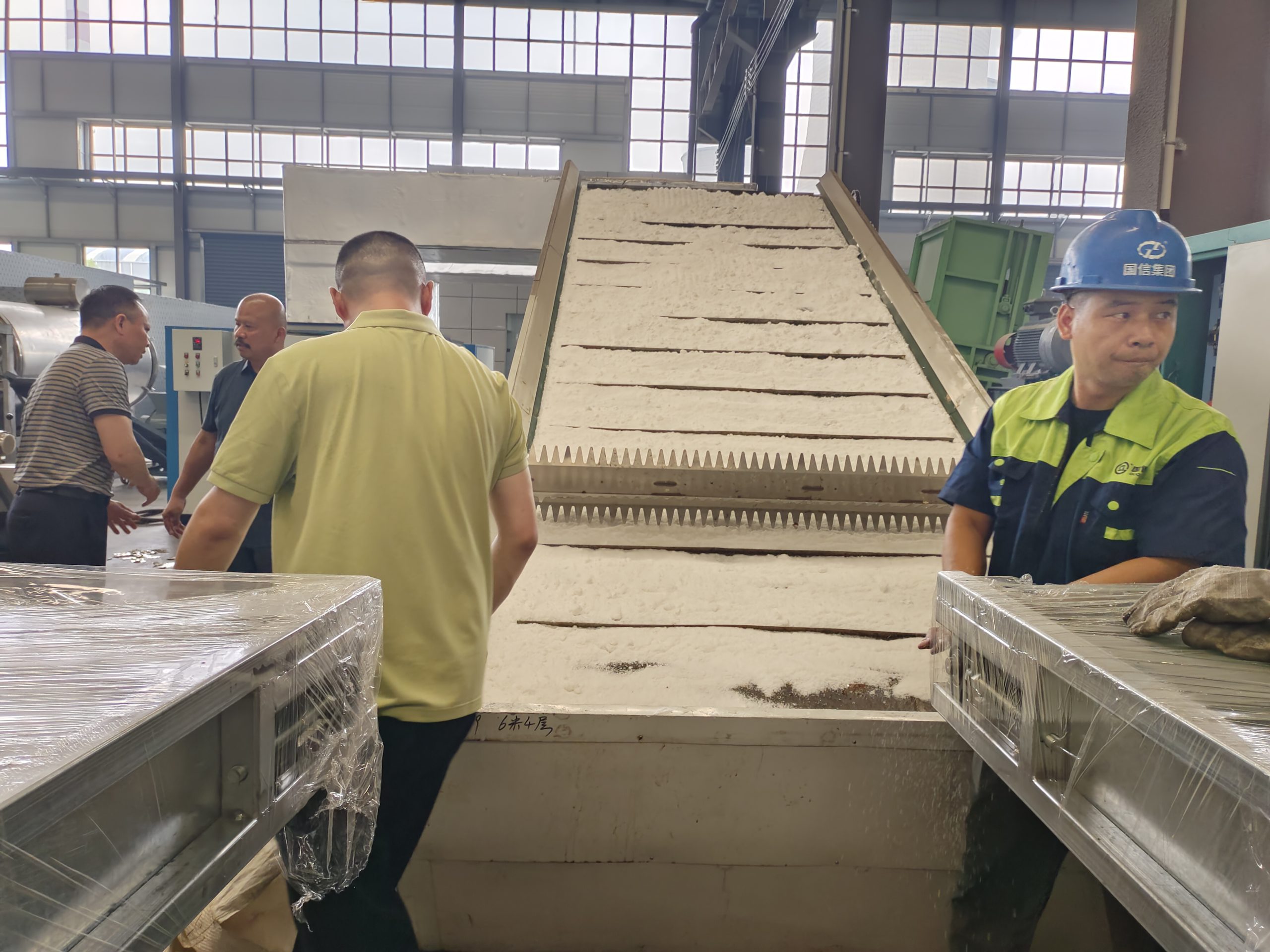
The continuous multi-tier mesh belt dryer relies on engineered hot-air convection passing through moving product layers.
[Raw Coconut Infeed] ──► [Cleated Incline Elevator] ──► [S-Path Mesh Layers] ──► [Uniform Hot-Air Sweeping] ──► [Continuous Dry Discharge]
Trial Performance & Key Characteristics
Controlled Hot-Air Distribution: The raw coconut flakes are evenly distributed across stainless steel (SUS304) mesh belts via a specialized feeding spreader. Hot air flows vertically through the moving bed, ensuring uniform moisture removal without heat accumulation pockets.
Multi-Stage Temperature Zoning: Dehydration is divided into distinct thermal stages (50℃ -70 ℃). Initial high-moisture stages quickly strip surface water, while lower-temperature finishing stages protect natural coconut oils from scorching.
High-Volume Continuous Throughput: Engineered for large-scale production facilities requiring continuous 24/7 tonnage output with flexible heat sources (Air-Source Heat Pump, Steam, or Natural Gas).
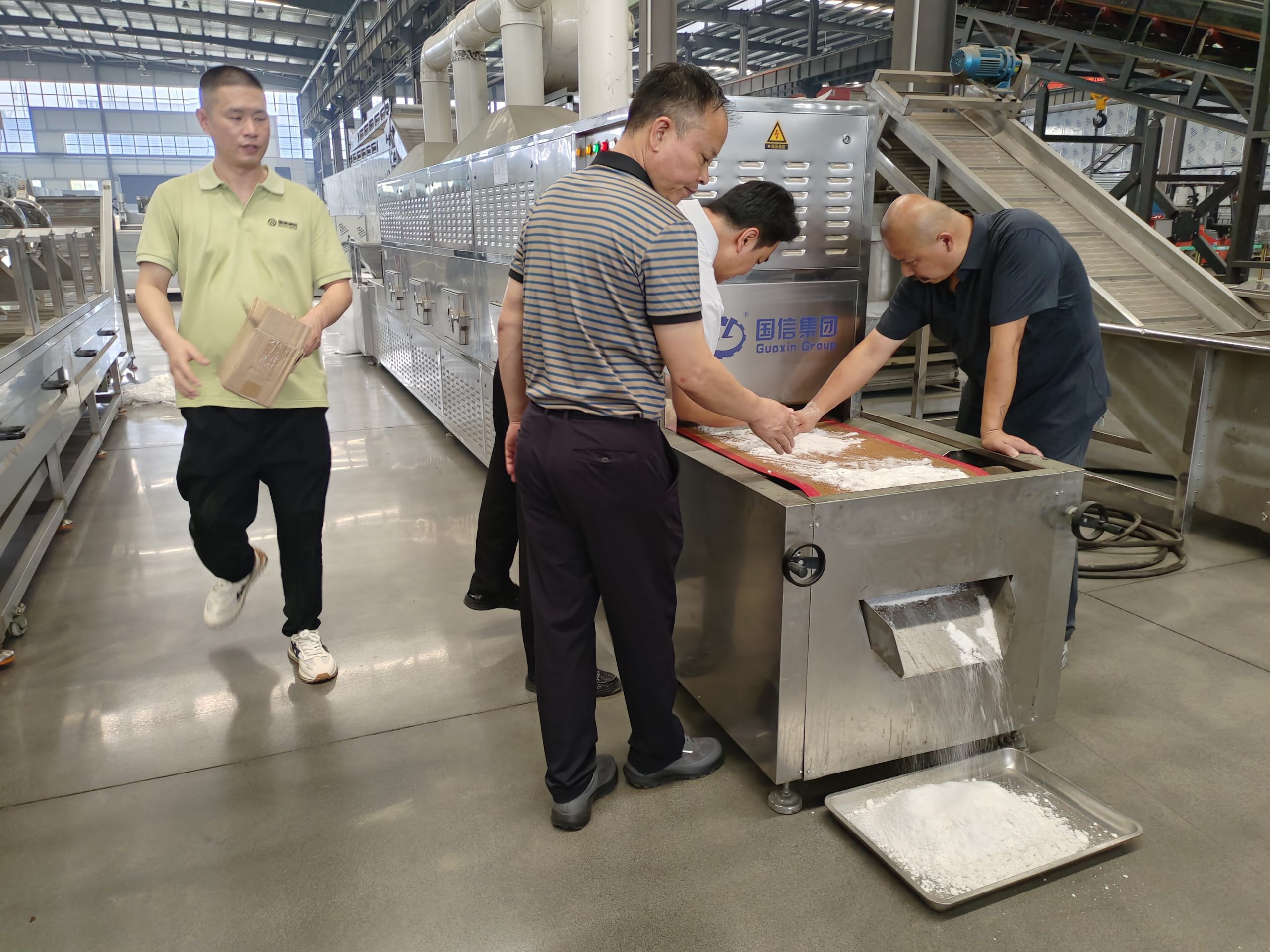
The industrial tunnel microwave dryer utilizes electromagnetic energy to directly excite water molecules deep within the coconut structure.
[Leveling Hopper Feed] ──► [PTFE Conveyor Belt] ──► [Microwave Cavity Exposure] ──► [Core Volumetric Drying & Sterilization] ──► [Instant Dry Output]
Volumetric Core Heating: Unlike traditional surface-to-core thermal conduction, microwave energy heats water molecules simultaneously throughout the coconut mass. Moisture rapidly migrates outward in minutes rather than hours.
Superior Snow-White Color Preservation: Because internal drying happens rapidly at lower chamber temperatures, thermal exposure is minimized. The processed coconut retains its natural snow-white color without surface browning or caramelization.
Dual-Action Drying & Pasteurization: The electromagnetic field destroys mold spores, yeast, E. coli, and Salmonella during the drying cycle, fulfilling food safety sterilization requirements without chemical additives or secondary autoclave equipment.
The table below outlines the comparative operational metrics observed during the July 31, 2026 workshop trial:
| Evaluation Metric | Continuous Mesh Belt Dryer | Industrial Microwave Dryer |
| Drying Mechanism | Forced Hot-Air Convection (Outside-In) | Volumetric Electromagnetic Penetration (Core-Out) |
| Processing Speed | Medium – Long (30 – 60 Minutes) | Ultra-Fast (3 – 8 Minutes) |
| Production Scale | High Tonnage (1 – 10+ Tons/Hour) | Small to Medium Batch (200 – 1,000 kg/Hour) |
| Color Protection | Excellent (Requires strict multi-zone temp control) | Superior (Instant moisture flash-off maintains snow-white shade) |
| Sterilization Capability | Standard thermal reduction | High-efficiency simultaneous sterilization & pasteurization |
| Primary Heat Sources | Heat Pump, Steam, Natural Gas, Biomass | Electricity (Magnetron Array) |
| Capital & Operating Cost | Lower CAPEX per ton / Highly cost-effective OPEX | Higher equipment density / Ideal for high-value premium lines |
                     ┌─── High Tonnage (Tons/Hour) ──────► Continuous Mesh Belt Dryer
                     │
Coconut Dryer Choice ┼─── Ultra-White / Zero Browning ──► Industrial Microwave Dryer
                     │
                     └─── Integrated Pasteurization ─────► Industrial Microwave Dryer
Choose a Continuous Mesh Belt Dryer if:
Your plant processes large bulk quantities (multi-ton hourly target) of raw coconut flakes or shreds.
You wish to utilize flexible, low-cost heat energy such as industrial steam boilers, natural gas burners, or closed-loop air energy heat pumps.
You require a robust, heavy-duty primary drying stage prior to secondary grading or oil extraction.
Choose an Industrial Microwave Dryer if:
You produce premium-grade white desiccated coconut, bakery topping flakes, or fine coconut flour where zero discoloration is mandatory.
Your processing facility requires an all-in-one drying and pathogen sterilization unit to pass strict international export micro-testing.
Factory floor space is limited, requiring a compact inline solution with zero warm-up waiting time.
Q1: Can both systems handle high-fat raw coconut without causing oil leakage or fires?
A: Yes. Both Guoxin systems feature precise multi-point digital thermal regulation. The mesh belt dryer uses gentle low-temperature zones (50℃ -70 ℃) to prevent oil expelling, while the microwave system employs real-time infrared temperature sensors and automated power throttling to keep product temperatures below 80℃.
Q2: Is it possible to combine both drying methods in a single production line?
A: Yes. For large-scale export processing lines, a hybrid system is highly efficient: a Continuous Mesh Belt Dryer performs the initial bulk moisture reduction (from 50% down to 12%–15%), followed by an Industrial Microwave Tunnel for final precision moisture trimming (down to <3%) and inline sterilization.
Contact Guoxin Machinery to Arrange Material Testing or Obtain a Custom Plant Quotation
Commercial Durian Dehydration: Preserving Quality with Heat Pump Technology
Milk Powder Drying – Parameters for Consistent Final Moisture and Functional Properties
Dehydrated Vegetables for Instant Noodle Seasoning – Drying Parameters for Consistent Quality in Seasoning Packs
Sun-Dried Tomato Drying – Parameters for Industrial Production of Consistent Tomato Slices
Drying Coffee Beans, Cocoa Nibs and Instant Coffee Powder