© Henan Guoxin Machinery Manufacturing Co., Ltd. All Rights Reserved.



Release time:2026-04-10
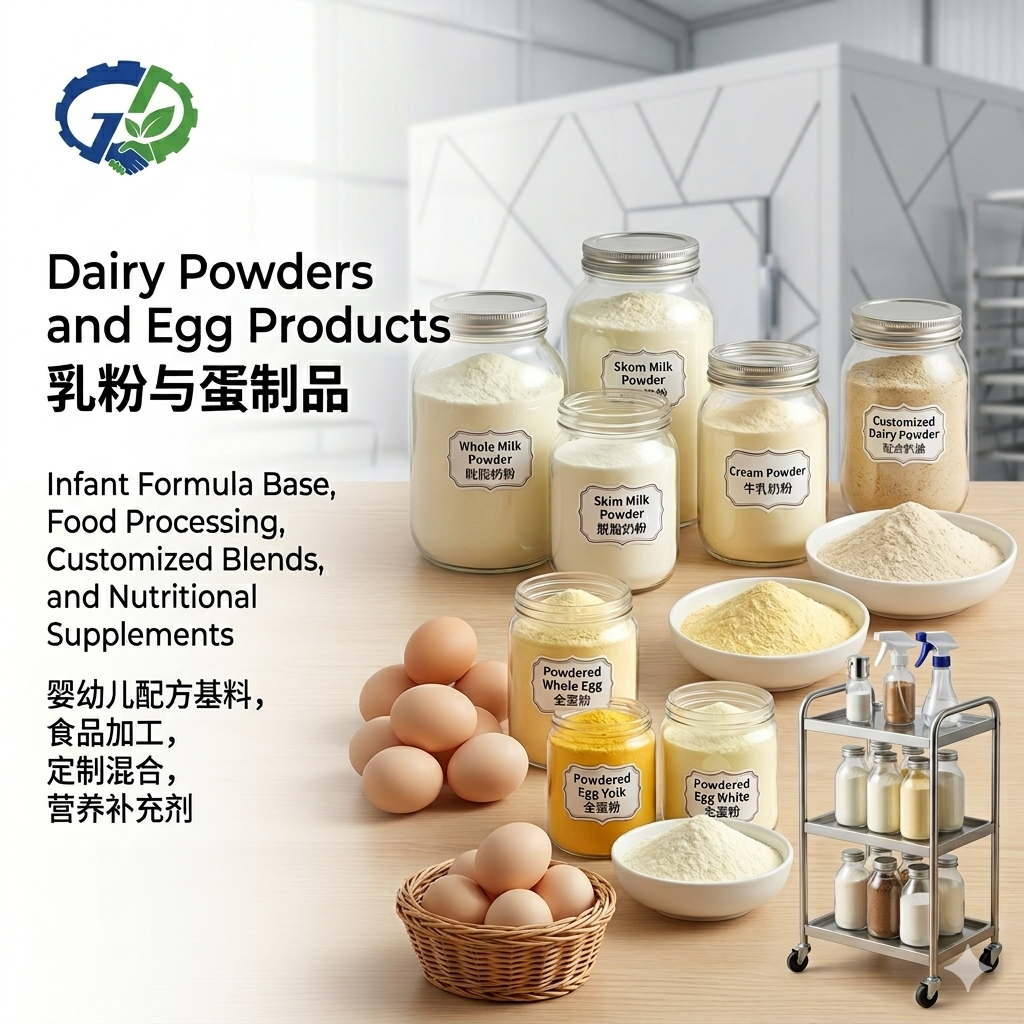
In industrial food ingredient manufacturing, the dehydration of dairy and egg products requires strict adherence to biochemical constraints. Unlike structured agricultural crops, these materials are composed of complex protein matrices, lipids, and heat-sensitive carbohydrates (lactose). Improper thermal profiling directly induces irreversible protein denaturation, lipid oxidation, and localized lactose caramelization, destroying essential functional properties such as solubility, foaming capacity, and emulsification stability.
Engineering a production line for these high-value ingredients requires selecting a thermodynamic method that aligns precisely with the physical state of the raw material—whether liquid, concentrated paste, or solid derivative.
Industrial processing plants deploy distinct drying mechanics based on the initial viscosity, solid content, and biological traits of the input material.
Whey proteins begin structural unfolding at 65°C, while egg albumen (ovalbumin) initiates thermal coagulation at 58°C. For batch processing of solid dairy or egg derivatives in heat pump systems, the PLC control logic must utilize a multi-stage ramped temperature curve that maintains drying temperatures below these critical thresholds until the constant-rate drying phase concludes.
High-fat products, including whole egg yolk and whole milk concentrates, undergo rapid lipid oxidation when exposed to simultaneous high heat and atmospheric oxygen. Utilizing closed-loop air circulation limits the introduction of fresh oxygen into the drying volume, suppressing the formation of free fatty acids (FFA) and preventing off-flavors.
During dairy dehydration, lactose must transition into a stable amorphous state. If the temperature crosses the glass transition temperature ($T_g$) during processing, the powder becomes highly hygroscopic, leading to caking, stickiness, and structural adherence to internal machine walls. Advanced air conditioning modules are integrated to control exit-air relative humidity.
The table below defines standard operational configurations across varying dairy and egg ingredient processing lines.
| Target Product Type | Input Physical State | Recommended Drying Method | Processing Temperature Baseline | Primary Quality Control Metric |
| Skim Milk Powder | Liquid (Evaporator Concentrate) | Spray Drying | 160°C to 200°C (Inlet Air) | Insolubility Index < 0.1 mL |
| Egg Albumen Powder | Liquid (Desugared) | Spray Drying / Tray Room | 60°C to 70°C (Inlet) / 45°C (Chamber) | Foaming Power & Gel Strength |
| Cheese Curds / Casein | Solid Wet Granules | Heat Pump Belt or Chamber | 40°C to 50°C (Continuous Airflow) | Volatile Flavor Retention |
| Industrial Eggshells | Crushed Solid Flakes | Continuous Mesh Belt Dryer | 70°C to 90°C (Forced Convection) | Salmonella Elimination / Total Dryness |
Dairy and egg processing lines are governed by strict global sanitary mandates (including FDA, HACCP, and European EHEDG guidelines).
[Raw Input Intake] → [Evaporative Concentration/Separation] → [Thermal Processing Unit] → [Zoned Dehumidified Discharge] → [Automated Packaging Interface]
Q1: Why can a mesh belt or standard heat pump chamber dryer not be used directly for liquid milk or liquid egg processing?
A: Pure liquids cannot be distributed evenly across a conveyor belt or static tray without instantly pooling, cementing to the surface, and undergoing rapid microbial spoilage due to prolonged drying times. Liquids require immediate surface-area expansion via atomization in a spray drying system, where moisture is removed instantly. Convective heat pump and mesh belt systems are mechanically engineered for solids, granulated curds, or highly concentrated pastes that can maintain structural placement on a moving or stationary mesh substrate.
Q2: How does temperature control affect the functional whipping and foaming properties of dried egg whites?
A: The foaming capability of egg white powder depends on the functional integrity of its native globulin and albumen proteins. If the core product temperature exceeds the coagulation threshold of 58°C during the drying process, these proteins denature, permanently losing their ability to entrap air and retain structural elasticity. Maintaining precise multi-stage temperature parameters in the drying air prevents this structural collapse, ensuring the finished ingredient complies with commercial bakery performance standards.
Q3: What role does latent heat recovery play in reducing operational costs (OPEX) in dairy derivative processing?
A: In standard open-cycle thermal systems, the energy used to evaporate moisture is completely lost when the humid exhaust air is vented out. In our closed-loop heat pump configurations, the humid air stream passes across an integrated refrigeration evaporator. The water vapor is condensed and drained away as liquid, while the latent heat of vaporization is recovered by the refrigerant and transferred back to the condenser to reheat the dry processing air. This system layout achieves a Coefficient of Performance (COP) of up to 3.5 to 4.0, reducing utility consumption by 60% to 75% compared to open-vent electrical resistance configurations.
Q4: How do you prevent lactose sticking and wall deposition inside the drying chamber?
A: Wall deposition occurs when sticky, amorphous lactose comes into contact with internal machinery surfaces at temperatures above its glass transition threshold. To counteract this, the drying system regulates the moisture-evaporation curve through zoned thermal control. Cold-air wall-sweeping systems or pneumatic hammers are integrated into the chamber geometries to continuously clear the boundaries, ensuring high product recovery yields and preventing prolonged localized overheating of stuck particles.
Engineering Consultation and Operational Layout Planning
Henan Guoxin Machinery provides technical analysis and mechanical fabrication for food ingredient processors globally.
Contact Our Engineering Team for Technical System Configuration
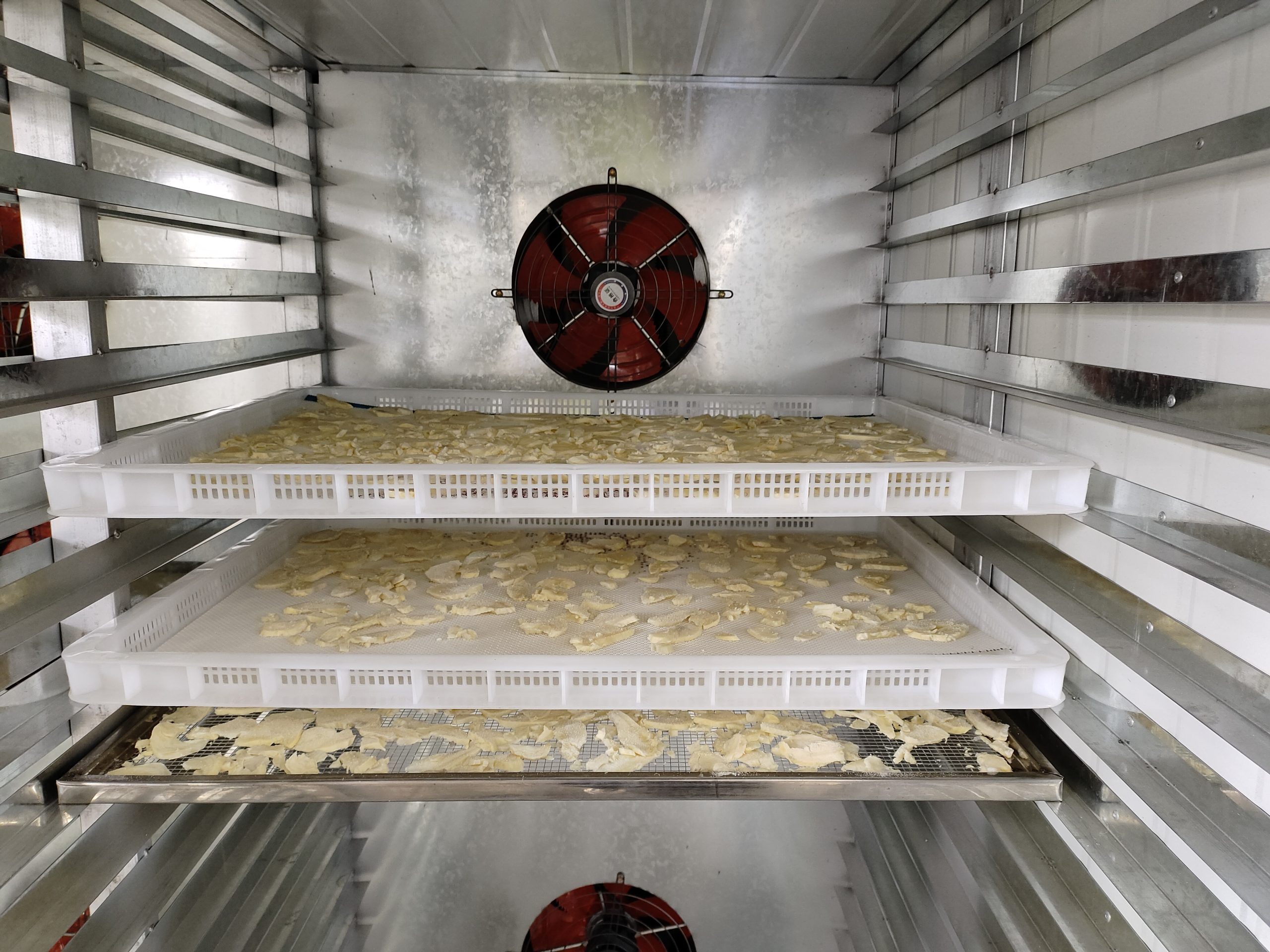
Commercial Durian Dehydration: Preserving Quality with Heat Pump Technology
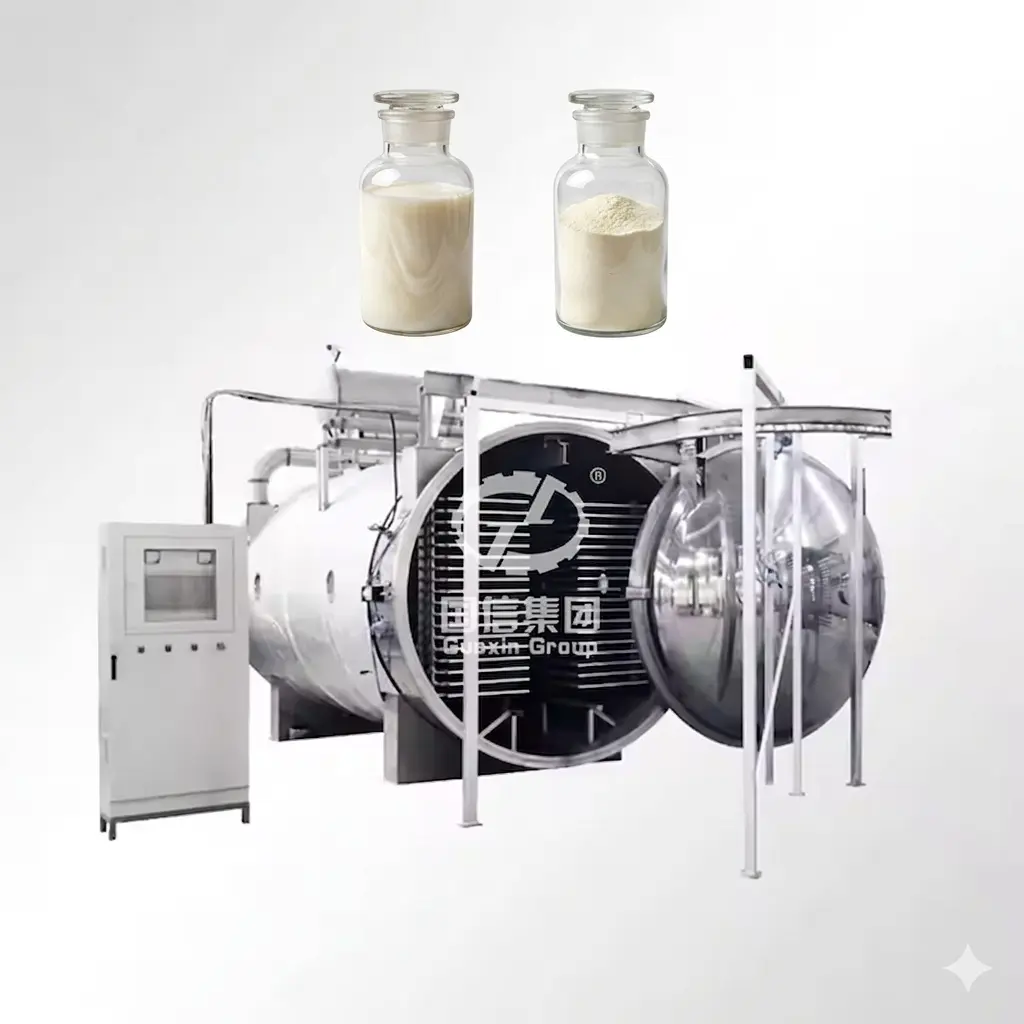
Milk Powder Drying – Parameters for Consistent Final Moisture and Functional Properties
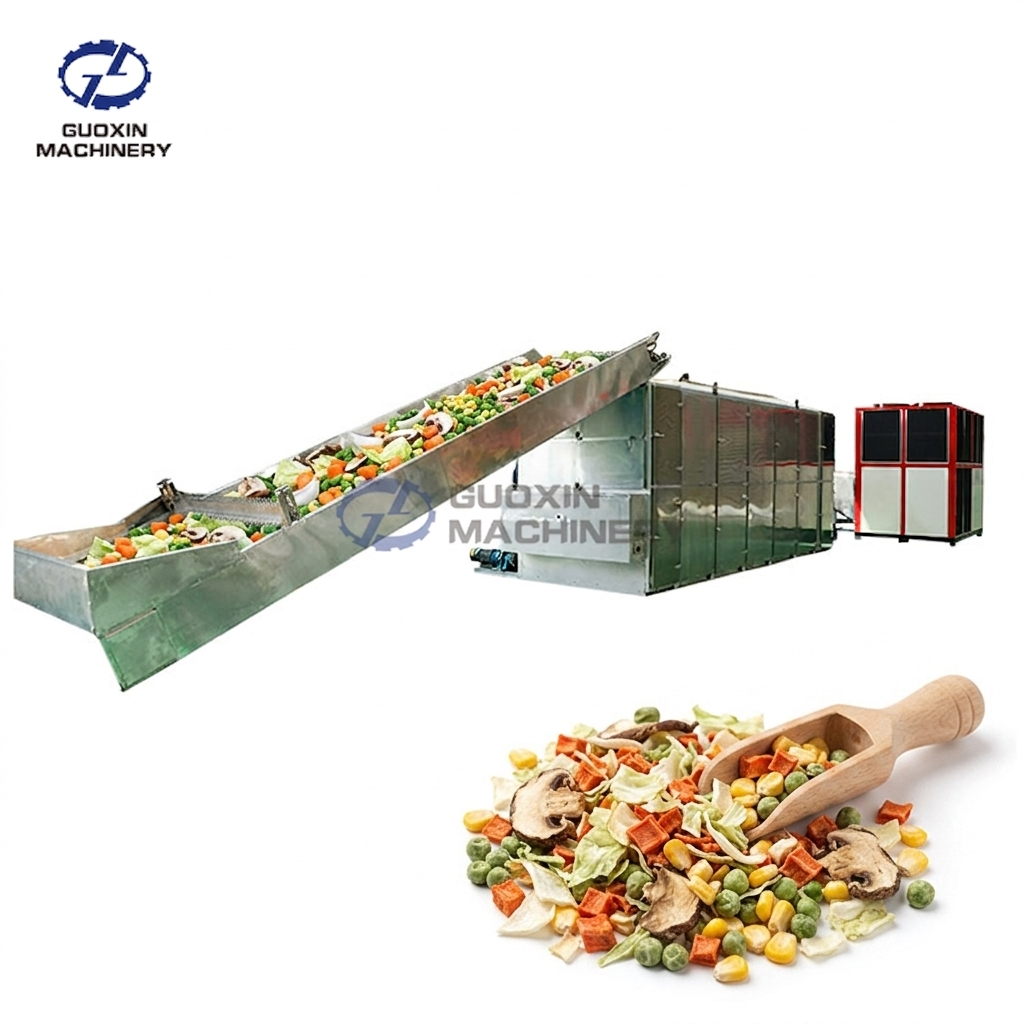
Dehydrated Vegetables for Instant Noodle Seasoning – Drying Parameters for Consistent Quality in Seasoning Packs
Sun-Dried Tomato Drying – Parameters for Industrial Production of Consistent Tomato Slices
Drying Coffee Beans, Cocoa Nibs and Instant Coffee Powder