© Henan Guoxin Machinery Manufacturing Co., Ltd. All Rights Reserved.



Release time:2026-04-10
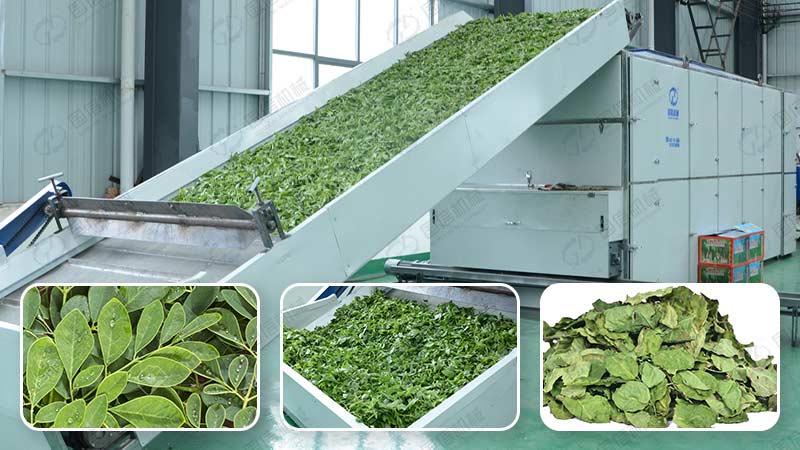
How do commercial botanical processors scale up dried herbs manufacturing while protecting volatile essential oils and vibrant original colors?
In the global dried herbs manufacturing industry, premium buyers from European, North American, and Asian markets place strict commercial benchmarks on imported botanicals. Whether processing culinary herbs (basil, oregano, thyme), delicate tea flowers (chamomile, chrysanthemum), or medicinal roots (turmeric, ginger), product value is directly dictated by three metrics: essential oil retention, visual color intensity, and active compound preservation.
Traditional high-temperature hot-air drying vaporizes delicate volatile aromatic compounds (VOCs) above 45°C and oxidizes natural pigments, turning vibrant green leaves into dull brown fragments. Furthermore, slow and uncalibrated drying leaves trapped humidity within dense material beds, risking microbial proliferation and mold growth.
Henan Guoxin Machinery engineers specialized dried herbs manufacturing equipment—including closed-loop air-energy heat pump drying rooms and continuous multi-tier mesh belt dehydrators—designed to satisfy strict HACCP, FDA, and EU Organic processing standards.
To produce export-grade dried botanicals that pass strict international laboratory testing, an industrial production line must operate under precise climate parameters:
A. Essential Oil Protection (Strict Thermal Ceiling: 30°C – 45°C)
Essential oils (terpenes, phenols, and aldehydes) begin evaporating at temperatures as low as 40°C. Our heat pump systems maintain a rigid low-temperature thermal curve, ensuring water is extracted from the plant tissues while volatile flavor compounds remain sealed inside the cellular matrix.
B. Chlorophyll & Anthocyanin Lock-in (Zero Thermal Browning)
When leafy herbs are dried under high relative humidity, trapped steam causes “leaf cooking,” breaking down chlorophyll bonds. Guoxin’s closed-loop dehumidification rapidly extracts moisture from the air, maintaining low ambient humidity to freeze native green pigments and vivid flower petal colors.
C. Water Activity ($a_w$) Reduction for Export Compliance
To satisfy FDA and EU limits for microbial safety, herbs must reach a target moisture content of 5% to 8%, lowering water activity (a_w) below 0.6. This prevents mold spores (Aspergillus) and bacteria from developing during long overseas maritime container transit.
Different botanical parts carry distinct physical structural constraints. Guoxin Machinery provides tailored equipment configurations based on material thermodynamics:
                               ┌──► Heat Pump Drying Room (Batch / Delicate Leaves & Flowers)
Dried Herbs Manufacturing ─────┤
                               └──► Continuous Mesh Belt Line (High-Tonnage Roots & Bulk Spices)
Option A: Air Energy Heat Pump Drying Room (High-Value Leaves, Flowers & Teas)
Best suited for: Basil, Oregano, Mint, Chamomile, Chrysanthemum, Rosebuds, Saffron, and Specialty Medicinal Leaves.
Closed-Loop Dehumidification: Operating on a reverse Carnot cycle, the system chilling loop condenses moisture out of the air into liquid water while recycling latent heat. It uses up to 70% less electricity than conventional thermal heaters.
Zero Dust & Contamination: Because the drying chamber is completely sealed with recirculated filtered air, no environmental dust, pollen, or insects can enter, ensuring compliance with EU Organic cleanroom standards.
Low Air Velocity: Gentle, calibrated air distribution prevents fragile flower petals or brittle dried leaves from shattering into low-value dust.
Option B: Continuous Multi-Layer Mesh Belt Dehydrator (Bulk Roots & Tonnage Spices)
Best suited for: Turmeric, Ginger, Ginseng Roots, Chili, Parsley, and High-Volume Botanical Tonnage.
Automated S-Path Conveying: Raw spices pass through multiple food-grade SUS304 stainless steel mesh tiers. The gentle cascading drop between tiers turns the bed naturally, exposing all sides to controlled horizontal airflow.
Multi-Zone Temperature Control: Individual chamber zones can be set to distinct thermal profiles (e.g., initial high-airflow surface water removal followed by low-temp finishing zones) to maximize throughput without scorching.
The engineering matrix below outlines real operational parameters derived from Guoxin commercial installations:
| Material Category | Examples | Target Final Moisture | Recommended Temp Profile | Primary Drying Equipment Type |
| Delicate Flowers | Chamomile, Chrysanthemum, Saffron | 5% – 7% | 30°C – 40°C (Ultra-Gentle) | Air Energy Heat Pump Drying Room |
| Volatile Leafy Herbs | Basil, Mint, Oregano, Thyme, Parsley | 5% – 8% | 35°C – 45°C (Dehumidified) | Heat Pump Room / Precision Belt Dryer |
| Medicinal Roots | Ginger, Turmeric, Ginseng, Angelica | 8% – 10% | 45°C – 55°C (Multi-Zone) | Continuous Multi-Layer Mesh Belt Line |
| Aromatic Seeds/Pods | Fennel, Cardamom, Anise | 7% – 9% | 40°C – 50°C (Zoned Airflow) | Heat Pump Room / Continuous Belt Line |
To pass international food safety inspections (HACCP, ISO 22000, GMP), Guoxin provides end-to-end turnkey engineering layout designs:
[Raw Intake Zone] ──► [Flotation Bubble Washing] ──► [Vibratory Water Extraction] ──►
[Soft-Drop Feed Conveying] ──► [Guoxin Low-Temp Dryer] ──► [Air-Cooling Tunnel] ──► [Sifting & Size Grading] ──► [Aroma-Lock Bulk Packaging]
Clean-Room Zoning Layout: We design factory blueprints with clear physical wall barriers separating the Wet Pre-Treatment Zone from the Positive-Pressure HEPA Dry Packaging Zone, preventing cross-contamination.
100% Stainless Steel Metallurgy: All material-contact surfaces, conveyor trays, and structural frames are built with food-grade SUS304 / SUS316L stainless steel for rapid wash-down sanitation routines.
A: Standard drying ovens continuously vent hot air outdoors and pull in fresh raw air, requiring constant high electrical or gas energy. More importantly, they lack moisture condensation controls. Guoxin heat pump drying rooms operate as closed-loop dehumidifiers that extract water vapor as liquid while running at ultra-low temperatures (35°C–45°C). This retains up to 90%+ of natural essential oils, prevents leaf yellowing, and cuts utility operating expenses (OPEX) by 60% to 75%.
A: We design modular, programmable drying systems. By utilizing Siemens PLC touchscreen interfaces, plant managers can instantly switch between saved processing profiles. For fragile leaves, the line runs low-velocity airflow at 38°C; for dense root slices, the system adjusts fan speeds and ramps temperatures up to 50°C, ensuring optimal utility efficiency across diverse seasonal crops.
A: Before finalizing any EPC project or equipment purchase, clients can send samples of their raw botanical materials to the Guoxin testing laboratory. We provide detailed pilot trial reports covering drying kinetics, essential oil retention percentage, visual color delta values (L*a*b*), and energy efficiency metrics.
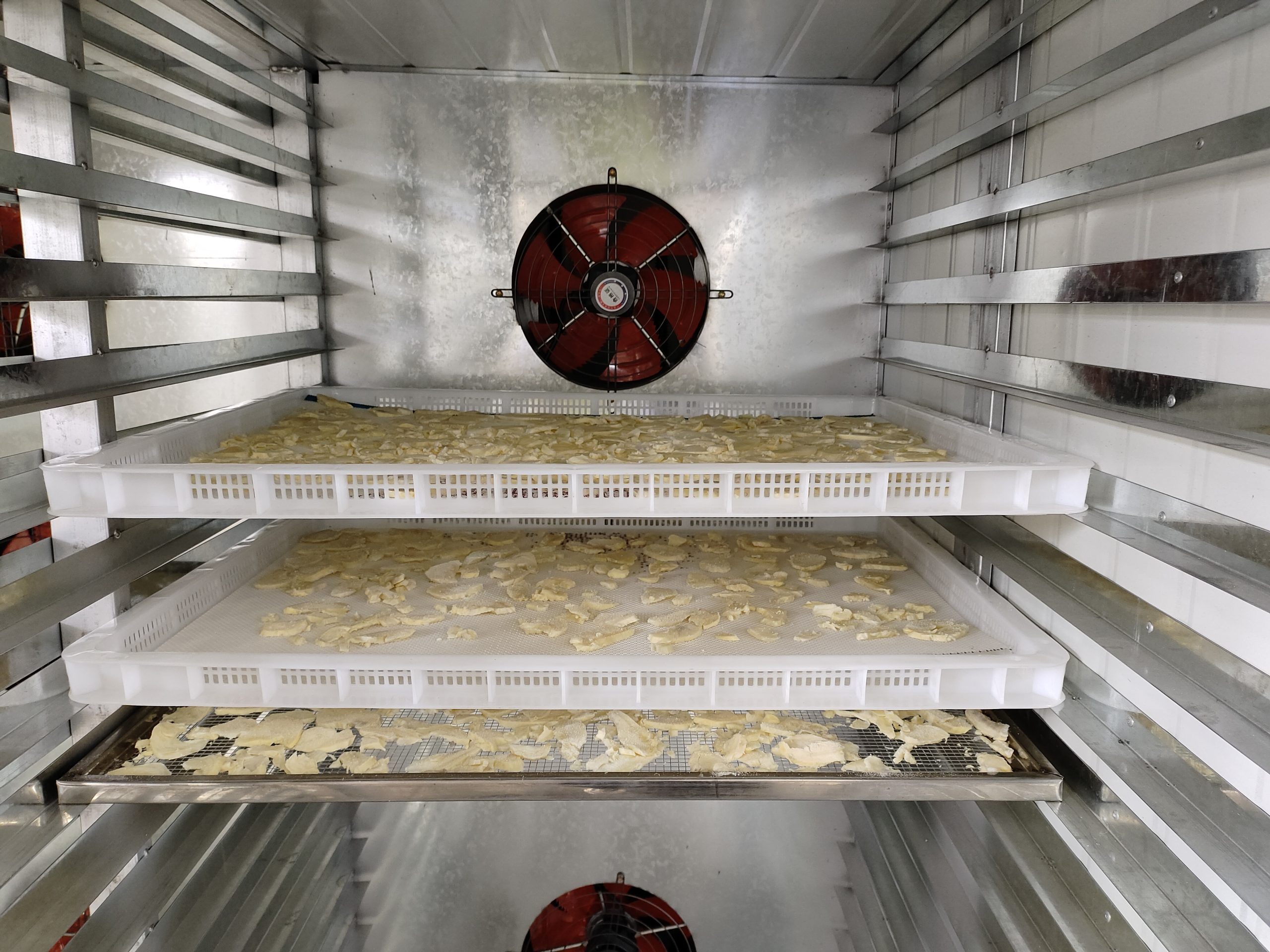
Commercial Durian Dehydration: Preserving Quality with Heat Pump Technology
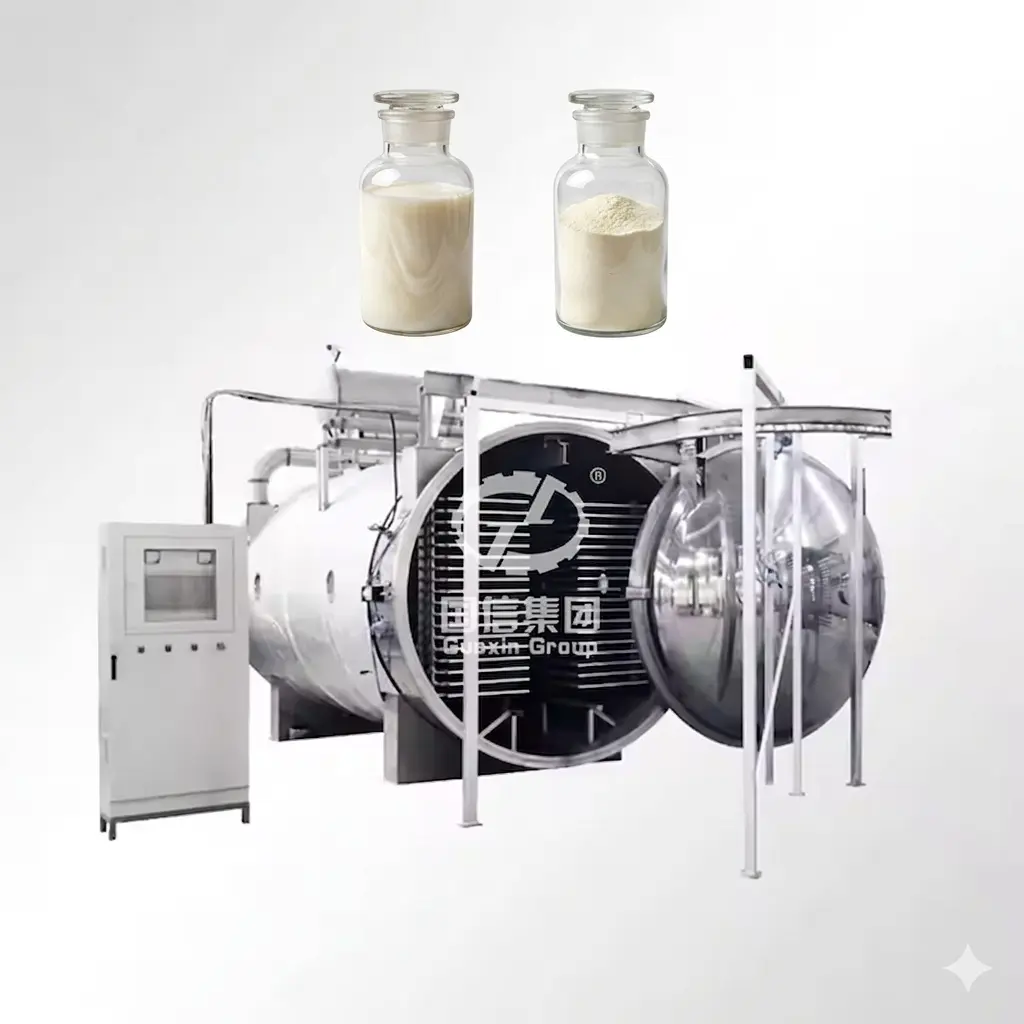
Milk Powder Drying – Parameters for Consistent Final Moisture and Functional Properties
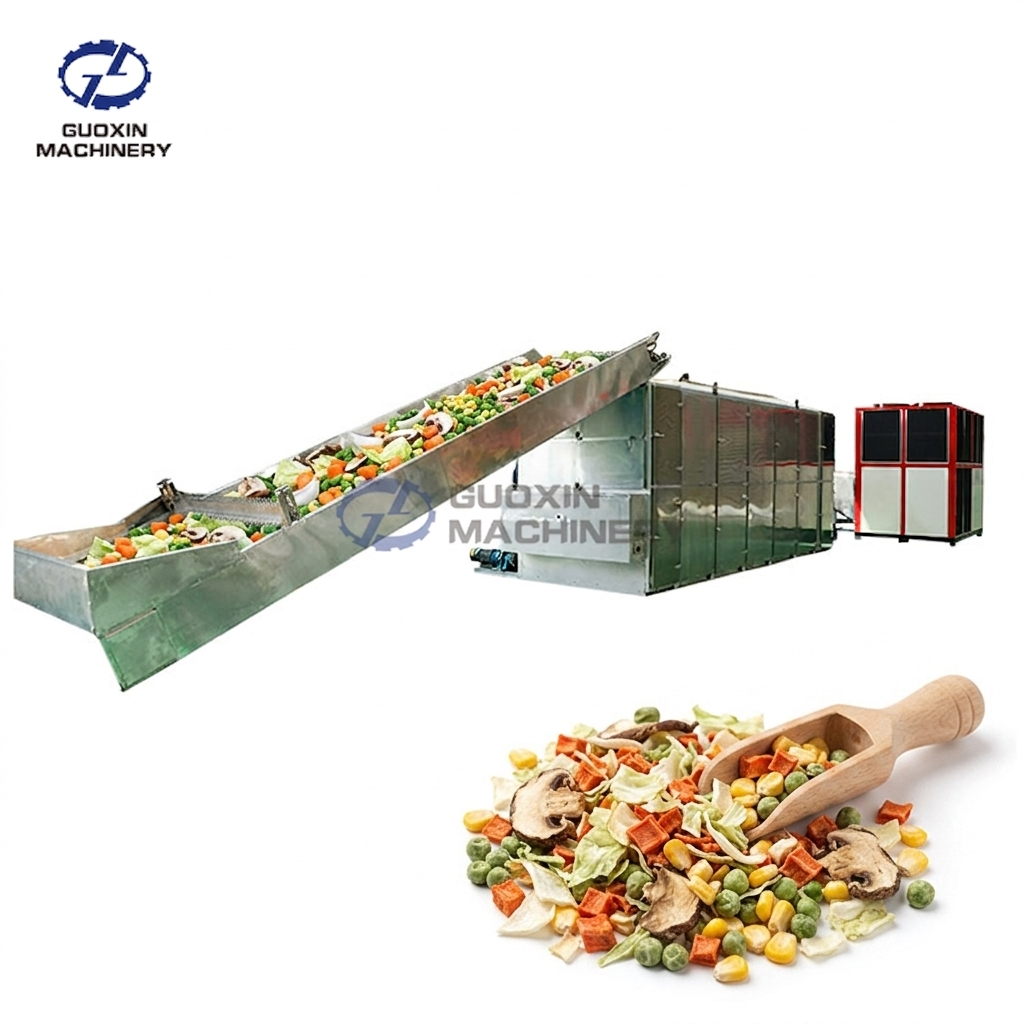
Dehydrated Vegetables for Instant Noodle Seasoning – Drying Parameters for Consistent Quality in Seasoning Packs
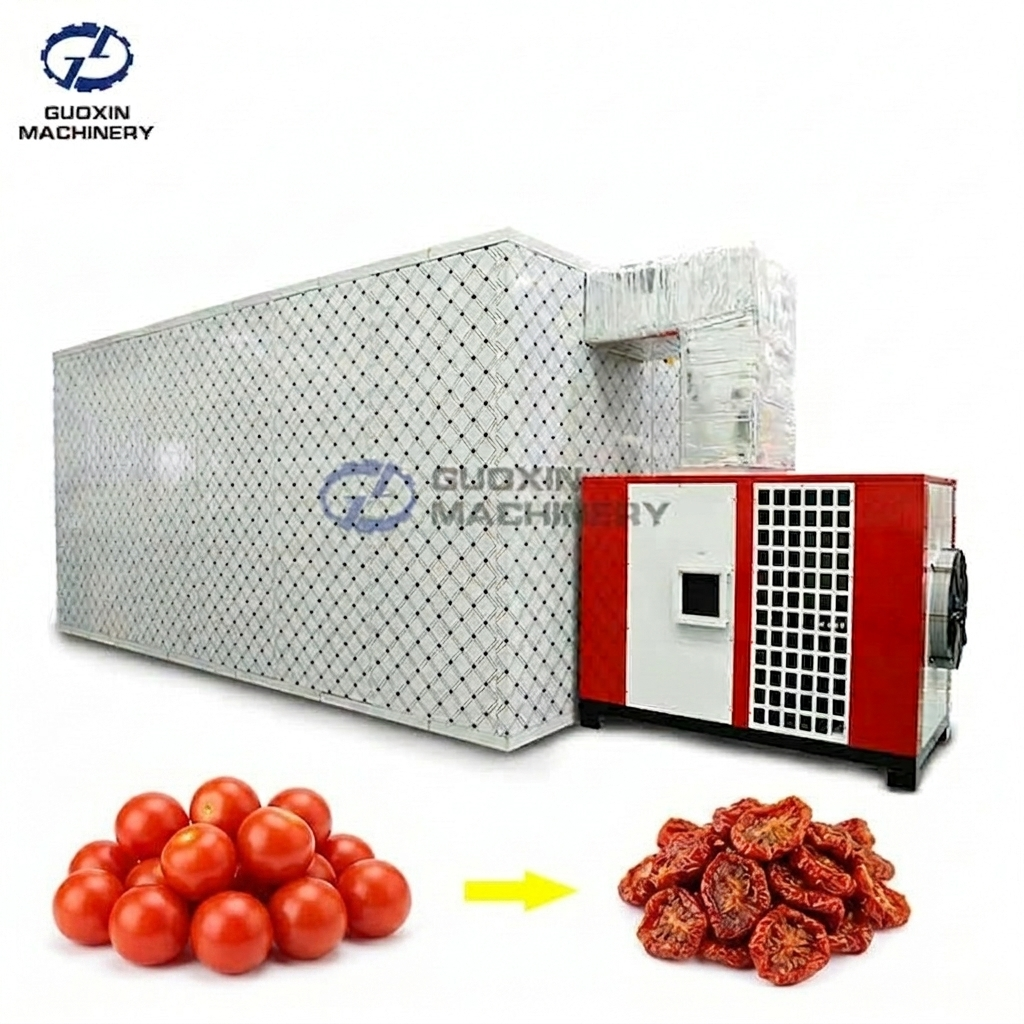
Sun-Dried Tomato Drying – Parameters for Industrial Production of Consistent Tomato Slices
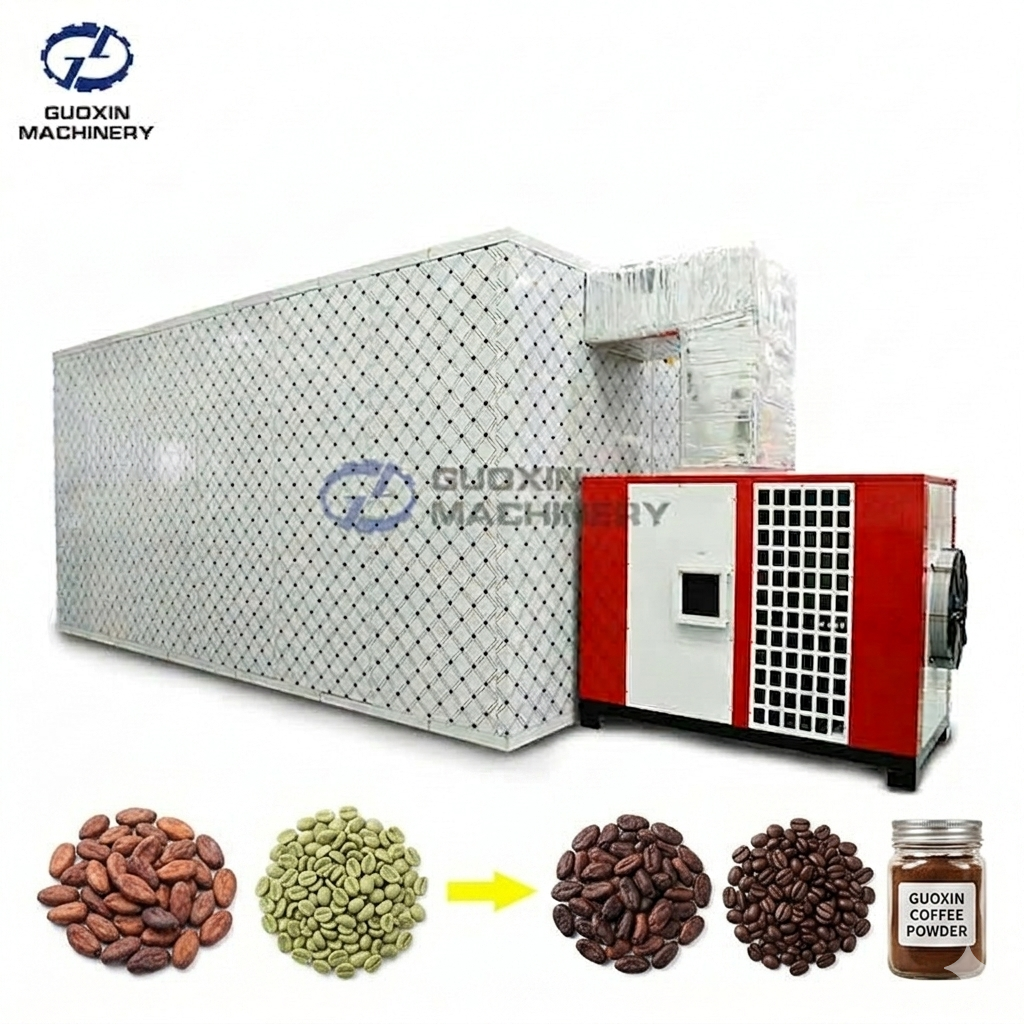
Drying Coffee Beans, Cocoa Nibs and Instant Coffee Powder