© Henan Guoxin Machinery Manufacturing Co., Ltd. All Rights Reserved.



Release time:2026-07-08
Why is factory material testing critical before investing in a commercial frying line?
Raw agricultural commodities like potatoes vary significantly in starch profiles, moisture content, and skin thickness based on region and storage time. Guoxin’s On-Site Material Trial Program allows global food processors to ship their native ingredients directly to our workshop. This test run verifies mechanical scaling, calibrates precision slicing metrics, and locks in exact thermal boundaries to ensure a uniform, golden, and crisp output before capital equipment deployment.
The workshop testing loop was configured as a continuous multi-stage sequence to demonstrate how integrated pre-treatment machinery optimizes downstream frying efficiency.
[Fresh Raw Potatoes] → [Mechanical Peeling] → [Centrifugal Slicing] → [Starch Rinsing] →
[Air-Dry De-watering] → [Thermostatic Deep Frying] → [Premium Crisps]
Phase 1: Mechanical Peeling & Hulling
Fresh, unpeeled potatoes are loaded into the vertical abrasion peeling machine. The internal abrasive matrix strips away the tough outer skins rapidly while minimizing flesh waste. A constant water flush sanitizes the tubers and washes away skin debris through a bottom drainage port.
Phase 2: Calibrated Slicing & Starch Rinsing
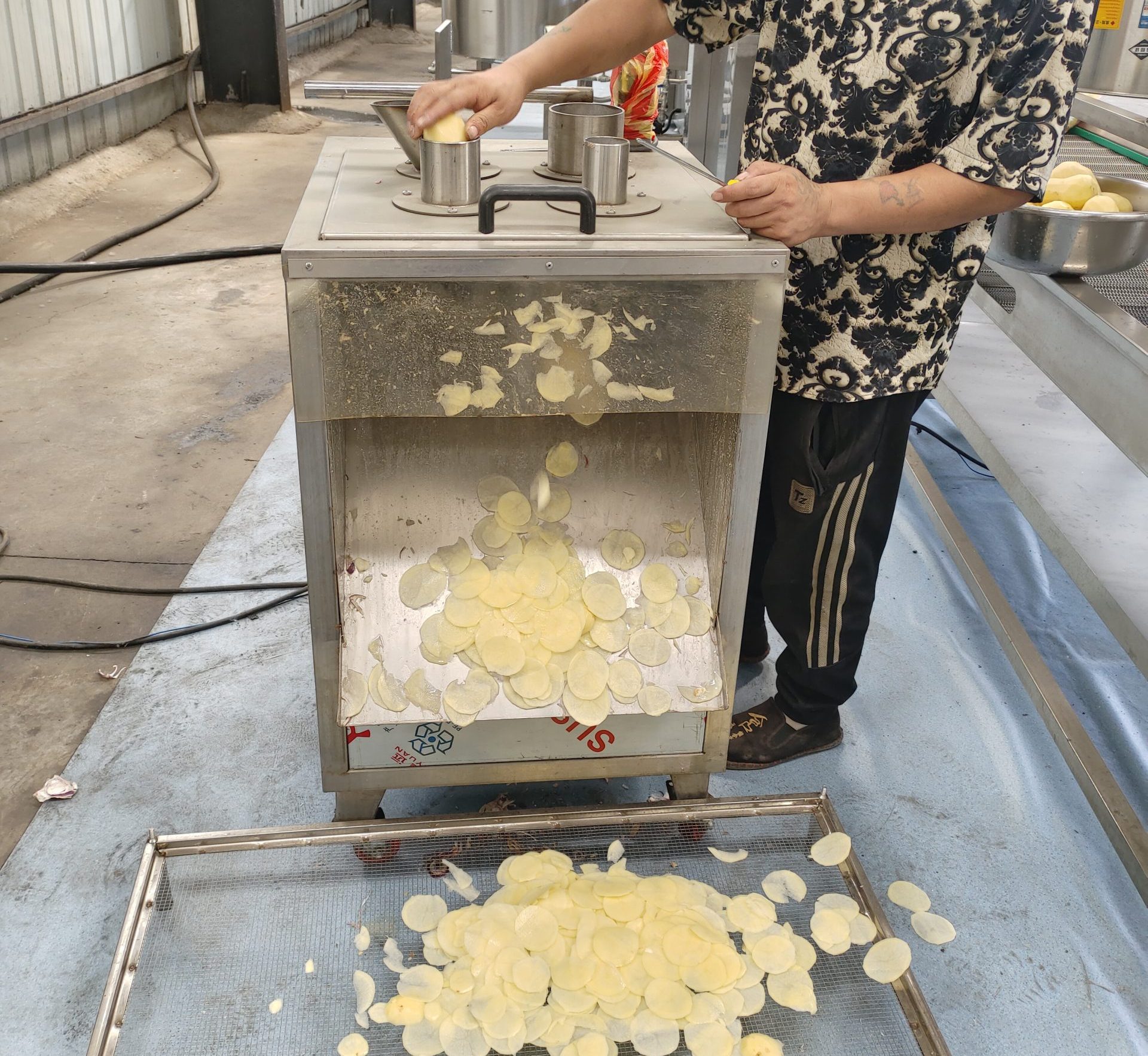
The peeled potatoes transition immediately into a heavy-duty centrifugal slicing machine. For this trial, the blades were calibrated to a precise thickness of 1.5 mm.
Following slicing, the raw chips drop into a turbulent water bath. This step is essential: it rinses away free surface starch released during cutting, which prevents the slices from sticking together in the fryer and ensures a clean, non-cloudy frying oil field.
Phase 3: High-Velocity Air-Dry De-watering
Before entering the frying stage, the wet potato slices travel across an automated air-drying conveyor matrix. Multiple banks of high-velocity vortex blowers sweep ambient air downward, stripping surface moisture from both sides of the slices. Removing this surface water prevents oil splattering, slows oil degradation, and lowers net fuel usage.
Phase 4: Temperature-Controlled Thermostatic Frying
The surface-dry potato slices feed directly into the commercial deep-frying unit. For this trial, the industrial control panel was configured to a precise, constant thermal boundary (170°C to 180°C). The continuous frying drive sweeps the chips through the oil bed at a controlled speed, ensuring every chip achieves identical crispness, moisture extraction, and a uniform golden-yellow appearance.
The data table below represents the performance metrics recorded during this workshop material trial run.
| Operational Process Stage | Mechanical Equipment Utilized | Key Configured Parameters | Target Quality Performance Output |
| Pre-Treatment | Abrasion Roller Peeler | 2-3 Minute Cycle / Water Flush | Complete skin removal; low flesh loss |
| Slicing Matrix | Centrifugal Slicer/Washer | 1.5 mm Cut Thickness | Uniform slice geometry; zero starch buildup |
| De-watering | Air-Knife Conveyor Line | Ambient Air / High Velocity | Complete removal of surface moisture film |
| Thermal Frying | Thermostatic Batch Fryer | 175°C Core Temp / Pure Vegetable Oil | Rapid moisture drop to <3%; uniform gold hue |
The finished batch of potato chips successfully cleared all B2B food-grade production benchmarks:
Q1: Why is the air-drying/de-watering step non-negotiable before the potato slices enter the frying machine?
A: Introducing wet potato slices directly into high-temperature frying oil causes an immediate thermal shock. The surface water flashes into steam instantly, causing intense oil splattering that damages the equipment environment and creates a severe safety hazard for operators. Furthermore, excess water accelerates oil hydrolysis, breaking down premium frying oil into free fatty acids. This ruins the oil quality and leaves the chips tasting greasy. Our high-velocity air-drying line removes this surface water film, protecting your oil chemistry and cutting frying energy consumption by up to 15%.
Q2: How does the fryer’s control system prevent the potato chips from developing dark or scorched margins?
A: Scorched margins are caused by localized hot spots in the oil or an accumulation of loose potato starch that burns at the bottom of the tank. Guoxin commercial frying machines use a multi-point indirect heating design managed by an intelligent PLC control panel. This system maintains a highly stable oil temperature within $\pm 1^\circ\text{C}$ across the entire tank, avoiding thermal spikes. Additionally, built-in continuous filtration scrapers continuously remove fine starch sediment before it can burn, preserving oil clarity and preventing flavor taint.
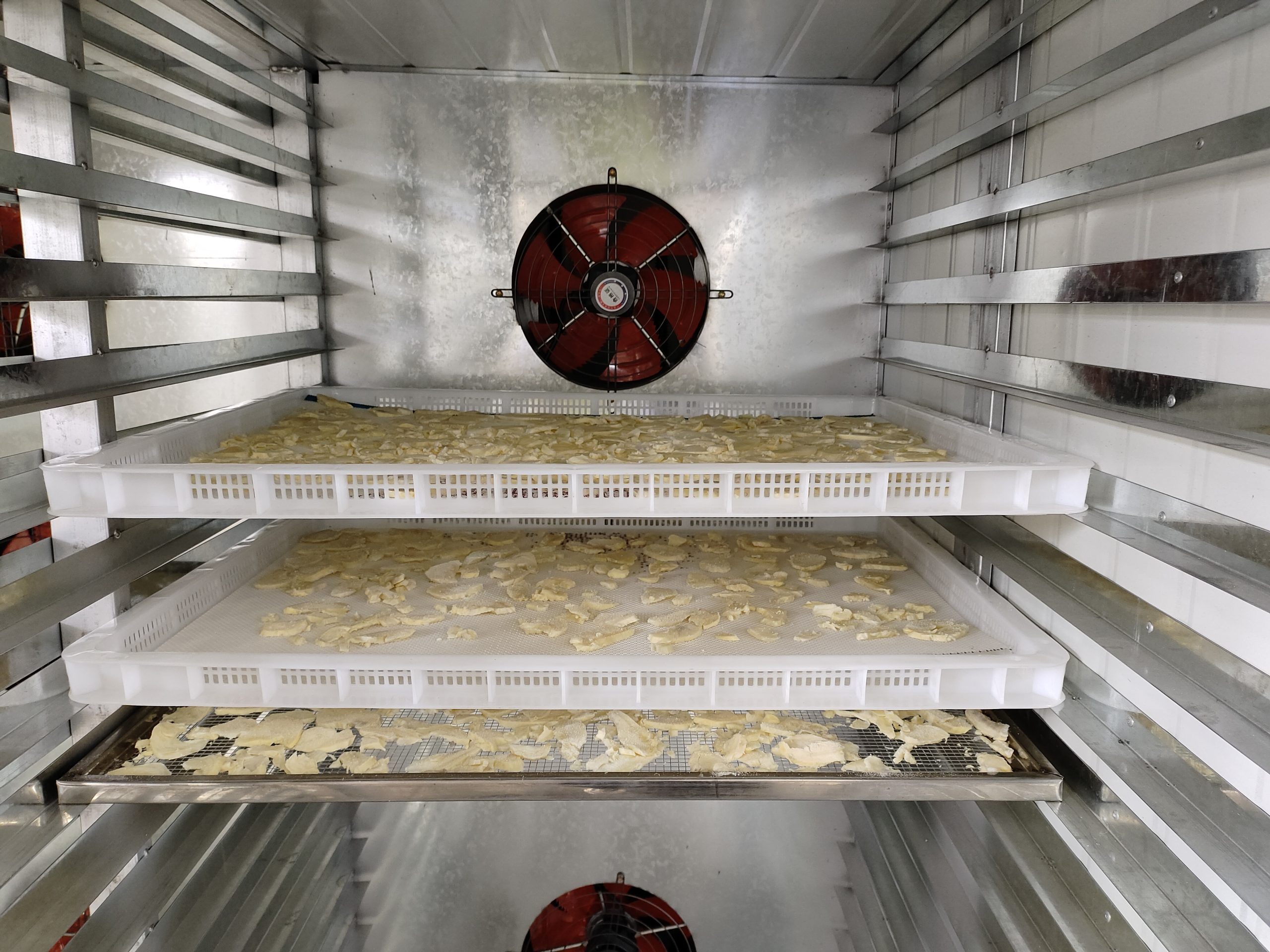
Commercial Durian Dehydration: Preserving Quality with Heat Pump Technology
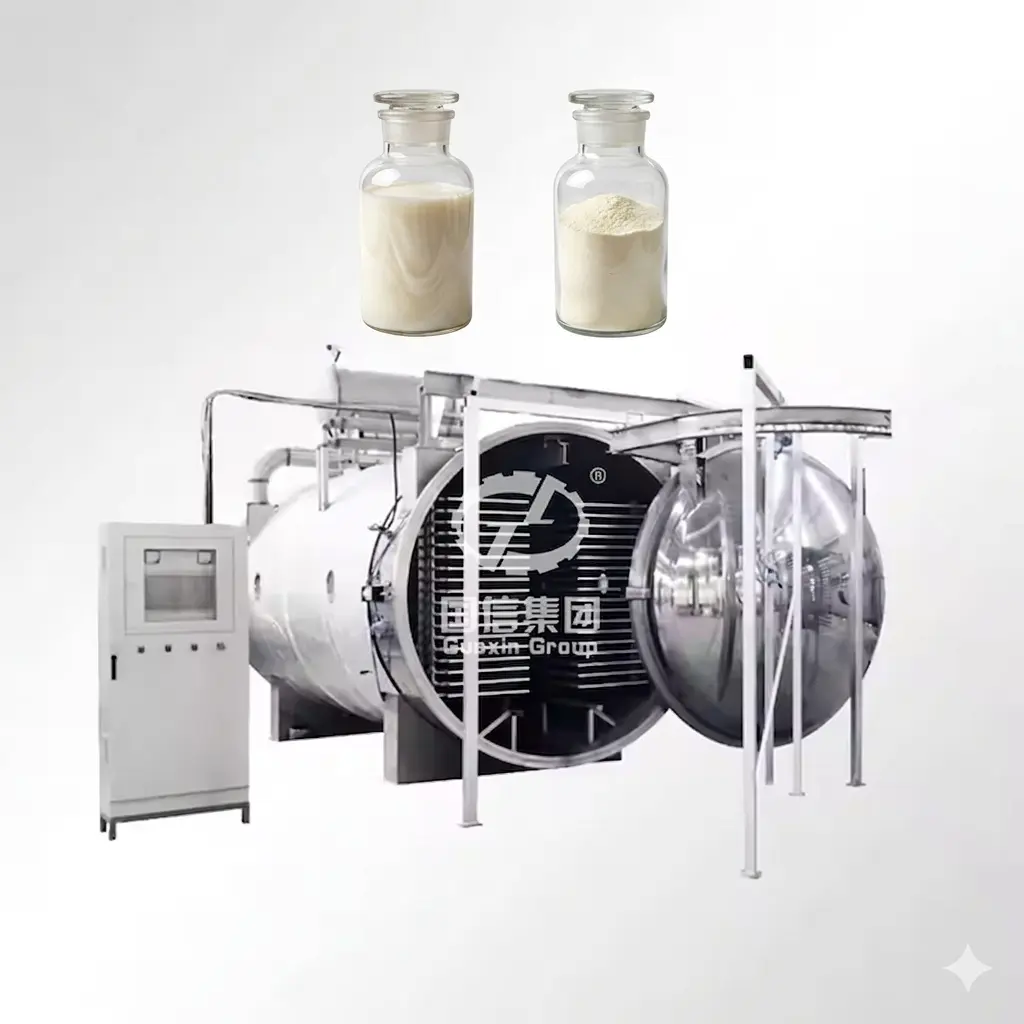
Milk Powder Drying – Parameters for Consistent Final Moisture and Functional Properties
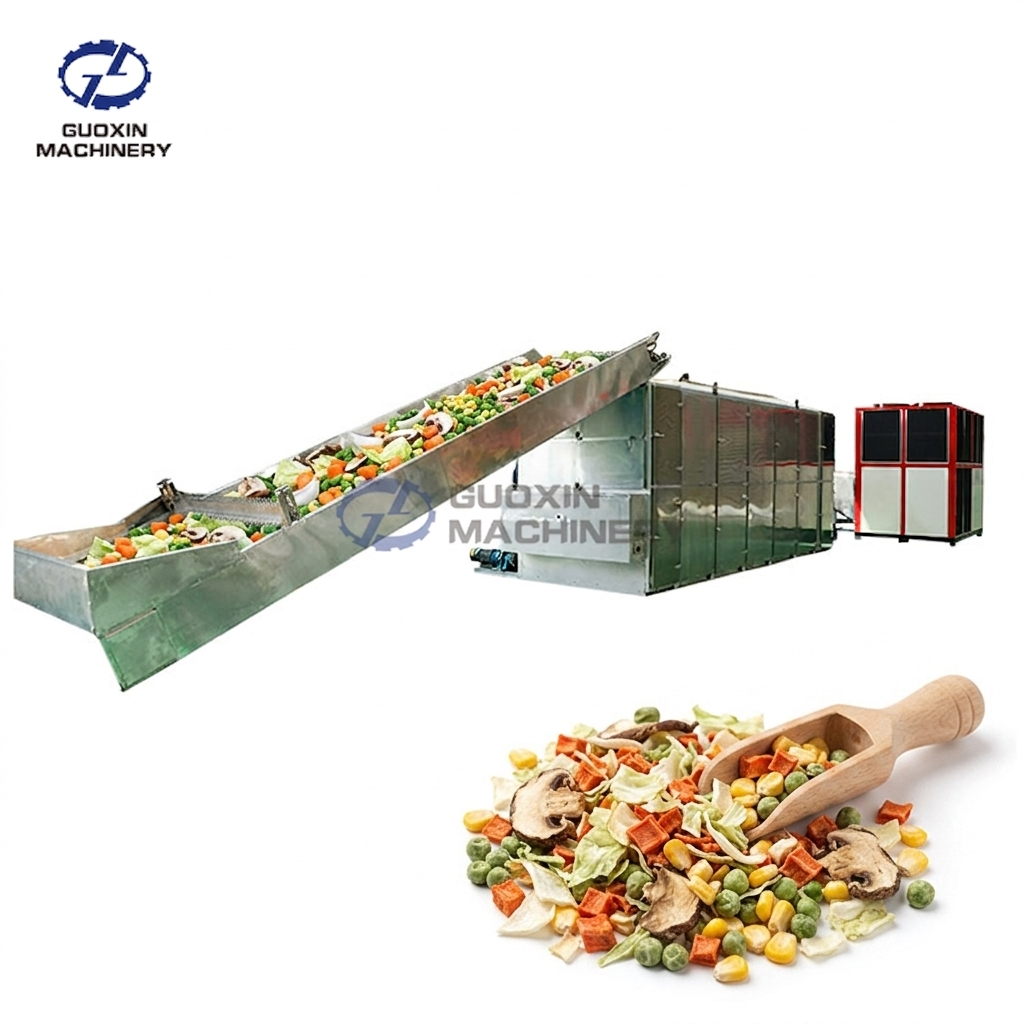
Dehydrated Vegetables for Instant Noodle Seasoning – Drying Parameters for Consistent Quality in Seasoning Packs
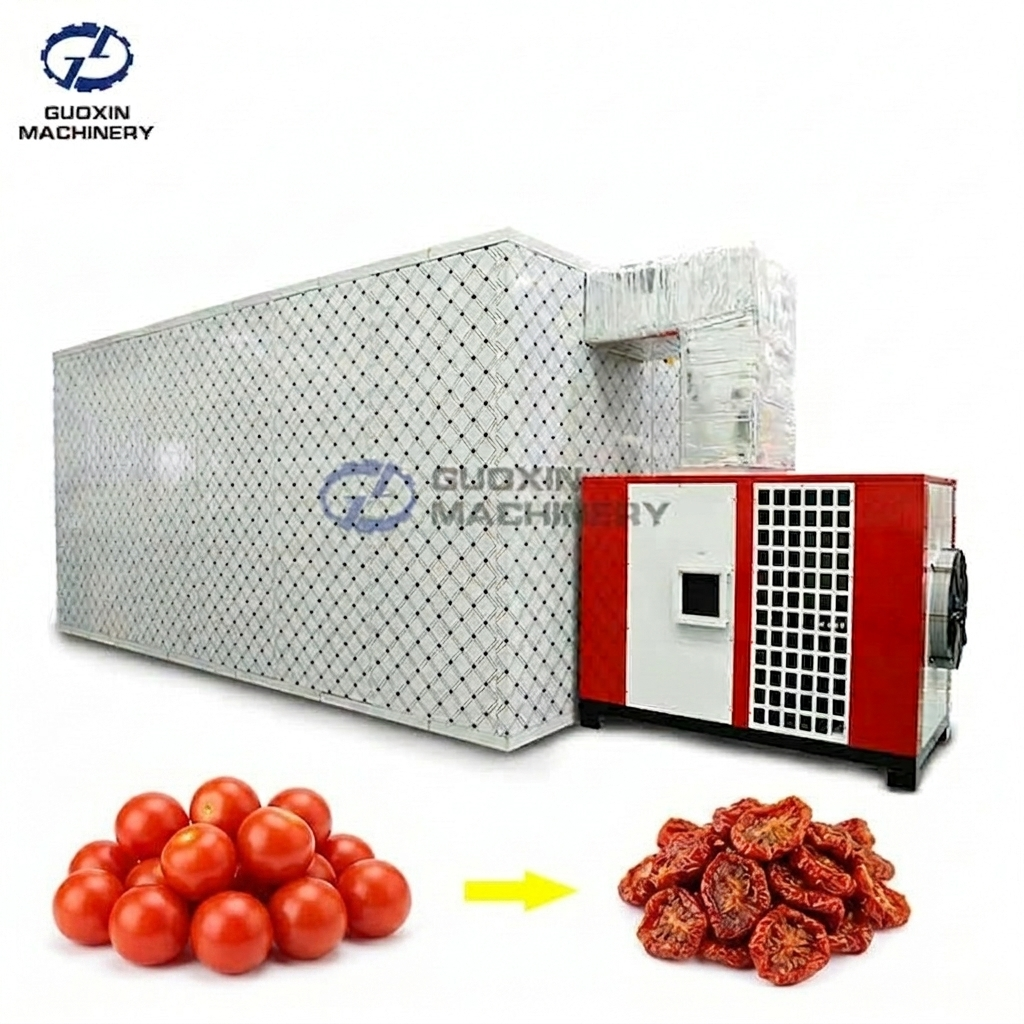
Sun-Dried Tomato Drying – Parameters for Industrial Production of Consistent Tomato Slices
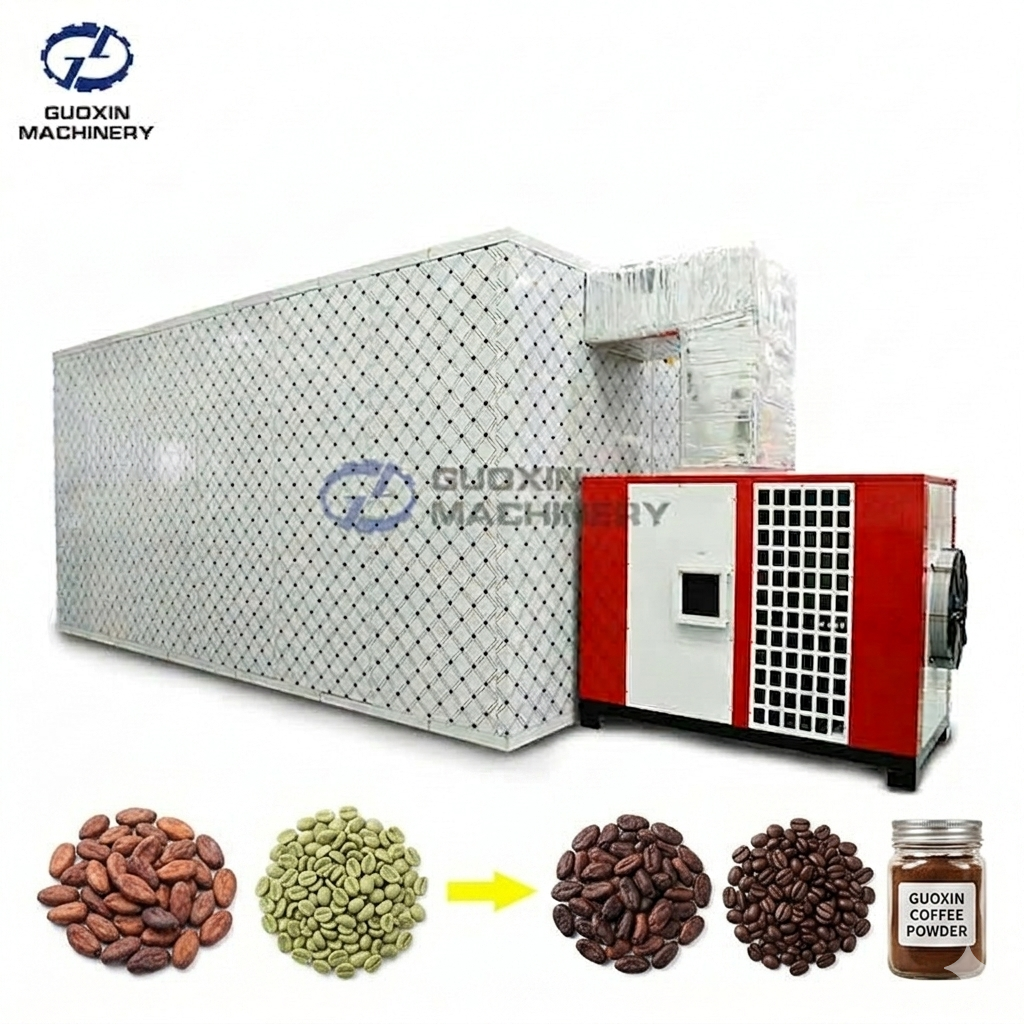
Drying Coffee Beans, Cocoa Nibs and Instant Coffee Powder