© Henan Guoxin Machinery Manufacturing Co., Ltd. All Rights Reserved.



Release time:2026-05-07
In January 2026, Guoxin Group conducted a comprehensive pilot test for a large-scale tropical fruit export client. The objective was to validate the drying curve and final product quality for Continuous Mesh Belt Dehydration of fresh mangoes. For industrial-scale production, maintaining the vibrant yellow color, flexible texture, and concentrated sugar profile of the mango is essential for international market standards.
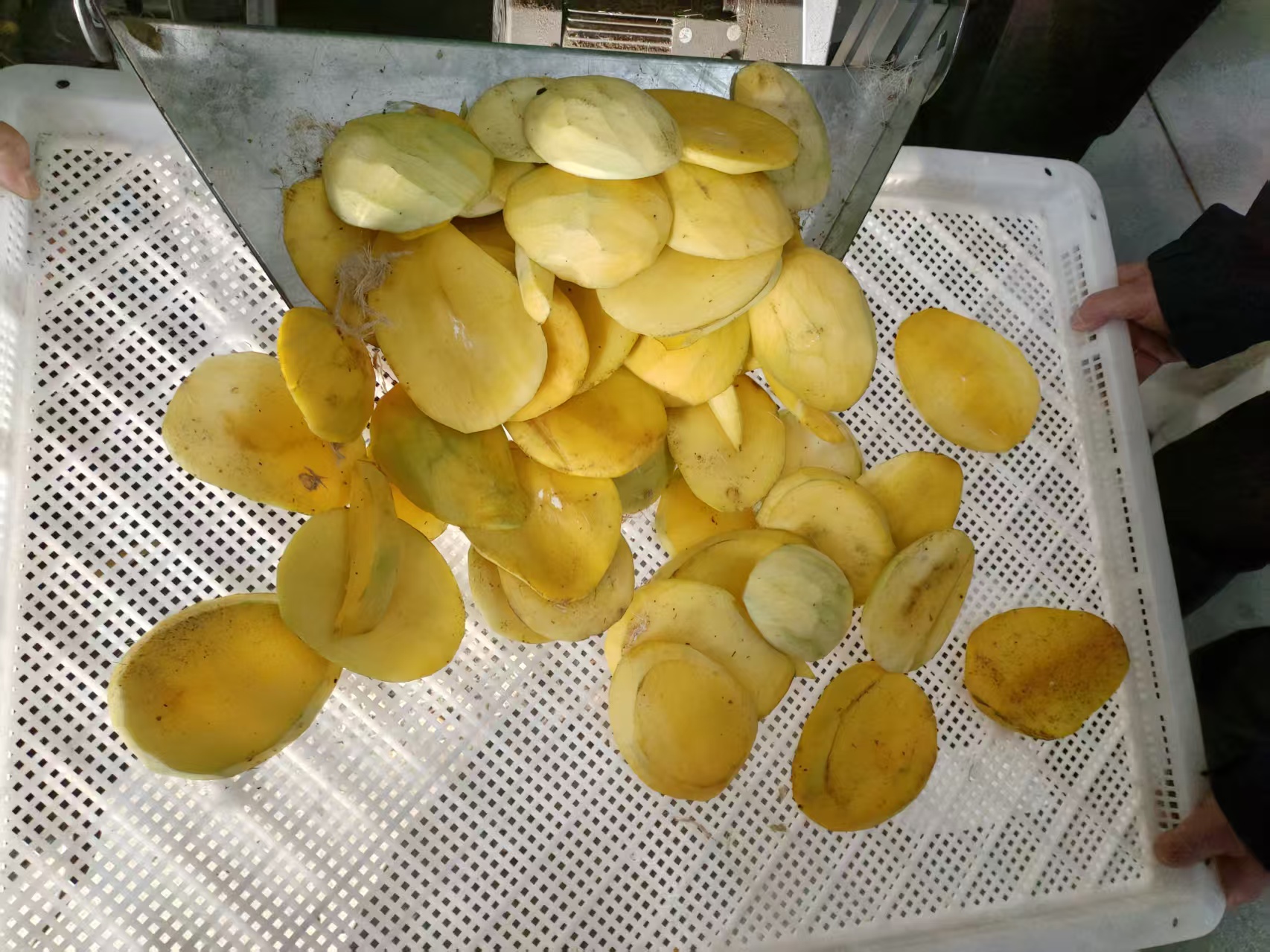
Mango Mesh Belt Drying
The test followed a rigorous food-grade workflow to ensure maximum nutrient retention and microbial safety.
Step 1: Raw Material Selection & Peeling
High-quality, mature mangoes were selected for the test. Manual peeling was utilized in this pilot stage to ensure the fruit’s integrity was maintained and to remove the skin without losing the nutrient-rich layer directly beneath it.
Step 2: Precision Slicing
The peeled mangoes were processed through a high-speed industrial slicer.
Technical Parameter: Slices were maintained at a uniform thickness of 5mm to 8mm.
Result: Uniform slicing is critical in mesh belt drying to ensure that every piece reaches the target moisture content simultaneously, preventing “over-dried” edges or “wet centers.”
Step 3: Loading and Pilot Testing
Before proceeding to full-scale continuous belt operation, the slices were tested in a cabinet-style pilot unit to calibrate the Mesh Belt Dryer‘s airflow and temperature settings.
Observation: Slices were arranged on SUS304 stainless steel trays to prevent sticking and ensure 360-degree air penetration.
While batch dryers are suitable for small quantities, the Continuous Mesh Belt Dryer is the professional choice for commercial mango production for several reasons:
Large-Scale Throughput: Designed for 24/7 operation with capacities ranging from 500kg to 10 tons per day.
Multi-Layer “S-Path” Drying: Mangoes travel through multiple layers of stainless steel mesh. As the fruit drops from one level to the next, it is naturally flipped, ensuring uniform dehydration without manual labor.
Temperature Control: Utilizing a Heat Pump or steam heat source allows for “Low-Temperature Drying” ($50\text{°C} – 65\text{°C}$). This prevents the caramelization of sugars and preserves the natural “Golden Yellow” color.
Hygienic Design: The internal chamber and belts are made of food-grade SUS304, meeting international export standards (FDA/CE).
| Phase | Equipment | Temperature | Outcome |
| Preparation | Industrial Slicer | Ambient | Uniform 6mm slices |
| Stage 1 (Initial) | Mesh Belt Dryer | 60°C | Rapid removal of surface moisture |
| Stage 2 (Mid) | Mesh Belt Dryer | 55°C | Deep-tissue dehydration |
| Stage 3 (Final) | Mesh Belt Dryer | 45°C | Moisture stabilization at 15/% – 18/% |
Final Product Quality: The resulting dried mangoes exhibited a vibrant color, high flexibility (no brittleness), and an intense flavor profile, fully meeting the client’s “Premium Export” requirements.
Q1: Why use a Mesh Belt Dryer instead of a Vacuum Dryer for mangoes?
A: While vacuum drying is excellent for “crunchy” fruit chips, the Mesh Belt Dryer is the industry standard for “chewy” dried mango slices. It provides a much higher ROI (Return on Investment) due to lower energy costs and significantly higher production volume.
Q2: How do you prevent mango slices from sticking to the mesh belt?
A: We use specialized food-grade, non-stick mesh or high-frequency vibration at the feeding stage. Additionally, the multi-layer drop system naturally breaks any slight adhesion as the fruit moves between layers.
Q3: Can this system be used for other tropical fruits like Pineapple or Durian?
A: Yes. Our January 2026 tests also included frozen durian and pineapple. The PLC control system allows you to save different “Drying Recipes,” adjusting the belt speed and temperature for various fruit types at the touch of a button.
Q4: What is the energy source for the Guoxin Mesh Belt Dryer?
A: Our systems are highly adaptable. We recommend Air Energy Heat Pumps for maximum energy savings (up to 70/% reduction in costs), but the system can also be configured for steam, natural gas, or biomass depending on your local resources.
Guoxin Group provides turnkey solutions for fruit dehydration plants worldwide.
Site Visit & Testing: Send your fruit to our lab for a custom drying report.
3D Factory Design: We optimize your floor plan for efficient material flow.
Global Installation: Our engineering team provides on-site setup and training.
Contact Guoxin for a Mango Drying Line Quote
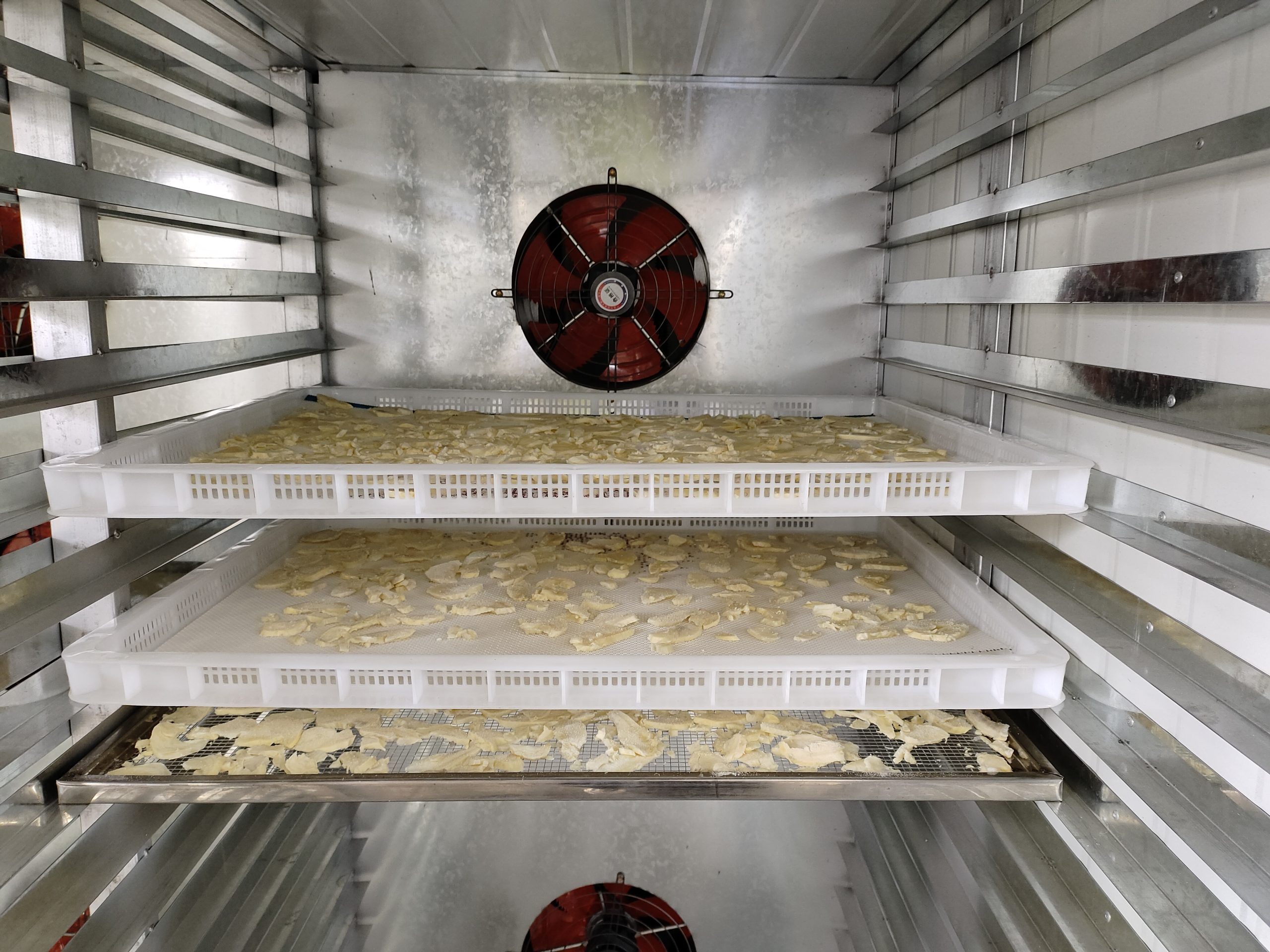
Commercial Durian Dehydration: Preserving Quality with Heat Pump Technology
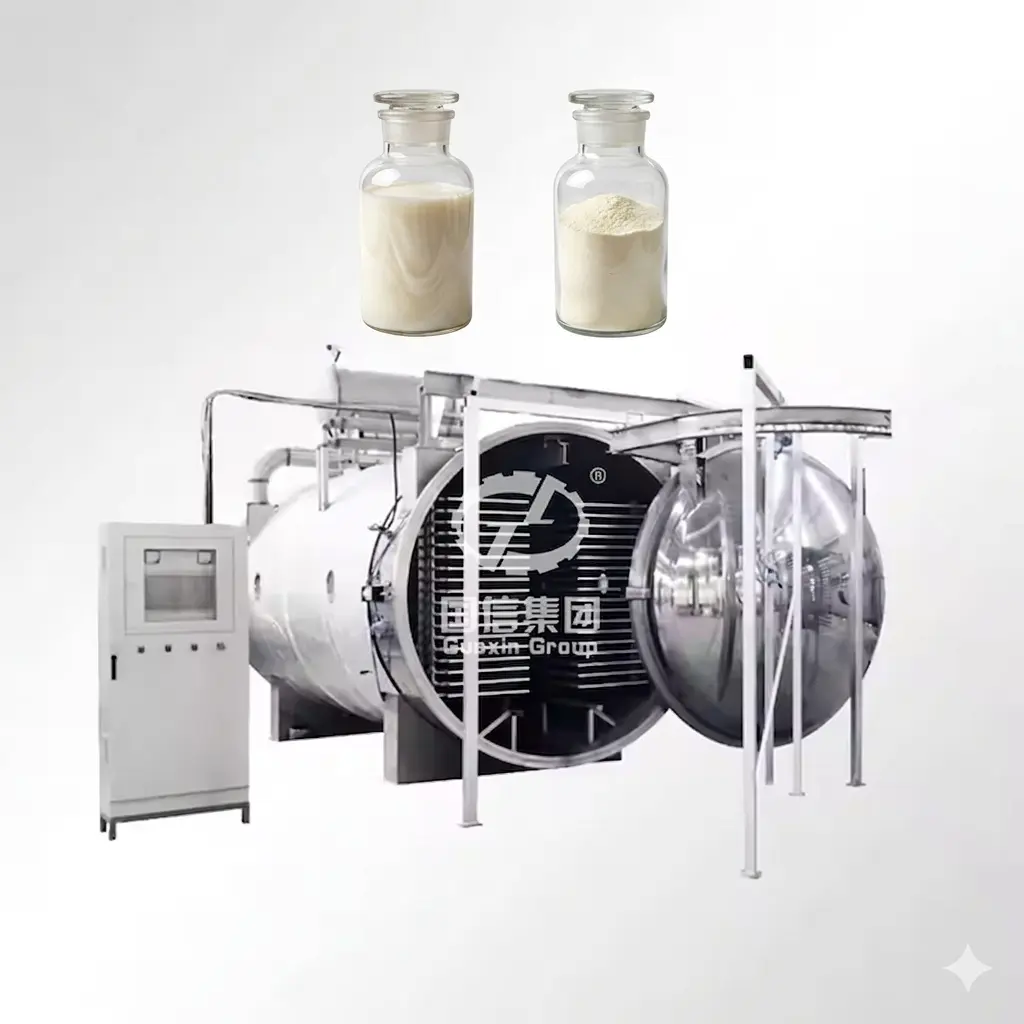
Milk Powder Drying – Parameters for Consistent Final Moisture and Functional Properties
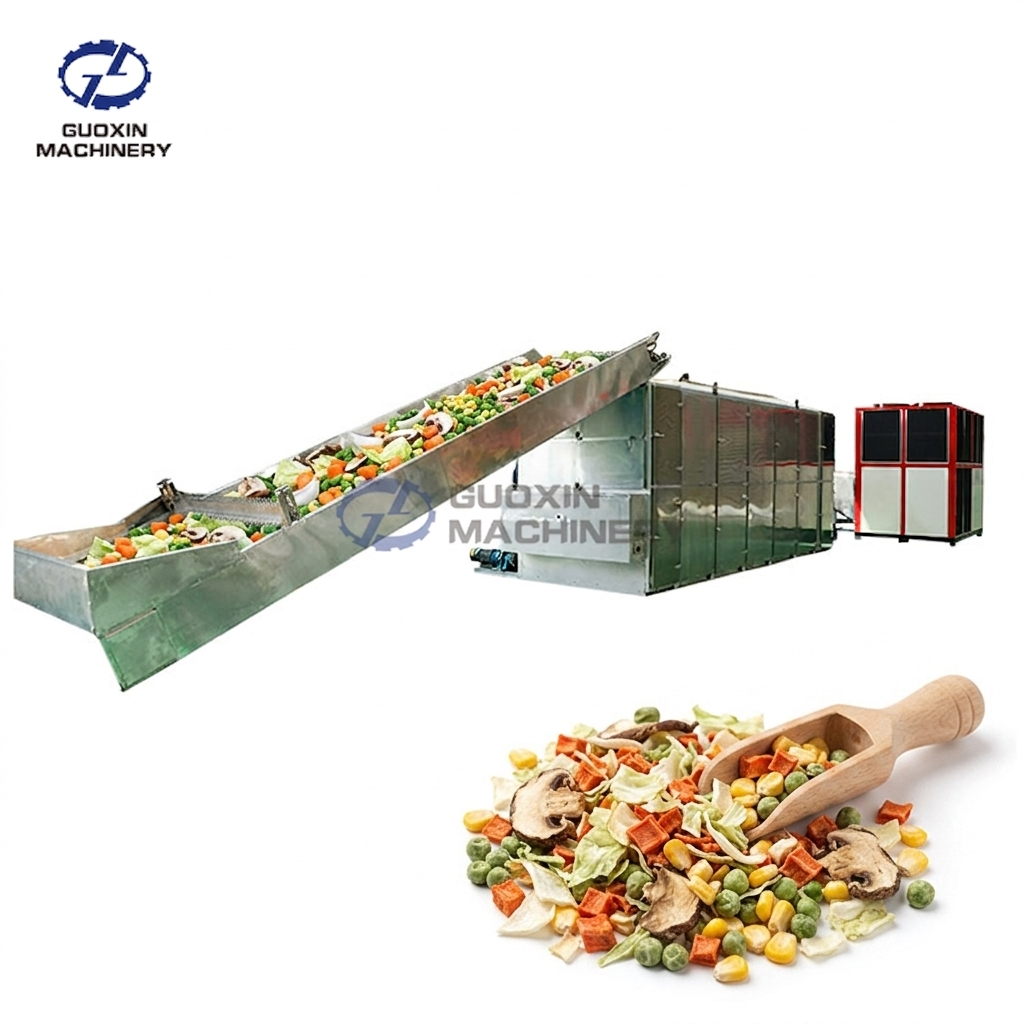
Dehydrated Vegetables for Instant Noodle Seasoning – Drying Parameters for Consistent Quality in Seasoning Packs
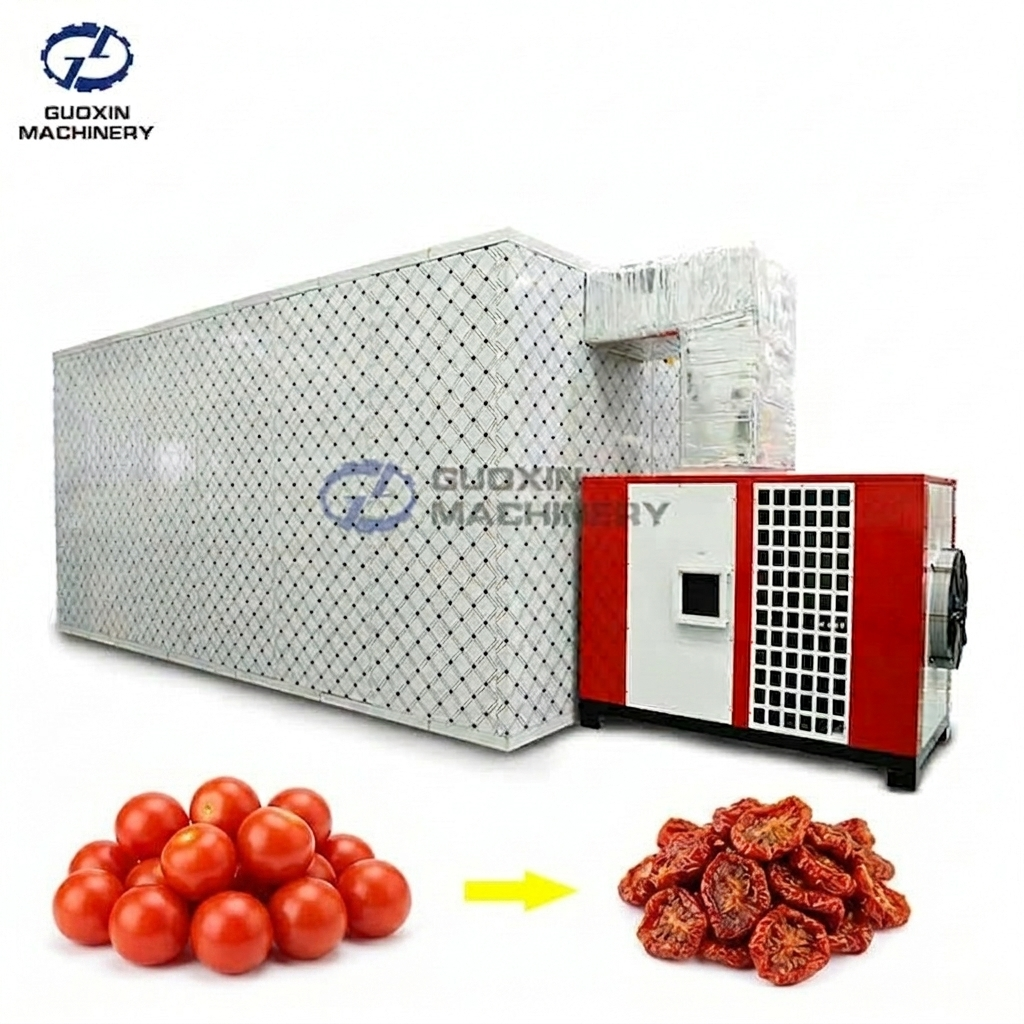
Sun-Dried Tomato Drying – Parameters for Industrial Production of Consistent Tomato Slices
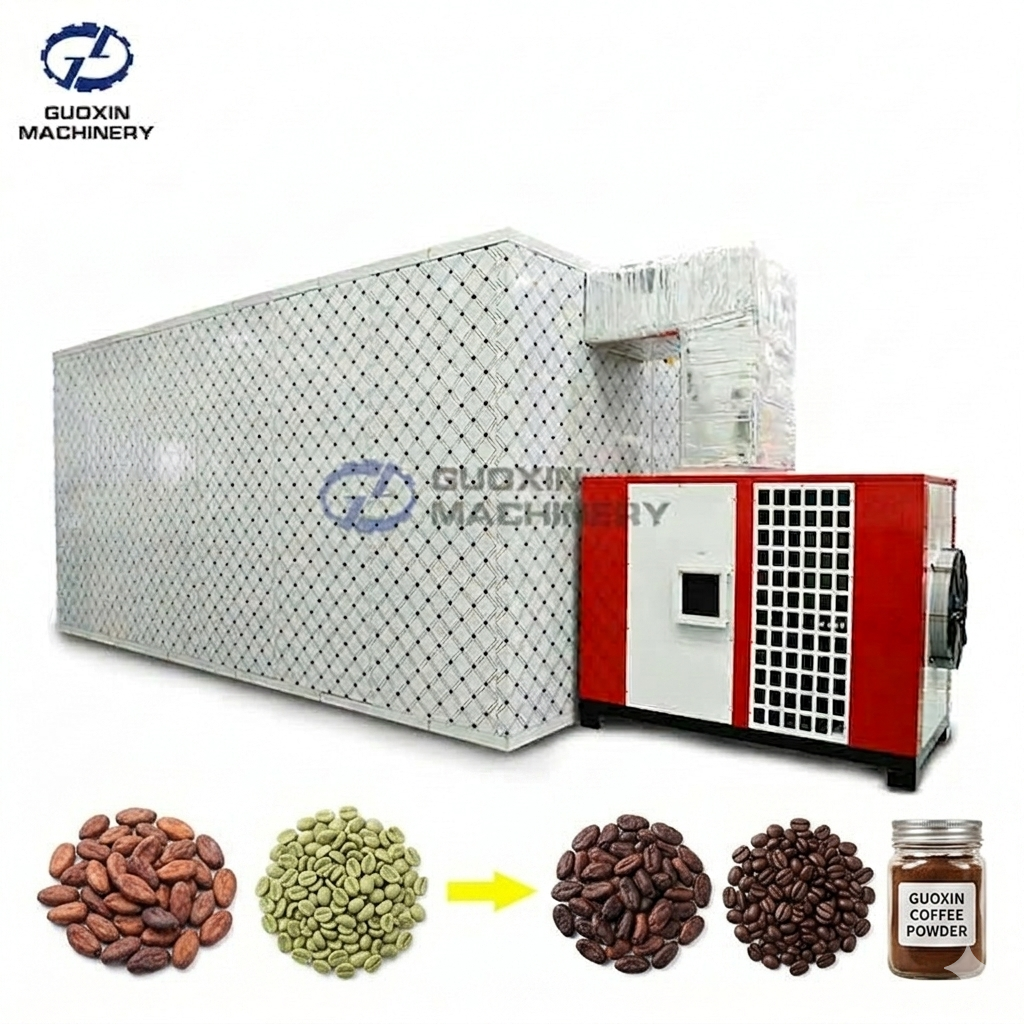
Drying Coffee Beans, Cocoa Nibs and Instant Coffee Powder