© Henan Guoxin Machinery Manufacturing Co., Ltd. All Rights Reserved.



Release time:2026-03-18
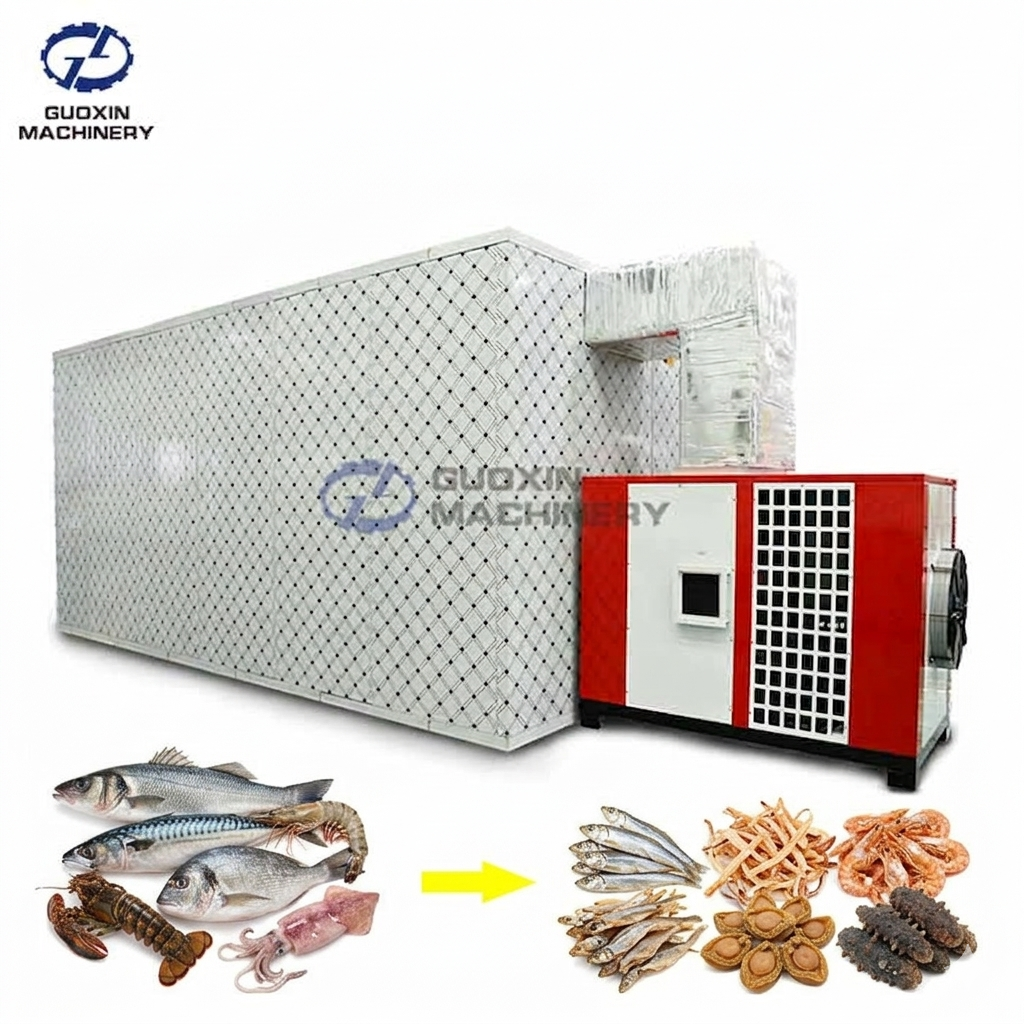
Dehydrating marine and freshwater products requires balancing thermal efficiency against raw material degradation.
High, uncontrolled heat (>60°C ) causes fat oxidation (rancidity), protein scorching, surface hardening, and loss of natural pigment.
Additionally, ocean seafood releases corrosive saline vapor during evaporation, requiring targeted structural metallurgy.
Guoxin Group engineers complete Seafood Drying Solutions configured around three core machinery platforms:
Air-Source Heat Pump Drying Chambers, Continuous Multi-Layer Mesh Belt Dryers, and Industrial Microwave Drying & Sterilization Systems.
[Raw Material Intake] ──► [Washing/Filleting/Brining] ──► [Pre-Dewatering]
                                                              │
    ┌─────────────────────────────────────────────────────────┴───────────────────┐
    ▼                                                         ▼                                                      ▼
[Primary Heat Pump Chamber]             [Continuous Mesh Belt Tunnel]                           [Industrial Microwave Dryer]
• Low-temp batch drying (20°C-55°C)     • High-tonnage continuous line                          • Rapid volumetric finishing
• Squid, sea cucumber, fish fillets     • Small fish, anchovies, seaweed                        • Fish skin puffing & sterilization
    │                                                         │                                                        │
    └─────────────────────────────────────────────────────────────────────────────┘
                                                              ▼
                                              [Cooling, Inspection & Packaging]
Drying Physics: Operates via closed-loop dehumidification at controlled temperatures (20°C – 55°C ). Recycles latent condensation heat, reducing energy draw by up to 60% compared to open-vent electric resistance heating.
Best Applied To: High-value or delicate seafood requiring strict color and fat protection, including squid, sea cucumber, fish maws, salted cod fillets, and export-grade prawns.
Drying Physics: Multi-tiered $SUS304/SUS316$ woven wire belts convey product through zoned, forced-convective hot-air tunnels. Materials tumble gently between belt levels to ensure uniform airflow contact.
Best Applied To: Mass-production facilities (2 to 20+ Tons/day) handling small fish, anchovies, kelp, seaweed, and bulk pre-boiled shrimp.
Drying Physics: Direct volumetric electromagnetic heating (2450MHz} / 915MHz) excites water molecules within the product interior instantly, evaporating deep-core moisture without reliance on surface conduction.
Best Applied To:
Secondary Finish-Drying: Rapidly lowering residual moisture from 15%down to <5% in minutes.
Seafood Snack Puffing: Producing crispy fish skin, expanded squid threads, and fish crackers.
Low-Temperature Pasteurization: Sterilizing packaged/dried seafood at 70°C – 85°C to kill mold and bacterial spores without altering flavor.
| Material Category | Primary Dryer Platform | Secondary / Finishing Unit | Thermal Control Range | Key Engineering Focus |
| Specialty Seafood (Squid, Sea Cucumber, Fish Maw) | Heat Pump Chamber | Microwave Sterilizer | 20°C – 45°C | Anti-shrinkage, shape retention, zero fat leakage |
| High-Tonnage Fish & Shrimp (Anchovies, Small Fish, Prawns) | Continuous Mesh Belt | Microwave Finish Dryer | 45°C – 65°C | SUS304 build, high throughput (>5 Tons/day) |
| Seaweed & Algae (Kelp, Wakame, Nori) | Continuous Mesh Belt | N/A | 35°C – 50°C | Teflon non-stick belt coating, high air velocity |
| Seafood Snacks & Crisps (Fish Skin, Puffed Fillets) | Heat Pump Chamber | Industrial Microwave | 60°C – 90°C (Microwave) | Rapid puffing, crisping, microbial control |
| Operational Parameter | Air-Source Heat Pump Chamber | Continuous Mesh Belt Line | Industrial Microwave Tunnel |
| Processing Capacity | 300 kg- 3,000 kg / batch | 2 Tons – 20+ Tons / day | 50 kg – 1,500 kg / hour |
| Structural Metallurgy | SUS304 / SUS316 Stainless Steel | SUS304 / SUS316 Stainless Steel | Industrial-Grade SUS304 Stainless Steel |
| Operating Temperature | 20°C – 60°C (pm 0.1°C ) | 35°C – 75°C (PLC Zoned) | 40°C – 100°C (Adjustable Power) |
| Core Advantage | Precise low-temp color retention | Continuous high-tonnage output | Volumetric speed & 100% pasteurization |
| Primary Utility Connection | 380V / 3-Phase / 50Hz Electric | Gas / Steam / Electric Heat Pump | 380V / 3-Phase / 50Hz Electric |
Q1: When should an industrial microwave dryer be integrated into a seafood drying line instead of hot-air dryers alone?
A: Microwave systems are deployed in two specific scenarios: (1) Crisp Puffing: For seafood snacks (e.g., fish skins or squid chips) requiring thermal expansion and rapid moisture drop, and (2) Final Finish & Sterilization: Conventional hot-air drying slows down drastically below 15% moisture content. Passing semi-dried seafood through a microwave tunnel strips residual core moisture in minutes while simultaneously completing low-temperature pasteurization before packaging.
Q2: How do Guoxin Group systems prevent saline corrosion when drying ocean fish and salted prawns?
A: Evaporated moisture from saltwater seafood contains corrosive sodium chloride. All Guoxin drying chambers, tray carts, mesh belts, and internal structural frames are manufactured using food-grade SUS304 or marine-grade SUS316 stainless steel. Heat pump condensing coils feature anti-corrosion epoxy coatings or titanium tubing to prevent salt-air degradation.
Q3: Can a continuous mesh belt dryer handle delicate, sticky materials like wet kelp or seaweed?
A: Yes. Fresh seaweed releases mucilaginous compounds that stick to standard wire mesh. Our continuous seaweed dryers utilize food-grade Teflon-coated stainless steel belts paired with variable-frequency high-volume fans, preventing material adhesion and ensuring smooth transfer between belt tiers.
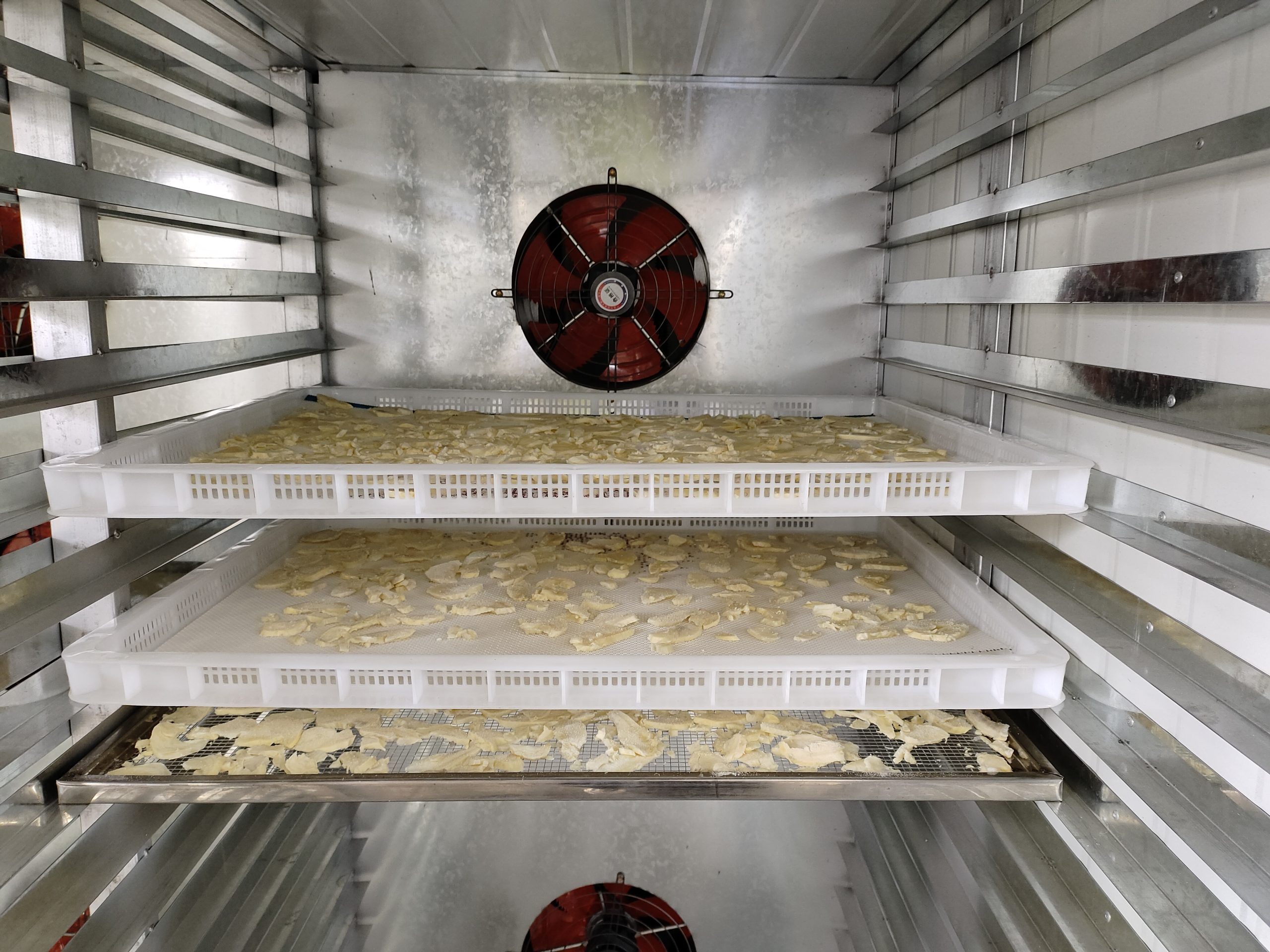
Commercial Durian Dehydration: Preserving Quality with Heat Pump Technology
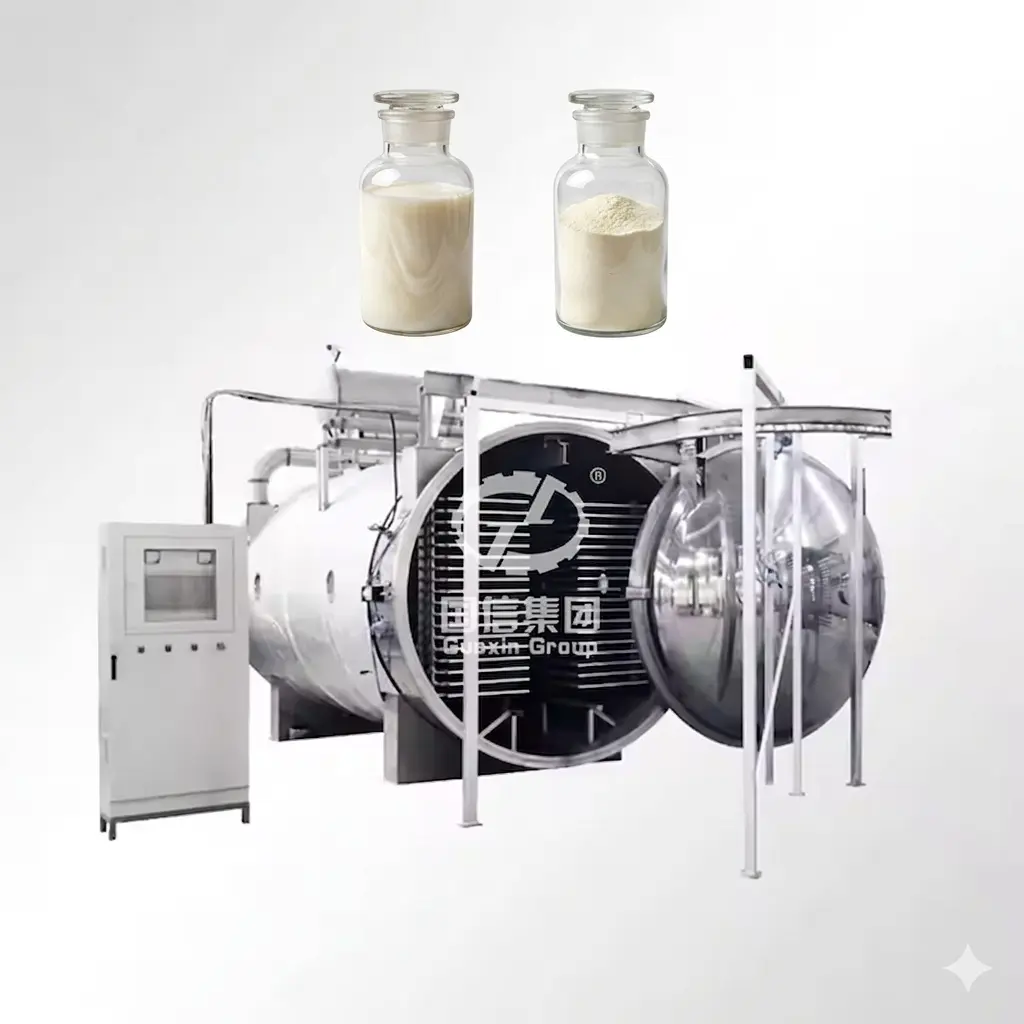
Milk Powder Drying – Parameters for Consistent Final Moisture and Functional Properties
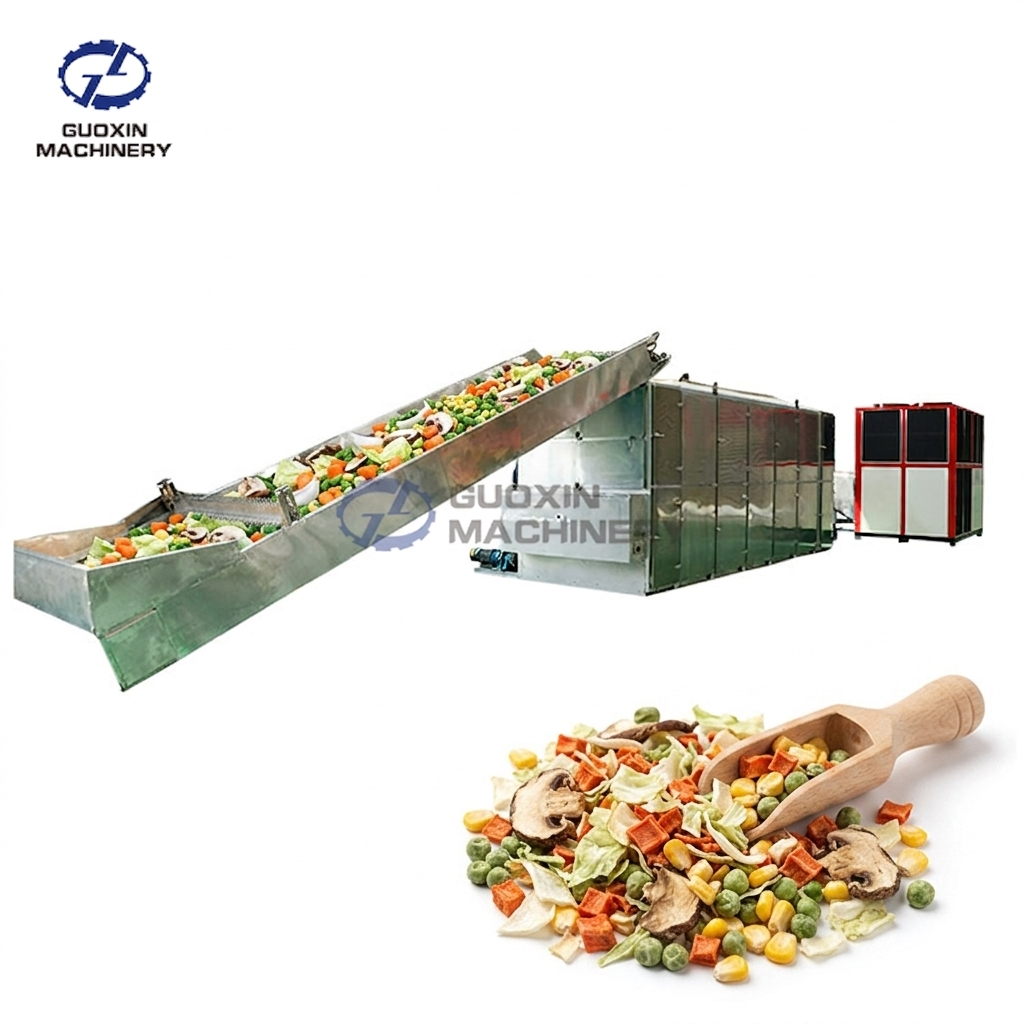
Dehydrated Vegetables for Instant Noodle Seasoning – Drying Parameters for Consistent Quality in Seasoning Packs
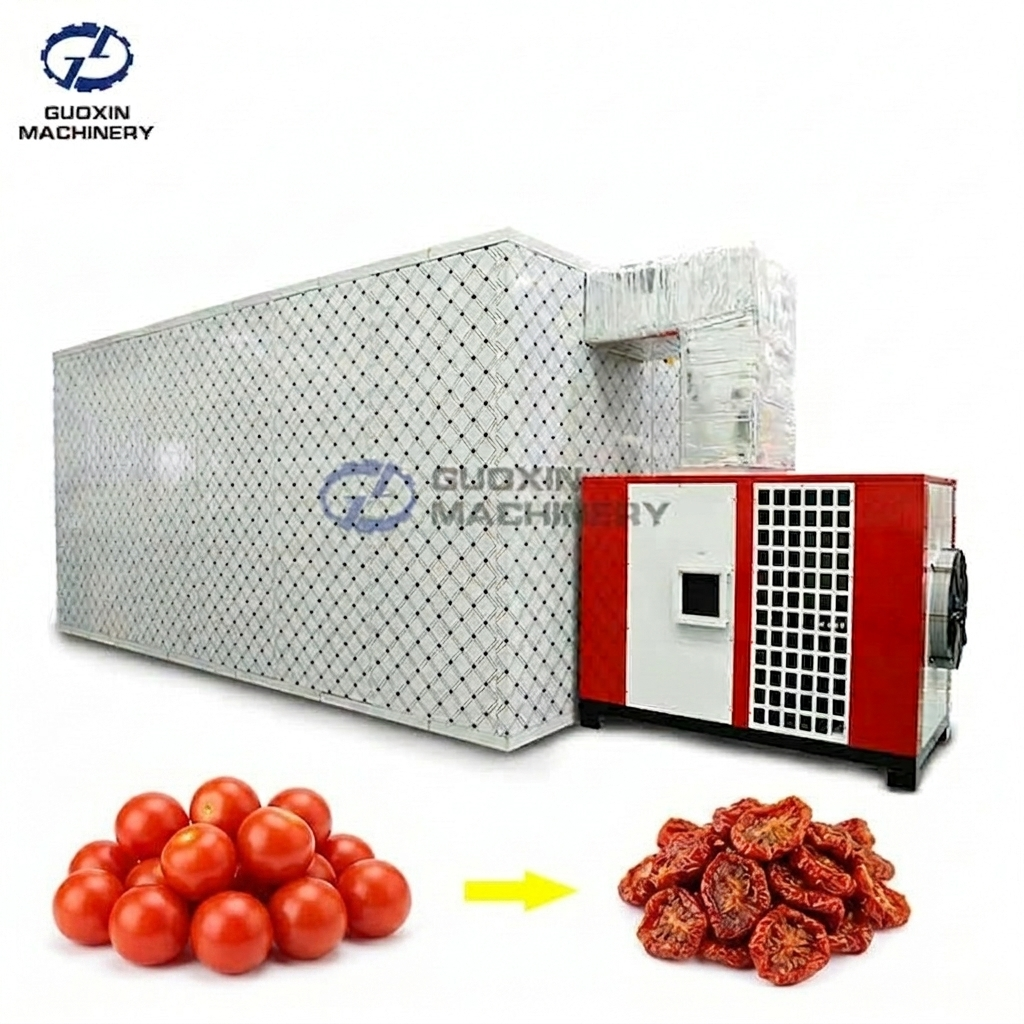
Sun-Dried Tomato Drying – Parameters for Industrial Production of Consistent Tomato Slices
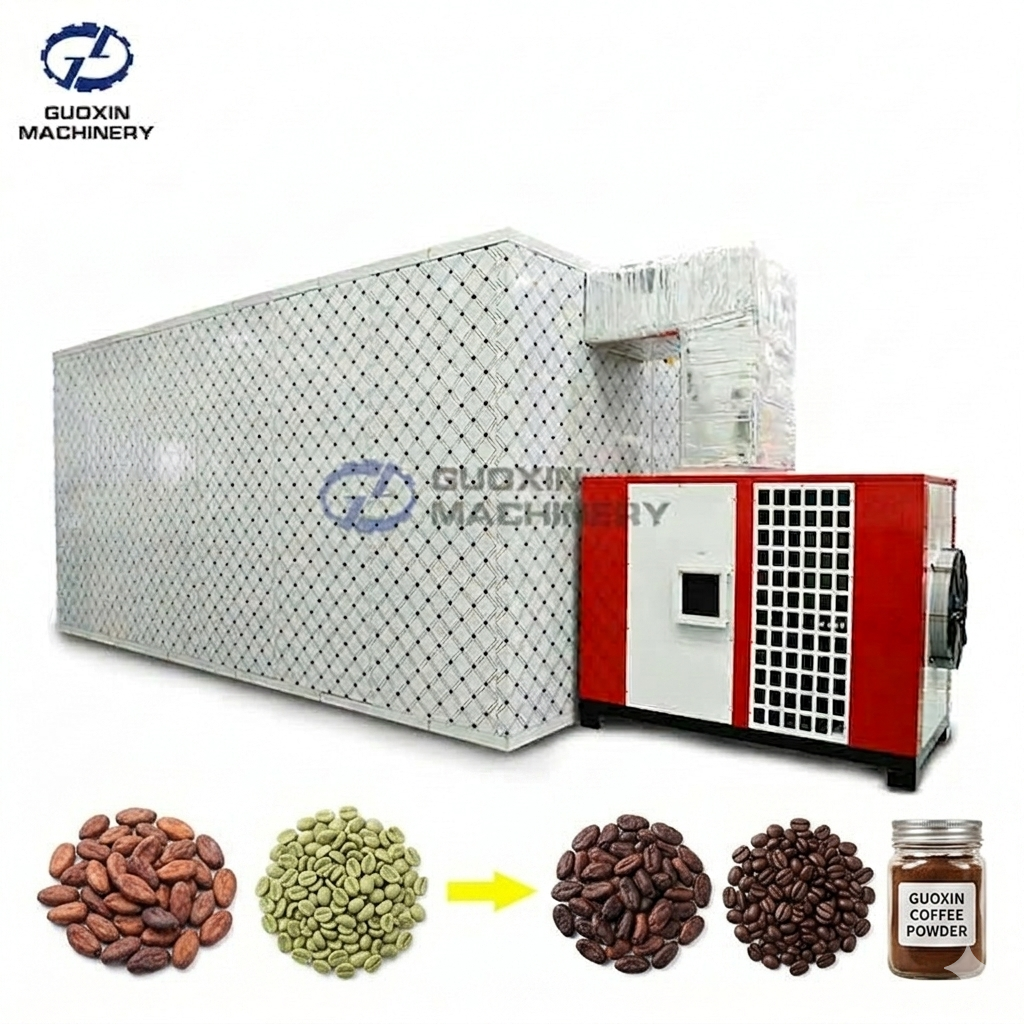
Drying Coffee Beans, Cocoa Nibs and Instant Coffee Powder