© Henan Guoxin Machinery Manufacturing Co., Ltd. All Rights Reserved.



Release time:2026-07-22
How do commercial agricultural seed producers maintain high embryo viability and germination rates during bulk batch drying?
In agricultural seed production, post-harvest dehydration is the most critical quality-control bottleneck. Unlike standard commercial food grain (where high-temperature thermal drying is used for speed), agricultural seeds require strict low-temperature dehydration.
Subjecting high-moisture seeds to processing temperatures above 38°C to 40°C causes severe thermal shock, destroying the living seed embryo and causing germination rates to collapse. Furthermore, mechanical friction or tumbling in traditional rotary dryers often cracks fragile seed coats.
To address these core biological requirements, Henan Guoxin Equipment engineered an air-energy heat pump batch seed drying system. The field setup below highlights a customer installation processing bulk agricultural seeds using a specialized flat-bed galvanized drying bin coupled with a low-temperature heat pump unit and a high-pressure centrifugal fan.
An industrial seed drying system must balance biological protection with operational material handling:
[Raw Seed Intake] → [Forklift Elevated Platform] → [Uniform Flat-Bed Distribution] → [Bottom-Up Low-Temp Aeration (≤38°C)] → [Safe Moisture Equilibrium]
Preserving Seed Germination Rates (≥ 95%Target): Heat pump closed-loop climate control guarantees that processing air stays strictly within 32°C to 38°C, eliminating embryo mortality caused by thermal spikes.
Overcoming Deep-Bed Airflow Resistance: Seeds form a dense material bed with high static pressure resistance. Without sufficient air pressure, hot air cannot penetrate the upper layer, resulting in uneven moisture zones and localized mold growth.
Zero Mechanical Damage: Stationary batch flat-bed processing ensures seeds remain resting on a smooth perforated metal deck throughout the drying cycle, preventing coat abrasion, splitting, or embryo dislocation.
As demonstrated in the operational facility video, the complete line integrates four functional modules:
       ┌─────────────────────────────────────────┐
       │   Air-Source Heat Pump Thermal Unit     │
       └────────────────────┬────────────────────┘
                            │ (Low-Temp Dehumidified Air)
                            ▼
       ┌─────────────────────────────────────────┐
       │  High-Pressure Centrifugal Fan Unit     │
       └────────────────────┬────────────────────┘
                            │ (Forced Static Pressure)
                            ▼
 ┌─────────────────────────────────────────────────────┐
 │ Insulated Ducting & Lower Pressure Plenum Chamber   │
 └──────────────────────────┬──────────────────────────┘
                            │ (Uniform Upward Airflow)
                            ▼
 ┌─────────────────────────────────────────────────────┐
 │ Galvanized Modular Flat-Bed Drying Bin (Seed Bed)   │
 └─────────────────────────────────────────────────────┘
A. Forklift-Elevated Batch Loading Platform
Scenario Handling: Bulk seed bags are lifted via forklift to an elevated platform positioned directly over the top rim of the drying box.
Labor Efficiency: Operators unbag and spread the raw seeds directly into the galvanized bin deck, utilizing gravity to speed up batch loading without heavy manual lifting.
B. Galvanized Modular Flat-Bed Drying Chamber
Structure: High-strength, corrosion-resistant galvanized steel enclosure engineered with a precision-punched perforated floor deck.
Aeration: The lower plenum chamber under the deck spreads incoming pressure evenly, forcing dehumidified air upward through the seed matrix.
C. Closed-Loop Heat Pump & Centrifugal Blower Assembly
Heat Pump Unit: Recycles latent heat while extracting moisture as liquid effluent, reducing electrical power requirements by 60% to 75% compared to traditional electrical resistance heaters.
Heavy-Duty Centrifugal Fan: Delivers high static pressure through insulated air ducting, ensuring warm, dry air penetrates deep seed beds uniformly from bottom to top.
| System Parameter | On-Site Project Specification |
| Equipment Configuration | Heat Pump Flat-Bed Batch Seed Drying Box |
| Primary Material | Agricultural Grain & Plant Seeds |
| Calibrated Drying Temperature | 30°C to 38°C (Automated PLC Range) |
| Thermal Source Integration | Air-Source Heat Pump Dehumidification Unit |
| Air Distribution System | Heavy-Duty Centrifugal Blower + Insulated Plenum |
| Chamber Construction | Heavy-Duty Galvanized Sheet Metal / Perforated SUS |
| Energy Efficiency Advantage | 60% – 75% Electricity OPEX Reduction vs. Resistance Ovens |
Maximizes Seed Market Value: Low-temperature dehumidification locks in native seed viability, ensuring high batch germination percentages required for certified agricultural sale.
Flexible Batch Tonnage: The modular box structure allows processors to handle variable harvest volumes per batch without needing to fill massive vertical towers.
Simplified Factory Maintenance: Stationary box designs feature no moving mechanical parts inside the seed chamber, minimizing wear and simplifying clean-down wash routines between seed varieties.
Q1: Why choose a heat pump flat-bed dryer over vertical recirculating grain towers for seed processing?
A: Vertical recirculating grain towers rely on continuous mechanical augers and gravity drops to move grain through high-heat airflow. While efficient for commercial feed corn or milling wheat, mechanical tumbling damages delicate seed hulls, and thermal spikes in vertical towers risk killing the seed germ. Heat pump flat-bed dryers keep seeds static on a perforated deck, applying gentle low-temperature airflow (≤38℃) to guarantee zero mechanical damage and maximum germination vitality.
Q2: How do operators ensure uniform drying from the bottom to the top of the seed bed?
A: Uniformity relies on the static pressure created in the lower plenum chamber beneath the perforated deck. Guoxin pairs its heat pump systems with high-pressure centrifugal blowers specifically calibrated to match the bed depth and seed density. This forces a uniform air front through the entire volume of the bed, preventing wet pockets.
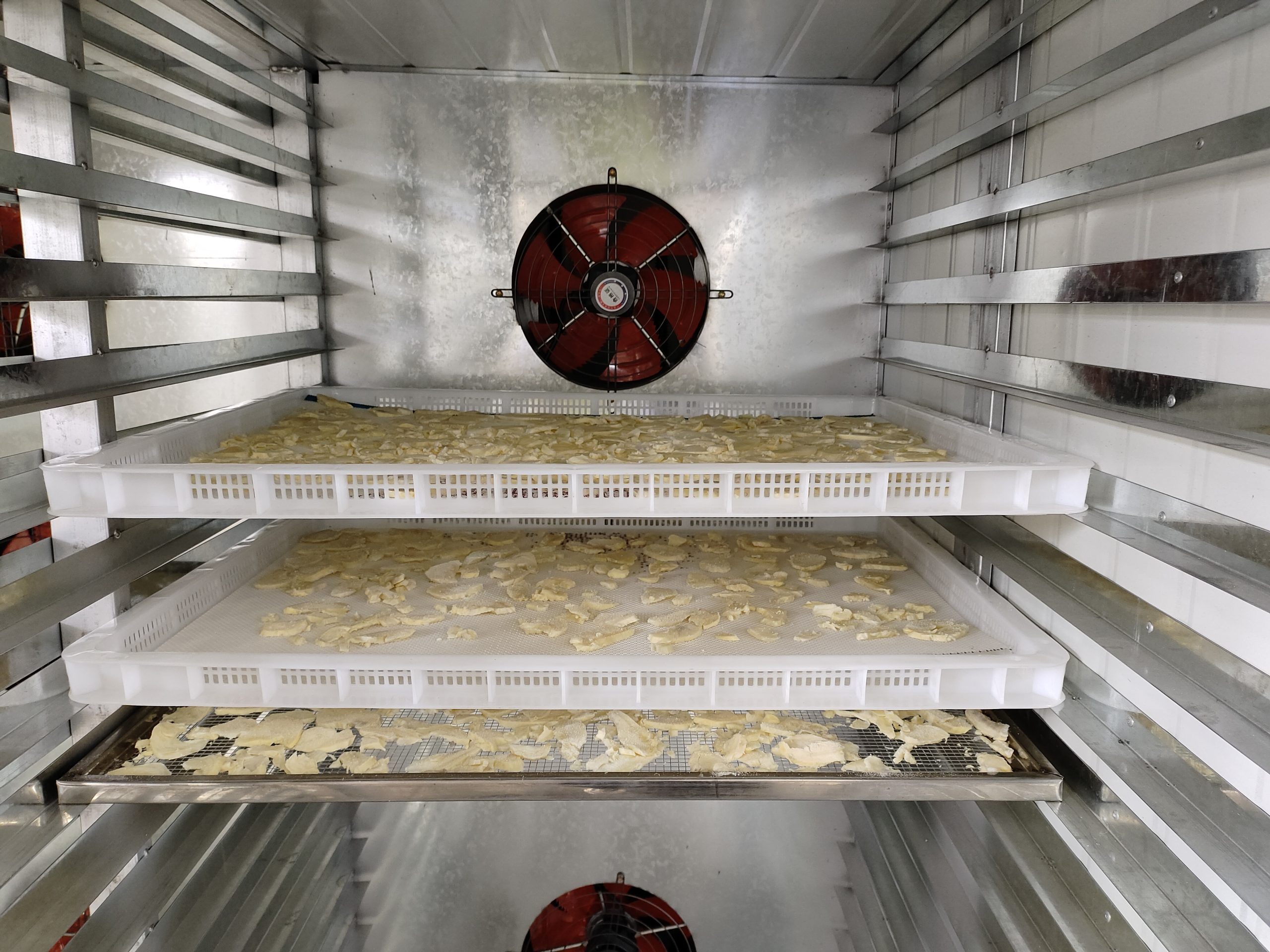
Commercial Durian Dehydration: Preserving Quality with Heat Pump Technology
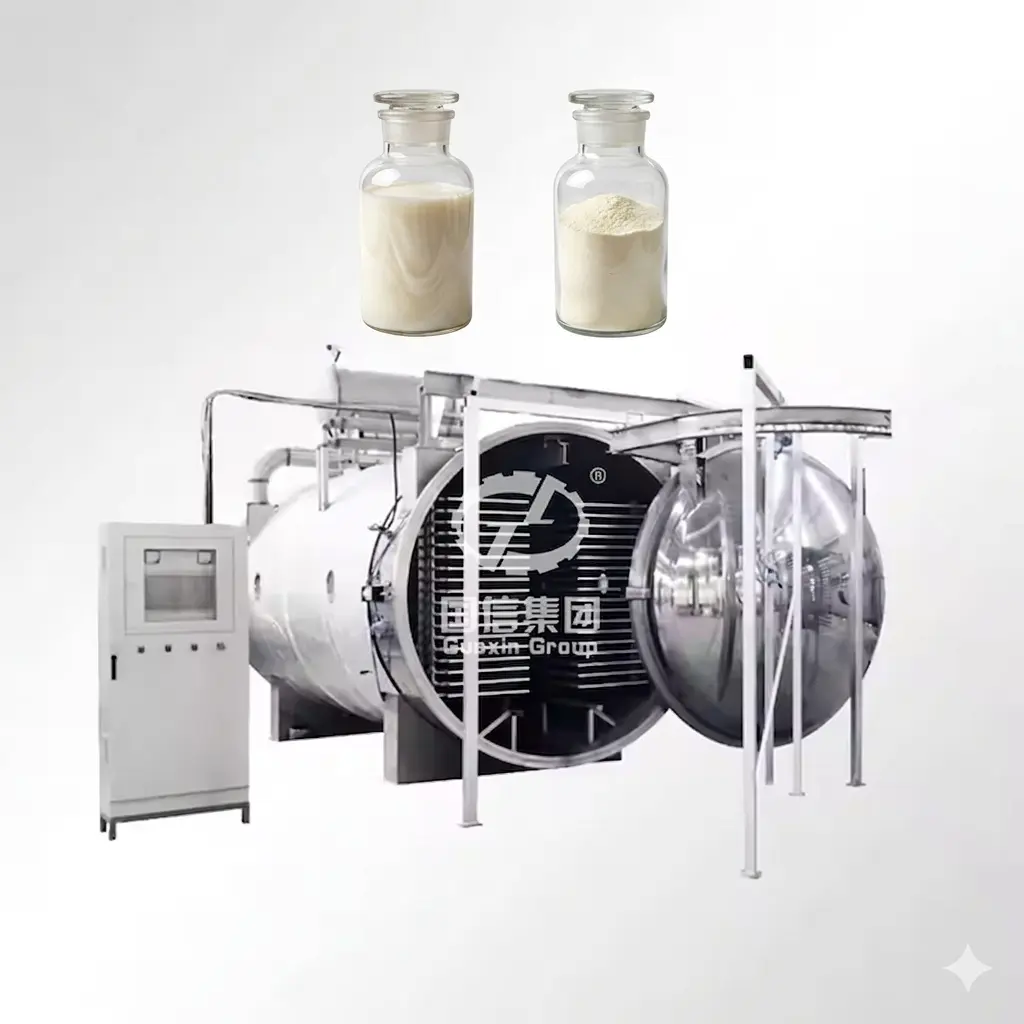
Milk Powder Drying – Parameters for Consistent Final Moisture and Functional Properties
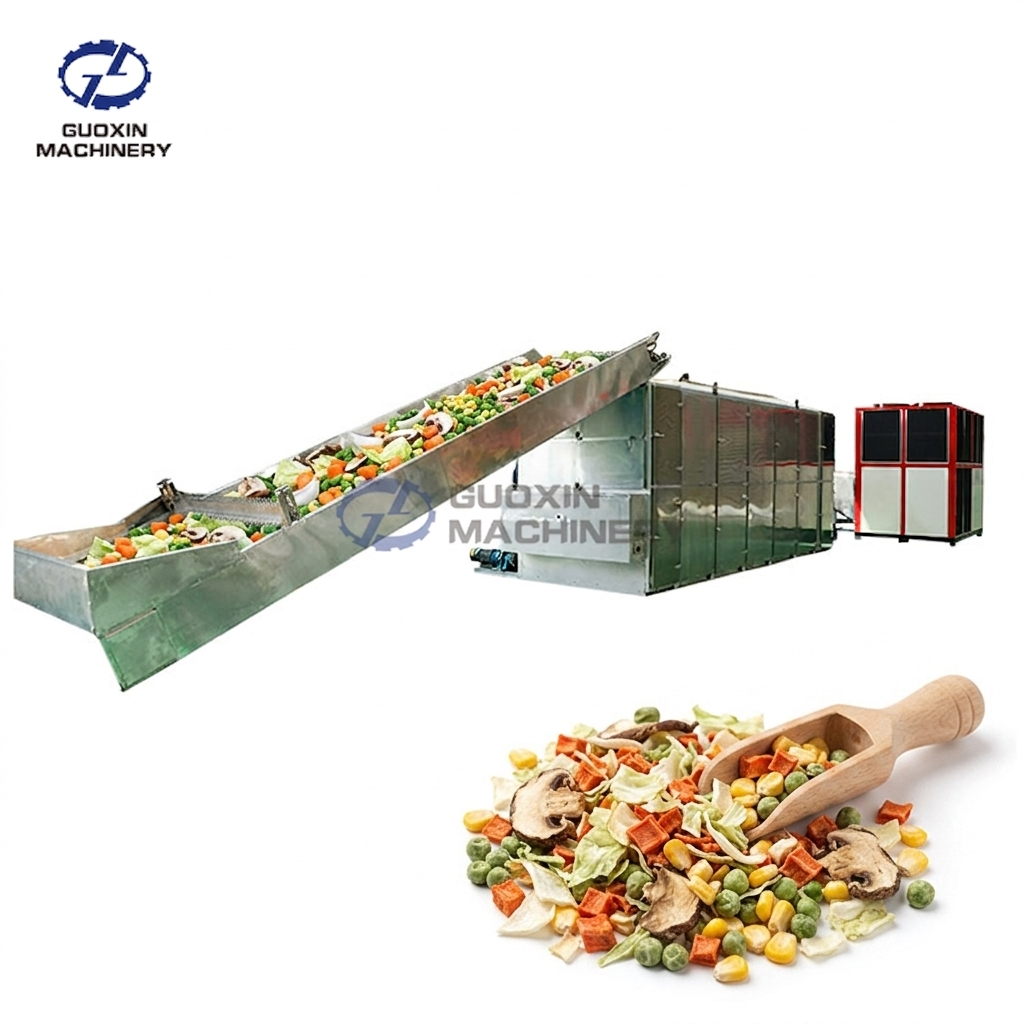
Dehydrated Vegetables for Instant Noodle Seasoning – Drying Parameters for Consistent Quality in Seasoning Packs
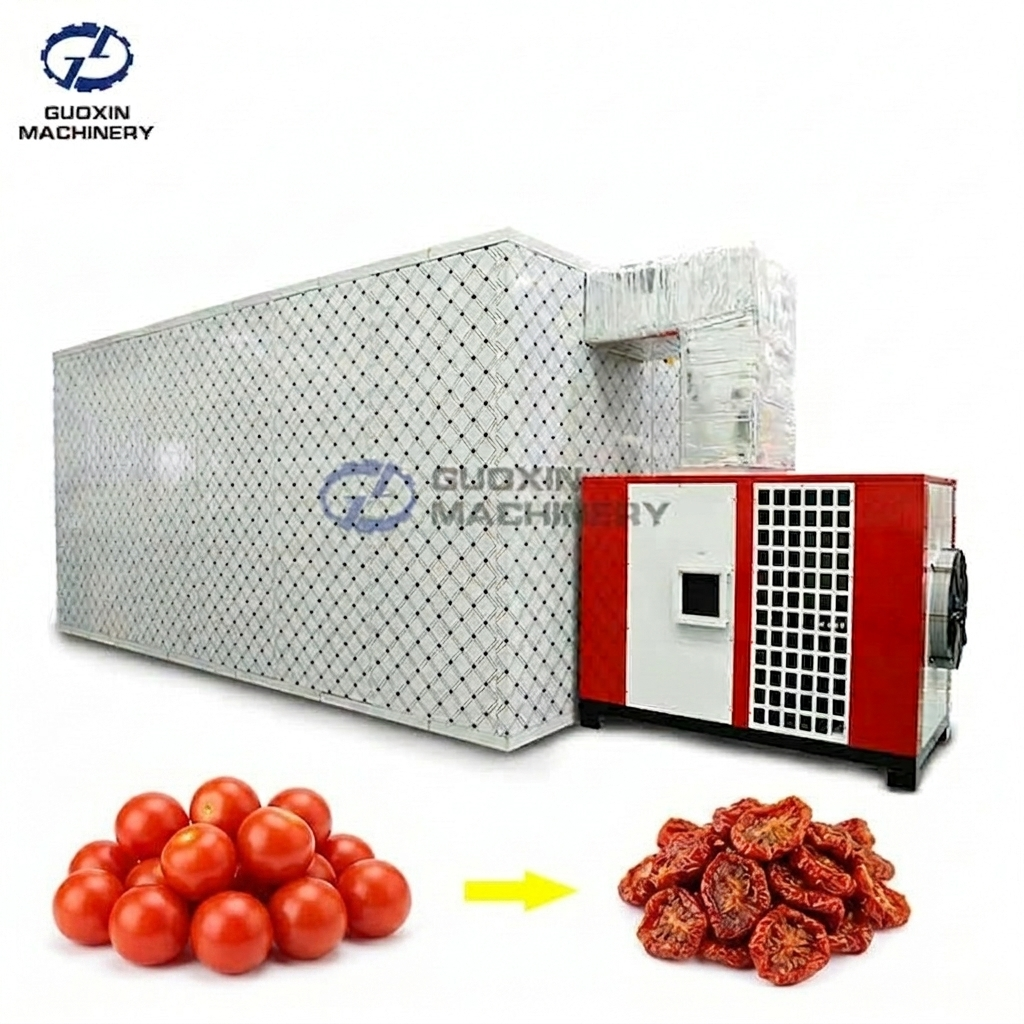
Sun-Dried Tomato Drying – Parameters for Industrial Production of Consistent Tomato Slices
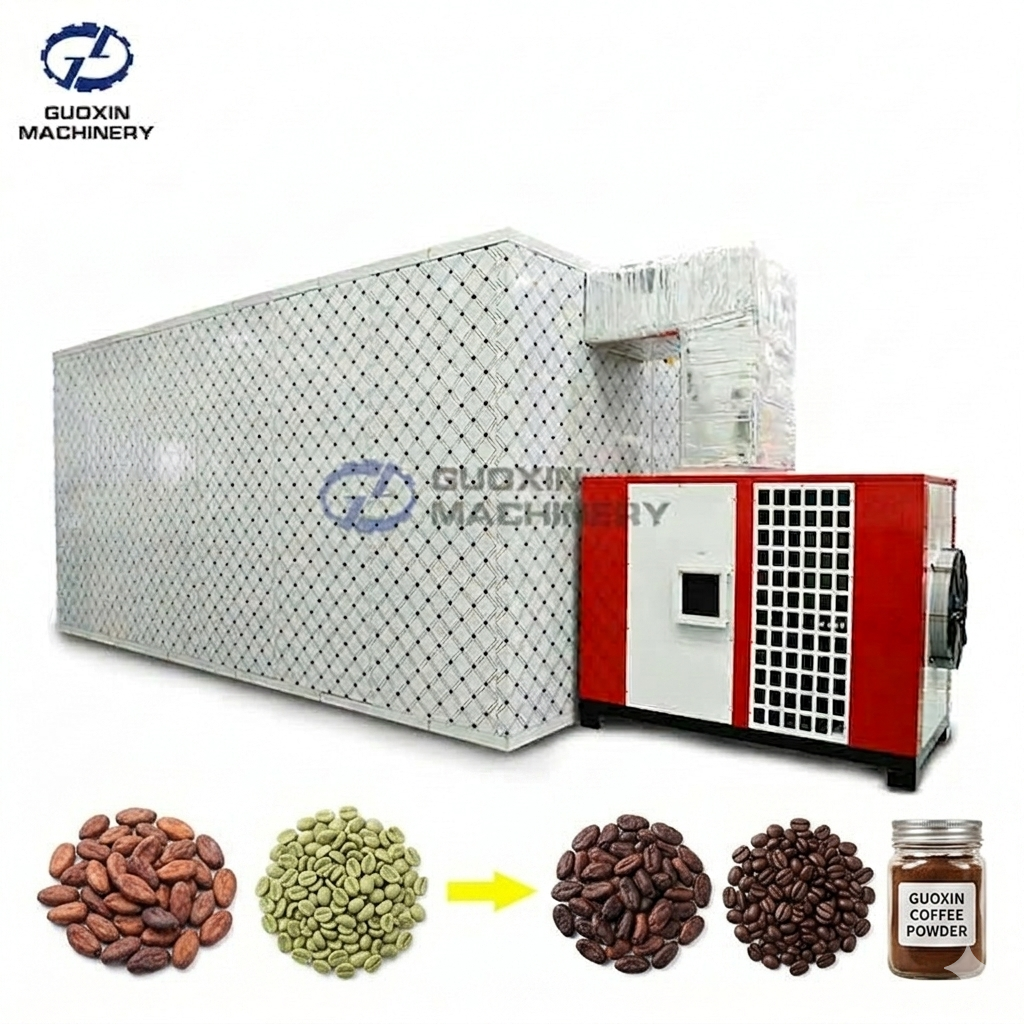
Drying Coffee Beans, Cocoa Nibs and Instant Coffee Powder