© Henan Guoxin Machinery Manufacturing Co., Ltd. All Rights Reserved.



Release time:2026-05-20

Industrial dehydration of delicate botanical herb leaves (including Rosemary, Thyme, Mint, Basil, and Oregano) demands highly specialized environmental control to maximize commercial grading.
Freshly harvested herb leaves contain an initial moisture content of 70% to 80%, which must be uniformly reduced to an export equilibrium of 8% to 10%.
Processing these fragile botanical matrices using standard open-vent drying lines degrades their primary value indicators: volatile essential oil content (such as menthol, thymol, or carvacrol) and vibrant green chlorophyll coloration.
Exposure to excessive temperatures, high air velocities, or ambient oxygen triggers rapid thermal volatilization and pigment oxidation, turning premium green leaves into a dull yellow or brown product with a minimal aroma profile.
Guoxin Machinery engineers fully enclosed, continuous Closed-Loop Heat Pump Dehydrators. Operating in an oxygen-controlled, low-temperature dehumidification circuit, these systems extract moisture efficiently while locking in the native essential oil fractions and natural pigments required to secure top-tier international market pricing.
Premium commercial herbs are cultivated in specialized agricultural zones, such as the Mediterranean basin, parts of North Africa, and micro-climate temperate plains. These areas provide high solar radiation and well-drained, lime-rich soils, which stimulate the plant to develop high concentrations of aromatic terpenes and essential oils within the glandular trichomes on the leaf surface.
When these fresh crops enter a large-scale processing plant, their thin, low-mass structural geometry poses a severe engineering challenge. Unlike thick root crops, herb leaves possess minimal thermal defense. The volatile oils are stored in fragile, external structures that rupture easily under thermal stress or rough physical handling. The industrial drying system must remove unbound cellular water rapidly without disturbing these external oil glands or causing leaf bruising and fracturing.
Traditional open-loop dryers introduce a continuous stream of fresh, oxygen-rich air into the drying chamber, which oxidizes sensitive plant compounds. Guoxin’s closed-loop dehumidification architecture isolates the internal environment to maintain product purity.
The essential oils that define the value of culinary and medicinal herbs begin to volatilize at temperatures as low as 40°C when exposed to open, moving air streams. Standard agricultural drying tunnels continuously vent exhaust air out of the building, carrying the valuable aroma compounds out with it and leaving a flat, low-value herb behind.
Our processing lines utilize a completely Sealed, Closed-Loop Dehumidification Enclosure managed via advanced PLC sensor networks. The drying air is recirculated continuously within a closed system. As the warm, moisture-laden air leaves the herb bed, it passes over an integrated industrial refrigeration evaporator that chills the air below its dew point, condensing the water out as liquid waste. The dry air is then reheated and sent back through the product. Because no air is ever vented outside the machine, a localized vapor-saturation equilibrium is achieved that prevents the volatile essential oils from escaping their cellular structures, resulting in an exceptionally high concentration of retained oils.
When green leaves are exposed to convective heat in the presence of fresh oxygen, the chlorophyll molecule degrades rapidly via oxidation, shifting the leaf color to an unappealing yellow-brown that fails export specifications for retail spice jars.
Operating a closed-loop system naturally creates an Oxygen-Depleted Dehumidification Atmosphere. Because the same air is recirculated without fresh air ingestion, the oxygen concentration inside the chamber stays low. Operating at low, stable temperatures (35°C to 45°C), this oxygen-depleted environment halts the oxidation path of chlorophyll completely. The dried leaves emerge from the machine with their natural, vivid green coloration intact, satisfying premium retail grading codes.
The matrix below outlines the engineered industrial configurations for Guoxin continuous closed-loop heat pump multi-layer dehydration systems configured for premium herb leaves.
| Operational Parameter | GX-HP-124 Enclosed Line | GX-HP-205 Enterprise Solution | GX-HP-256 Industrial Complex |
| Wet Input Raw Throughput | 300 kg/h to 500 kg/h | 800 kg/h to 1,500 kg/h | 2,000 kg/h to 3,500 kg/h+ |
| Conveyor Belt Width Options | 1,200 mm | 2,000 mm | 2,500 mm |
| Drying Enclosure Tiers | 4 Layers | 5 Layers | 6 Layers |
| Chamber Enclosure Length | 10 Meters | 14 Meters | 20 Meters |
| Heat Pump Compressor Type | Copeland Scroll / Digital | Copeland Scroll / Digital | Heavy-Duty Industrial Reciprocating |
| Refrigerant Medium Circuit | R134a / R410A Eco-Friendly | R134a / R410A Eco-Friendly | R134a / R410A Eco-Friendly |
| Temperature Profile Bounds | 30°C – 55°C (±0.5°C accuracy) | 30°C – 55°C (±0.5°C accuracy) | 30°C – 55°C (±0.5°C accuracy) |
| Conveyor Material Build | Food-Grade SUS304 Mesh | Food-Grade SUS304 Mesh | Food-Grade SUS304 Mesh |
| Automation Integration | Siemens PLC / Touchscreen HMI | Siemens PLC / Touchscreen HMI | Full Siemens PLC / SCADA Ready |
For commercial spice exporters, thermal utility efficiency is the largest operational variable directly impacting profit margins per ton of finished inventory.
Traditional open-cycle agricultural dryers constantly exhaust warm, moisture-laden air into the atmosphere, resulting in major structural energy loss. Guoxin’s closed-loop heat pump configurations redirect this energy path. When the humid air stream passes over the industrial evaporator, the latent heat of vaporization released during condensation is captured by the refrigerant circuit. The compressor elevates this thermal energy, and the internal condenser plates dump it back into the dry processing air stream.
This configuration achieves an exceptional Coefficient of Performance (COP). In standard operating conditions, our enclosed heat pump systems deliver 60% to 75% energy savings compared to conventional open-loop electrical resistance heaters or direct gas-fired systems, dramatically lowering total factory OPEX and accelerating capital amortization schedules.
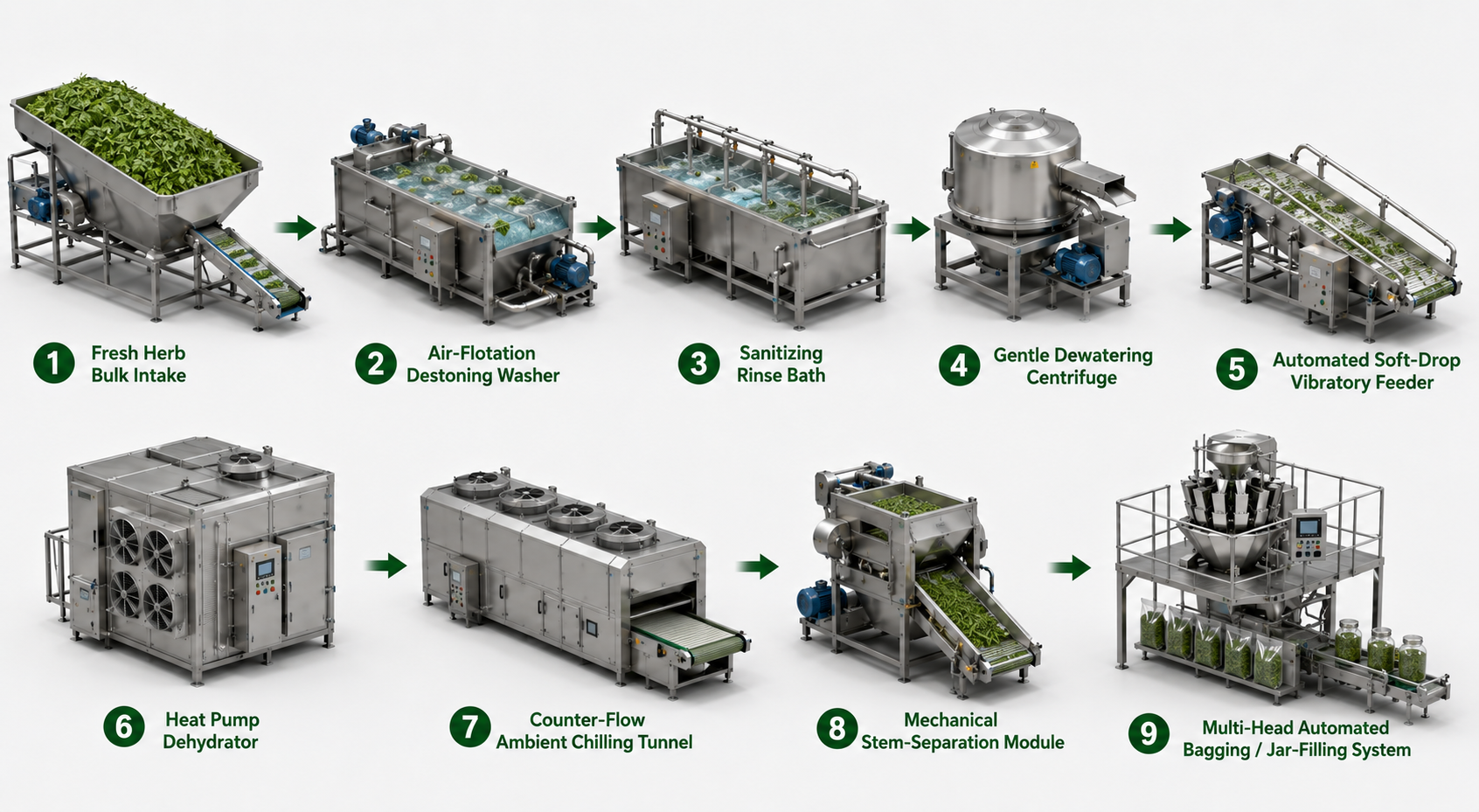
Commercial spice and herb processing facilities require full production line integration to eliminate engineering mismatches between separate equipment vendors and maintain strict food safety standards. Guoxin Machinery designs, manufactures, and commissions complete turnkey (EPC) processing lines, aligning all pre-treatment and post-drying systems for automated, continuous material flow:
[Fresh Herb Bulk Intake] → [Air-Flotation Destoning Washer] → [Sanitizing Rinse Bath] → [Gentle Dewatering Centrifuge] → [Automated Soft-Drop Vibratory Feeder] → [ Heat Pump Dehydrator] → [Counter-Flow Ambient Chilling Tunnel] → [Mechanical Stem-Separation Module] → [Multi-Head Automated Bagging / Jar-Filling System]
Utilizes low-RPM centrifugal force or advanced high-volume air knives to strip surface wash-water off fresh leaves without bruising the delicate tissue or rupturing surface essential oil trichomes.
Mechanical Stem-Separation Module:
A post-drying system that separates the dried leaves cleanly from their wooden stems using calibrated mechanical agitation and air-density classification, producing a clean, stalk-free final product.
Q1: How do I select the correct equipment model and capacity configuration for a commercial herb leaf line?
A: Model selection is determined by your raw input volume per hour and the density of the specific leaf varieties (e.g., loose mint leaves vs. dense, oily rosemary needles). Herb leaves dry relatively quickly due to their high surface-area-to-mass ratio, requiring between 3 to 5 hours inside a low-temperature closed-loop system. If your plant targets a net output of 3 tons of finished dried basil per day, you must account for an approximate 4:1 moisture reduction, requiring a system that processes 12 tons of wet input daily. For this volume, we recommend our GX-HP-205 Enterprise Solution to maintain a loose, uniform product bed depth for optimal cross-flow air penetration.
Q2: What is the optimal factory layout for a global export herb processing facility?
A: To satisfy international food safety audits (such as HACCP, BRC, or FDA inspections), the plant must enforce a strict physical separation between wet and dry processing zones. The pre-treatment machinery (washing, sanitizing, and de-watering) must be isolated in a designated “Wet Preparation Zone” with specialized floor drainage. The botanical herb leaves closed-loop heat pump dehydrator serves as the sealed mechanical transition through the facility separation wall. The discharge end of the drying system outputs directly into a positive-pressure, climate-controlled “Clean Dry Zone” running ambient relative humidity below 35% to prevent the dried herbs from re-absorbing atmospheric moisture before automated packaging occurs.
Q3: What are the capital expenditure thresholds and expected ROI payback periods for this infrastructure?
A: Total capital investment varies based on the chosen scale of continuous belt operations and the level of automation required for post-drying sorting and stem separation. While a fully automated continuous heat pump line requires a higher initial investment than basic, uninsulated batch drying rooms, it removes massive manual labor costs, requiring only 2 to 3 operators to manage the entire processing line from a central PLC console. Backed by a 60% to 75% reduction in utility consumption, commercial operators typically achieve complete capital investment recovery within 14 to 22 months of plant operation.
Q4: How does the system handle sanitation and flavor cross-contamination between different herb batches?
A: To prevent flavor cross-contamination when switching between different aromatic herbs (such as switching a line from Mint to Rosemary), all structural frameworks, internal air-routing louvers, exterior panels, and continuous woven mesh belts are fabricated exclusively from food-grade SUS304 stainless steel. Internal surfaces feature a smooth, highly polished finish with a radius-corner design that prevents product debris or residual oils from accumulating. The outer enclosure is built with large, double-sealed inspection doors to provide complete access for high-pressure chemical wash-downs and streamlined Clean-in-Place (CIP) sanitization routines, complying fully with global food contact regulations.
Henan Guoxin Machinery collaborates with international agricultural cooperatives, commercial spice millers, and herbal tea exporters to validate system performance metrics before manufacturing begins.
Contact Our Engineering Team for a Technical Project Proposal
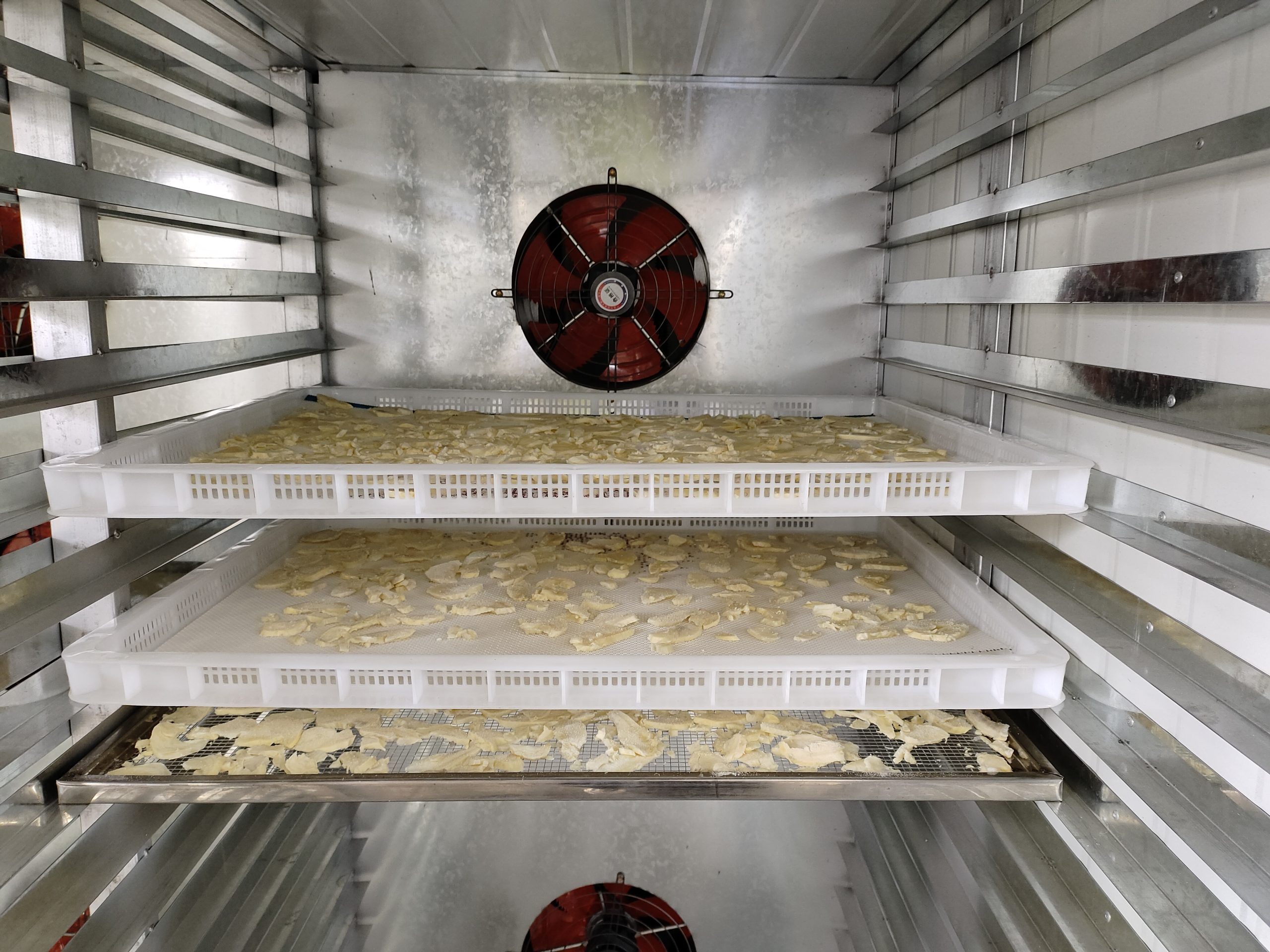
Commercial Durian Dehydration: Preserving Quality with Heat Pump Technology
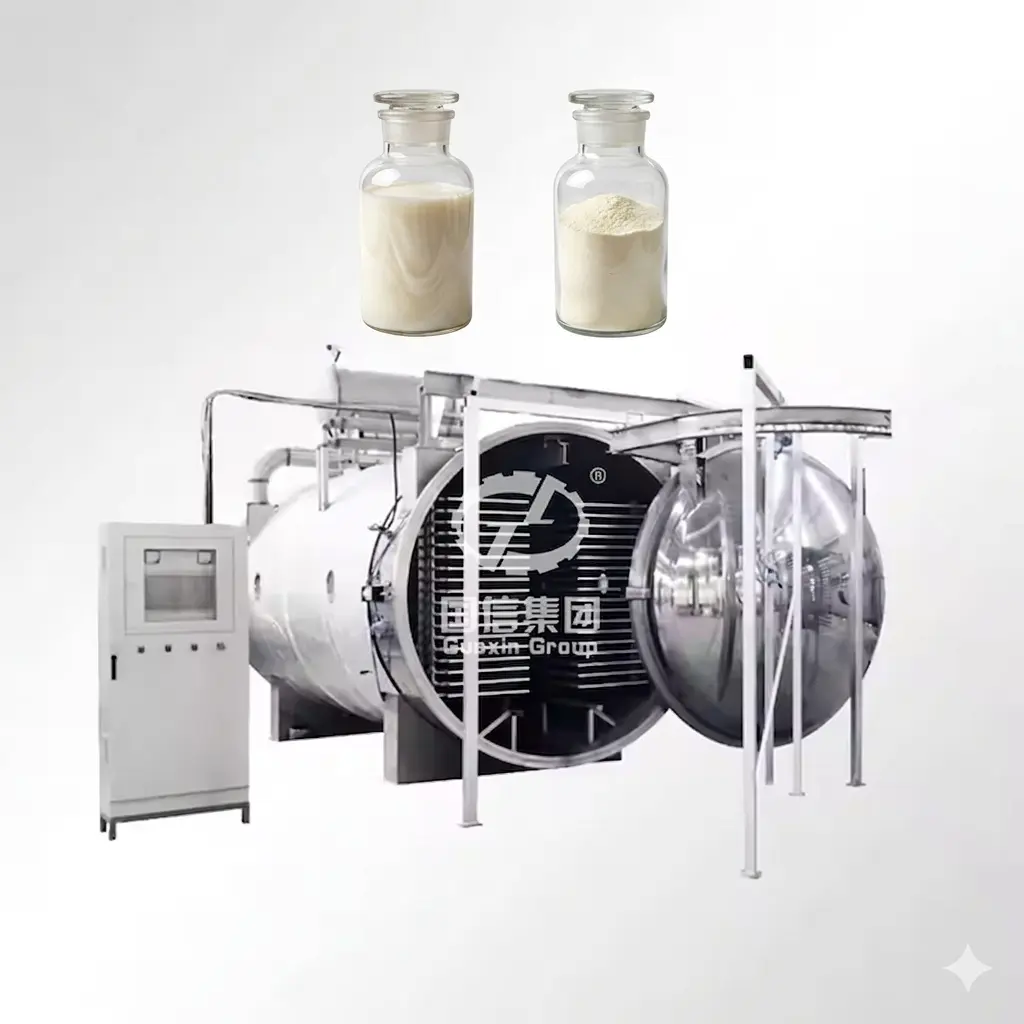
Milk Powder Drying – Parameters for Consistent Final Moisture and Functional Properties
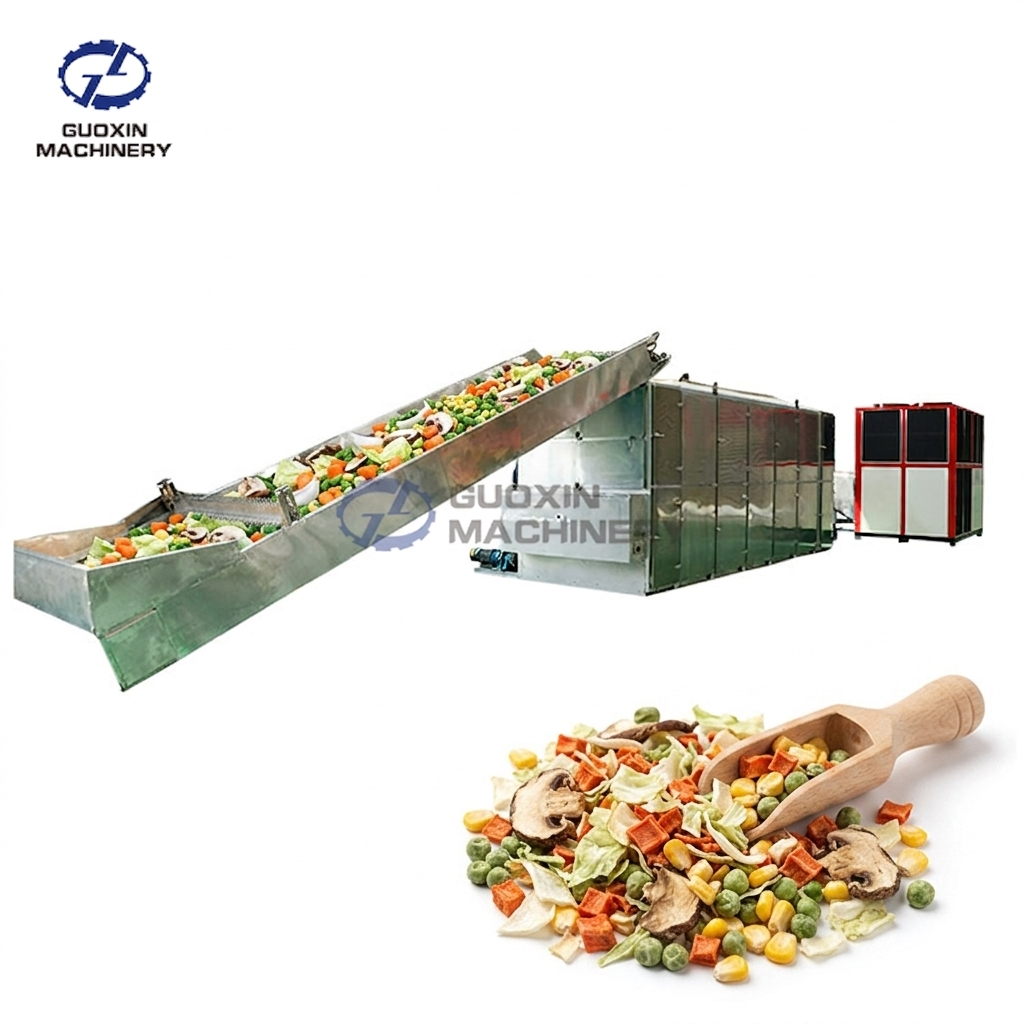
Dehydrated Vegetables for Instant Noodle Seasoning – Drying Parameters for Consistent Quality in Seasoning Packs
Sun-Dried Tomato Drying – Parameters for Industrial Production of Consistent Tomato Slices
Drying Coffee Beans, Cocoa Nibs and Instant Coffee Powder